Visual Regression Testing: What It Is, How It Works, and Best Practices

Jayanti Katariya
Last Updated: May 05, 2026 Total View: 145
UI Breaking After Every Release?
If layouts shift or styles break after updates, missing visual regression testing could be the cause. Catch UI issues early and ship confidently without manual guesswork.
- UI snapshot comparison
- Cross-browser validation
- Automated test setup
- Release quality assurance


As modern applications become more UI-driven, ensuring that visual elements remain consistent across updates is critical. Even small unintended UI changes like a broken layout, a missing button, or shifted text can significantly impact the user experience.
This is where visual regression testing comes into play. It helps teams automatically detect visual differences between UI versions, ensuring that updates do not introduce unintended design issues.
What is Visual Regression Testing?
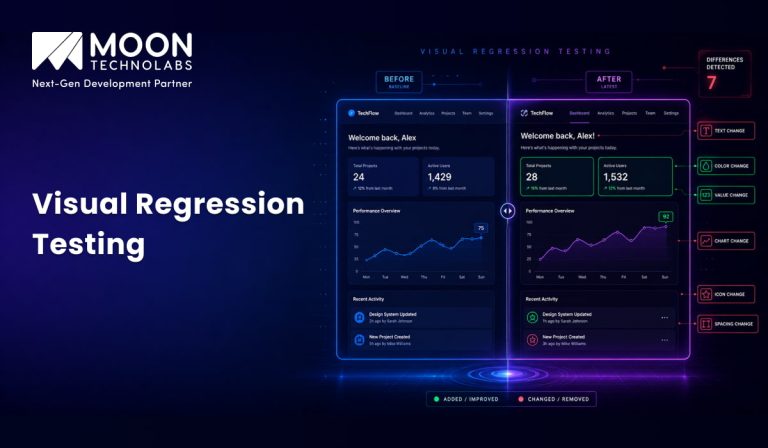
Visual regression testing is a testing technique that compares screenshots of a user interface before and after changes to detect visual differences. It ensures that UI components render consistently across updates.
Instead of relying only on functional tests, visual regression testing focuses on appearance. It helps catch issues that traditional testing methods might miss, such as layout shifts or styling inconsistencies.
Why Visual Regression Testing Is Important?
In fast-paced development environments, UI changes happen frequently. Without proper checks, even small changes can introduce visual bugs that affect usability.
Visual regression testing provides an automated way to detect these issues early. It improves UI quality, reduces manual testing effort, and ensures a consistent user experience across releases.
Prevents UI Breakages
Even minor CSS or layout changes can break the UI. Visual regression testing detects these issues automatically.
This ensures that updates do not negatively impact the design or usability of the application
Reduces Manual Testing Effort
Manually checking UI changes is time-consuming and error-prone. Visual regression testing automates this process.
It allows teams to focus on development while ensuring UI consistency.
Improves User Experience
A consistent and stable UI improves user trust and engagement. Visual issues can reduce credibility and usability.
Visual regression testing ensures that users get a seamless experience across updates.
How Visual Regression Testing Works?
Visual regression testing works by capturing screenshots of the UI and comparing them against a baseline. Any differences are highlighted and reported.
This process is automated and can be integrated into CI/CD pipelines for continuous monitoring.
Capture Baseline Images
The first step is to capture screenshots of the application’s UI in its expected state. These images serve as the baseline for comparison.
Baseline images represent the correct design and layout of the application.
Run Tests After Changes
After making changes to the application, new screenshots are captured. These are compared against the baseline images.
This helps identify any unintended visual differences.
Compare and Detect Differences
The testing tool compares pixel differences between images. Even small changes are detected and highlighted.
This allows developers to quickly identify and fix UI issues.
Example: Visual Regression Testing Using Playwright
Here’s a simple example using Playwright for visual comparison:
const { test, expect } = require('@playwright/test');
test('homepage visual test', async ({ page }) => {
await page.goto('https://example.com');
expect(await page.screenshot()).toMatchSnapshot('homepage.png');
});
This test captures a screenshot and compares it with a stored baseline image.
Tools for Visual Regression Testing
Several tools are available to implement visual regression testing effectively. These tools help automate screenshot comparison and reporting.
Playwright
Playwright provides built-in support for visual comparisons. It is fast and integrates well with modern testing workflows.
It is ideal for developers looking for a simple and reliable solution.
Percy
Percy is a cloud-based visual testing tool that integrates with CI/CD pipelines. It provides advanced comparison and reporting features.
It is suitable for teams working on large-scale applications.
Applitools
Applitools uses AI-based visual testing to detect differences intelligently. It reduces false positives and improves accuracy.
This makes it useful for complex UI testing scenarios.
Benefits of Visual Regression Testing
Visual regression testing helps teams maintain a polished and consistent user interface as applications evolve. By automatically detecting unexpected visual changes, it reduces the risk of UI defects reaching production. This approach supports faster, more reliable development cycles.
Early Detection of UI Issues
Visual regression testing catches layout shifts, styling errors, and broken components early in the development process. Fixing these issues sooner minimizes rework and prevents costly last-minute corrections.
Consistent UI Across Releases
It ensures that every release maintains the intended design and branding. This consistency improves the user experience and builds trust over time.
Faster Development Cycles
Automation reduces the need for repetitive manual UI checks, allowing teams to focus on building features. As a result, releases can be delivered more quickly and with greater confidence.
Better Collaboration
Providing clear visual comparisons makes it easier for developers and designers to review changes together. This shared visibility leads to better communication and more accurate design implementation.
Key Challenges of Visual Regression Testing
While visual regression testing improves UI quality, it also introduces challenges that teams must handle carefully. Managing these issues effectively ensures that the testing process remains reliable and efficient. Proper strategies can help reduce noise and maintain accuracy.
False Positives
Minor differences such as font rendering, screen resolution, or browser variations can trigger false alerts. These need to be minimized or filtered to avoid wasting time on unnecessary investigations.
Maintenance of Baselines
As the UI evolves, baseline images must be updated to reflect intentional changes. Without proper version control, maintaining these baselines can become complex and error-prone.
Performance Overhead
Taking and comparing screenshots can slow down test execution, especially in large applications. Optimizing test runs and limiting unnecessary comparisons helps maintain performance efficiency.
Best Practices for Visual Regression Testing
Adopting the right practices helps teams get the most value out of visual regression testing. It ensures accurate results while reducing noise and maintenance effort. A structured approach leads to more reliable and scalable testing workflows.
Use Stable Test Environments
Running tests in consistent, controlled environments minimizes unexpected variations. This helps produce reliable and repeatable visual results across test runs.
Ignore Dynamic Content
Elements like timestamps, ads, or live data can cause unnecessary test failures. Excluding or masking such content reduces false positives and improves test accuracy.
Integrate with CI/CD
Incorporating visual tests into your CI/CD pipeline ensures that UI changes are continuously monitored. This enables teams to catch visual issues early in every deployment cycle.
Review Changes Carefully
Not every visual difference indicates a bug, so careful review is essential. Teams should verify whether changes are intentional before taking action.
How Moon Technolabs Helps with Visual Testing?
Moon Technolabs helps businesses implement advanced testing strategies, including visual regression testing. The focus is on improving UI quality, reducing bugs, and ensuring seamless user experiences.
By integrating modern testing tools and automation frameworks, organizations can achieve faster and more reliable deployments.
We help you implement visual regression testing to catch UI issues early, maintain design consistency, and deliver flawless user experiences.
Conclusion
Visual regression testing is essential for maintaining UI consistency in modern applications. It helps detect visual issues early and ensures a high-quality user experience.
By using the right tools and following best practices, teams can automate UI testing effectively and deliver better products with confidence.


Jayanti Katariya is the CEO of Moon Technolabs, a fast-growing IT solutions provider, with 18+ years of experience in the industry. Passionate about developing creative apps from a young age, he pursued an engineering degree to further this interest. Under his leadership, Moon Technolabs has helped numerous brands establish their online presence and he has also launched an invoicing software that assists businesses to streamline their financial operations.
Get in Touch With Us
Submitting the form below will ensure a prompt response from us.