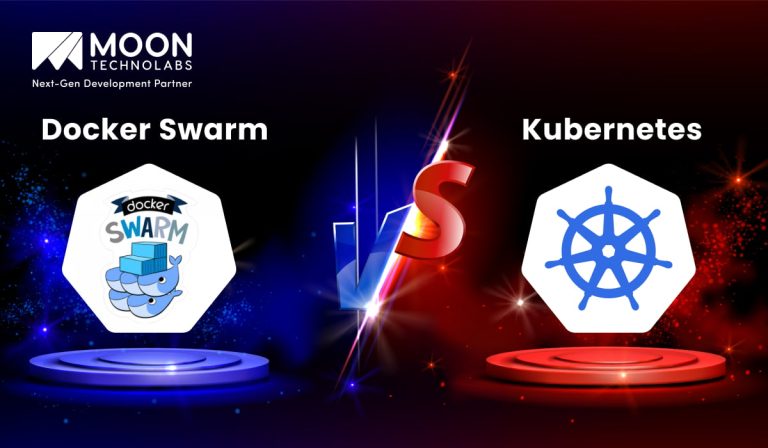
Docker Swarm vs Kubernetes: Which Container Orchestration Tool is Better?

Jayanti Katariya
Last Updated: May 14, 2026 Total View: 169
Still Debating Docker Swarm or Kubernetes?
If you’re unsure which orchestration platform fits your deployment needs, choosing the wrong one can create scaling and maintenance issues later. Get expert guidance before you commit.
- Cluster size & scalability
- Deployment complexity
- Cost & maintenance impact
- Best fit for your workload


As containerized applications become more common, managing them efficiently across multiple servers becomes increasingly important. This is where container orchestration tools come in. Two of the most popular options are Docker Swarm and Kubernetes. Both are designed to deploy, manage, and scale containers, but they differ significantly in complexity, features, and ideal use cases.
If you are comparing Docker Swarm and Kubernetes, the right choice depends on the size of your project, your team’s expertise, and the level of scalability you need. While Docker Swarm is simpler and easier to set up, Kubernetes offers advanced capabilities for large-scale and production-grade environments.
What is Docker Swarm?
Docker Swarm is Docker’s native orchestration tool that allows you to manage multiple Docker containers across several machines. It groups multiple Docker hosts into a cluster, making them appear as a single virtual system.
Docker Swarm is designed to be simple and easy to use. For teams already familiar with Docker, setting up Swarm is relatively straightforward because it uses the same Docker CLI and concepts.
How Does Docker Swarm Work?
Docker Swarm organizes machines into two types of nodes: manager nodes and worker nodes. The manager node controls the cluster, while worker nodes run the containers.
The manager automatically distributes tasks across the cluster. This allows applications to run on multiple servers while still being managed from a single place.
docker swarm init
This command initializes a new Docker Swarm cluster.
Key Features of Docker Swarm
Docker Swarm provides basic orchestration capabilities such as service discovery, load balancing, and scaling. It is tightly integrated with Docker, which makes it easy for developers already using Docker containers.
It also offers a gentler learning curve than Kubernetes. This makes it suitable for smaller teams or projects that do not require highly advanced orchestration features.
What is Kubernetes?
Kubernetes is an open-source orchestration platform designed to automate the deployment, scaling, and management of containerized applications. Originally developed by Google, it has become the industry standard for container orchestration.
Kubernetes is more powerful and feature-rich than Docker Swarm. It is designed for large-scale, distributed systems and can manage thousands of containers across multiple clusters.
How Kubernetes Works?
Kubernetes organizes containers into units called pods, which run on worker nodes inside a cluster. A master node controls scheduling, scaling, and overall cluster management.
Kubernetes continuously monitors the state of the system and ensures that the desired number of containers are running. If a container fails, Kubernetes automatically replaces it.
apiVersion: apps/v1
kind: Deployment
metadata:
name: app
spec:
replicas: 3
This configuration tells Kubernetes to run three instances of an application.
Key Features of Kubernetes
Kubernetes includes advanced features such as self-healing, rolling updates, auto-scaling, and persistent storage management. It also supports service discovery and complex networking configurations.
These capabilities make Kubernetes highly suitable for enterprise-scale applications that require high availability and fault tolerance.
Docker Swarm vs Kubernetes: Core Differences
Docker Swarm and Kubernetes both manage containers, but they differ in their focus and complexity. Docker Swarm emphasizes simplicity and ease of use, while Kubernetes prioritizes flexibility, scalability, and advanced orchestration.
Docker Swarm is easier to set up and manage, whereas Kubernetes provides a more comprehensive solution for large and complex environments.
| Aspect | Docker Swarm | Kubernetes |
|---|---|---|
| Purpose | Simple container orchestration | Advanced container orchestration |
| Setup | Easy and quick | More complex |
| Learning Curve | Beginner-friendly | Steeper |
| Scalability | Suitable for small to medium projects | Suitable for large-scale systems |
| Auto-Scaling | Limited | Advanced built-in support |
| Ecosystem | Smaller | Large and mature |
Docker Swarm vs Kubernetes: Detailed Comparison
To choose the right orchestration tool, it is important to compare them across different factors such as setup, scalability, networking, and fault tolerance.
Ease of Setup
Docker Swarm is easier to set up because it is built directly into Docker. Developers can create a Swarm cluster with just a few commands.
Kubernetes, on the other hand, requires more configuration and setup. Installing and managing a Kubernetes cluster is more complex, especially for beginners.
docker swarm init
This simplicity is one of Docker Swarm’s biggest advantages.
Scalability
Docker Swarm works well for small and medium-sized applications. It can scale services, but its capabilities are limited compared to Kubernetes.
Kubernetes is designed for massive scale. It can manage thousands of containers across multiple clusters and supports automatic scaling based on demand.
Load Balancing
Docker Swarm includes built-in load balancing, making it easy to distribute traffic across containers.
Kubernetes also provides advanced load balancing and service discovery. It offers more flexibility in handling traffic across distributed systems.
Self-Healing
Kubernetes automatically restarts failed containers and replaces unhealthy instances. This ensures that applications remain available even if some components fail.
Docker Swarm offers basic recovery features, but it is not as advanced or flexible as Kubernetes in handling failures.
Networking
Docker Swarm uses a simpler networking model that is easier to configure. This is useful for smaller projects where simplicity is more important than flexibility.
Kubernetes provides more advanced networking capabilities, including custom network policies and service meshes. This makes it better suited for complex microservices environments.
When Should You Use Docker Swarm?
Docker Swarm is a good choice when you need a lightweight orchestration solution with minimal setup. It works well for small teams, simple applications, and environments where ease of use is more important than advanced features.
If your team is already comfortable with Docker and does not require complex orchestration, Docker Swarm can provide a faster and easier solution.
When Should You Use Kubernetes?
Kubernetes is the better option for large-scale, production-grade environments. It is ideal for organizations that need high availability, automatic scaling, and advanced networking.
If your application is expected to grow significantly or requires enterprise-level reliability, Kubernetes is usually the better long-term investment.
Example: Deploying a Service in Docker Swarm
Docker Swarm uses simple commands to deploy services.
docker service create --name web -p 80:80 nginx
This command creates a scalable Nginx service running on port 80.
Example: Deploying a Service in Kubernetes
Kubernetes uses YAML configuration files for deployment.
apiVersion: v1
kind: Service
metadata:
name: web-service
spec:
type: LoadBalancer
This allows more control and flexibility in how services are deployed and managed.
Best Practices for Choosing Between Docker Swarm and Kubernetes
Choosing the right orchestration tool depends on your business goals, team expertise, and infrastructure requirements. Both tools have strengths, but they suit different use cases.
Choose Docker Swarm for Simplicity
If you want a fast and simple orchestration solution, Docker Swarm is the better choice. It is easier to learn and works well for smaller deployments.
Choose Kubernetes for Scalability
If your application requires advanced features and is expected to grow, Kubernetes is the stronger option. Its ecosystem and scalability make it ideal for modern enterprise systems.
Consider Team Skills
Docker Swarm is easier for teams already familiar with Docker. Kubernetes requires more expertise and training but offers more long-term benefits.
How Moon Technolabs Helps with Container Orchestration?
Moon Technolabs helps businesses choose and implement the right orchestration platform based on their project requirements. The team provides support for both Docker Swarm and Kubernetes, ensuring scalable and reliable deployments.
By leveraging modern DevOps practices, organizations can optimize container management and improve overall system performance.
Moon Technolabs helps businesses implement Docker Swarm and Kubernetes solutions for scalable, secure, and efficient cloud-native deployments.
Conclusion
Docker Swarm and Kubernetes are both powerful orchestration tools, but they serve different needs. Docker Swarm is simpler and easier to manage, making it suitable for smaller projects. Kubernetes is more advanced and scalable, making it ideal for enterprise-level environments.
The best choice depends on your project size, complexity, and future growth. By understanding the strengths of each platform, you can select the right solution for your containerized applications.


Jayanti Katariya is the CEO of Moon Technolabs, a fast-growing IT solutions provider, with 18+ years of experience in the industry. Passionate about developing creative apps from a young age, he pursued an engineering degree to further this interest. Under his leadership, Moon Technolabs has helped numerous brands establish their online presence and he has also launched an invoicing software that assists businesses to streamline their financial operations.
Get in Touch With Us
Submitting the form below will ensure a prompt response from us.