IoT Manufacturing Examples: Real-World Applications, Benefits, and Industry Use Cases

All Technologies
Last Updated: Jul 31, 2026 Total View: 87
Ready to Modernize Your Manufacturing with IoT?
If you’re exploring IoT for manufacturing but unsure which solutions deliver real value, the right implementation can improve productivity, reduce downtime, and streamline factory operations.
- Predictive maintenance systems
- Real-time asset monitoring
- Smart factory automation
- Production performance insights


The Internet of Things (IoT) is transforming the manufacturing industry by connecting machines, sensors, equipment, and production systems to collect and analyze real-time data. By enabling continuous monitoring, predictive analytics, and automation, IoT helps manufacturers improve productivity, reduce downtime, optimize energy consumption, and enhance product quality.
From smart factories and predictive maintenance to automated inventory management and worker safety monitoring, IoT is becoming a core component of Industry 4.0. Manufacturers across automotive, electronics, pharmaceuticals, food processing, aerospace, and heavy industries are leveraging IoT to make data-driven decisions and streamline operations.
In this guide, we’ll explore the top IoT manufacturing examples, how they work, their benefits, implementation challenges, and the technologies driving smart manufacturing.
What is IoT in Manufacturing?
The Internet of Things (IoT) in manufacturing refers to a network of connected devices, machines, sensors, and industrial equipment that communicate over the internet or private industrial networks.
These connected devices continuously collect operational data such as:
- Machine temperature
- Vibration
- Pressure
- Humidity
- Energy consumption
- Production output
- Equipment status
The collected data is analyzed using AI, machine learning, and analytics platforms to improve manufacturing efficiency and automate decision-making.
How IoT Works in Manufacturing?
A typical IoT manufacturing solution follows this workflow:
Industrial Sensors & Machines
│
▼
Real-Time Data Collection
│
▼
IoT Gateway / Edge Devices
│
▼
Cloud Platform / Industrial IoT Platform
│
▼
AI & Analytics Engine
│
▼
ERP / MES / SCADA / Dashboard
│
▼
Alerts • Reports • Automation
The system continuously monitors production environments and provides actionable insights to factory managers and operators.
Top IoT Manufacturing Examples
IoT is used throughout manufacturing operations, from production lines and warehouses to quality control and supply chain management. Below are some of the most impactful applications.
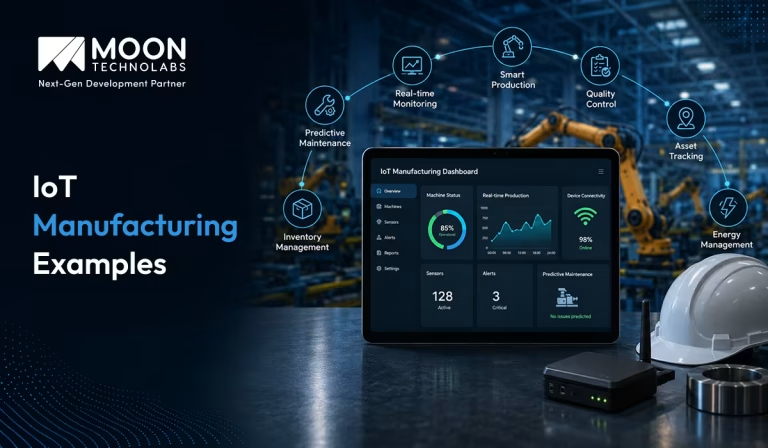
Predictive Maintenance
Unexpected equipment failures can halt production and increase maintenance costs. IoT sensors monitor machine health by tracking parameters such as vibration, temperature, pressure, and motor current.
When abnormal patterns are detected, maintenance teams receive alerts before a breakdown occurs.
Benefits
- Reduced unplanned downtime
- Lower maintenance costs
- Longer equipment lifespan
- Improved production efficiency
Smart Factory Automation
IoT enables machines, robots, and production systems to communicate and coordinate automatically.
Examples include:
- Automated assembly lines
- Robotic material handling
- Production scheduling
- Machine-to-machine (M2M) communication
- Automated workflow optimization
This improves throughput while reducing manual intervention.
Real-Time Equipment Monitoring
Manufacturers can continuously monitor machine performance using connected sensors.
The system tracks:
- Machine utilization
- Operating temperature
- Runtime
- Production speed
- Equipment status
Managers gain instant visibility into factory operations through centralized dashboards.
Asset Tracking
Factories often manage thousands of valuable tools, machines, pallets, and vehicles.
IoT devices such as RFID tags, BLE beacons, GPS trackers, and UWB sensors provide real-time asset location and movement history.
Benefits
- Faster asset retrieval
- Reduced equipment loss
- Better inventory visibility
- Improved operational efficiency
Inventory Management
IoT automates inventory monitoring by tracking raw materials, work-in-progress items, and finished goods.
Sensors and smart shelves can detect:
- Stock levels
- Material movement
- Storage conditions
- Inventory shortages
Automated alerts help prevent production delays caused by material shortages.
Energy Management
Manufacturing facilities consume significant amounts of electricity, gas, and water.
IoT energy monitoring systems track consumption in real time and identify inefficiencies.
Common applications include:
- Power monitoring
- HVAC optimization
- Lighting automation
- Compressed air monitoring
- Peak demand management
This helps reduce operational costs and supports sustainability initiatives.
Quality Control
IoT devices continuously monitor production conditions that affect product quality.
Examples include:
- Temperature
- Humidity
- Pressure
- Machine calibration
- Process consistency
When measurements exceed predefined thresholds, the system immediately alerts operators to minimize defects.
Worker Safety Monitoring
Connected wearables and environmental sensors help improve workplace safety.
Applications include:
- Helmet sensors
- Smart safety vests
- Gas leak detection
- Heat stress monitoring
- Fall detection
- Restricted area alerts
These systems enable faster emergency response and help reduce workplace accidents.
Cold Chain Monitoring
Manufacturers in pharmaceutical and food industries rely on IoT to maintain proper storage conditions.
Sensors monitor:
- Temperature
- Humidity
- Refrigeration performance
- Transportation conditions
If values move outside acceptable ranges, alerts are sent immediately.
Supply Chain Visibility
IoT extends beyond the factory floor by providing visibility across the supply chain.
Manufacturers can monitor:
- Shipment locations
- Delivery status
- Warehouse conditions
- Transportation delays
- Product handling
Real-time insights improve logistics planning and customer service.
Remote Equipment Monitoring
Manufacturers operating equipment at customer sites or remote facilities can monitor machine health without on-site inspections.
Technicians receive alerts for abnormal behavior and can often diagnose issues remotely before dispatching service teams.
Digital Twin Implementation
IoT data powers digital twins—virtual representations of physical machines or production lines.
Digital twins allow manufacturers to:
- Simulate production
- Test process improvements
- Predict equipment failures
- Optimize maintenance schedules
This reduces operational risks before implementing changes in the real environment.
Smart Warehouse Management
IoT automates warehouse operations through connected devices and sensors.
Applications include:
- Automated inventory counting
- Warehouse climate monitoring
- Smart forklifts
- Location tracking
- Picking optimization
This increases warehouse efficiency while reducing manual errors.
Environmental Monitoring
Manufacturers must monitor environmental conditions to protect both products and employees.
IoT sensors track:
- Air quality
- Dust levels
- Noise
- Temperature
- Humidity
- Water leakage
Continuous monitoring supports regulatory compliance and workplace safety.
Production Line Optimization
IoT provides real-time production analytics to identify bottlenecks and inefficiencies.
Manufacturers can analyze:
- Machine cycle times
- Downtime
- Throughput
- Production rates
- OEE (Overall Equipment Effectiveness)
These insights support continuous improvement initiatives.
Real-World IoT Manufacturing Examples
| Industry | IoT Application |
|---|---|
| Automotive | Robotic assembly monitoring |
| Food & Beverage | Cold storage monitoring |
| Pharmaceuticals | Environmental condition monitoring |
| Electronics | Automated production tracking |
| Textile | Machine performance monitoring |
| Aerospace | Predictive aircraft component manufacturing |
| Heavy Equipment | Fleet and equipment monitoring |
| Chemical Manufacturing | Tank pressure and leak monitoring |
| Packaging | Smart conveyor monitoring |
| Steel Manufacturing | Furnace temperature monitoring |
Benefits of IoT in Manufacturing
Implementing IoT delivers measurable improvements across manufacturing operations.
Key benefits include:
- Reduced equipment downtime
- Increased production efficiency
- Improved product quality
- Lower maintenance costs
- Better worker safety
- Real-time production visibility
- Enhanced supply chain management
- Reduced energy consumption
- Improved inventory accuracy
- Faster decision-making
Technologies Used in IoT Manufacturing
Modern IoT manufacturing platforms combine multiple technologies.
| Technology | Purpose |
|---|---|
| IoT Sensors | Data collection |
| Edge Computing | Local data processing |
| Industrial IoT (IIoT) Platforms | Device management |
| AI & Machine Learning | Predictive analytics |
| Cloud Computing | Centralized storage and analytics |
| Digital Twins | Virtual asset simulation |
| RFID | Asset tracking |
| BLE Beacons | Indoor positioning |
| Computer Vision | Quality inspection |
| SCADA | Industrial monitoring |
| MES | Manufacturing execution management |
| ERP Integration | Business operations |
How Moon Technolabs Helps with IoT Manufacturing Solutions?
Moon Technolabs develops end-to-end IoT manufacturing solutions that enable smart factories, predictive maintenance, connected equipment, real-time production monitoring, and intelligent asset management. Our experts integrate IoT devices, cloud platforms, AI, machine learning, and industrial systems such as ERP, MES, and SCADA to deliver scalable, secure, and data-driven manufacturing solutions.
Whether you’re modernizing legacy production lines, improving operational efficiency, or implementing Industry 4.0 initiatives, Moon Technolabs helps design and deploy customized IoT solutions tailored to your manufacturing environment and business goals.
We develop custom IoT manufacturing solutions that enable real-time monitoring, predictive maintenance, automation, and data-driven decision-making.
Conclusion
IoT is revolutionizing manufacturing by connecting machines, sensors, and production systems to deliver real-time insights, automation, and predictive intelligence. From predictive maintenance and smart factory automation to energy management, quality control, and digital twins, IoT enables manufacturers to improve productivity, reduce costs, and increase operational resilience.
As Industry 4.0 continues to evolve, organizations that adopt scalable IoT solutions and integrate them with AI, cloud computing, and existing enterprise systems will be better positioned to optimize production, respond to changing market demands, and maintain a competitive advantage.

Our technology team brings together professionals with diverse backgrounds in development, cloud, data, AI, and software engineering. With expertise across modern programming languages, frameworks, platforms, and digital solutions, we create practical content that simplifies complex technical topics. From troubleshooting development errors to understanding emerging technologies, our team shares reliable insights that help developers, businesses, and technology enthusiasts make informed decisions and solve real-world challenges.
Get in Touch With Us
Submitting the form below will ensure a prompt response from us.