Computer Vision Retail Use Cases: Applications, Benefits, and Real-World Examples

Mobile App Development Team
Last Updated: Jul 31, 2026 Total View: 84
Planning Computer Vision for Retail?
If you’re exploring computer vision for retail but unsure where to start, choosing the right use case can maximize ROI. Build smarter shopping experiences with an AI strategy tailored to your business.
- Smart inventory tracking
- Automated checkout solutions
- Shelf & product monitoring
- Customer behavior insights


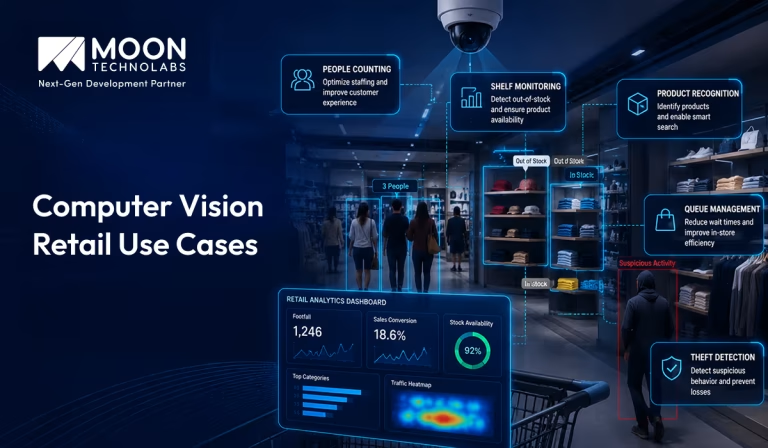
Computer vision is transforming the retail industry by enabling stores to “see” and understand what’s happening through cameras and AI-powered image analysis. From cashier-less checkout systems to smart inventory management and customer behavior analysis, computer vision helps retailers automate operations, reduce losses, improve shopping experiences, and make data-driven business decisions.
As customer expectations continue to evolve, retailers are adopting computer vision to streamline store operations, enhance security, optimize shelf management, and personalize shopping experiences. Combined with artificial intelligence (AI), machine learning (ML), and IoT devices, computer vision is becoming a key technology in modern retail.
In this guide, we’ll explore the top computer vision retail use cases, their benefits, implementation challenges, technologies involved, and how retailers can leverage computer vision to improve operational efficiency and customer satisfaction.
What is Computer Vision in Retail?
Computer vision is a branch of artificial intelligence that enables computers to interpret and analyze images and video captured by cameras.
In retail, computer vision systems continuously monitor stores, products, shelves, customers, and employees to automatically detect events, recognize objects, and generate actionable insights without human intervention.
For example, computer vision can:
- Detect empty shelves
- Count customer foot traffic
- Identify products
- Monitor checkout lines
- Prevent theft
- Analyze shopping behavior
- Track inventory automatically
Instead of manually reviewing security footage or conducting inventory checks, retailers receive real-time insights generated by AI-powered vision systems.
How Does Computer Vision Work in Retail?
A typical computer vision retail solution follows these steps:
Store Cameras
│
▼
Image & Video Capture
│
▼
AI Vision Model
(Object Detection, Recognition, Tracking
│
▼
Data Processing & Analytics
│
▼
Retail Dashboard / POS / ERP Integration
│
▼
Alerts & Automated Actions
The system analyzes live video streams using deep learning models and sends valuable insights to business applications such as inventory management systems, POS software, CRM platforms, and retail analytics dashboards.
Top Computer Vision Retail Use Cases
Computer vision is being applied across almost every retail operation. From the sales floor to warehouse management, these AI-powered systems improve efficiency while reducing operational costs.
Below are some of the most impactful use cases.
Smart Shelf Monitoring
Retail shelves frequently experience stock-outs, misplaced products, and incorrect pricing.
Computer vision continuously monitors shelves using cameras to detect:
- Empty shelves
- Low stock
- Wrong product placement
- Missing price tags
- Promotional compliance
Store employees receive instant alerts, allowing them to restock products before customers encounter empty shelves.
Benefits
- Better product availability
- Reduced lost sales
- Improved merchandising
- Faster replenishment
Automated Inventory Management
Manual inventory counting is time-consuming and prone to errors.
Computer vision automates inventory tracking by recognizing products through shelf cameras, warehouse cameras, or mobile scanning devices.
Retailers can:
- Count products automatically
- Monitor stock levels
- Detect inventory discrepancies
- Improve warehouse accuracy
- Reduce manual labor
This enables near real-time inventory visibility across stores.
Cashier-less Checkout
One of the most well-known computer vision applications is cashier-less shopping.
Customers simply:
- Walk into the store
- Pick up products
- Leave the store
The AI system automatically identifies selected items and charges the customer through their registered payment method.
The system combines:
- Computer vision
- Sensor fusion
- Product recognition
- Customer tracking
- AI algorithms
Benefits
- No checkout queues
- Faster shopping
- Reduced staffing costs
- Improved customer experience
Customer Foot Traffic Analysis
Retailers need to understand how customers move throughout the store.
Computer vision tracks anonymous customer movement to identify:
- High-traffic areas
- Low-performing sections
- Popular entrances
- Customer flow
- Dwell time
These insights help optimize store layouts and product placement.
Customer Behavior Analytics
Beyond counting visitors, computer vision can analyze shopping behavior.
Retailers can measure:
- Product interactions
- Time spent in aisles
- Purchase intent signals
- Browsing patterns
- Conversion rates
These analytics help improve merchandising strategies and promotional campaigns.
Queue Management
Long checkout lines often lead to abandoned purchases and lower customer satisfaction.
Computer vision continuously monitors checkout counters and estimates:
- Queue length
- Average waiting time
- Customer count
- Checkout congestion
When queues exceed predefined thresholds, managers receive alerts to open additional checkout counters.
Theft Prevention and Loss Detection
Retail shrinkage remains a major challenge for retailers.
Computer vision can identify suspicious activities such as:
- Concealing merchandise
- Unauthorized access
- Suspicious customer behavior
- Restricted area violations
- Employee policy violations
Instead of replacing security staff, AI assists by highlighting unusual events for review.
Product Recognition
Retailers can automatically recognize products without relying solely on barcodes.
Applications include:
- Self-checkout
- Inventory counting
- Warehouse automation
- Smart vending machines
- Product search
Advanced image recognition models can identify products based on appearance, packaging, and labels.
Personalized Customer Experiences
With appropriate user consent and privacy safeguards, retailers can integrate computer vision with loyalty programs and customer data to deliver personalized experiences.
Examples include:
- Personalized offers
- Digital signage recommendations
- Product suggestions
- Loyalty rewards
- Smart shopping assistance
Retailers should ensure compliance with applicable privacy laws and clearly communicate how customer data is used.
Store Compliance Monitoring
Retail chains need consistent store operations.
Computer vision helps verify:
- Promotional displays
- Shelf arrangement
- Store cleanliness
- Employee safety compliance
- Brand guidelines
Managers receive reports showing whether each store follows company standards.
Warehouse Automation
Distribution centers use computer vision to improve logistics.
Applications include:
- Package identification
- Barcode recognition
- Sorting automation
- Pallet inspection
- Damage detection
This increases fulfillment speed while reducing operational errors.
Fresh Produce Quality Inspection
Grocery retailers can use computer vision to inspect fruits and vegetables.
The AI system can identify:
- Ripeness
- Color consistency
- Surface defects
- Damage
- Spoilage
This helps reduce food waste while improving product quality.
Smart Shopping Carts
Modern shopping carts equipped with cameras and AI can recognize products as customers add them.
Features include:
- Automatic item recognition
- Running total calculation
- Digital payment
- Shopping recommendations
- Store navigation
These systems provide a more convenient shopping experience.
Employee Productivity Monitoring
Computer vision can assist managers in understanding operational workflows by measuring activities such as shelf restocking, checkout utilization, and task completion. When used, organizations should implement it transparently, respect employee privacy, and comply with labor laws and workplace policies.
Visual Search
Customers can upload a product image through a retailer’s mobile app to find visually similar products.
Computer vision analyzes:
- Shape
- Color
- Style
- Brand features
- Product category
Visual search improves product discovery and supports omnichannel shopping experiences.
How Moon Technolabs Helps with Computer Vision Retail Solutions?
Moon Technolabs develops AI-powered computer vision solutions tailored for retail businesses, helping automate inventory management, shelf monitoring, customer analytics, warehouse operations, and intelligent checkout experiences. Our team combines computer vision, machine learning, cloud computing, and edge AI to build scalable solutions that integrate seamlessly with existing retail systems such as POS, ERP, CRM, and inventory platforms.
Whether you’re looking to reduce operational costs, improve inventory accuracy, enhance customer experiences, or gain real-time insights into store performance, Moon Technolabs delivers customized computer vision solutions designed to support your retail transformation.
We build AI-powered computer vision solutions for retailers to automate operations, improve customer experiences, and optimize inventory with real-time insights.
Conclusion
Computer vision is reshaping the retail industry by enabling stores to automate routine tasks, improve operational visibility, and deliver more seamless customer experiences. From smart shelf monitoring and automated inventory management to cashier-less checkout, theft prevention, and customer behavior analytics, retailers can leverage AI-powered vision systems to optimize nearly every aspect of their operations.
As camera technology, edge computing, and deep learning models continue to evolve, computer vision will play an increasingly important role in creating intelligent, data-driven retail environments. By starting with high-impact use cases, integrating with existing business systems, and maintaining strong privacy and governance practices, retailers can unlock long-term value while staying competitive in an increasingly digital marketplace.

The Mobile App Development Team at Moon Technolabs shares expertise gained from building mobile applications across diverse industries and platforms. From user experience and app architecture to emerging mobile technologies, the team provides valuable insights, best practices, and practical perspectives to help businesses succeed in the evolving mobile landscape.
Get in Touch With Us
Submitting the form below will ensure a prompt response from us.