
Jayanti Katariya
Last Updated: December 08, 2025 Total Views: 2906
Table of Content


Blog Summary:
This is a short guide to help CTOs, CEOs, CFOs, and tech decision-makers understand the secrets of successful app monetization. It delves into 15 crucial strategies and best practices essential for optimizing revenue while maintaining user satisfaction. You’ll have hands-on knowledge of the dynamic landscape of mobile app monetization needed to stay ahead in the competitive market.
Table of Content
Each organization aims to achieve user satisfaction through mobile app monetization as the pinnacle. If we look at it, it’s very similar to climbing up Maslow’s hierarchy of needs. Crafting a groundbreaking app idea is only the first layer on this hierarchical journey.
Much like a solid app foundation for the self-actualization phase, where the app needs continuous improvement and innovation, each step is crucial and must be fulfilled.
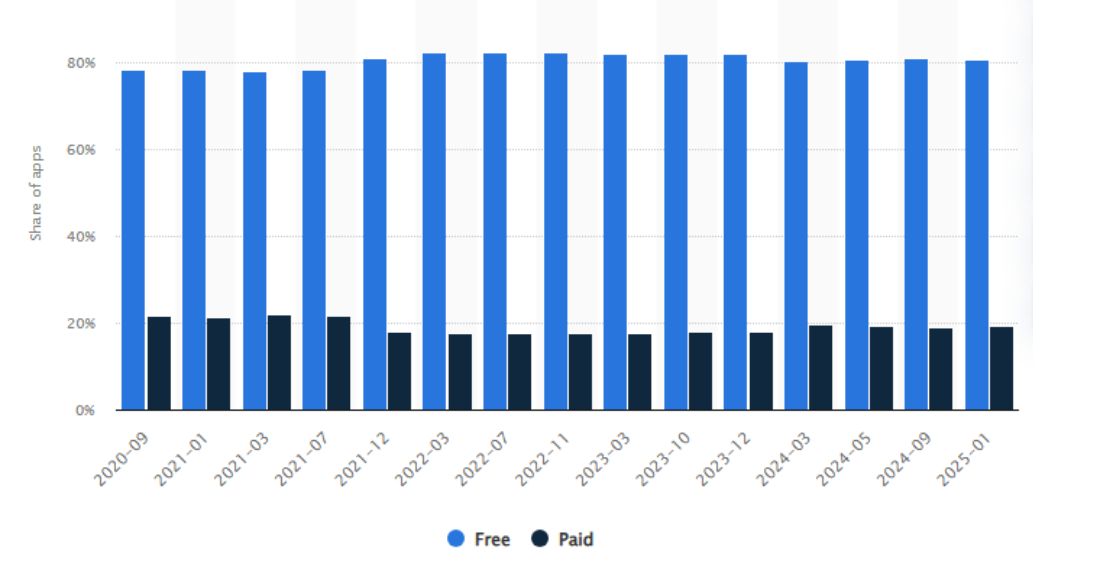
However, the challenge lies in mastering the art of generating a revenue stream. Why? Well, because free mobile apps have consistently outperformed paid apps in both downloads and profits.
In fact, 97% of apps on the Play Store and 95% on the App Store are available for free download. So, the big question is, how do free apps help businesses make money to survive in the market?
This blog will unravel the answer to this question and will help decision-makers realize the critical importance of app monetization.
When the App Store launched, there were only two ways to generate revenue: in-app purchases and sales revenue from app sales. However, only 5% of people contributed towards it. For the same reason, in-app advertising emerged.
The earlier landscape of monetizing mobile apps focused solely on in-app ads. However, current monetization models are hybrid, with organizations combining in-app ads and in-app purchases (IAP) to increase the lifetime value (LTV) of their apps.
Learning which monetization will suit your organization takes time. However, incorporating a monetization strategy at the earliest stages of planning is crucial.
The top four current monetization models are:
In a market where user attention spans are fleeting, your mobile app monetization strategy should aim to fulfill both users’ and the app’s needs. Let us explore what the advertising scenario in the stores looks like through the following interesting facts:
Solve all your app monetization problems. Consult with our experts for a tailored strategy.
Start Smart App Monetization
Mobile app monetization strategies encompass a range of methods to generate revenue. Common approaches include in-app purchases, where users buy premium features or virtual goods, and advertising, incorporating non-intrusive ads.
Subscription models and freemium structures offer additional options, ensuring developers balance user satisfaction with sustainable income streams for their apps.
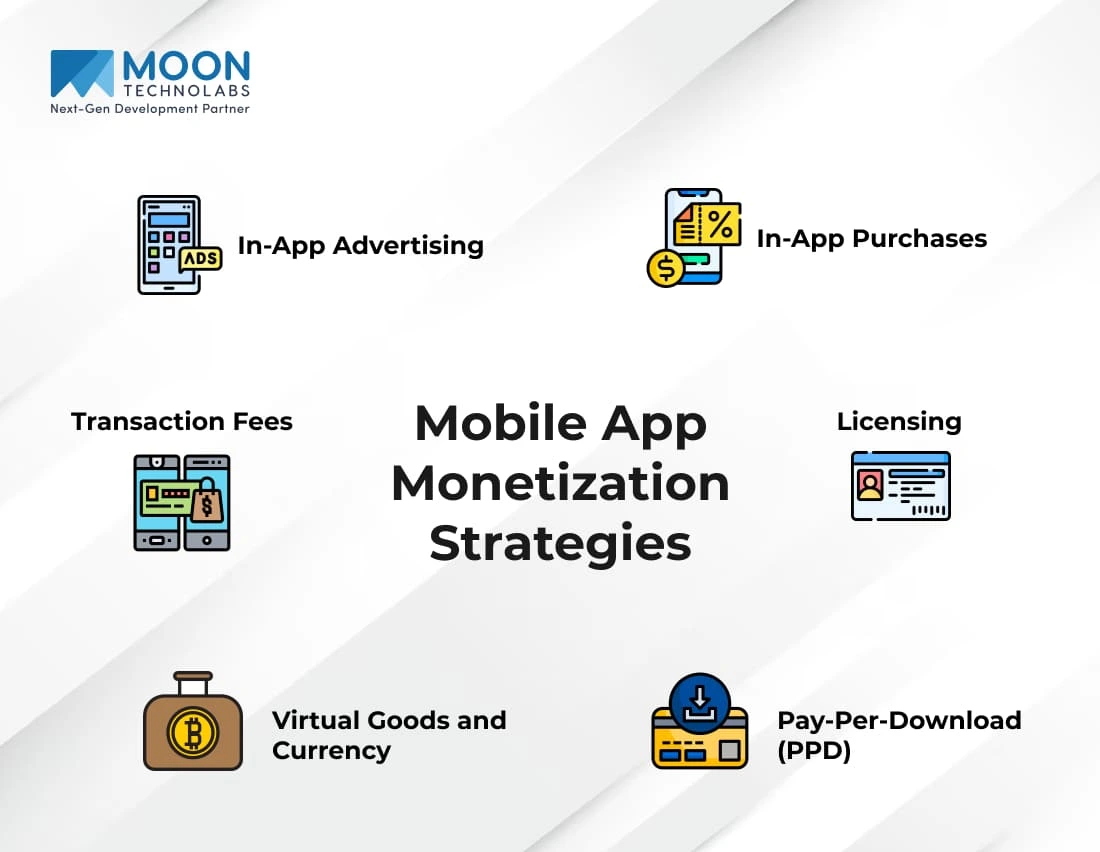
Let us explore the strategies available in detail:
In-app advertising seamlessly integrates ads within the app interface to generate revenue. This method strategically places advertisements, ensuring they complement rather than disrupt the user experience. By opting for non-intrusive formats and relevant content, app development experts strike a balance between user engagement and income generation.
In-app advertising proves effective in reaching a broad audience, offering advertisers a platform to showcase their products or services while providing users with a free or subsidized app experience. The success lies in delivering compelling ad content without compromising the app’s functionality or user satisfaction.
The freemium model is one of the most popular monetization models for mobile apps. It allows developers to offer a basic version of their app for free while providing an option to access premium features through in-app purchases. This approach allows a broad user base to experience the app’s core functionalities without upfront costs.
Users can choose to enhance their experience by purchasing additional features, creating a flexible revenue stream for developers. The freemium model thrives on striking a balance between providing value to free users and offering enticing premium features for those willing to invest in an enhanced app experience.
Under the In-app purchases model for mobile app monetization, users can buy virtual goods, premium features, or additional content within a mobile app. The model is best suited to enhancing user engagement and satisfaction, as individuals can tailor their app experience to their personal preferences.
App advertising experts offer a range of enticing items or functionalities for purchase, creating a direct revenue stream. In-app purchases are widely used across app categories, from gaming to productivity, contributing to app success. By providing users with a personalized and enhanced experience, it also serves as a powerful revenue stream for developers.
This monetization model is the most sustainable, as users pay recurring fees. The specified intervals are often monthly or annually to access premium content, features, or services within a mobile app.
This strategy provides developers with a consistent, predictable income stream. Users benefit from continuous access to high-value content besides achieving higher mobile app security, creating a win-win scenario.
Popular in content streaming, news, and productivity apps, as well as for developing OTT applications, subscription-based monetization encourages user loyalty and supports ongoing app development. This ensures that developers can deliver quality experiences and updates over an extended period.
Sponsorships and partnerships are lucrative avenues for app monetization, where companies pay to associate with the app and leverage its user base for promotional initiatives. By seamlessly integrating brand offerings, developers create an additional revenue stream while enhancing user engagement.
Sponsorships and partnerships are versatile and applicable across diverse app genres, providing brands with a targeted platform to showcase products or services. This model fosters mutually beneficial relationships, offering developers financial support and brand access to a curated audience.
Virtual goods and currency provide users with tangible benefits, making this model effective for both entertainment and utility-driven apps. Under this monetization strategy, users purchase digital items or in-app currency to enhance their mobile app experience.
It is highly prevalent in gaming and virtual marketplaces, allowing users to buy items that they can customize within the app. On the other hand, developers benefit by creating an additional revenue stream and improving user engagement by unlocking special features, customizing avatars, or accelerating in-game progress.
User-generated content is a crucial app monetization solution that leverages content created by app users to generate revenue. Platforms that employ this strategy often incorporate ads or offer premium subscriptions, capitalizing on their user base’s engagement and creativity.
Users’ contributions, whether in the form of videos, articles, or other content, become valuable assets for the app’s revenue generation. Developers can create a sustainable model where user-generated content becomes a driving force for engagement and income.
They can achieve this by providing a platform for user expression and implementing monetization strategies earlier in the mobile app development lifecycle.
Affiliate marketing enables apps to earn commissions by promoting external products or services. Developers integrate unique affiliate links or codes within the app, and when users make purchases through these links, the app receives a predetermined percentage of the sale.
This performance-based model is a huge part of app monetization solutions that benefit both parties. On the one hand, app developers earn revenue from successful referrals, while affiliate partners gain increased exposure and potential sales. It aligns user interests with external offerings, creating a dynamic revenue stream through collaborative marketing efforts.
Pay-per-download (PPD) is a direct app monetization model in which users pay a one-time fee to download the app. This straightforward approach ensures developers receive immediate revenue with each app installation.
PPD is a part of such a mobile app architecture that eliminates the need for ongoing transactions or subscriptions, making it a simple and effective way to generate income. Users pay a predefined fee, often upfront, to access the app’s features, content, or functionalities.
This model caters to a broad audience, offering a clear value proposition and straightforward financial transactions for both developers and users.
Data monetization involves leveraging user data obtained with consent for various purposes that generate revenue. Here, app development experts analyze and utilize this data for targeted advertising, analytics, or even selling anonymized insights. This strategy turns user data into a valuable asset, boosting the app’s overall income.
While respecting privacy regulations and ensuring user consent, data monetization allows developers to unlock additional revenue streams beyond the app’s primary functionalities. By ethically harnessing user insights, apps can provide personalized experiences while creating a sustainable financial model through data-driven strategies.
App advertising experts use this strategy, in which different apps promote each other within their user bases. This mutually beneficial approach increases visibility and drives user acquisition without requiring direct financial transactions. Apps strategically display promotions or links to partner apps, leveraging their existing user trust to encourage downloads or engagement.
Cross-promotion can be a cost-effective way to foster community growth and enhance the overall user experience. By aligning with complementary apps, developers create a network effect that amplifies user reach and strengthens the app ecosystem.
Email marketing is a targeted strategy for app development services in which apps leverage their email lists to deliver personalized, engaging promotional content to users. This direct communication channel drives user engagement, encourages app-related activities, and creates revenue opportunities.
Developers design email campaigns that highlight new features, promotions, or exclusive content, fostering a sense of community and user loyalty. Email marketing is a powerful tool for maintaining user interest by providing valuable updates.
It strategically promotes app-related offerings to a receptive audience, contributing to sustained app success.
Rewarded ads and offer walls constitute voluntary user interaction with advertisements to earn in-app rewards. Users choose to watch ads, complete offers, or engage with sponsored content in exchange for virtual currency, premium features, or other incentives.
This value exchange benefits both users and advertisers: users gain rewards, while advertisers achieve greater visibility. It is an effective strategy that enhances user engagement.
Highly prevalent in gaming and content-focused apps, it aims to balance revenue generation with user satisfaction.
In-app events and tickets allow users to pay for exclusive experiences or access to special events within the app. This strategy introduces a new revenue stream by offering users opportunities to participate in premium in-app events or unlock exclusive content through purchased tickets.
Developers curate captivating experiences, ensuring users find value in the events or content tied to these tickets. This model enhances user engagement and exclusivity and provides developers with a dynamic approach to generating revenue beyond traditional methods.
This model gives users access to exclusive or advanced features within the app. Developers offer a free version of the app with basic functionalities and entice users to upgrade by purchasing premium content. It caters to diverse user preferences, allowing them to customize their experience based on individual needs.
By providing valuable content behind a paywall, developers create a direct revenue stream while maintaining a free option for users, striking a balance between accessibility and enhanced offerings.
Stay ahead in the game by choosing the ideal monetization strategy for sustained profitability.
Talk to a Monetization Expert
Monetizing a mobile app is a tricky balance to achieve. Organizations should understand that monetization isn’t just about making money but also about providing an app experience that generates revenue.
The biggest challenge they face is choosing the right monetization model and strategy to deliver continuous results. To achieve this, there must be active participation from the end-users. Moreover, over time, user retention tends to decrease, which can hamper the acquisition of relevant app users.
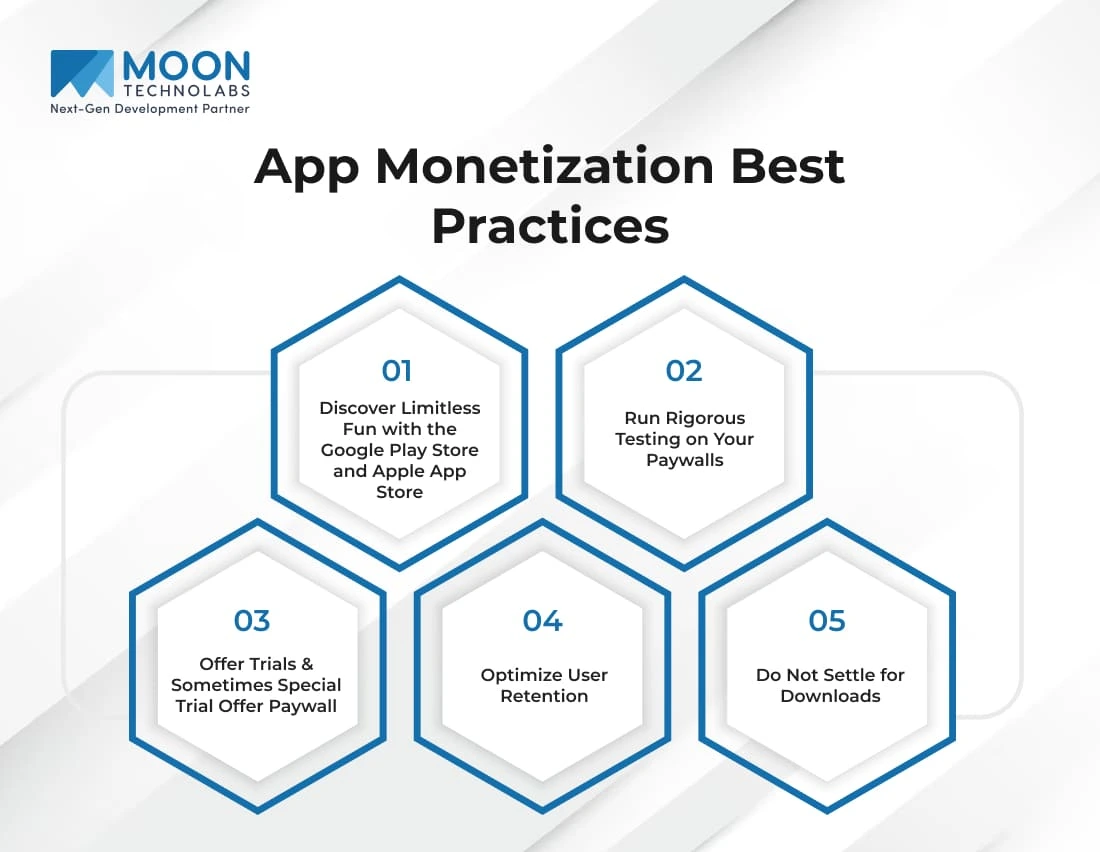
Here are some best practices that they can adopt:
In the coming years, establishing user identity will be one of the most important aspects for organizations venturing into mobile app monetization. Since Apple introduced limitations on Identifier for Advertisers (IDFA) guidelines, segmentation, ad-targeting, and attribution have been affected.
Moreover, developers have seen a 52% decrease in their advertising revenues. Users without IDFA generate up to 85% of the average revenue per user (ARPU), but this drops to 35% among iOS users.
Developers should give more thought to choosing an advertising partner or look for app monetization consulting services. Generally, they choose one and stick with it, which often results in lost app revenue.
The mobile app market is a huge segment, so different SDKs generate different revenue. Some SDKs would drive better revenue, while others would drive better CTRs.
A good practice in this case is to experiment with additional plug-in SDKs. Plus, they should research each audience segment and the specific market to identify SDKs that can help them achieve higher revenue.
Developers and marketers should consider adopting an in-app purchase model during development. It will help them map out a roadmap for the app’s monetization and will save resources down the line. A good copy can work wonders to increase engagement by giving it a name unique to your brand.
Another way is to introduce in-app bundle offers for multiple items at a lower price. Lastly, using automation tools to monetize mobile apps will help you move your users down the funnel by introducing push notifications, in-app messages, and emails.
A crucial part of optimizing your app strategy is always to keep tracking essential metrics.
These include:
Navigating the intricacies of app monetization can be smoother when you have the right partner by your side. Monetization has become crucial because most users today prefer downloading free apps.
Hence, generating revenue after installation is a requirement for survival in the market. Fortunately, users are willing to pay for an enhanced experience if they find the app’s premium content engaging enough.
Choose Moon Technolabs to navigate such an intricate world of app monetization. Our experts empower decision-makers to transform their apps into lucrative ventures.
We provide consultation on whether you need in-app advertising, freemium models, or subscription-based monetization. Focusing on user satisfaction and revenue optimization ensures a balanced approach that allows businesses to thrive in the dynamic app market.
01
02
03
04
05

Jayanti Katariya is the CEO of Moon Technolabs, a fast-growing IT solutions provider, with 18+ years of experience in the industry. Passionate about developing creative apps from a young age, he pursued an engineering degree to further this interest. Under his leadership, Moon Technolabs has helped numerous brands establish their online presence and he has also launched an invoicing software that assists businesses to streamline their financial operations.


Submitting the form below will ensure a prompt response from us.
We refine our expertise to deliver innovative business solutions.





500 N Michigan Avenue, #600, Chicago IL 60611
13500 Long Is Dr, Pflugerville, TX 78660, USA

C-105, Ganesh Meridian, S.G. Highway, Ahmedabad, GJ 380060


Ayse D.
Co-Founder France
“ I highly recommend Moon Technolabs as the quality of service is wonderful. We have hired this company to develop the product based on some complex & technical issues. We get the best quality services as compared with others in the market. Huge Thanks to Moon Technolabs as the team is always ready to give the solution all time.”

Justin G.
Founder & CEO USA
USA“ Moon Technolabs is a pioneer in the WebRTC based project as they have fixed complicated segments of the module by fulfilling different product lines by providing 24X7 customer support. We really recommended Moon Technolabs as they are able to develop products as per the module deadline and project timeline.”

Flavio S.
Founder & Managing Director Germany
“I am happy to recommend Moon Technolabs for their app development services. They successfully developed apps for me, and I am highly satisfied with the overall outcomes. The development team has swiftly addressed the issues with responsive and effective communication to understand the requirement quickly and actively resolve the back-and-forth problems that arose...”

Jay M.
Founder & CEOUSA“Moon Technolabs is the best company that provides advanced apps and websites development services in the USA and Europe. I am a newbie to develop my app with an external team. I am really happy to work with them as I am not that much mobile apps user. Here, the team and specially the CEO of Moon Technolabs helps me to let me know about the benefits of my app to generate revenue....”


Our Offices
India
C-105, Ganesh Meridian, S.G. Highway, Ahmedabad, GJ 380060USA
500 N Michigan Avenue, #600, Chicago IL 60611Contact Information


