
Jayanti Katariya
Last Updated: February 27, 2026 Total Views: 82
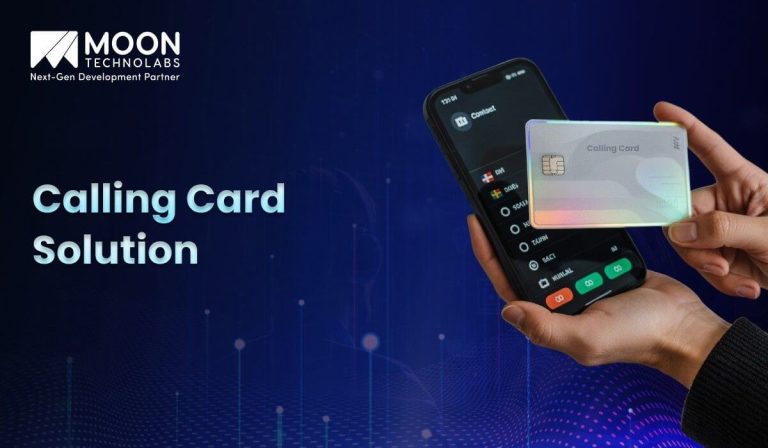
Table of Content


Blog Summary:
This blog post explains everything you need to know about a calling card solution, including its importance, types, features, and more. It provides a complete list of the most popular calling card solutions along with their pros and cons. Keep reading to find the right solution for your business.
Table of Content
Telecom operators and VoIP providers often face challenges such as revenue leakage, billing inaccuracies, increased fraud risk, and inconsistent call routing. These operational gaps directly affect service reliability and, ultimately, profitability.
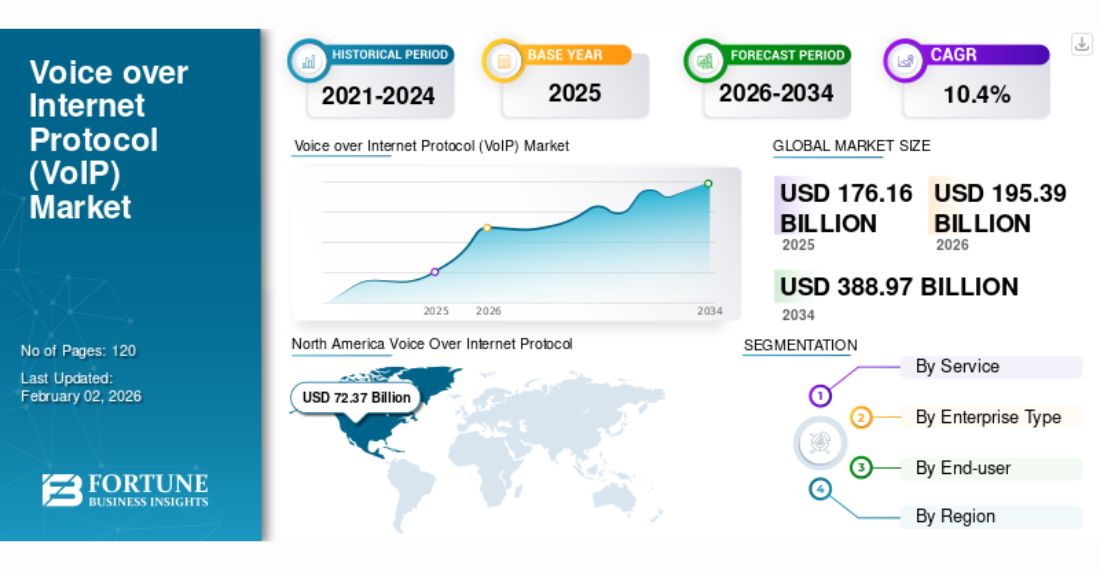
At the same time, the demand for both internet-based and prepaid calling services is surging, driven by the growing global VoIP market, which is likely to grow at a CAGR of 10.4% (Fortune Business Insights) from 2026 to 2034. So, the growing market brings a vast revenue opportunity for businesses having the right systems. In this case, a calling card solution emerges as a good option for them.
It’s much more than just a PIN-based calling system, which has become a strategic platform for real-time billing control, intelligent routing, revenue assurance, and scalable service delivery. In this guide, we will discuss calling card solutions in more detail. Let’s explore now.
Well, a calling card solution is a postpaid telecommunications system that is widely used by businesses. It’s available as both prepaid and postpaid. And allows businesses to make both domestic and international calls using virtual access credentials and a unique PIN.
Previously available as a physical card, it’s now issued with a cloud infrastructure and VoIP. It facilitates businesses with call routing, balance management, and billing. The Calling Card Solution is most commonly used by telecom operators, businesses, and service providers. They use it for cost-effective international calling services with flexible pricing models.
Calling card solutions can integrate authentication, IVR, real-time billing, and fraud-prevention mechanisms. These are necessary for scalable, secure, and revenue-driven communication services.
Selecting the best calling card solution directly impacts customer experience, revenue, and long-term business sustainability. Besides, the right selection also matters a lot for the following reasons:
A cutting-edge and powerful calling card solution offers transparent rate management, real-time balance deduction, precise call duration tracking, and more. It includes the ability to provide detailed CDR reporting, automated reconciliation, etc. This solution also includes a revenue-tracking tool that enables telecom providers to maintain full financial control and minimize revenue loss.
Call clarity and connection have a higher impact on customer satisfaction. A perfect solution comes with least-cost routing (LCR), intelligent call routing, and carrier failover mechanisms. These are quite essential for uninterrupted services.
A poor routing strategy tends to increase costs or degrade voice quality, leading to a negative user experience. A perfect credit card solution minimizes latency, optimizes routing paths, and maintains a consistent call performance across multiple regions.
The fact is, telecom fraud has become a major threat these days. Businesses need robust security layers to prevent financial losses caused by PIN abuse, hacking, toll fraud, etc.
An advanced calling card solution includes usage pattern analysis, real-time monitoring, secure authentication protocols, and IP restrictions. These controls ensure safety for both user trust and revenue streams.
With the growing user base, your credit card platform should be able to handle increasing call volumes without any performance issues. A scalable architecture offers multi-region deployment, smooth expansion, and high concurrency support.
When you select a future-ready solution, it helps your business grow with higher confidence. It also prevents you from having to undergo entire service overhauls or any service disruptions.
Calling cards are available in different types. The following are some of those:
Whether you plan or seek to upgrade your existing calling card business, you need to choose the top platform that offers the ability to scale, monetize, and deliver an outstanding call experience. The following are some of them:
IDT Express is well-known for its DID numbers, global voice, SIP trunking infrastructure, etc. It emerged as a top solution for calling card operators due to its extensive DID coverage, reliable international routing, and a robust network backbone, all of which support calling card services. It comes with intelligent routing and performance optimization, which help maintain great call quality.
Best For: It’s a good option for operators seeking global carrier reach and quality termination with easy integration into existing VoIP frameworks.
| Pros and Cons |
|---|
|
The iTel SwitchPlus calling card combines PIN and PINless calling on a single platform. It supports everything, from advanced IVR to multi-carrier routing to online account management. All of these make iTel SwitchPlus a good option for service providers seeking flexible product offerings. Its features, such as integrated billing and PINless registration, minimize friction for end users and enable providers to diversify their revenue streams.
Best For: It’s perfect for telecom providers seeking an end-to-end softswitch and calling card features with strong management and billing tools.
| Pros and Cons |
|---|
|
As a comprehensive carrier-grade VoIP billing and switching solution, PortaSwitch can manage both prepaid and postpaid services. It comes with an array of features, including flexible rate plans, multilingual support, and robust billing and reporting tools. PortaSwitch emerges as a top-notch option for global calling card solutions.
Best For: This platform is best suited for carriers or large-scale providers targeting high concurrency and global PIN distribution.
| Pros and Cons |
|---|
|
Magnus Billing is an open-source calling card and VoIP solution. It offers multi-level reseller support, real-time billing, DID integration, rate management, and more. These are pivotal for running a calling card business successfully. Magnus Billing is considered a perfect choice for businesses for its practical features and broad deployment base.
Best For: Startups and mid-sized businesses seeking open-source flexibility with billing and calling card support.
| Pros and Cons |
|---|
|
As a proven Asterisk telephony engine, this calling card is considered a perfect choice for operators with extensive technical expertise. It supports both PINless and PIN calling, balance transfer, multilingual IVR, detailed CDR reporting, etc. These give you higher control over both customer workflows and call logic.
Best For: It’s a good option for both developers and tech teams seeking greater integration and customization flexibility.
| Pros and Cons |
|---|
|
A Smart TelePhony Platform (ASTPP) is another open-source billing and VoIP ecosystem that includes a powerful calling card module. It includes the capability of handling PIN/PINless authentication, bulk card generation, rate management, reseller hierarchies, DID provisioning, detailed call reporting, etc. It’s good for service providers seeking robust features and the flexibility of an open-platform approach.
Best For: It’s a perfect option for service providers seeking an open-source, full-featured calling card and billing ecosystem.
| Pros and Cons |
|---|
|
Kolmisoft MOR is best for operators seeking a full-stack Class 4/5 softswitch with calling card capabilities. With the calling cards add-on, it delivers real-time billing, scalable routing, and comprehensive subscriber management. It supports carrier-grade performance, PINless options, and physical/digital card issuance.
Best For: Its suitable for telecoms looking for a calling card, integrated softswitch, and reseller support.
| Pros and Cons |
|---|
|
Sippy’s calling card platform is packed with real-time changing, multilingual IVR frameworks, flexible PIN management, and advanced routing. It offers support for bulk voucher generation, integrated reporting, customizable messages, and more. Its platform offers calling card operators the tools they need to serve diverse markets with localized experiences.
Best For: Those seeking a scalable, simple call platform with the necessary calling card capabilities.
| Pros and Cons |
|---|
|
We provide tailor-made calling card solutions while ensuring their robust security, performance, and smooth scalability. Let’s expand your business confidently.
Talk to Our Experts
Both prepaid and postpaid models support long-distance and international calling. But they differ completely based on risk exposure, billing structure, etc. Let’s explore the details.
| Factors | Prepaid Calling Cards | Postpaid Calling Cards |
|---|---|---|
| Payment structure | It’s based on an advanced payment. | Customers get a bill after the end of every billing cycle |
| Cash flow impact | Immediate cash flow | Revenue realization depends mainly on payment collection and billing cycles |
| Risk of revenue | Minimal risk | Higher credit risk caused by delayed payments |
| Customer flexibility | It’s appropriate for occasional and budget-conscious users. | It’s appropriate for high-usage customers who require uninterrupted services |
Let’s go through a detailed comparison of different calling card solutions based on several parameters.
| Solutions | Real-Time Billing Accuracy | Fraud Management | Integration Capabilities | Deployment Model |
|---|---|---|---|---|
| IDT Express | Outstanding | Strong (built-in carrier security) | Very high | Cloud/Carrier |
| iTel SwitchPlus | Good | Good | Perfect | On-premise/Cloud |
| PortaSwitch | Perfect | Good | Highly flexible through APIs | Cloud/On-premise |
| Magnus Billing | Good | Basic to moderate | Moderate | On-premise/cloud |
| Asterisk Calling Card | Variable | Varies (add-on based) | Very high | On-premise/cloud |
| ASTPP Calling Card | Very Good | Good | Perfect | Cloud/On-premise |
| Kolmisoft MOR | Very Good | Good | Good | On-premise/Cloud |
| Sippy Calling Card Platform | Great | Moderate | Good | Cloud/On-premise |
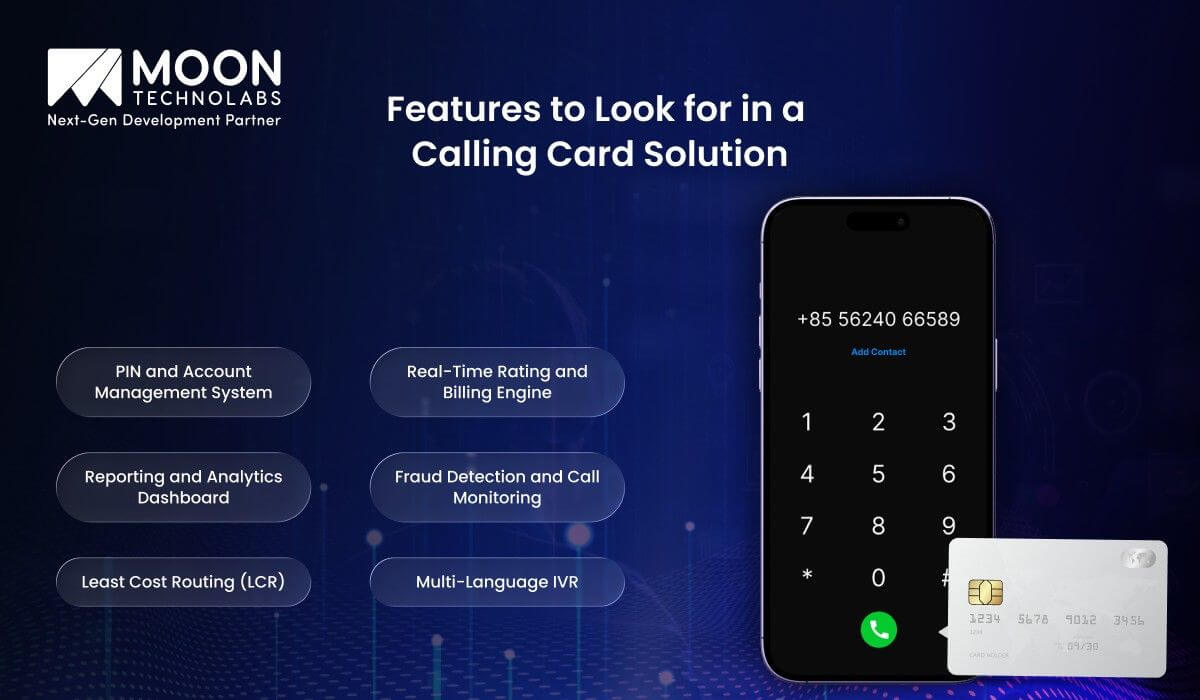
When selecting the top calling card platform, you need to consider various features and make your selection accordingly. The following are some of those:
A real-time rating and billing engine is one of the top features of a successful calling card solution. It determines how call charges are calculated, reconciled, and allocated as calls occur.
Real-time systems help update user balances quickly, prevent overspending, and offer transparent usage tracking. It includes the following things:
When it comes to calling card services, they generally involve user accounts and PINs. It necessitates a PIN and account management system. It includes a highly secure PIN generation, self-service portals, and hierarchical account control. It includes the following important elements:
A perfectly-designed PIN system boosts operational efficiency while minimizing fraud, customer friction, and support costs.
Operators need to optimize call routing to remain profitable in a competitive market. Least-cost routing (LCR) selects the most cost-effective path for calls based on carrier and destination rates. A great LCR systems provide:
LCR increases profitability by minimizing overall termination costs while maintaining high service quality, especially for important international calls.
Whether it’s unauthorized access, PIN cloning, or toll bypass, any telecom fraud tends to drain revenue quickly, especially if your systems lack appropriate defenses. An advanced calling card platform should include real-time call monitoring and fraud detection tools. Essential capabilities include the following important things:
An intelligent fraud system allows operators to protect their margins and thus build customer trust.
Multi-language support is an important feature that ensures users from different regions can easily navigate the card system, hear balance details, and authenticate PINs. This feature should be accompanied by:
Multi-language IVR improves usability and also opens your service to audiences from across the globe with less friction.
A calling card platform should include a robust reporting and analytics dashboard. It should provide both a granular and a higher-level view of performance metrics. Critical reporting features include:
A right dashboard effectively transforms data into decisions. It helps operators in optimizing marketing, pricing, and network routing strategies.
We assist you in creating and launching a secure and scalable VoIP calling card platform. Let’s transform your vision into a high-performing solution.
Share Your Project Details
We possess extensive industry expertise in crafting custom calling card solutions tailored to your specific business model, growth strategy, and target market. Whether you require an advanced real-time billing integration, a cloud-based VoIP platform, fraud management systems, or reseller modules, we are your one-stop solution. Our developers create a secure and scalable architecture aligned with your operational objectives.
We provide a reliable, future-ready, and revenue-driven calling card service, from solution consulting to deployment and post-launch support. Our commitment is to help you launch a powerful solution that delivers high-end performance with long-term value.
Selecting the best calling card solution needs a perfect balance of scalability, technology, security, and billing accuracy. Your every decision impacts both the customer experience and profitability, from determining platform capabilities to the features that are necessary.
Partnering with an experienced calling card solution provider like us helps you develop a high-performing, secure, and scalable solution for your business. We promise sustainable growth for your business.
01
02
03
04
05

Jayanti Katariya is the CEO of Moon Technolabs, a fast-growing IT solutions provider, with 18+ years of experience in the industry. Passionate about developing creative apps from a young age, he pursued an engineering degree to further this interest. Under his leadership, Moon Technolabs has helped numerous brands establish their online presence and he has also launched an invoicing software that assists businesses to streamline their financial operations.


Submitting the form below will ensure a prompt response from us.
We refine our expertise to deliver innovative business solutions.




500 N Michigan Avenue, #600, Chicago IL 60611
13500 Long Is Dr, Pflugerville, TX 78660, USA

C-105, Ganesh Meridian, S.G. Highway, Ahmedabad, GJ 380060


Ayse D.
Co-Founder France
“ I highly recommend Moon Technolabs as the quality of service is wonderful. We have hired this company to develop the product based on some complex & technical issues. We get the best quality services as compared with others in the market. Huge Thanks to Moon Technolabs as the team is always ready to give the solution all time.”

Justin G.
Founder & CEO USA
USA“ Moon Technolabs is a pioneer in the WebRTC based project as they have fixed complicated segments of the module by fulfilling different product lines by providing 24X7 customer support. We really recommended Moon Technolabs as they are able to develop products as per the module deadline and project timeline.”

Flavio S.
Founder & Managing Director Germany
“I am happy to recommend Moon Technolabs for their app development services. They successfully developed apps for me, and I am highly satisfied with the overall outcomes. The development team has swiftly addressed the issues with responsive and effective communication to understand the requirement quickly and actively resolve the back-and-forth problems that arose...”

Jay M.
Founder & CEOUSA“Moon Technolabs is the best company that provides advanced apps and websites development services in the USA and Europe. I am a newbie to develop my app with an external team. I am really happy to work with them as I am not that much mobile apps user. Here, the team and specially the CEO of Moon Technolabs helps me to let me know about the benefits of my app to generate revenue....”


Our Offices
India
C-105, Ganesh Meridian, S.G. Highway, Ahmedabad, GJ 380060USA
500 N Michigan Avenue, #600, Chicago IL 60611Contact Information


