Smoke Testing in Software: An Essential First Check

Marketing Team
Last Updated: Mar 12, 2026 Total View: 509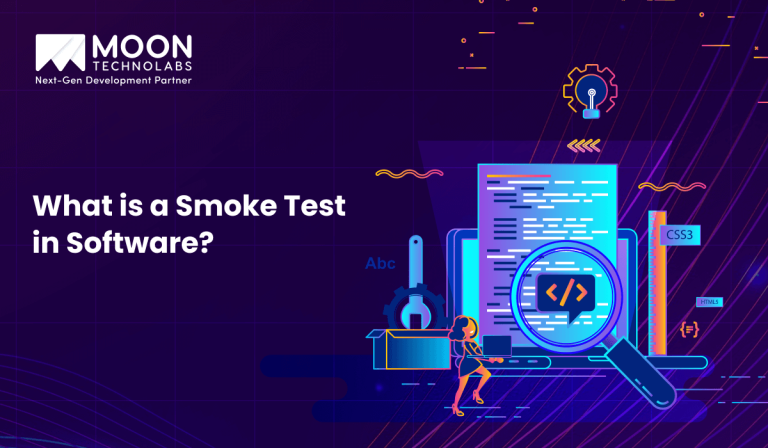
Get in Touch With Us
Submitting the form below will ensure a prompt response from us.


Software testing has many layers, ranging from unit testing to regression testing, but not every build requires full-scale validation immediately. That’s where smoke testingin software comes into play. Think of it as the “first gate” — a quick check to determine whether the most critical functions of a software build are working. If these fail, there’s no point in moving forward with deeper tests.
Now, let’s explore in detail what a smoke test in software is, why it’s important, and how it can be implemented effectively.
What is Smoke Testing in Software?
In software development, ensuring that applications work as expected after every build is crucial. One of the simplest yet most effective ways to validate a new release is through smoke testing. Often referred to as “build verification testing”, smoke testing quickly checks whether the most important functionalities of a software application are working before moving on to more detailed testing phases.
Definition of Smoke Testing
A smoke test is a preliminary test performed on new software builds to verify basic functionality. If the application fails this test, it is considered unstable and not ready for further testing.
The name comes from the hardware world: when technicians first powered on a new circuit, if it smoked, there was no need for further testing. Similarly, in software, if a build fails the smoke test, testers stop there and reject the build.
Purpose of Smoke Testing
The main objectives of smoke testing are:
- To ensure critical features are functioning.
- To detect major issues early in the development lifecycle.
- To save time by avoiding detailed testing of a broken build.
- To give confidence that the build is stable enough for further testing.
Characteristics of Smoke Testing
- Broad, not deep: It covers all major areas but does not test details.
- Quick execution: Typically takes a short time compared to regression or system testing.
- Performed on new builds: Runs after developers deploy a fresh build.
- Automated or manual: Can be executed using scripts or manually, depending on the project.
Example of Smoke Testing
Imagine you are testing an e-commerce website:
- Can the user log in?
- Can the user search for a product?
- Can the user add an item to the cart?
- Can the user proceed to checkout?
If any of these fail, the build is rejected and returned to developers before further testing.
Smoke Testing vs. Sanity Testing
Although often confused, smoke testing is different from sanity testing:
| Feature | Smoke Testing | Sanity Testing |
|---|---|---|
| Scope | Broad & shallow | Narrow & deep |
| Purpose | Verify the stability of the build | Verify specific functionality or bug fix |
| Automation | Often automated | Mostly manual |
| When performed | On initial builds | On subsequent builds |
Example Code: Automating a Smoke Test
Smoke testing can be automated using test frameworks such as Selenium (for web apps), JUnit (for Java), or Pytest (for Python).
Here’s a simple example using Selenium with Python for a login smoke test:
from selenium import webdriver

from selenium.webdriver.common.by import By

# Initialize WebDriver

driver = webdriver.Chrome()

# Open the application

driver.get("https://example-ecommerce.com")

# Smoke Test: Check if login works

try:

    driver.find_element(By.ID, "username").send_keys("test_user")

    driver.find_element(By.ID, "password").send_keys("test_pass")

    driver.find_element(By.ID, "loginButton").click()

    # Verify successful login

    if "Dashboard" in driver.title:

        print("Smoke Test Passed: Login successful.")

    else:

        print("Smoke Test Failed: Login not successful.")

except Exception as e:

    print("Smoke Test Failed:", e)

# Close the browser

driver.quit()
This simple smoke test verifies if the login functionality works. If it fails, testers know the build is unstable.
Types of Smoke Testing in Software
Manual Smoke Testing
- Testers manually execute critical test cases.
- Useful when automation is not set up.
Automated Smoke Testing
- Uses tools like Selenium, JUnit, or Pytest to smoke test scripts automatically.
- Faster and more reliable for continuous integration (CI) pipelines.
Smoke Testing in Agile & DevOps
In Agile and DevOps practices, where builds are frequent and continuous integration (CI) is used, smoke testing becomes essential. Automated smoke tests are integrated into the CI/CD pipeline, ensuring that any unstable build is detected immediately before it reaches QA or production.
For example, in Jenkins pipeline:
pipeline {

stages {

stage('Build') {

steps {

sh 'mvn clean install'

}

}

stage('Smoke Test') {

steps {

sh 'pytest tests/smoke'

}

}

}

}
This ensures that smoke tests are executed automatically after every build.
Advantages of Smoke Testing
- Early defect detection – catches critical failures quickly.
- Saves time and cost – avoids unnecessary testing of broken builds.
- Improves software stability – ensures stable builds are passed to QA.
- Boosts confidence – developers and testers know the build is working.
Challenges of Smoke Testing
- Limited scope – may miss deeper bugs.
- Needs maintenance – automated smoke tests must be updated frequently.
- False sense of security – passing smoke tests doesn’t guarantee bug-free software.
Conclusion
A smoke test in software is a crucial step to ensure that new builds are stable enough for further testing and deployment. It acts as a gatekeeper, preventing broken builds from wasting testers’ time. Whether manual or automated, smoke testing improves software quality, saves effort, and integrates seamlessly into Agile and DevOps workflows.
For modern teams, incorporating automated smoke tests into CI/CD pipelines ensures that only stable builds move forward—making the entire development process more efficient and reliable.


Jayanti Katariya is the CEO of Moon Technolabs, a fast-growing IT solutions provider, with 18+ years of experience in the industry. Passionate about developing creative apps from a young age, he pursued an engineering degree to further this interest. Under his leadership, Moon Technolabs has helped numerous brands establish their online presence and he has also launched an invoicing software that assists businesses to streamline their financial operations.
Get in Touch With Us
Submitting the form below will ensure a prompt response from us.