
 Total Views: 517
Table of Content


Blog Summary:
This guide dives deep into the Odoo Implementation Cost structure. It compares price points in India and the USA and also reveals the “hidden” factors that can make or break your budget. Whether you’re a startup or a global enterprise, this is a complete breakdown to discover how to build a lean, high-ROI roadmap and why the right Odoo implementation partner is your best defense against overspending.
Table of Content
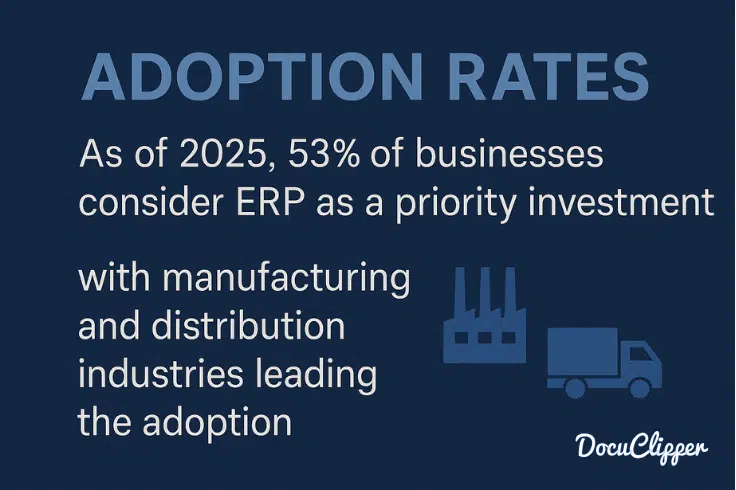
In today’s competitive era, forward-thinking companies are increasingly turning to Enterprise Resource Planning (ERP) solutions. As of 2025, 53% of businesses prioritize ERP solutions as an investment.
The Odoo ERP solution stands out for unifying business operations, boosting efficiency, and enabling data-driven decision-making. The software is powerful, but the key question most stakeholders ask is “What is the actual cost of the Odoo implementation?”
Businesses are struggling to understand the financial commitment of an ERP transition. The total investment comprises several moving parts, including licensing fees, custom development, user training, and long-term maintenance. A transparent breakdown of these variables helps companies avoid budget overruns and deployments that fail to reach their maximum potential.
Every business has unique requirements. So, there is no “one-size-fits-all” price. Whether you are a small startup or a large enterprise, your costs will scale with your specific operational needs.
In this guide, we break down the key cost components of an Odoo rollout to help you plan resources effectively and ensure a high return on investment (ROI) for your digital transformation.
Odoo ERP Implementation is a transformative step toward digitizing your business environment. Unlike traditional, rigid software, Odoo offers a modular suite of integrated applications ranging from CRM and inventory to accounting and e-commerce. This flexibility allows businesses to start with only the essential tools and scale as they grow.
However, a successful Odoo implementation is a strategic process that aligns the platform’s capabilities with your unique workflows. It involves several critical phases, including requirements analysis, system configuration, data migration, and user adoption. By understanding these foundational steps, companies can better anticipate the technical and financial resources required to turn Odoo into a powerful engine for operational excellence and sustainable growth.
The cost of an Odoo implementation varies significantly between India and the USA. Regional labor rates and local market demand are the primary drivers. In India, a basic Odoo implementation for a small business typically ranges from $5,000 to $15,000, making it a highly cost-effective hub for offshore development. In contrast, businesses in the USA can expect to invest between $10,000 and $25,000 for a similar scope, due to higher premiums for local consulting and on-site support.
For mid-sized to large enterprises with complex customizations and data migrations, costs can range from $50,000 to $ 100,000 or more in both regions. Beyond the initial setup, Odoo’s tiered licensing also shifts by geography. For instance, the “Standard” plan costs approximately $24.90/user/month in the USA (Tier 1). However, the same plan often starts around $9.10/user/month in India (Tier 3), which is significantly lower.
You Might Also Like:
Odoo Alternatives: Best ERP Solutions for Growing Businesses
Navigating the financial landscape of an Odoo rollout requires a clear understanding of the project lifecycle. Each phase carries its own set of deliverables and associated costs, which typically account for the bulk of your initial investment beyond licensing. Let’s check the essential stages of a standard Odoo ERP implementation.
This stage is a discovery phase in which your implementation partner maps your current business processes to Odoo’s features. It involves requirement gathering, gap analysis, and roadmap creation.
Estimated Cost: $1,000 – $5,000.
Once the plan is set, experts configure the Odoo environment to align with your workflows. Here, you can set up the chart for accounting software, configure warehouse routes, and adjust user access rights.
Estimated Cost: $3,000 – $15,000.
The next step is to move your history from legacy systems (such as Excel, QuickBooks, or SAP) into Odoo. It’s quite a complex technical task. Activities in this phase include data cleansing, data mapping, and connecting third-party APIs (e.g., Amazon, PayPal, or FedEx). Also, the cost highly depends on data volume.
Estimated Cost: $2,000 – $10,000+.
You Might Also Like:
Odoo Migration: A Complete Guide to Seamless Version Upgrades and Data Transition
Before the big launch, the system must be rigorously “stress-tested” to ensure all customizations and automated workflows function as intended. It involves unit testing, bug fixing, and User Acceptance Testing (UAT).
Estimated Cost: $1,500 – $5,000.
An ERP is only as good as the people using it. This phase focuses on empowering your team.
Activities: Role-based workshops, creating user manuals, and overcoming internal resistance.
Estimated Cost: $2,000 – $8,000.
It is called the “flip of the switch” stage. This phase covers the final transition to the live production server. Activities involve final data sync, server optimization, and on-site or remote support.
Estimated Cost: $2,000 – $8,000.
ERP success is a marathon, not a sprint. Ongoing maintenance ensures your system evolves with your business. It requires continuous minor tweaks, version updates, and helpdesk support.
Estimated Cost: $3,000 – $5,000 per year.
The budgeting involves more than just the base Odoo software. To avoid financial surprises, you must account for recurring subscription fees and the technical environment required to run the system.
Odoo’s licensing is primarily based on a per-user, per-month model. The software is known for its “all-in-one” value. However, the costs fluctuate based on three key factors.
Where you host your Odoo instance determines your speed, security, and monthly overhead.
The cost of an Odoo implementation extends beyond the software license. It’s a variable-based equation that changes according to your specific operational requirements. To get an accurate budget, it’s important to evaluate several “cost drivers” that determine the total number of development hours and technical resources.
The standard Odoo interface is modern and functional. However, many brands require a tailored look and feel that aligns with their corporate identity. UI/UX customization involves more than just changing colors. It includes building custom dashboards, simplifying complex forms for faster data entry, and ensuring mobile responsiveness for field teams. Overall, the cost impact of UI/UX is moderate to High, depending on the depth of frontend design.
Your recurring licensing costs are directly tied to the number of internal employees using the system. However, the “user count” also affects implementation costs. A larger user base often requires more complex Access Rights management, more extensive training sessions, and higher server capacity. Its cost impact is directly proportional to the license fees and training hours.
Odoo is modular. This means you pay only for what you use. Implementing basic modules like CRM, Sales, or Invoicing is relatively straightforward. However, advanced modules such as Manufacturing (MRP), Multi-Step Inventory, or Accounting require in-depth functional configuration and testing to ensure they handle your business logic correctly. In short, the more modules you activate, the higher the configuration and testing fee.
This is the most significant cost variable. If your business processes follow standard “out-of-the-box” flows, your costs stay low. If you require custom modules, specialized business logic, or unique automated reports that aren’t available in standard Odoo, developers must write custom Python code. Its cost impact is High as it is billed at an hourly development rate.
To act as a “Single Source of Truth,” Odoo often needs to “talk” to other tools like Shopify, Amazon, FedEx, or PayPal. While Odoo offers many prebuilt connectors, integrating with legacy software or niche third-party APIs requires custom integration and rigorous API testing. The cost impact varies by API complexity and data sync frequency.
The choice between Odoo Online (SaaS), Odoo.sh (Cloud), or On-Premise (Self-hosted) dictates your infrastructure costs. While Odoo Online is free to host, it doesn’t support custom code. Odoo.sh offers the best balance for most, but it introduces monthly server costs based on “workers” and storage.
Hiring a certified Official Odoo Partner may have a higher hourly rate than a freelancer, but it often saves money in the long run. Experienced partners use proven methodologies to avoid “scope creep,” ensure your system is upgrade-safe, and reduce the risk of costly post-deployment bugs.
Odoo’s pricing has become significantly simpler now. It is because of the streamlined model that moved away from complex per-module billing. Today, the cost of Odoo is primarily determined by your chosen plan, the number of users, and your hosting environment. Whether you are a solo entrepreneur or a multinational corporation, Odoo’s “Value-Based” pricing ensures you only pay for the scale you need.
Odoo has transitioned to a highly transparent subscription model. As of 2025, there are three primary tiers:
The “per-user” fee is the core of Odoo’s revenue model. In the USA (Tier 1), the Standard plan typically starts at $24.90 per user/month (billed annually), while the Custom plan is approximately $37.40 per user/month. It is important to note that Odoo uses “Regional Pricing,” meaning businesses in India or other Tier 3 regions often pay significantly lower rates (starting around $9.10 – $13.60 per user/month) to align with local economic conditions.
One of the most significant changes in recent years is the elimination of the “per-app” fee. Previously, adding a module like Inventory or Manufacturing added to your monthly bill. In 2025, once you move to the Standard or Custom plans, you get access to all 70+ official Odoo applications for a single flat per-user price. This “All-You-Can-Eat” model encourages businesses to integrate more departments without fear of ballooning software costs.
Where your data lives impacts both your budget and your system’s flexibility:
Investing in an ERP is a significant decision, but Odoo’s unique value proposition often makes it the most cost-effective choice for modern businesses. The platform has evolved into more than just software. It is a scalable business ecosystem designed to provide a rapid return on investment.
Odoo eliminates “app fatigue” and the high cost of maintaining multiple software subscriptions. By consolidating CRM, Accounting, Inventory, and HR into a single platform, you remove the need for expensive middleware and manual data reconciliation between disconnected tools.
Unlike rigid proprietary systems (like SAP or Oracle), Odoo’s open-source core means you are never “locked in.” You have full access to the source code, allowing for deep customizations that align perfectly with your unique business DNA without the “enterprise-level” price tag.
With over 100,000 developers worldwide and a library of 40,000+ community apps, most features you might need have already been built. This community-driven model drastically reduces research and development costs for your specific implementation.
Odoo releases a major version every year (most recently Odoo 19), introducing cutting-edge AI features, an improved UI, and faster processing. This ensures your investment stays “future-proof” and competitive as technology advances.
The ROI of an Odoo implementation is typically realized through operational efficiency and cost reduction. Businesses are seeing a significant increase in productivity within the first year by automating repetitive tasks such as invoice generation and stock reordering.
By reducing manual errors and providing real-time data dashboards, Odoo empowers leaders to make faster, more profitable decisions. For most SMEs, the system pays for itself within 12-18 months by replacing 5–10 separate SaaS subscriptions with a single, unified Odoo license.
Selecting the right Odoo implementation partner is the most critical factor in ensuring your ERP investment delivers long-term value. At Moon Technolabs, we combine over 16 years of technical excellence with deep functional expertise to provide a seamless Odoo implementation service tailored to your business.
Our certified developers specialize in complex module customization, third-party API integrations, and secure data migrations that minimize downtime. We don’t just install software. We optimize your entire workflow from automated accounting to AI-driven inventory management. With a global presence and a proven track record of delivering 1,600+ successful projects, Moon Technolabs ensures your Odoo ecosystem is scalable, bug-free, and perfectly aligned with your growth strategy.
Why Work With Us?
Moon Technolabs helps you plan, customize, and implement Odoo ERP with transparent pricing, expert guidance, and proven delivery.
Odoo is a transformative tool that unifies your operations, but its true power lies in how well it aligns with your specific business goals. A successful ERP journey requires more than just software; it demands a strategic roadmap, precise technical execution, and continuous optimization.
Whether you are starting with a fresh Odoo implementation, seeking deep customization, or requiring long-term technical support, choosing a trusted Odoo implementation partner like Moon Technolabs is key to a high-ROI transformation.
01
02
03
04
05

Jayanti Katariya is the CEO of Moon Technolabs, a fast-growing IT solutions provider, with 18+ years of experience in the industry. Passionate about developing creative apps from a young age, he pursued an engineering degree to further this interest. Under his leadership, Moon Technolabs has helped numerous brands establish their online presence and he has also launched an invoicing software that assists businesses to streamline their financial operations.


Submitting the form below will ensure a prompt response from us.
We refine our expertise to deliver innovative business solutions.





500 N Michigan Avenue, #600, Chicago IL 60611
13500 Long Is Dr, Pflugerville, TX 78660, USA

C-105, Ganesh Meridian, S.G. Highway, Ahmedabad, GJ 380060


 France
“ I highly recommend Moon Technolabs as the quality of service is wonderful. We have hired this company to develop the product based on some complex & technical issues. We get the best quality services as compared with others in the market. Huge Thanks to Moon Technolabs as the team is always ready to give the solution all time.”

 USA
USA“ Moon Technolabs is a pioneer in the WebRTC based project as they have fixed complicated segments of the module by fulfilling different product lines by providing 24X7 customer support. We really recommended Moon Technolabs as they are able to develop products as per the module deadline and project timeline.”

 Germany
“I am happy to recommend Moon Technolabs for their app development services. They successfully developed apps for me, and I am highly satisfied with the overall outcomes. The development team has swiftly addressed the issues with responsive and effective communication to understand the requirement quickly and actively resolve the back-and-forth problems that arose...”
 USA
USA“Moon Technolabs is the best company that provides advanced apps and websites development services in the USA and Europe. I am a newbie to develop my app with an external team. I am really happy to work with them as I am not that much mobile apps user. Here, the team and specially the CEO of Moon Technolabs helps me to let me know about the benefits of my app to generate revenue....”


