
 Total Views: 7803
Table of Content


Blog Summary:
This blog post offers a comprehensive overview of the role of IoT in transforming the aviation industry. It covers everything to help you gain a better understanding, from benefits and use cases to challenges and the future of IoT in this sector.
Table of Content
The aviation industry utilizes multiple cutting-edge technologies to transform its operations and deliver an exceptional user experience, with the Internet of Things (IoT) being one of them. IoT in Aviation has a major impact on how aerospace, airports, and airline companies work, especially in today’s digital-first world.
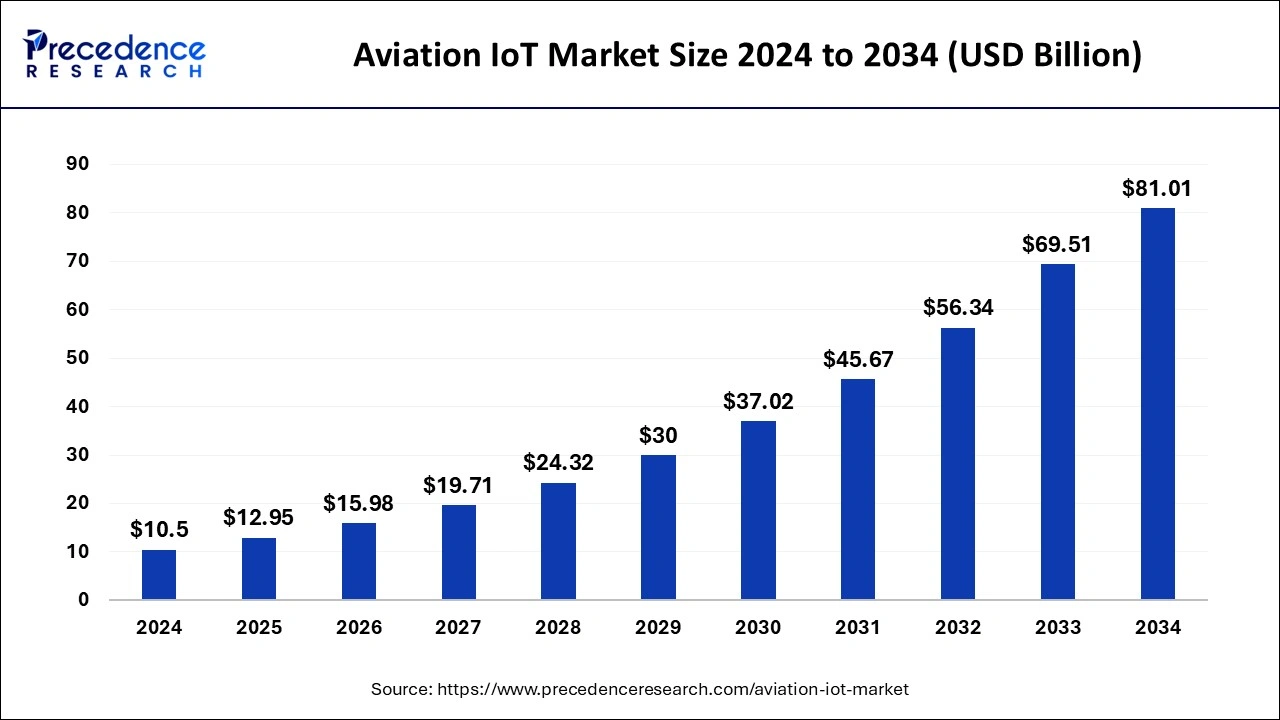
As a result, the global market size for IoT in the aviation industry experienced a significant surge. According to Precedence Research, the IoT market size in aviation is expected to rise from $12.95 billion in 2025 and is likely to reach $81.01 billion by 2034. It’s expected to grow at a CAGR of 22.67% during the forecast period.
Airlines and aviation companies today use IoT for much more than just flight operations. From tracking assets in real time to predicting maintenance needs and even tailoring services for passengers, its impact is everywhere. In this blog, we’ll explore how these innovations are shaping the future of aviation.
IoT in aviation represents how airports, aircraft, airlines, etc., harness the potential advantages of this technology. It involves integrating a comprehensive IoT ecosystem, comprising interconnected devices, sensors, and data systems across aviation companies.
The integration serves its core purposes like automation, real-time monitoring, and decision-making. With the use of data-driven insights, IoT transforms the way the aviation industry operates. Hence, it allows air travel safer, smarter, and more efficient.
IoT in aviation plays an indispensable role in making air travel more enjoyable and meaningful, from reshaping the transformation to ensuring patient safety. Let’s explore some other major roles.
The Internet of Things simplifies the operation of aviation companies, regardless of their complexity. This becomes possible by leveraging data analytics and connected systems. IoT-powered devices and smart sensors are capable of monitoring everything properly, whether it’s fuel consumption or baggage handling.
It ensures a smooth workflow and minimizes delays. For instance, predictive analytics powered by IoT helps optimize flight schedules and ground operations better. It not only decreases turnaround times but also improves fleet utilization.
Safety is crucial in the aviation sector. One of the most interesting facts about IoT is that it offers complete aircraft safety. Airlines can utilize IoT-powered sensors in their aircraft to monitor key systems, such as hydraulics, engines, and avionics, in real-time.
As mentioned, IoT also enables predictive maintenance, helping to detect potential failures even before they occur. It minimizes unplanned downtime, thereby maximizing overall flight time while ensuring higher safety.
The IoT enhances the passenger’s experience, from the moment they enter the airport to the end of their journey. They feel more relaxed and overwhelmed with biometric-enabled boarding, smart check-in kiosks, real-time baggage tracking, and more. These, of course, improve convenience while minimizing stress.
Once passengers board the flight, they get connected cabin services, personalized entertainment, and smooth communication. This not only enhances passenger satisfaction but also fosters brand loyalty among airline passengers.
IoT helps aviation companies achieve their sustainability goals by providing robust tools. They can perform real-time monitoring for various purposes, including route optimization, fuel usage, and efficient energy management. These are helpful in minimizing carbon emissions.
Besides, they can use IoT-powered predictive maintenance to minimize waste from unnecessary part replacements. The technology ensures aviation matches global sustainability standards by minimizing cost.
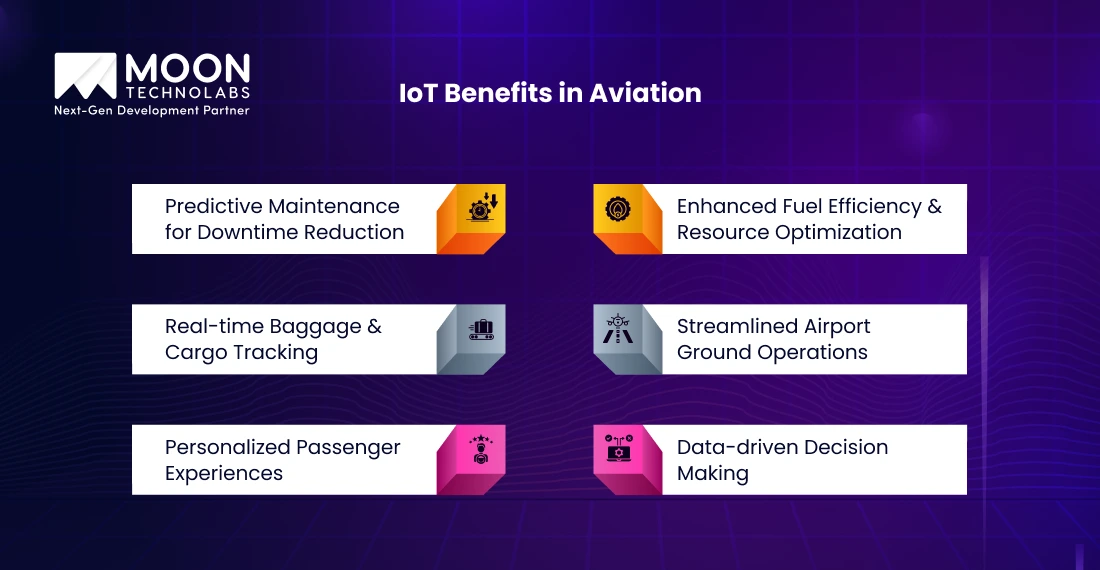
IoT brings plenty of benefits in aviation to foster innovation across the industry. We will discuss some of the most promising advantages in-depth.
With predictive maintenance, airline companies find it convenient to manage the performance of their aircraft. They also utilize sensors that continuously gather data from multiple sources, including mechanical systems, avionics, and engineers. These help companies detect any issues at an early stage.
Airlines can schedule timely repairs and avoid unplanned groundings by predicting potential failures. It extends the life of critical aircraft components while minimizing downtime.
You Might Also Like:
Fuel consumption has a significant impact on aviation operational costs. IoT helps by providing real-time monitoring of fuel use, flight paths, and weather, enabling smarter route optimization. This results in reduced fuel consumption and lower operational costs.
Passengers often get frustrated when their baggage is lost. IoT offers ‘smart tracking systems’ to overcome this situation. Airlines can utilize this system to receive real-time updates on cargo and baggage. It also enables passengers to locate their luggage with the assistance of mobile apps.
Meanwhile, cargo operators also gain higher visibility into their supply chains. It minimizes loss, maximizes customer reliability, and improves operational transparency for logistics providers and airlines.
Be it logistics teams, air traffic control, or ground staff, many stakeholders are directly involved in airport ground operations. IoT systems use automation and connected devices to integrate these processes.
It introduces automated check-in kiosks, smart trolleys, and IoT-powered runway monitoring, among other innovations. All these are pivotal to making ground operations safe and highly efficient. It causes fast turnaround times, smooth passenger journeys, and minimizes delays.
Personalized experience is something that every traveler expects from an airline. IoT delivers it through smart seating, connected cabins, and tailored on-board entertainment.
Airline companies utilize real-time passenger data for various purposes, including offering personalized shopping options, meal choices, and services. These make the journey more enjoyable. These innovations not only enhance customer satisfaction but also boost ancillary revenue for airlines.
The majority of aviation businesses use data generated by IoT devices to make smart decisions. They utilize advanced analytics to predict trends, identify inefficiencies, and develop a strategic plan accordingly. This data-driven approach not only enhances competitiveness but also fosters long-term growth.
We encourage you to leverage our IoT expertise to take your business to the next level. Revolutionize your business with our high-grade IoT solutions.
Connect with Our IoT Experts Today
The aviation sector harnesses the potential advantages of the Internet of Things for a myriad of purposes. We will discuss some major use cases of IoT in aviation.
Embedded in avionics, hydraulics, or engines, IoT-based sensors enable aviation companies to continuously monitor the performance of their aircraft. Real-time data enables the detection of issues, optimization of fuel efficiency, and scheduling of predictive maintenance. This approach is beneficial for enhancing safety, preventing unexpected breakdowns, minimizing maintenance costs, and other benefits.
IoT offers smart baggage tracking systems with the use of GPS, RFID tags, mobile apps, etc. These are useful for both passengers and airlines to monitor luggage in real-time. It improves transparency while minimizing any mishandling. It boosts passengers’ confidence while offering a smooth travel experience.
Another popular use case of IoT is in monitoring fuel consumption, which accounts for approximately 25 to 30% of an airline’s overall operating costs. Analytics and smart sensors provide comprehensive data on fuel consumption, as well as other key details such as optimal flight routes and weather conditions. It helps airlines minimize fuel wastage and thus lower their operating cost.
IoT plays a vital role in making airports “smart hubs” with runway condition monitoring, automated gate management, and queue detection systems. These simplify overall passenger flow while maximizing safety. For instance, IoT-powered trains provide passengers with accurate guidance to their designated gates.
IoT is also useful for cargo and supply chain optimization, including the analysis of temperature-sensitive products, real-time tracking of shipments, and automation processes. It minimizes losses, enhances supply chain visibility, and offers full compliance with regulatory standards.
The IoT also contributes significantly to providing passenger-centric services. It offers real-time information on connecting flights, tailored in-flight entertainment, and smart seating systems, among others. Apart from this, digital boarding passes, biometric check-ins, and personalized shopping offers also improve passengers’ experience.
The Internet of Things enhances the safety and security of airlines in several ways, including biometric verification, real-time surveillance, and aircraft sensors. Meanwhile, airport IoT solutions play a crucial role in detecting potential threats and improving crowd management.
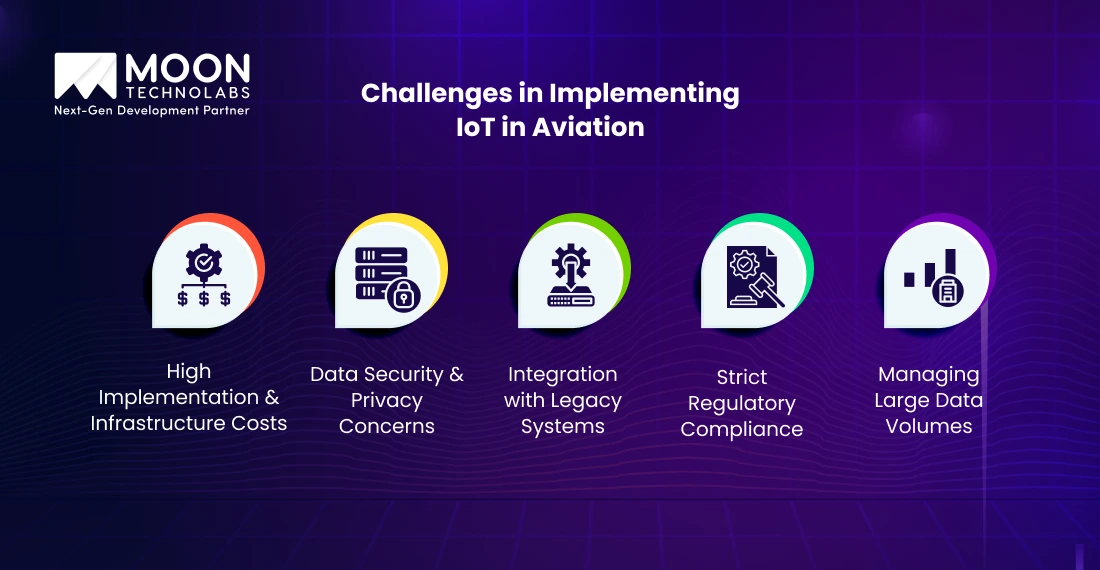
The implementation of IoT in aviation presents numerous challenges, alongside some of its most promising advantages. The following are some of the common challenges that most businesses encounter.
When aviation companies implement IoT, they often encounter upfront expenses, including connectivity infrastructure, sensors, integration tools, and other related costs. Since they often have a limited budget, these costs are the biggest barriers for them.
Solution: Implement a phased strategy that focuses on key areas for IoT integration. These include baggage tracking and predictive maintenance, among others.
Since IoT devices constantly gather and transmit sensitive data, they increase cybersecurity risks. Any data breach can expose passenger safety.
Solution: Implement powerful encryption, ensure compliance, access security controls, etc.
Integration of an IoT system with a legacy system involves a lot of hassle, as most airlines still use legacy operational and IT systems. Apart from being complex, the integration process is also costly.
Solution: Proceed with middleware solutions and APIs. They play an intermediary role between your legacy system and the advanced IoT platforms.
IoT implementation in the aviation sector also requires compliance with data privacy laws, including the GDPR, as aviation is a highly regulated industry. Therefore, meeting these strict requirements often causes delays in implementing timelines while incurring increased compliance costs.
Solution: Stay in close contact with regulatory authorities throughout the IoT adoption process.
IoT systems generate a high volume of data from airports, passengers, and aircraft. It’s really difficult to store, manage, and analyze this large volume of data. It requires AI-based analytics and high-grade cloud platforms.
Solutions: Utilize edge computing, big data analytics, AI-driven platforms, etc. They help you process information in real-time.
The future of IoT in aviation is primarily driven by cutting-edge technologies such as AI and 5G, among others. Let’s understand how these technologies define the future of the Internet of Things in this sector.
The combination of IoT and Artificial Intelligence (AI) has extensive implications for the future of the aviation sector. Both technologies take predictive maintenance to the next level, enabling airlines to enhance the performance of their aircraft. This combination also works effectively in minimizing disruption and improving decision-making with higher accuracy.
There are various use cases of 5G in IoT, such as real-time data transmission between airports, aircraft, and ground systems. Apart from this, the technology also enables IoT devices to handle even large datasets smoothly. It presents an enormous opportunity for innovation in the aviation industry.
In the coming time, smart airports will become a reality. The IoT will control every important operation, including biometric security, automated check-ins, queue management, smart gate assignments, and more. The connected IoT devices offer numerous advantages, including reduced wait times, smoother passenger journeys, optimized resource allocation, and more.
In the future, IoT solutions are expected to contribute to green aviation by decreasing carbon footprint emissions. It can do the same through analyzing emissions, optimizing fuel consumption, managing energy usage at airports, and more. Apart from this, IoT-powered predictive maintenance will also limit unnecessary part replacement, thereby minimizing material waste.
We provide robust IoT solutions for your aviation business. Get in touch with us to transform your business by making it more connected and safe.
Consult Us to Know More
Moon Technolabs is a renowned IoT development company , specializing in developing secure, scalable, and tailored IoT solutions. We offer innovative IoT solutions, backed by extensive experience in the industry.
Our experts perform seamless integrations tailored to align with your core business objectives. With extensive skills in utilizing cloud, AI, and 5G, we endeavor to leverage our unmatched expertise in IoT to deliver future-ready transformation to you.
IoT has taken the aviation industry by storm with maximized safety, operational efficiency, and an unmatched passenger experience. When combined with 5G and AI, it offers real-time connectivity, predictive intelligence, and smart airports, among other benefits.
So, if you have yet to consider the implementation of IoT in your aviation business, it’s the right time to go for it. Contact us to receive customized IoT solutions to future-proof your operations.
01
02
03
04
05

Jayanti Katariya is the CEO of Moon Technolabs, a fast-growing IT solutions provider, with 18+ years of experience in the industry. Passionate about developing creative apps from a young age, he pursued an engineering degree to further this interest. Under his leadership, Moon Technolabs has helped numerous brands establish their online presence and he has also launched an invoicing software that assists businesses to streamline their financial operations.


Submitting the form below will ensure a prompt response from us.
We refine our expertise to deliver innovative business solutions.





500 N Michigan Avenue, #600, Chicago IL 60611
13500 Long Is Dr, Pflugerville, TX 78660, USA

C-105, Ganesh Meridian, S.G. Highway, Ahmedabad, GJ 380060


 France
“ I highly recommend Moon Technolabs as the quality of service is wonderful. We have hired this company to develop the product based on some complex & technical issues. We get the best quality services as compared with others in the market. Huge Thanks to Moon Technolabs as the team is always ready to give the solution all time.”

 USA
USA“ Moon Technolabs is a pioneer in the WebRTC based project as they have fixed complicated segments of the module by fulfilling different product lines by providing 24X7 customer support. We really recommended Moon Technolabs as they are able to develop products as per the module deadline and project timeline.”

 Germany
“I am happy to recommend Moon Technolabs for their app development services. They successfully developed apps for me, and I am highly satisfied with the overall outcomes. The development team has swiftly addressed the issues with responsive and effective communication to understand the requirement quickly and actively resolve the back-and-forth problems that arose...”
 USA
USA“Moon Technolabs is the best company that provides advanced apps and websites development services in the USA and Europe. I am a newbie to develop my app with an external team. I am really happy to work with them as I am not that much mobile apps user. Here, the team and specially the CEO of Moon Technolabs helps me to let me know about the benefits of my app to generate revenue....”


