


Healthcare Workflow Automation: Transforming Efficiency in Modern Healthcare

Jayanti Katariya
Last Updated: June 05, 2026 Total Views: 103
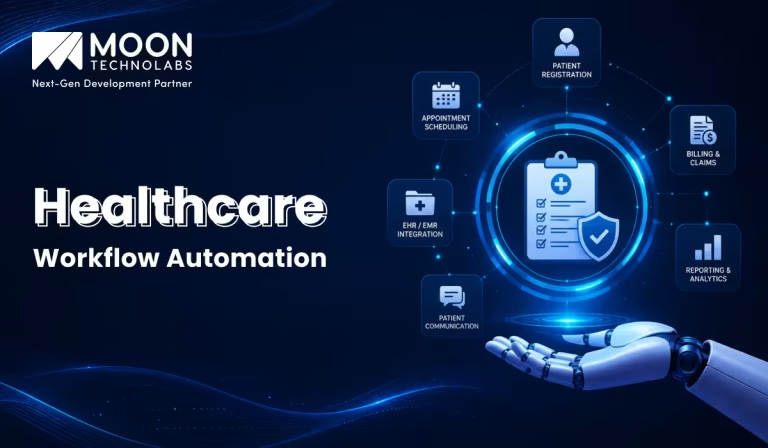
Table of Content


Blog Summary:
This comprehensive guide explores how healthcare workflow automation eliminates administrative burnout, reduces errors, and delivers significant ROI. We have discussed the core features, real-world use cases, implementation challenges, and future AI trends for healthcare software modernization. Read on to transform your healthcare efficiency.
Table of Content
Healthcare providers today are dealing with overwhelming amounts of bureaucracy and red tape in the form of paperwork. It has resulted in a 62% burnout rate among healthcare professionals, according to a recent article by Your Health Magazine. Clinicians are spending so much time on monotonous administrative work that they have no time to see their patients and are hence losing money.
The good news is that many hospitals are adopting technology to help reduce this wasted effort. A CAQH report showed that hospitals could save more than $258 billion over the next five years by moving from paper-based processes to electronic data interchange (EDI) systems. In addition, hospitals still have an opportunity to save approximately $21 billion more in administrative costs by converting to automated electronic transactions.
Healthcare organizations looking to reduce the amount of money lost to operational errors should invest in digital systems that automate workflows, streamline processes, and reduce the risk of human error.. The purpose of this guide is to explain the impact of workflow automation and digital system tools on how healthcare will be run in the future.
What is Healthcare Workflow Automation?
Healthcare workflow automation involves the intentional deployment of software and sophisticated technologies to coordinate, optimize, and automate repetitive administrative and clinical functions. In the modern healthcare industry, providers are stuck with repetitive processes such as patient scheduling, billing, insurance verification, and data entry into Electronic Health Records (EHRs).
When healthcare organizations automate these tasks, they eliminate human error, drastically reduce operational bottlenecks, and shorten delivery timelines. This change reduces the pressure on overworked staff. It allows clinicians to spend less time on paperwork and more time focusing on providing top-notch patient care and improving the overall health of the population.
You Might Also Like:
Medical Web Development: Building Secure & Scalable Healthcare Solutions
Why Healthcare Workflow Automation is Important?
Workflow automation in the healthcare sector is essential to reduce burnout among healthcare providers today while maintaining a focus on improving patient welfare. Labor-intensive tasks, such as compliance monitoring, prescription transmission, and appointment reminder notifications, can be automated with smart software.
This eliminates costly human errors. Digital efficiencies from the automated delivery of administrative tasks reduce turnaround time for patient diagnosis, approval, and treatment. Automation also relieves the burden of digital paperwork for healthcare providers, thereby improving patients’ overall experience and clinical outcomes.
Key Areas Where Workflow Automation is Used in Healthcare
Workflow automation is transforming much of the work doctors have to do, replacing manual processes with intelligent and seamless digital ones. The following areas demonstrate where workflow automation delivers the greatest value:
Patient Registration and Scheduling
Digital portals allow patients to self-schedule, upload IDs and intake forms online, automatically syncing information and removing paperwork from the waiting room.
Electronic Health Records (EHR) Management
Automation updates patient charts, moves data between systems, and flags key health alerts, ensuring clinicians always have accurate, up-to-date data at their fingertips.
Billing and Insurance Processing
Automated systems quickly confirm insurance eligibility, accurately code claims, and flag errors before submission, greatly reducing costly claim denials and speeding revenue cycles.
Appointment Reminders and Follow-ups
They use automated text and email systems to send timely appointment reminders to help reduce costly no-show rates. They send patients automated post-discharge care instructions.
Lab and Diagnostic Workflow Automation
When a lab runs a sample, automation immediately sends the digital results to the EHR and alerts the physician, dramatically reducing the time it takes to make a diagnosis.
Staff Management and Task Allocation
AI-driven scheduling tools automatically predict patient volume to optimize nursing shifts, manage on-call rotations, and fairly distribute daily clinical tasks among available staff.
You Might Also Like:
How Does Healthcare Workflow Automation Work?
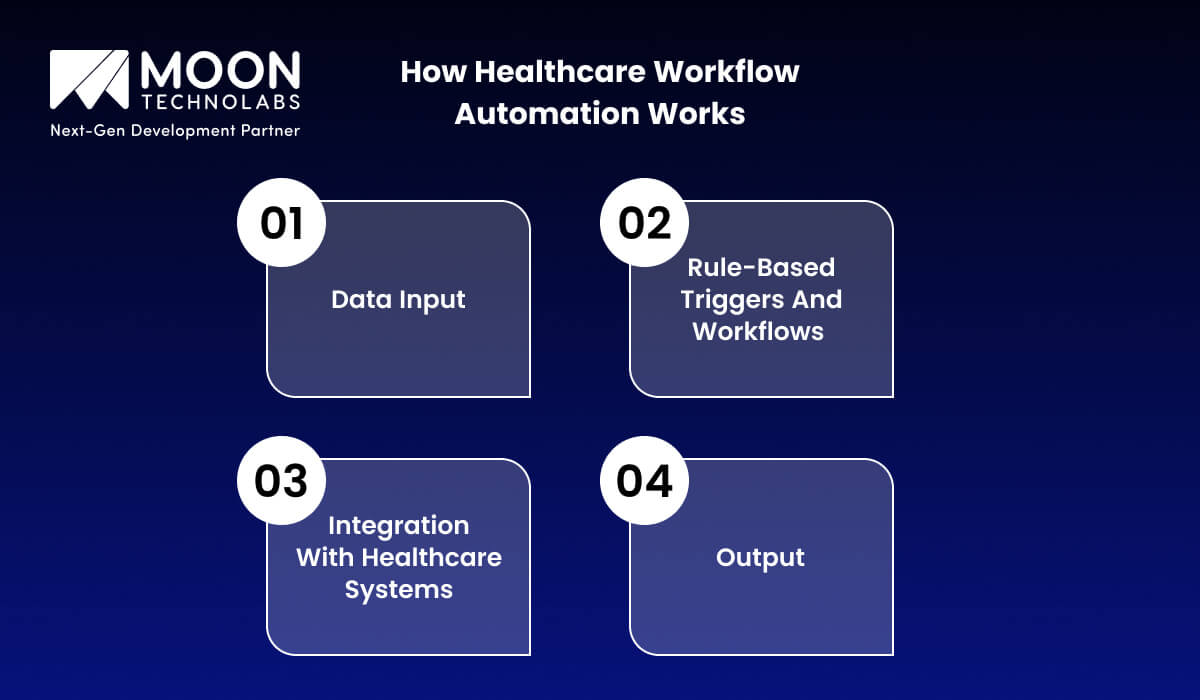
Automation in the healthcare sector operates like a highly efficient digital assistant. It connects different medical systems and handles repetitive tasks by following a structured, four-step cycle:
Data Input
The process starts with data ingestion. Automation tools securely capture information from various entry points, such as a patient filling out an online intake form, a nurse scanning a barcode, or an external laboratory uploading diagnostic results.
Rule-based Triggers and Workflows
Once data enters the system, pre-defined conditional logic takes over. For example, if a patient indicates a severe penicillin allergy on their digital form, then the system instantly triggers a specific workflow to flag this critical safety information.
Integration with Healthcare Systems
The automation software acts as a bridge, instantly communicating across fragmented platforms. It seamlessly pushes and pulls data between EHR systems, CRM systems, and specialized medical billing tools, ensuring all records are synchronized in real time without manual double entry.
Output
The final stage is execution. Based on the data and rules, the system performs automated actions. This includes sending instant SMS appointment reminders to patients, generating daily operational reports for hospital management, or routing urgent clinical alerts directly to a doctor’s smartphone.
Discover how custom workflow automation solutions can streamline clinical and administrative processes, reduce manual workloads, and improve operational efficiency across your healthcare organization.
Key Features of Healthcare Workflow Automation Systems
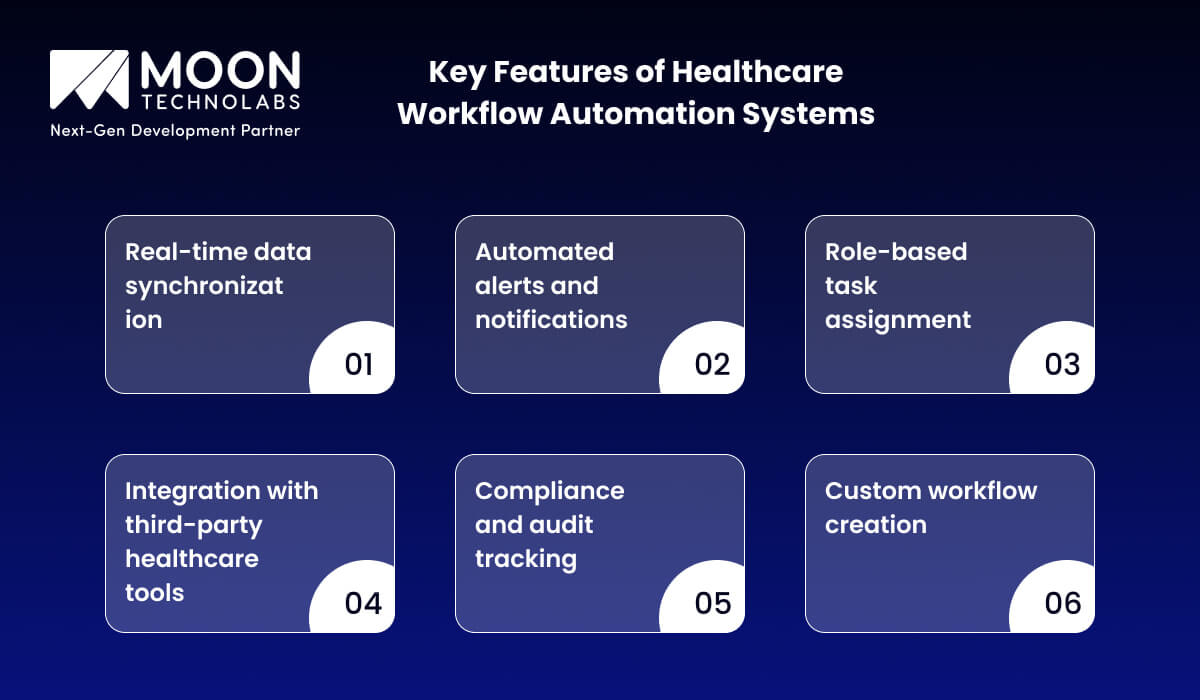
An automation platform must have core capabilities to successfully transform a chaotic medical practice into an efficient environment. There are many key features necessary to drive operational success when using a robust healthcare workflow automation system. Let’s check them out:
Real-time Data Synchronization
This feature ensures that whenever a patient’s record is updated, the changes are instantly reflected across all connected departments. This real-time syncing eliminates data silos and prevents dangerous discrepancies between different healthcare teams.
Automated Alerts And Notifications
You can automatically send critical and time-sensitive updates without requiring human monitoring. For example, text message reminders sent to patients about upcoming appointments, urgent push notifications to physicians regarding important lab results, or automated flags to billing teams when a claim is missing a signature.
Role-based Task Assignment
The role-based assignment feature allows for automatic routing of tasks and patient information to specific staff members only. Tasks are assigned based on their job functions, credentials, and current shift availability. Nurses see clinical care tasks, administrative staff handle check-ins, and billing specialists receive financial workflows. This maximizes productivity and protects patient privacy.
Integration With Third-party Healthcare Tools
This feature uses secure APIs to bridge gaps among third-party tools, including major EHR platforms, telehealth applications, pharmacy networks, and specialized accounting or CRM software, creating a unified, cooperative digital ecosystem.
Compliance And Audit Tracking
Healthcare workflow automation enables automatic logging of every digital action, data access request, and workflow execution within the system. It builds a permanent, tamper-proof audit trail that allows compliance officers to easily track who accessed which patient data and when. As a result, the organization remains audit-ready at all times.
Custom Workflow Creation
Every healthcare facility has unique protocols and operational structures. A top-tier automation system provides intuitive, often low-code or no-code drag-and-drop interfaces that allow administrators to design, test, and deploy customized digital workflows tailored to their clinic’s specific workflows, specialties, and patient care models.
Benefits of Healthcare Workflow Automation
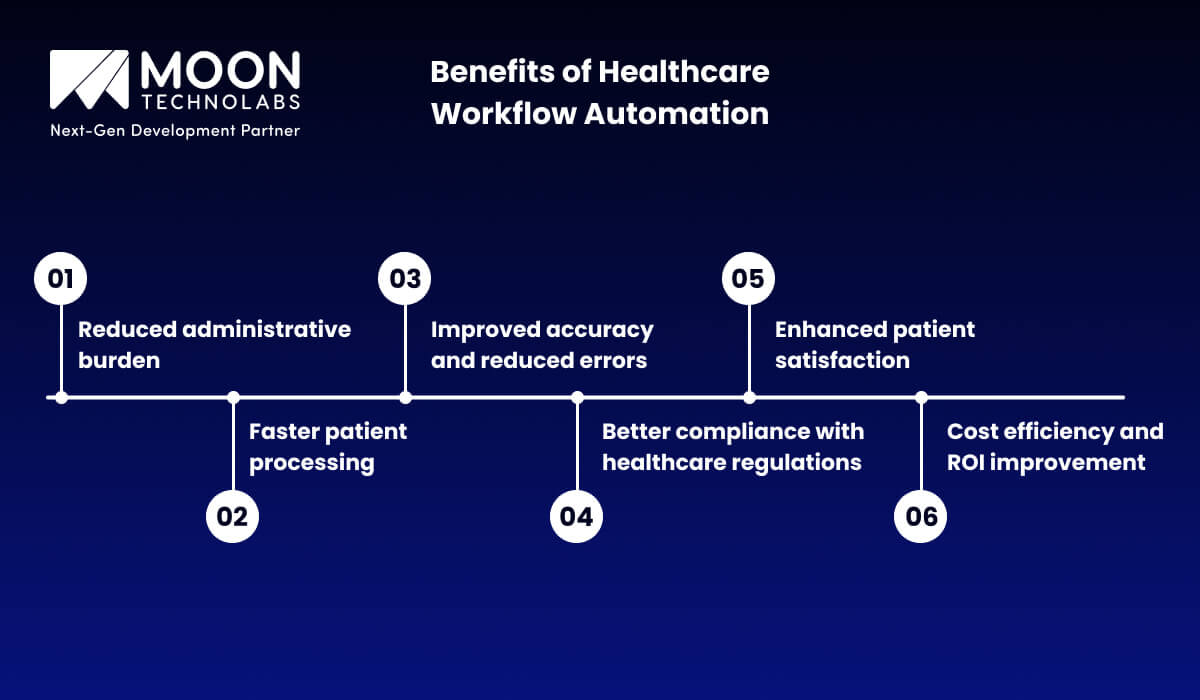
Automated workflows are not just about improving clinic software; they’re about changing the very fabric of everyday life for patients and staff. By replacing manual paperwork with streamlined digital processes, healthcare organizations can unlock a handful of game-changing benefits:
Less Administrative Work
Endless documentation and repetitive data entry routinely overwhelm medical staff. These non-clinical tasks are handled by automation to update patient charts, fill out repetitive forms, and route internal approvals. It also lightens the administrative load, directly combating staff burnout and allowing clinicians to put all their energy into patient interaction.
Faster Patient Processing
Long waiting room delays and slow intake processes frustrate patients and stall clinic efficiency. Automated digital check-ins, instant insurance eligibility verification, and streamlined digital consent forms help patients breeze through registration in minutes. Faster intake leads to optimized appointment slots, shorter wait times, and a highly efficient clinic flow.
Improved Accuracy and Reduced Errors
Manual data entry is a frequent source of human error, resulting in misread prescriptions, misfiled billing codes, or mismatched patient records. Automation systems move data seamlessly, cross-referencing information on platforms in an instant. This reduces typos and misplaced files, greatly improving data accuracy and patient safety.
Better Compliance With Healthcare Regulations
HIPAA and other very stringent medical regulations are a nightmare to comply with from an administrative standpoint. Workflow automation applies compliance rules automatically to every digital transaction and protects sensitive patient data with end-to-end encryption. All actions are logged systematically to maintain a tight audit trail for regulatory reviews, without the hassle.
You Might Also Like:
Enhanced Patient Satisfaction
Today’s patients want a seamless experience, delivered digitally first. Automation does this by offering instant online scheduling, automated text reminders to avoid missed visits, and easy access to digital prescriptions or lab results. Patients feel more informed, respected, and highly satisfied with their care because they experience less friction in the healthcare journey.
Cost Efficiency and ROI Improvement
Manual errors, claim denials, and administrative bottlenecks cost health facilities thousands of dollars annually. Automation optimizes resource allocation, dramatically accelerates billing cycles, and minimizes costly compliance penalties. This operational efficiency drastically slashes overhead expenses, driving a rapid and substantial ROI for the organization.
Real-world Use Cases of Healthcare Workflow Automation
Although digital transformation has many theoretical benefits, it has now been demonstrated through the execution of such projects that automated systems may have tremendous empirical advantages as well. Throughout the healthcare sector, many institutions routinely use automated systems to address complex operational challenges:
Automating Patient Onboarding in Hospitals
Automated intake pipelines are replacing the traditional patient check-in process that involved waiting in long lines, filling out forms on clipboards and paper, and entering data into a computer by hand. When the patient makes an appointment, the system will send them a secure text link to upload their identification and insurance cards.
The OCR software will scan and extract text from these documents, compare it with the patient’s existing records in the electronic medical record system, and add it to the patient’s chart before the patient arrives at the treatment facility.
Streamlining Insurance Claim Approvals
The historical complexity of navigating insurance claims and obtaining prior authorizations has always created administrative friction. Today, automation engines continually review physician notes, interpreting them to standardize them into medical coding.
Once the converted codes are approved, the system automatically cross-references them to determine whether the patient’s insurance covers them. If a treatment requires prior authorization, the system instantly compiles the necessary clinical documentation and submits it directly to the payer portal, reducing approval wait times from weeks to mere minutes.
Managing Telemedicine Workflows
In telehealth, a strong link must exist between your home and the virtual provider’s electronic platform. The technology that connects everything is automation. It handles all of the elements of the telehealth visit, including the video calls themselves. Before the appointment, adaptive intake technologies will capture the patient’s symptoms.
You Might Also Like:
Then, as the patient and provider speak during the telehealth visit, ambient AI technologies will grasp the discussion and draft a complete clinical summary. After the visit, the telehealth platform will automatically send the prescriptions to the pharmacy, schedule any necessary return visits, and facilitate real-time billing, without the doctor needing to click a single button.
Emergency Response Coordination
Automated systems in emergencies provide rapid response and appropriate resource allocation. When a trauma alert is received and an authority to triage is granted, the automated workflow sends prioritized alerts simultaneously to all on-duty surgical specialists and blood bank employees via their electronic devices or mobile telephones.
Concurrently, the system calculates the fastest physical route to the emergency bay, prepares the digital intake sheet, and updates real-time hospital bed-tracking maps to ensure that an empty intensive care unit (ICU) bed is reserved and ready.
Chronic Disease Monitoring Systems
Long-term management of diseases like diabetes and hypertension requires continuous monitoring. Automated remote patient monitoring (RPM) systems connect directly to a patient’s wearable health devices (e.g., a continuous glucose monitor, a digital blood pressure cuff) and continuously collect data from them.
If a patient’s vital signs exceed a clinically predefined dangerous threshold, the RPM system will generate a rule-based alert that bypasses normal queueing to immediately notify the patient’s care management team, enabling proactive and potentially life-saving interventions.
We combine expert Medical Web Development with intuitive automation tools to build compliant, secure, and user-friendly software that your clinicians will actually love using.
Challenges in Implementing Healthcare Workflow Automation
There are many undeniable benefits of digital transformation. However, healthcare workflow automation has its own blockages. Healthcare organizations must navigate unique operational and technical obstacles to deploy these advanced systems successfully:
Integration with Legacy Systems
A lot of healthcare providers continue to use outdated softwares for years and years. This can cause problems, since many of these software applications lack API support, making it hard to create new automated solutions for legacy applications.
This can lead to difficulties in managing modern automation solutions due to fragmented data across different systems, technical errors, and the amount of custom coding required to connect new technology to legacy EHR databases.
Data Privacy and Security Concerns
Healthcare data is highly sensitive and a prime target for cybercriminals. Automating workflows requires that data flow freely across various applications, devices, and cloud networks. Every new integration point inherently introduces a potential vulnerability.
Whether deploying custom healthcare app development solutions or updating user portals, if an automation system is not rigorously secured, it risks exposing protected health information (PHI) to data breaches, ransomware attacks, and unauthorized access.
Staff Training and Adoption Resistance
Technological change often breeds anxiety. Heavy workloads already bog down clinicians, nurses, and administrative staff; forcing them to learn an entirely new software platform can lead to severe resistance to adoption.
Even when partnering with an experienced healthcare app development company to create highly intuitive interfaces, without comprehensive training programs and clear communication about how the automation will actually make their jobs easier, staff may bypass the new systems altogether, reverting to manual habits.
High Initial Implementation Cost
Transitioning to an automated ecosystem requires a significant financial commitment. Beyond the initial software licensing fees, organizations must budget for infrastructure upgrades, advanced AI development integrations, third-party consulting, and extensive cybersecurity auditing.
Regulatory Compliance Complexities
The healthcare sector is governed by a strict, ever-evolving web of legal regulations, including HIPAA, GDPR, and various local medical data mandates. Automating a workflow means ensuring that every single digital trigger, automated message, and data transfer aligns perfectly with these laws.
A single oversight in how an automated bot handles a patient’s file can lead to catastrophic compliance violations, resulting in severe legal penalties and a damaged reputation.
Best Practices for Implementing Healthcare Workflow Automation
Successfully deploying automation across a medical organization requires a strategic approach that balances technological innovation with clinical reality. To ensure a smooth transition and maximize your return on investment, keep these essential best practices in mind:
Start With High-impact Processes
Do not attempt to automate your entire facility overnight. Instead, begin with high-volume, low-complexity tasks that yield immediate, visible results, such as patient appointment reminders or insurance eligibility verification. Securing these quick wins builds confidence among stakeholders and demonstrates the technology’s value early on.
Ensure HIPAA/GDPR Compliance
Patient privacy is non-negotiable. Any automation tool you implement must feature robust end-to-end encryption, strict user-access controls, and comprehensive audit logs. Ensure that your automated workflows strictly adhere to healthcare regulations like HIPAA and GDPR to safeguard PHI and avoid catastrophic penalties.
Choose Scalable and Customizable Solutions
Healthcare needs change rapidly. Select a flexible automation platform that can scale alongside your growing practice and adapt to evolving medical guidelines. Avoid rigid software; instead, opt for systems that offer custom workflow creation so you can easily tailor digital processes to your clinic’s unique operational needs.
Train Healthcare Staff Effectively
To overcome adoption resistance, provide comprehensive, hands-on training tailored to different staff roles. Emphasize how the new automated workflows will eliminate their tedious administrative burdens, allowing them to focus more energy on actual patient care.
Continuously Monitor and Optimize Workflows
Regularly track key performance indicators (KPIs) like task processing times, error rates, and user feedback. This is to identify bottlenecks. Continuously audit and refine your digital workflows to ensure they remain efficient, compliant, and perfectly aligned with your operational goals.
Future Trends in Healthcare Workflow Automation
Healthcare automation is shifting from basic, rules-based tasks to highly intelligent, interconnected systems. Healthcare software modernization is important to stay ahead of these emerging trends to maximize operational efficiency and deliver superior patient care:
AI-Driven Decision-making
Future automation platforms will move beyond simply routing forms to actively assisting with complex clinical decisions. Advanced artificial intelligence models will analyze massive datasets, such as medical imaging, genetic markers, and historical patient records, in real time. This allows the system to flag subtle diagnostic anomalies and suggest personalized, evidence-based treatment plans for physician review.
Robotic Process Automation (RPA) in Healthcare
Robotic Process Automation will become the standard engine for handling complex, multi-system administrative tasks. RPA bots can mimic human digital actions to log into legacy software, extract data from unstructured documents, and update cross-platform records flawlessly.
This eliminates data-entry bottlenecks in areas such as billing, credentialing, and supply chain management without requiring an expensive software overhaul.
Integration With IoT Medical Devices
IoT in healthcare will create a fully connected healthcare ecosystem. Automated workflows will sync directly with smart hospital beds, wearable cardiac monitors, and automated medication dispensers. The system will continuously ingest this streaming biometric data and automatically trigger instant clinical interventions or adjust hardware settings the moment a patient’s vitals fluctuate.
Predictive Analytics for Patient Care
Instead of just responding to events, automated systems will use predictive analytics to anticipate them. By evaluating historical trends and real-time data, algorithms will automatically predict peak emergency room congestion, forecast patient readmission risks, and identify individuals at high risk for chronic disease complications, allowing hospitals to allocate resources proactively.
Voice-Enabled Automation Systems
Voice technology-powered healthcare systems will revolutionize clinical documentation and reduce doctors’ screen time. Ambient voice-enabled systems will securely listen to patient-provider consultations, automatically extract relevant clinical data, and accurately populate the EHR system in the background. This allows physicians to focus entirely on face-to-face patient interaction rather than typing notes.
We upgrade fragmented systems to a fully integrated digital ecosystem. Our advanced Medical Web Development and automation services include flawless EHR synchronization as well as secure patient portals.
Wrap Up
Healthcare workflow automation has become a significant operational necessity for modern medical organizations. It shifts the burden of repetitive administrative tasks to AI-based software solutions. Healthcare software modernization simultaneously eliminates costly human errors and combats widespread staff burnout.
When you navigate integration challenges and compliance regulations with careful planning, the long-term benefits are undeniable: enhanced patient satisfaction, reduced operational friction, and measurable cost savings. Partner with a healthcare app development company to utilize the healthcare digital transformation for an optimized workflow and deliver exceptional patient care.
FAQs
01
What is healthcare workflow automation, and how does it improve hospital operations?
Healthcare workflow automation uses software to handle repetitive tasks like scheduling, billing, and data entry. It helps to reduce mistakes by eliminating paperwork. This, in turn, helps to finish patient intake forms. Automation helps reduce staff burnout and costs. Doctors and nurses can focus more on delivering patient care rather than on manual operation work.02
What are the key challenges and costs involved in implementing healthcare workflow automation systems?
Implementing healthcare workflow automation comes with many challenges. It requires integrating with major EHR systems. It also demands strict adherence to HIPAA compliance. Sometimes the staff is not compatible with using new technology. The cost of setting up the software and synchronizing everything ranges from $20,000 to over $500,000. Overall, Healthcare workflow automation requires significant investment and planning.03
How is healthcare workflow automation used in EHR management, billing, and patient scheduling?
Healthcare workflow automation integrates scheduling, electronic health record management, and billing into a single system. For scheduling, it lets people book appointments online and automatically sends text reminders. It also keeps health records up to date by immediately adding new information and filling out patient charts on its own. Healthcare workflow automation also speeds up billing by checking insurance coverage promptly and automatically submitting claims using clinic information.04
What are the latest trends and technologies shaping healthcare workflow automation in modern healthcare systems?
Modern healthcare systems are rapidly adopting ambient AI scribes that listen to clinician-patient conversations and automatically generate structured EHR notes. Other advanced technologies include AI-driven revenue cycle tools that automate prior authorizations and coding to slash claim denials. Hospitals are also deploying autonomous AI agents and low-code platforms to easily coordinate real-time patient triage, scheduling, and cross-department workflows.




Jayanti Katariya is the CEO of Moon Technolabs, a fast-growing IT solutions provider, with 18+ years of experience in the industry. Passionate about developing creative apps from a young age, he pursued an engineering degree to further this interest. Under his leadership, Moon Technolabs has helped numerous brands establish their online presence and he has also launched an invoicing software that assists businesses to streamline their financial operations.
Submitting the form below will ensure a prompt response from us.
We refine our expertise to deliver innovative business solutions.





205 N Michigan Avenue, #810, Chicago, 60601, Illinois, United States
13500 Long Is Dr, Pflugerville, TX 78660, USA

C/105 Ganesh Meridian, S.G. Highway, Ahmedabad, GJ 380060


Ayse D.
Co-Founder France
“ I highly recommend Moon Technolabs as the quality of service is wonderful. We have hired this company to develop the product based on some complex & technical issues. We get the best quality services as compared with others in the market. Huge Thanks to Moon Technolabs as the team is always ready to give the solution all time.”

Justin G.
Founder & CEO USA
USA“ Moon Technolabs is a pioneer in the WebRTC based project as they have fixed complicated segments of the module by fulfilling different product lines by providing 24X7 customer support. We really recommended Moon Technolabs as they are able to develop products as per the module deadline and project timeline.”

Flavio S.
Founder & Managing Director Germany
“I am happy to recommend Moon Technolabs for their app development services. They successfully developed apps for me, and I am highly satisfied with the overall outcomes. The development team has swiftly addressed the issues with responsive and effective communication to understand the requirement quickly and actively resolve the back-and-forth problems that arose...”

Jay M.
Founder & CEOUSA“Moon Technolabs is the best company that provides advanced apps and websites development services in the USA and Europe. I am a newbie to develop my app with an external team. I am really happy to work with them as I am not that much mobile apps user. Here, the team and specially the CEO of Moon Technolabs helps me to let me know about the benefits of my app to generate revenue....”


Our Offices
India
C/105 Ganesh Meridian,S.G. Highway, Ahmedabad, GJ 380060USA
205 N Michigan Avenue, #810, Chicago, 60601, Illinois, United StatesContact Information


