
Jayanti Katariya
Last Updated: July 25, 2025 Total Views: 4996
Table of Content


Blog Summary:
This post provides a comprehensive insight into strategizing the QA process for healthcare software development with. From basic details, we explain the types of QA tests, including manual and automation testing, along with best practices and challenges of Healthcare Application Testing.
Table of Content
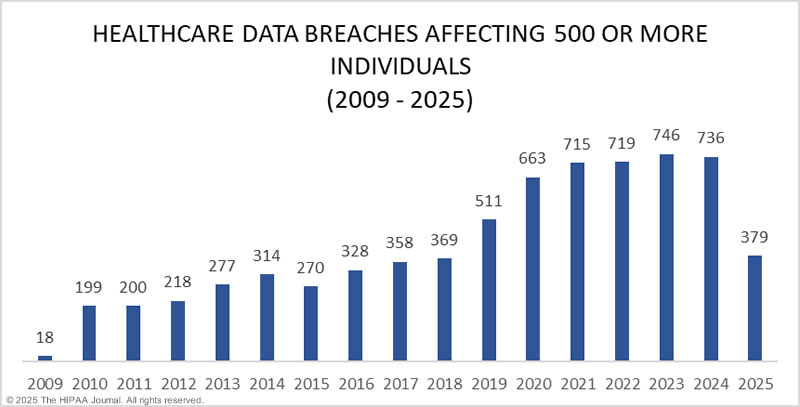
Imagine a scenario where your healthcare app is suffering a data breach or fails a clinical audit. Could you imagine what will happen? According to the HIPAA Journal, 725 cases of data breaches were reported in 2023, resulting in approximately 133 million records being compromised. This situation creates repercussions, including financial penalties, HIPAA violations, and lawsuits. These all reflect compromised patient safety.
Not to mention, healthcare is a sector where trust is everything – even a small QA insight can lead to a major fall in reputation. It necessitates rigorous healthcare quality assurance, which has become mandatory rather than optional. Your healthcare apps should meet high-performance standards while adhering to interoperability requirements, privacy, and regulatory requirements.
A well-defined QA process is essential for any IT team or small business to avoid risks that fall short of user expectations and compliance. In this guide, we discuss a complete QA methodology for healthcare app development. Let’s explore now.
QA in healthcare app development is much more than preventing bugs. It involves maintaining reliability, protecting lives, and ensuring regulatory compliance. The entire process requires a compliance-based and rigorous approach that adheres to both clinical and legal consequences.
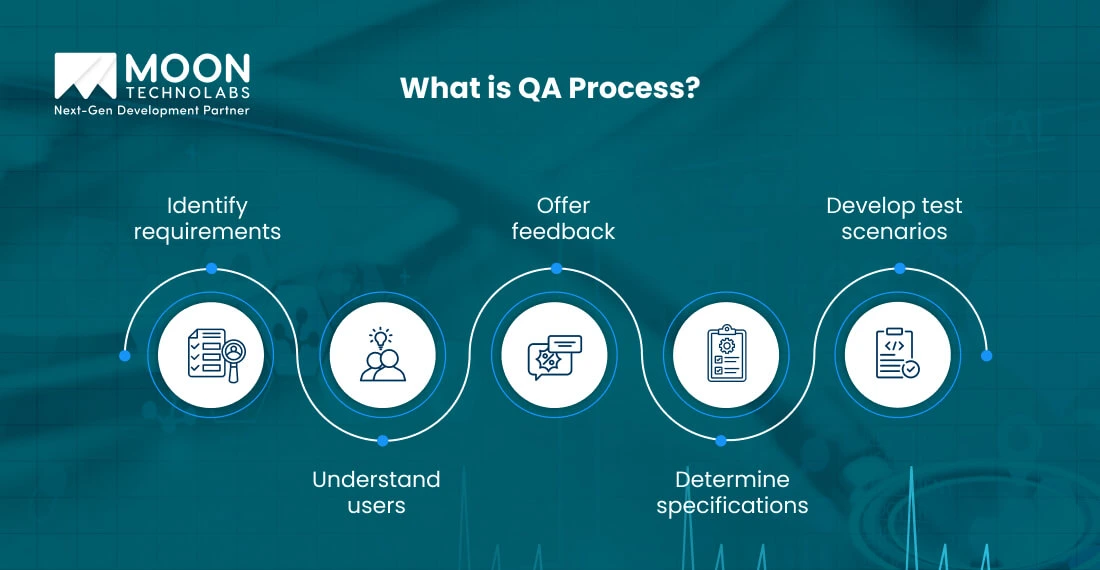
QA is a process that checks whether healthcare apps perform as expected. It verifies the software works with accuracy, safety, and full compliance within the context of patient privacy and clinical workflows.
QA in the healthcare app development process differs significantly from general app development, which focuses on functionality, user experience, and cross-device consistency. Healthcare QA focuses on the following important elements;
You need to understand that even a minor bug in your healthcare app leads to major issues. It could expose various issues, ranging from exposing personal health details to delaying urgent care.
When it comes to compliance, it’s pivotal for QA in the healthcare sector. Ensure that every phase of your QA process incorporates all relevant regulations, such as GDPR, HIPAA, and FDA guidelines, among others. Let’s explain each of them in-depth.
Check out our detailed guide on HIPAA compliance app development, which will help you navigate and mitigate complex regulations.
Varieties of healthcare software require fully customized QA strategies.
A strategy-driven QA testing process provides great value to healthcare organizations. Let’s consider it from the different points of view of various stakeholders.
Manual testing plays a crucial role in determining complex user workflows that involve patient interactions, clinical logic, variable conditions, and other factors. For instance, a medical professional who deals with medication charts, patient vitals, and alerts should experience an intuitive and smooth flow. It’s something that automated scripts cannot replicate in real-world use cases.
It’s indeed highly important in accessibility testing, especially for patients with disabilities or the elderly who rely on voice-based navigation. Manual testing and human observation often require analyzing the way visually impaired users interact with mobile health apps.
An effective and result-driven software testing in healthcare includes the following important points:
Automation testing is crucial for ensuring consistency, speed, and scalability. It’s highly important for today’s advanced healthcare QA strategies.
Automation is ideal for high-volume, repetitive, or time-sensitive tasks that require implementation across multiple platforms and builds. Let’s understand important areas where automation brings value, including;
Healthcare QA teams mainly depend on various top-notch automation tools, which are as follows:
Automation works smoothly when integrated with a CI/CD pipeline. It triggers test suites with every code pull or push request. It offers;
When you integrate automated QA with DevOps, it ensures healthcare apps remain high-performing, audit-ready, and deployment-friendly.
Security is not to be optional for healthcare development. It is, in fact, critical, especially with the rising number of data breaches. Therefore, security testing has become indispensable for quality assurance in healthcare.
It cannot be denied that healthcare data is the primary target of cyber attackers. We have already seen various examples, whether it’s ransomware attacks or the theft of patient records. These are real and an increasing threat.
Many reputable regulatory bodies, such as GDPR and HIPAA, often impose heavy fines for non-compliance. You need to understand that even a single data breach can cause millions of dollars in costs and permanently damage trust.
A security testing strategy consists of multiple approaches that are as follows;
Let’s explore an important checklist for quality assurance testing before you conduct a thorough security test.
Wondering if your app’s QA process truly covers all compliance and security bases? Let our specialists review your workflows and identify key improvement areas.
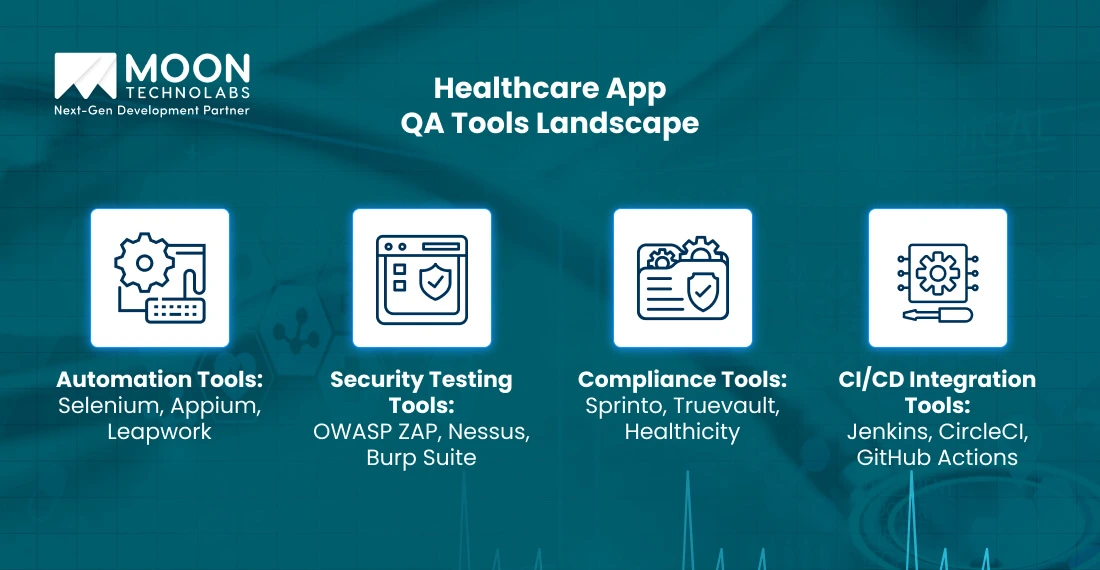
Implementing the top practices and tools makes your QA process more advanced and streamlined. Let’s explore various emerging trends and tools to improve speed, quality, and compliance.
QA lifecycle offers regulatory alignment and consistent delivery. It includes multiple phases.
The QA process in healthcare app development needs to be cross-functional by design. It also requires perfect collaboration between developers, testers, clinicians, compliance officers, and others for various purposes.
Modern healthcare QA teams should adopt the following important practices to stay compliant and competitive;
The development of healthcare apps presents several QA challenges that can lead to audit failures, stall releases, and compromise patient safety. Let’s explore those challenges one by one.
Babylon Health, a telemedicine company, faced major software issues in 2020. The affected software was the UK app.
An app update introduced a bug that allowed users to browse consultation recordings that didn’t belong to them.
It posed risks, including breaches of confidentiality and the disclosure of sensitive PHI, which constituted a clear violation under GDPR/HIPAA-like regulations.
Although the issues were not malicious, they still posed significant privacy risks and became a major threat to the company’s reputation and compliance.
The QA team acted fast and unveiled a vulnerability by focusing on privacy scenarios and edge cases. They identified and resolved the glitches within a couple of hours, thereby successfully mitigating a large-scale data breach.
A robust QA process is essential for healthcare app development for several reasons, including compliance, security, and user-friendliness. At Moon Technolabs, our QA experts ensure that your healthcare apps meet the latest QA standards, encompassing user safety, regulatory compliance, and data security.
Our deep expertise as a top software testing services company spans manual, automated, and advanced security testing, ensuring every application is robust, reliable, and fully compliant with global standards, including HIPAA, GDPR, and 21 CFR Part 11. We have a proven track record across diverse digital health solutions ranging from telemedicine, mental health, EHRs, medical IoT, and pharmaceutical apps.
01
02
03
04

Jayanti Katariya is the CEO of Moon Technolabs, a fast-growing IT solutions provider, with 18+ years of experience in the industry. Passionate about developing creative apps from a young age, he pursued an engineering degree to further this interest. Under his leadership, Moon Technolabs has helped numerous brands establish their online presence and he has also launched an invoicing software that assists businesses to streamline their financial operations.


Submitting the form below will ensure a prompt response from us.
We refine our expertise to deliver innovative business solutions.





205 N Michigan Avenue, #810, Chicago, 60601, Illinois, United States
13500 Long Is Dr, Pflugerville, TX 78660, USA

C/105 Ganesh Meridian, S.G. Highway, Ahmedabad, GJ 380060


Ayse D.
Co-Founder France
“ I highly recommend Moon Technolabs as the quality of service is wonderful. We have hired this company to develop the product based on some complex & technical issues. We get the best quality services as compared with others in the market. Huge Thanks to Moon Technolabs as the team is always ready to give the solution all time.”

Justin G.
Founder & CEO USA
USA“ Moon Technolabs is a pioneer in the WebRTC based project as they have fixed complicated segments of the module by fulfilling different product lines by providing 24X7 customer support. We really recommended Moon Technolabs as they are able to develop products as per the module deadline and project timeline.”

Flavio S.
Founder & Managing Director Germany
“I am happy to recommend Moon Technolabs for their app development services. They successfully developed apps for me, and I am highly satisfied with the overall outcomes. The development team has swiftly addressed the issues with responsive and effective communication to understand the requirement quickly and actively resolve the back-and-forth problems that arose...”

Jay M.
Founder & CEOUSA“Moon Technolabs is the best company that provides advanced apps and websites development services in the USA and Europe. I am a newbie to develop my app with an external team. I am really happy to work with them as I am not that much mobile apps user. Here, the team and specially the CEO of Moon Technolabs helps me to let me know about the benefits of my app to generate revenue....”


Our Offices
India
C/105 Ganesh Meridian,S.G. Highway, Ahmedabad, GJ 380060USA
205 N Michigan Avenue, #810, Chicago, 60601, Illinois, United StatesContact Information


