
 Total Views: 181
Table of Content


Blog Summary:
This comprehensive guide covers the detailed process of creating successful fuel delivery apps, outlining their various steps. We also explain features to integrate, how the app works, reasons to invest, and more. Let’s read the entire blog to explore more.
Table of Content
Imagine your delivery vehicles are ready as per the predefined schedule for the day, and drivers are set to go. But suddenly one of your vehicles runs out of fuel. So, the delivery gets delayed, and your team works hard to tackle the situation. Well, this is a common scenario many logistics and transport businesses face.
It goes without saying that any unplanned stops raise costs, waste time, and lower efficiency for your fleet business. And, fuel delivery app development offers an easy solution to these problems. It helps your drivers get fuel delivered exactly at their desired location while offering safety.
Due to these potential advantages, most businesses are turning to mobile delivery solutions and frequently opt to build fuel delivery apps. Meanwhile, the development process requires a proper strategy and plan. In this guide, we will discuss everything you need to know to develop a successful fuel delivery app.
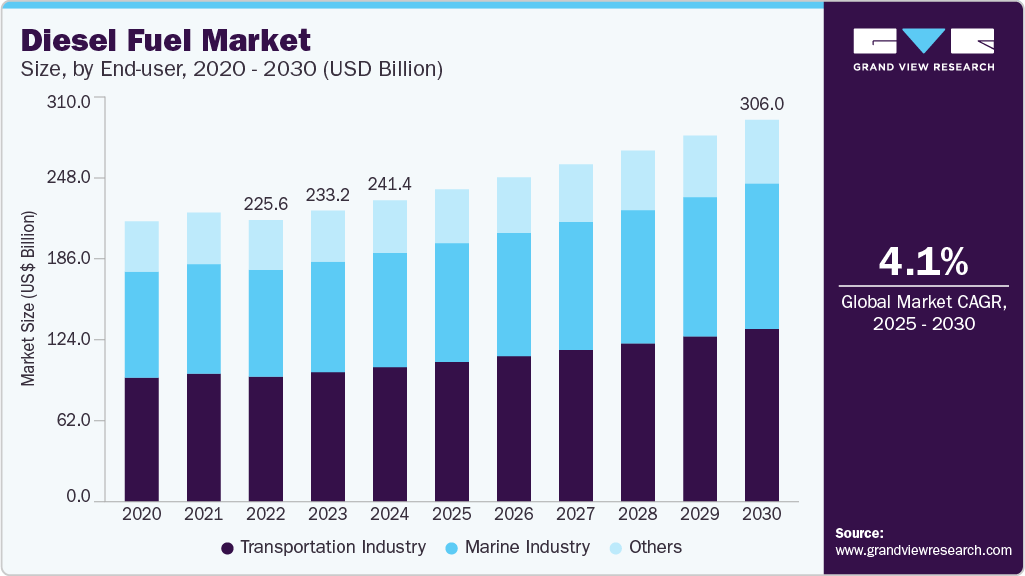
The fuel delivery market is evolving rapidly, driven by unprecedented demand for digital convenience and on-demand services. As more consumers and industries seek contactless fuel solutions, app-based fuel delivery has become a popular alternative to traditional fueling options.
Let’s explore some key stats of the fuel delivery market:
As an on-demand fuel delivery mobile platform, the app enables users to order fuel online, regardless of time or location. It works on the same principle as a food-ordering or grocery-delivery app. Using the app, users can order a variety of fuels, including diesel, petrol, and others.
To order fuel, users first need to enter their locations and then pay securely online. After completing the order process, the fuel is delivered. A delivery tanker arrives at the user’s location to refuel their vehicles or equipment.
Integrated with real-time tracking, GPS, notification systems, and more, these apps provide a complete, safe, and smooth experience. They prevent users from visiting the fuel stations, thereby saving them valuable time.
Fuel delivery apps work in several steps by combining GPS tracking, payment, and real-time communication to cater to users’ refueling requests.
Let’s understand important steps in detail:
Users access the app to place the refueling request by enabling GPS access. The app can detect users’ exact locations, enabling it to pinpoint where the fuel needs to be delivered. Users can also manually enter or drop a location pin.
This feature is highly important for ensuring delivery accuracy. It allows the service provider to dispatch a nearby fuel truck, reducing overall waiting time and fuel transportation costs.
Once users set their exact location, they must select the required fuel. They can select fuel type based on their requirements. Many advanced fuel delivery apps also provide numerous options for eco-friendly or premium-grade fuels.
By displaying exact fuel prices, these apps help users make detailed comparisons and decide accordingly.
After confirmation of the refueling order, users must make payment. They can choose the right payment methods from a wide range of options, including credit/debit cards, integrated digital wallets, and more. A fuel delivery app offers full data privacy and fraud protection with encryption.
Apart from this, users also receive instant invoices and digital receipts, providing a complete transaction history and transparency. It builds reliability while simplifying the overall financial tracking for service providers and users.
After a successful payment, the app passes the order to a nearby fuel delivery truck. Drivers get important instructions on their dashboards, including quantity, fuel type, delivery location, and more.
In addition, users can track vehicle delivery in real time and receive important notifications about the estimated arrival time. Once they reach the overall destination, the fuel is provided using certified equipment that complies with environmental and safety regulations.
With the unprecedented growth of the on-demand economy, investment in fuel delivery app development offers ample opportunities for businesses that adopt this model.
Let’s understand some compelling reasons why one should invest in it:
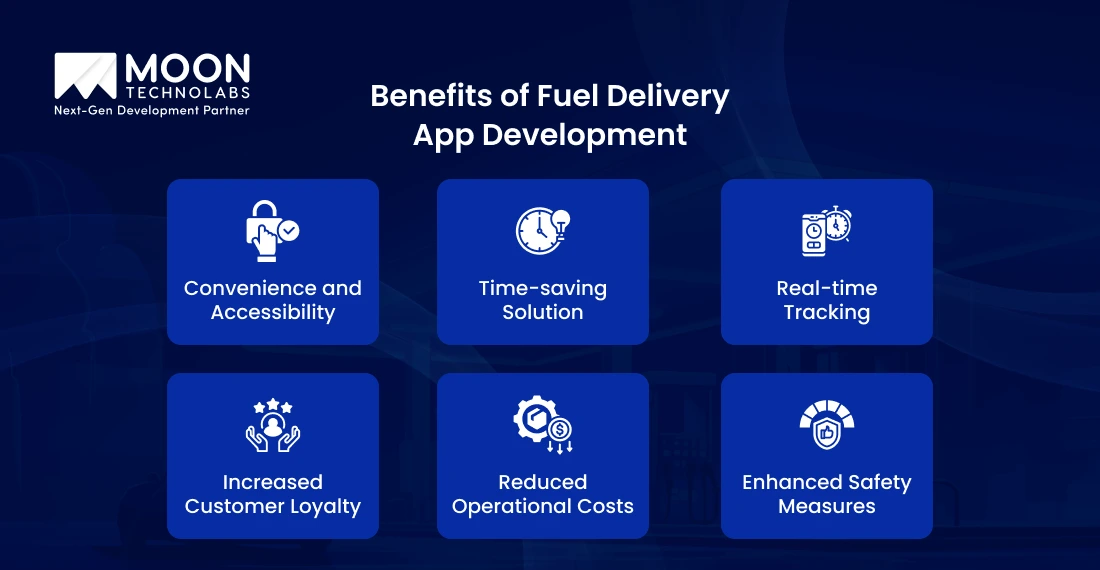
Developing a mobile app for fuel delivery benefits everyone, including stakeholders, fuel suppliers, and customers. Let’s understand some of the most promising advantages:
Unmatched convenience and accessibility are among the top advantages of fuel delivery apps. They prevent users from visiting fuel stations to refuel their vehicles, generators, or any other equipment. They also don’t need to waste their valuable time standing in long queues to buy fuel.
The app is useful for everyone, whether you’re a fleet owner, a busy professional, a remote construction site operator, or others. It ensures fuel availability at users’ desired locations with just a couple of taps.
This level of app accessibility serves a range of audiences, including logistics providers, industries using heavy equipment, and others.
With on-demand fuel delivery apps, businesses can focus on their work even while handling or managing the refueling process of their vehicles or machinery. This works well, especially for fleet operators in minimizing downtime, optimizing operations, and thus boosting overall productivity.
A robust fuel delivery app comes with GPS-based real-time tracking. It enables users to keep an eye on the exact delivery status, from order confirmation to refueling completion. This level of transparency is necessary to enhance user experience.
Using tracking data, businesses can monitor delivery vehicle performance, optimize routes, improve operational efficiency, and more. Thus, it also helps them predict delivery time. Based on this, they can offer highly accurate ETAs to their customers.
A perfectly designed fuel delivery app ensures long-term loyalty, boosting customer retention. Whether it’s reward programs, personalized notifications, or subscription-based refueling services, they play a vital role in keeping users engaged.
Apart from this, many other features, such as quick payment methods, saved preferences, repeat orders, etc., give customers a genuine reason to rely on the platform daily. Additionally, order history and digital recipients make account management smoother and more transparent.
Another interesting fact about a fuel delivery app is that it enables businesses to control operational expenses through demand forecasting, route optimization, resource management, and more.
With the automated scheduling, they find it convenient to reduce idle time for staff and delivery vehicles. Besides, analytics tools offer detailed insights into the actual fuel consumption patterns.
It enables businesses to make data-driven decisions, helping them manage inventory effectively, minimize waste, maintain competitive pricing, and more.
In the fuel delivery business, safety is highly important. These apps boast of advanced safety protocols for both customers and delivery personnel.
Apart from this, the app ensures a highly secure fueling process with trained staff, certified vehicles, and compliance with required safety rules and regulations.
Develop a custom fuel delivery app to streamline refueling operations, boost efficiency, and offer customers on-demand fuel anytime, anywhere.
Talk to Our Developers
An advanced fuel delivery app includes many key features that ensure transparency, safety, convenience, and operational efficiency. Let’s explore each feature in detail:
The user registration process facilitates new users to create an account first before accessing the app. During registration, they need to provide their personal details, such as email addresses, mobile numbers, social media profiles, and more.
After completing registration, users can set up their profiles using their personal details, including preferred payment methods, vehicle type, etc. It personalizes their experience while ensuring a smooth ordering process.
These apps also support OTP-based verification to improve security and prevent fraudulent sign-ups. For business, this feature collects user data important for targeted offers, personalized marketing, and improved customer engagement.
Once registered, users can easily choose the quantity and type of fuel they require. A large number of apps provide common fuel types like diesel and petrol, which may include eco-friendly or high-grade fuels.
With the app that displays current prices by location, users can make informed decisions. Some platforms enable recurring or subscription-based orders for daily users. Its built-in calculator can be used to estimate total costs, including taxes and delivery fees.
Using real-time tracking features, users can monitor delivery vehicle locations. It integrates mapping APIs and GPS to highlight the estimated time of arrival, accurate routes, and the live status of delivery vehicles.
For businesses, both drivers and admins can avoid any congested areas, analyze route efficiency, and offer on-time delivery. This feature enables quick alerts, especially when the delivery vehicle deviates from its original route, ensuring accountability and safety.
Payment gateway integration is essential to enable users to complete transactions securely. Make sure your app allows users to select the right payment method from the available options, such as UPI, credit or debit cards, digital wallets, or net banking.
An advanced payment system comes with region-specific and multi-currency gateways. To ensure the safety of every transaction, fuel delivery apps use robust encryption methods such as tokenization and SSL. These ensure that every payment data remains safe from any unauthorized or fraudulent access.
The order history displays detailed information about users’ past transactions. It displays information along with other details such as date, time, location, total cost, fuel type, and more.
This feature is quite useful for corporate clients, fleet managers, or others. They require day-to-day records for accounting and compliance purposes. For any business, order history provides crucial insights into user behavior and demand patterns.
These details are quite necessary for optimizing promotions, pricing strategies, service routes, and more. Apart from this, it also boosts overall user experience by letting them reorder fast with just a one-tap.
Push notifications are essential for maintaining real-time communication between service providers and users. It provides users with necessary updates on delivery progress, order confirmation, payment status, estimated arrival time, special offers, and more, directly on their devices.
Apart from sending alerts, notifications also serve as a marketing tool to deliver referral offers, personalized discounts, loyalty rewards, etc., to keep users engaged. Additionally, admins can use this feature to send alerts to drivers about traffic conditions, route updates, fuel inventory levels, and more.
Customer feedback plays a vital role in boosting service quality. It enables users to share their overall experience and feedback about driver behavior, fuel delivery, app usability, fuel quality, and more.
It helps businesses identify their overall strengths and weaknesses in their operations. Positive reviews are necessary to develop brand credibility, whereas constructive criticism offers an excellent chance for improvement.
The admin dashboard serves as the central control hub for the fuel delivery ecosystem, providing administrators with important insights, operational controls, real-time data, and more.
It includes data visualization tools for faster decision-making. The dashboard allows the admin to perform numerous tasks, which are as follows:
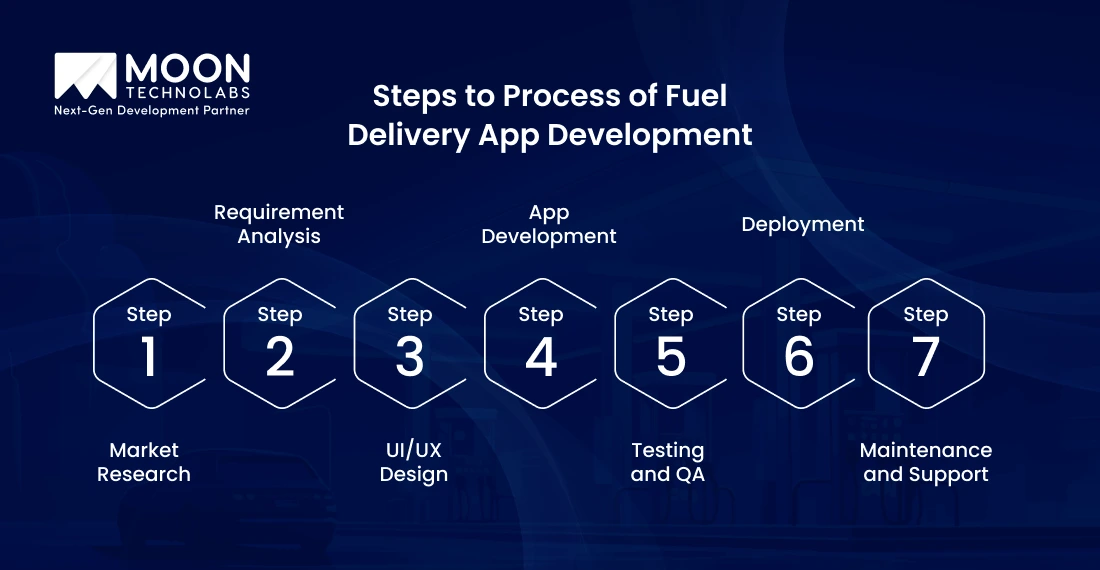
Fuel delivery app development requires a well-structured approach that strikes a balance between safety, innovation, and user convenience. The entire development process is accomplished in multiple steps, as follows:
Market research is a process for gathering details on target audiences, existing competitors, user requirements, pain points, and more. It becomes essential for business owners and developers to analyze market trends, consumer behaviors in particular regions, fuel distributions, and more.
Apart from this, market research also involves studying high-performing apps to identify important differentiators. This data-driven approach is useful for determining a unique value proposition.
Gathering requirements is the next step of mobile fuel delivery app development. The process includes understanding supported platforms, app core functionalities, payment gateways, GPS tracking, real-time notifications, and more.
Technical teams coordinate with businesses seeking to develop apps to determine the performance benchmarks, security protocols, compliance standards, and more.
This step focuses mainly on crafting a visually appealing, intuitive, and user-friendly interface. Designers are responsible for managing tasks like wireframing, prototyping, and mockups.
These envisage the navigation and flow of apps. The app design should make it easy for users to register, select fuel, and place orders. Be it icons, color schemes, or typography, many factors are pivotal to make an app attractive.
This is the core step that involves coding apps based on the provided design. This step involves creating both the backend and the frontend, setting up the database, and integrating the API. App developers then integrate necessary features such as GPS tracking, payment gateways, push notifications, and more.
After development, the next step is to test your app before going live. QA experts check for performance bottlenecks, bugs, and compatibility issues across different operating systems and devices.
Be it usability, functionality, performance, or security, different types of testing ensure apps run seamlessly in real-world scenarios. QA experts verify that safety protocols are properly followed, as fuel delivery involves handling various hazardous materials.
You Might Also Like:
The Essential QA Checklist for Healthcare Mobile App Security Testing
After testing is complete, the app is finally ready for deployment. It involves uploading the apps to app stores and also setting up servers for backend operations.
App deployment also includes configuring many analytics tools and analysis systems to track performance metrics and user engagement. It’s necessary to implement app store guidelines while ensuring a smooth installation and update experience.
Even after launching the app, the development process doesn’t end—maintenance and support are also important parts. Being an ongoing process, it includes releasing updates, resolving post-launch bugs, optimizing performance, integrating new features, and more.
Regular updates are also essential to ensure the app complies with the emerging regulations and platform requirements. Reliable customer support is necessary for resolving user issues quickly, ensuring customer satisfaction, and improving overall reliability.
Well, the cost of developing a fuel delivery app starts at $50,000 and can go up to, or even beyond, $150,000. It depends on numerous factors, such as the selected platforms, design, app complexity, features, developer location, and more.
Apart from these factors, fuel delivery apps also incur additional costs, such as third-party integrations, backend infrastructure, ongoing maintenance, and more.
Let’s create your on-demand fuel delivery app to automate refueling, track fleets, improve efficiency, and more. Deliver fuel to any location and at any time.
Get Started Now
We specialize in creating feature-rich fuel delivery apps tailored to match your specific requirements and goals. Whether you are a startup or an established business, we are your ideal destination for building fuel-delivery apps.
We have seasoned app developers with expertise in mobile application development, UI/UX design, secure payment solutions, backend integration, and more.
Our team uses agile methodologies for rigorous testing, quality assurance, timely delivery, and compliance with safety and industry standards. We create scalable apps that optimize operations to deliver higher customer satisfaction and support adequate business growth.
You may now have a clear idea of how to proceed with fuel delivery app development. Before you go for development, you need to complete the necessary preparations, such as defining the actual purposes and target audience, and analyzing market scenarios.
You also need to plan strategically about the right features to integrate into the app to ensure its success. Partner with us to develop secure, scalable, and feature-rich solutions tailored to match your specific market needs.
01
02
03
04
05

Jayanti Katariya is the CEO of Moon Technolabs, a fast-growing IT solutions provider, with 18+ years of experience in the industry. Passionate about developing creative apps from a young age, he pursued an engineering degree to further this interest. Under his leadership, Moon Technolabs has helped numerous brands establish their online presence and he has also launched an invoicing software that assists businesses to streamline their financial operations.


Submitting the form below will ensure a prompt response from us.
We refine our expertise to deliver innovative business solutions.





500 N Michigan Avenue, #600, Chicago IL 60611
13500 Long Is Dr, Pflugerville, TX 78660, USA

C-105, Ganesh Meridian, S.G. Highway, Ahmedabad, GJ 380060


 France
“ I highly recommend Moon Technolabs as the quality of service is wonderful. We have hired this company to develop the product based on some complex & technical issues. We get the best quality services as compared with others in the market. Huge Thanks to Moon Technolabs as the team is always ready to give the solution all time.”

 USA
USA“ Moon Technolabs is a pioneer in the WebRTC based project as they have fixed complicated segments of the module by fulfilling different product lines by providing 24X7 customer support. We really recommended Moon Technolabs as they are able to develop products as per the module deadline and project timeline.”

 Germany
“I am happy to recommend Moon Technolabs for their app development services. They successfully developed apps for me, and I am highly satisfied with the overall outcomes. The development team has swiftly addressed the issues with responsive and effective communication to understand the requirement quickly and actively resolve the back-and-forth problems that arose...”
 USA
USA“Moon Technolabs is the best company that provides advanced apps and websites development services in the USA and Europe. I am a newbie to develop my app with an external team. I am really happy to work with them as I am not that much mobile apps user. Here, the team and specially the CEO of Moon Technolabs helps me to let me know about the benefits of my app to generate revenue....”


