
 Total Views: 396
Table of Content


Blog Summary:
If you’re trying to decide between Framer vs Webflow, you’re not alone. Both are powerful website builders, but they serve different needs. In this blog, we’ll break down the key differences between Framer and Webflow, covering things like ease of use, customization, SEO features, and custom pricing. By the end, you’ll have a better idea of which one is the best fit for your website project.
Table of Content
Choosing the right website builder can be overwhelming, especially with so many options available. Among the top contenders are Framer Vs Webflow, both of which offer powerful design and development tools. But how do you know which one is right for your project? Whether you’re a designer seeking creative control or a developer focused on custom functionality, understanding the strengths of Framer vs. Webflow is key.
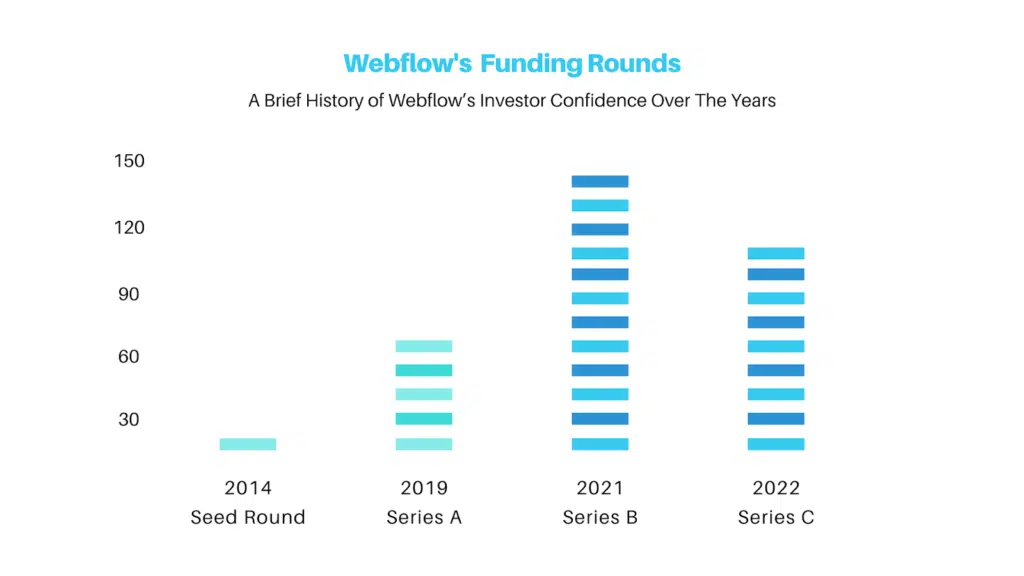
According to AUQ.io, there were 480,000 websites built on Webflow, collectively receiving about 10 billion visits a month, and an additional 450,000 websites were created on Webflow due to its flexibility and user-friendly interface. However, Framer has been gaining traction as a solid alternative for those looking to integrate smooth animations and interactive nested elements with a more intuitive interface.
Framer is a powerful, design-first website builder that blends the flexibility of visual design tools with the control of code. Initially known for its interactive prototyping capabilities, Framer focuses on creating fully responsive websites without heavily relying on traditional coding, allowing developers and web designers to build scalable web projects with minimal effort. Below are the key points about Framer:
Webflow is a powerful website builder and design tool that combines visual web design with the flexibility of code. It allows users to create custom, responsive websites without writing code, making it ideal for designers who want complete control over their projects. Webflow templates provide an intuitive drag-and-drop interface for creating websites and offer deeper capabilities for developers, including code integration, CSS styling, and JavaScript.
As a leading web development company, we use the Webflow platform to craft stunning and high-performing websites. So, whether you are a freelancer or an agency, you can still depend on Webflow development to bring custom website and e-commerce designs to life. Here are the key points about Webflow:
You Might Also Like:
Best Webflow Alternative Tools for Flexible Website Development
Have a sneak peek at where we compare the best website builders, making it easier for you to choose the one that suits your project requirements:
| Feature | Framer | Webflow |
|---|---|---|
| Design Flexibility and Visual Editing | Highly flexible, great for creative projects. | Flexible, focused on UI/UX interactions. |
| Ease of Use and Learning Curve | Easier for beginners, but complex for advanced features. | Steeper learning curve, especially for beginners. |
| CMS and Content Management Capabilities | Limited CMS capabilities. | Strong CMS with full control over dynamic content. |
| Custom Code and Developer Control | Full code access is great for developers. | Excellent code integration and control. |
| Hosting, Performance, and Scalability | Fast but less scalable. | Robust, scalable, and performance-focused. |
| SEO and Marketing Tools | Basic SEO options. | Advanced SEO tools and marketing integrations. |
| Pricing and Cost Structure | Flexible, more affordable. | Webflow pricing is expensive, especially for advanced CMS collections and hosting. |
Both Webflow and Framer are powerful design platforms that enable users to create responsive, visually stunning websites without extensive coding knowledge. However, they differ significantly in their approach, target audience, and features. Here’s a breakdown of the key differences across several important factors:
Framer:
Framer is known for its design-first approach, offering a robust set of tools to create highly interactive websites and prototypes. It allows users to work with a drag-and-drop interface and provides advanced features for animation, complex interactions, and microinteractions. Its design interface is similar to tools such as Figma and Sketch, making it a favorite among designers who want to push the boundaries of creativity through animations and interactions.
Webflow:
Webflow offers a more traditional web design approach with a built-in visual CSS editor. It gives users complete control over the layout, styling, and positioning of elements through a visual Webflow interface that mimics front-end development. While it doesn’t focus as heavily on advanced interactions, it does allow complex animations and interactions through its Webflow designer interface. It’s generally considered less flexible than Framer for animation.
Framer:
Framer’s interface, while visually stunning, requires a steeper learning curve for beginners. It’s better suited to designers with experience in design tools and UX/UI principles. The platform gives you complete freedom to customize, but this flexibility comes at the cost of a more complex user experience. You may need some time to get used to the platform’s intricacies, especially when working with its advanced interactive features.
Webflow:
Webflow development is generally considered more user-friendly, especially for people without a deep technical background. Its intuitive interface and visual editor enable users to create responsive, complex websites with minimal coding knowledge quickly. Webflow also provides a vast educational resource library and a community of designers and developers that can help ease the learning curve.
Framer:
Framer’s CMS capabilities are newer and somewhat limited compared to Webflow’s. It offers basic CMS functionality, such as dynamic pages and content management, but it’s less robust than Webflow’s CMS. If you need a simple blog or content-driven website, Framer can handle it, but it’s not well-suited to complex, data-heavy websites.
Webflow:
Webflow offers a full-featured CMS that lets you create dynamic content, custom collections, and dynamic pages with ease. It’s highly customizable, allowing for complex content relationships, user-defined fields, and automatic content organization. Webflow’s CMS is one of its standout features, offering excellent scalability for content-heavy websites.
Framer:
Framer offers built-in hosting with great performance, optimized for fast load times. It’s hosted on a global CDN, ensuring high scalability and uptime. However, Framer’s hosting is less customizable than Webflow’s, especially for users who want more control over the hosting environment.
Webflow:
This platform provides reliable hosting and integrates with a CDN for high performance. The hosting options are solid, and the platform is known for its excellent scalability, especially for businesses that need to grow their websites over time. Webflow’s business plan also supports custom domains, SSL encryption, and fast page load times.
Framer:
It supports custom code integration, allowing developers to add JavaScript, HTML, and CSS directly into the platform. However, because it focuses on visual design, integrating code is not as seamless as in Webflow. Developers who need to customize the site’s advanced functionality in depth may find Framer’s developer tools somewhat restrictive.
Webflow:
It offers great flexibility for Webflow developers by allowing them to add code snippets, JavaScript, and third-party custom integrations directly into their projects. Webflow also lets you export the full HTML, CSS, and JavaScript code for your website, giving developers greater control to fine-tune the site or host it elsewhere.
Framer:
This platform offers basic SEO tools, including customizable meta tags, image alt text, and responsive design support, which helps with SEO. However, it does not offer as advanced SEO features as Webflow, such as detailed performance analytics, built-in Google Analytics integration, and deeper control over on-page SEO elements.
Webflow:
Webflow excels in SEO. It offers extensive control over SEO elements, including customizable meta titles and descriptions, clean HTML schema markup, and structured data. Webflow also integrates easily with Google Analytics and automatically generates XML sitemaps. Additionally, Webflow’s clean code output enables search engines to crawl and index websites more efficiently.
Both Webflow and Framer are no-code design platforms with similar features, enabling users to create responsive websites without heavy coding. Here’s a brief comparison:
Similarities:
Framer is ideal when speed, interaction, and modern design are the top priorities.
Webflow is better suited for structured, scalable, and content-rich websites.
Here are the future trends shaping no-code and visual website builders. Check them out to see how website creation is becoming faster, smarter, and more accessible than ever.
The answer depends largely on your project goals. Framer is ideal for teams that prioritize speed, modern design, and smooth interactions, making it a great choice for landing pages, portfolios, and startup websites. Webflow Enterprise, on the other hand, stands out for its powerful CMS, structured layouts, and scalability, making it well-suited for content-heavy or long-term business websites.
If you’re working with a custom web development company, the decision often comes down to the level of complexity and future growth you expect. Framer works best for quick launches and design-first experiences, while Webflow writes clean code and offers greater flexibility for managing content, SEO, and larger site architectures. Choosing the right platform ensures your website not only looks great but also supports your business as it grows.
Moon Technolabs helps you choose, design, and build high-performance websites using the right no-code platform—Framer or Webflow.
Choosing between Framer and Webflow depends on your specific needs and project complexity. Framer is ideal for designers seeking visual control and advanced animation features for dynamic, interactive sites. It’s ideal for creative professionals who want design flexibility. In contrast, Webflow offers more versatility and scalability, with robust CMS and e-commerce features. It’s a great choice for those who want control over site structure and clean, production-ready code.
If you’re unsure which platform suits you best, working with web development consulting professionals can provide valuable insights. They can help you choose the right tool for your project, ensuring you save time and resources. By understanding the strengths of Framer vs Webflow, you can confidently select the platform that aligns with your website goals.
01
02
03
04
05

Jayanti Katariya is the CEO of Moon Technolabs, a fast-growing IT solutions provider, with 18+ years of experience in the industry. Passionate about developing creative apps from a young age, he pursued an engineering degree to further this interest. Under his leadership, Moon Technolabs has helped numerous brands establish their online presence and he has also launched an invoicing software that assists businesses to streamline their financial operations.


Submitting the form below will ensure a prompt response from us.
We refine our expertise to deliver innovative business solutions.




500 N Michigan Avenue, #600, Chicago IL 60611
13500 Long Is Dr, Pflugerville, TX 78660, USA

C-105, Ganesh Meridian, S.G. Highway, Ahmedabad, GJ 380060


 France
“ I highly recommend Moon Technolabs as the quality of service is wonderful. We have hired this company to develop the product based on some complex & technical issues. We get the best quality services as compared with others in the market. Huge Thanks to Moon Technolabs as the team is always ready to give the solution all time.”

 USA
USA“ Moon Technolabs is a pioneer in the WebRTC based project as they have fixed complicated segments of the module by fulfilling different product lines by providing 24X7 customer support. We really recommended Moon Technolabs as they are able to develop products as per the module deadline and project timeline.”

 Germany
“I am happy to recommend Moon Technolabs for their app development services. They successfully developed apps for me, and I am highly satisfied with the overall outcomes. The development team has swiftly addressed the issues with responsive and effective communication to understand the requirement quickly and actively resolve the back-and-forth problems that arose...”
 USA
USA“Moon Technolabs is the best company that provides advanced apps and websites development services in the USA and Europe. I am a newbie to develop my app with an external team. I am really happy to work with them as I am not that much mobile apps user. Here, the team and specially the CEO of Moon Technolabs helps me to let me know about the benefits of my app to generate revenue....”


