
Jayanti Katariya
Last Updated: March 15, 2026 Total Views: 3073
Table of Content


Blog Summary:
This blog is a short guide for decision-makers to tap into the potential of the fitness app development industry. It will give them insights into building a feature-rich fitness app motivating users to stay on track with their fitness goals.
Table of Content
The global health and fitness market has witnessed significant growth with increased health awareness and remote lifestyles. Today, users need convenience in tracking their health activities and monitoring progress while on the go.
For the same reason, smartphone wearable integration has become one of the most beneficial Features for Fitness App. GlobeNewswire suggests that the wearable devices market is expected to reach USD 188.4 billion by 2030.
We’ll uncover all the basic and advanced fitness app features that you can integrate into your apps. Besides, you’ll be able to figure out which type of fitness apps will best suit your ideal goals.
A fitness app is a convenient way to track your fitness levels and monitor them regularly. It’s a mobile app to help users improve their overall health.
It includes features for workout routines, goal setting, progress monitoring, and nutrition recommendations. Fitness apps can use sensors in smartphones or wearable devices to collect data on physical activity, heart rate, and other metrics.
These apps provide users with insights into their fitness progress and offer personalized recommendations. Besides, they also help users achieve their fitness goals more effectively and conveniently.
A remote lifestyle has increased the demand for building a loyal community of like-minded individuals. Hence, the cost of fitness app development depends on the type of customer you want to target:
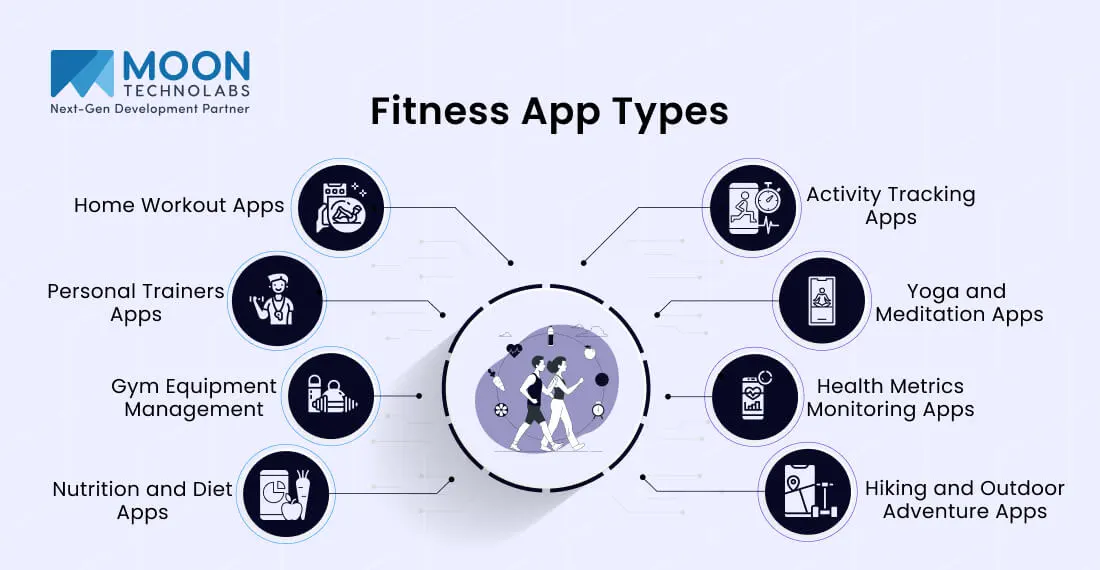
Home workout apps features are a convenient solution for users looking to reach their fitness goals without leaving home or going to the gym. They provide customized workouts, video demonstrations, meal planning, and progress monitoring.
For example, some popular home workout apps like Nike Training Club (completely free), Strava, Runtastic, and MyFitnessPal provide personalized fitness routines and nutrition guidance.
Personal trainer apps save users time when hiring trainers. They allow users to choose personal coaches and find instructors matched to their goals and requirements. These apps also provide messaging and chat options to connect with the trainers for guidance.
The business model for fitness apps like Map My Run, Everfit, ClubRight, PTminder, and Coach Catalyst includes premium subscriptions for personal trainers.
Gym equipment management apps utilize IoT services to sync users’ equipment activity. These apps tailor gym activities according to a user’s preference, helping gym enthusiasts.
By collecting and sending user data through IoT servers, it syncs with the gym machines before a user starts their workout. Popular apps include Zen Planner, Gymdesk, Virtuagym, PushPress, Glofox, RhinoFit, etc.
The engagement rate fitness apps achieve is high, as users want to improve their diets and switch to healthier options. They also want to track their eating habits and physical activity, lose weight, and make workouts a part of their daily routine.
Nutrition, calorie counting, and healthy recipe ideas are among the major services offered by apps like MyFitnessPal.
These apps use sensors and wearable devices, which is a lucrative idea for developing a fitness app for both hospitals and fitness businesses. They help them establish their individual goals by generating recommended grocery lists and nutrition plans.
Additionally, they help them stay up to date on vaccinations and provide reminders to make proactive health decisions.
These apps offer features to help make healthy lifestyle changes. These include overcoming unhealthy habits, improving physical and mental health, and preparing the body for any change.
For example, Asana Rebel is a free app that offers subscriptions to promote well-being through Yoga and meditation.
Quite popular in the market, these apps help keep track of health metrics. Users can track water intake, calorie burn, weight management, sleep patterns, and blood pressure levels.
For example, if you have an idea for developing a wearable fitness app, you can add IoT features to track calorie intake.
Trekking, hiking, and adventure enthusiasts can use these apps to find route information and access navigation tools. These apps serve as virtual guides, helping hikers navigate difficult terrain and points of interest by offering weather and wildlife insights with GPS capabilities.
For example, AllTrails is an app that provides safety information for outdoor enthusiasts who like to explore new adventure destinations.
We can guide you in determining which app type best suits your unique goals and audience.
Let’s Discuss Your Idea
The rise of smart device integration, social engagement, and personalized experiences with gamification has brought an upward tick. Hence, starting a fitness app needs a proper understanding of the target audience and relevant features to create the app you want.
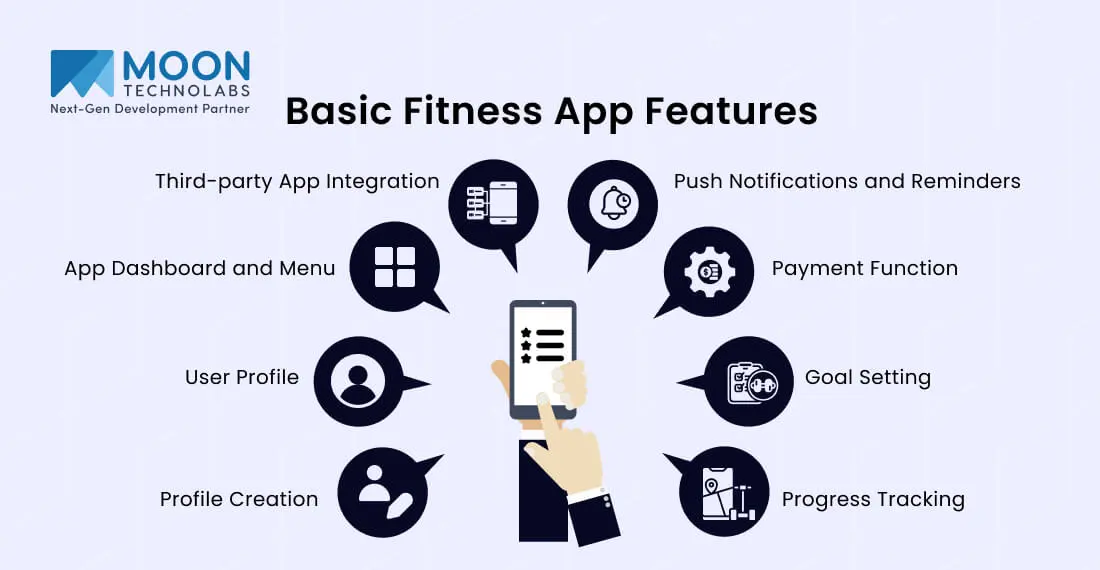
The basic features listed below for creating an MVP will help you gauge user preferences so you can include advanced essential features later.
Creating user profiles is important because even if users change devices, their profiles remain in sync. For example, you can offer the option to connect users’ social media accounts when they create their user profiles.
They don’t have to go through a lengthy, complex registration process every time, as slow page load times can affect mobile app performance. The profile creation also requires basic details such as name, height, weight, email ID, and a profile photo.
It includes adding a short bio, food preferences, daily routine, work profile, goals, and the time they can dedicate to working out. They can also modify their profile password to add existing health conditions.
Apart from that, some apps also provide a database of custom workouts, food options, and calorie intake. Customized user profiles can be a valuable addition, offering access to personalized workout routines, tracking statistics, and progress comparisons.
Depending on their goals, fitness tracking apps can offer users different browsing options. You can also add filters to choose fitness levels, workout types, duration, intensity, and specific body parts.
For example, if your app is for finding personal trainers, you can make the dashboard tailored to that use case. Include location features of personal trainers, their experience levels, certifications, and the form of training you require. You can also include group and individual classes to help users choose their preferred option.
Most current fitness apps integrate with many third-party apps. These are important for establishing a successful interaction with the components of a mobile app’s architecture.
Gym and fitness enthusiasts like to work on music playlists. Hence, many apps provide a feature to integrate their playlists from other apps like Spotify, YouTube Music, etc.
Similarly, other apps can be integrated with Google Fit and Apple Health to keep track of user metrics. These apps are also integrated with a device’s features, such as GPS navigation, to sync data on steps and sleep patterns, like FitBit.
A push notification system is essential for reminding users how well they are doing toward their goals. It focuses on maintaining the consistency and frequency of their health habits and timely workouts.
When using a fitness app, users often don’t stay on track with their schedules due to illnesses, limited time, etc. Adding push notifications as a feature can help them stay connected.
They will get reminders to do their workouts, take meals, and take water breaks at scheduled times. Moreover, it will increase user engagement with the app, thereby making the business more profitable.
Payment function integration is a basic feature that should be implemented to enhance the security of a fitness mobile app. While this feature is essential, it’s also important to maintain the security, privacy, and confidentiality of users’ data.
Adding payment gateways will enable users to make payments for premium subscriptions and in-app purchases conveniently. Common payment gateways include PayPal, Visa, etc.
Monetizing your apps is essential for generating profits by offering free trials before they sign up for a premium subscription. Other ways to get paid include in-app advertising.
Goal setting should be included to offer a personalized experience for your users. This feature allows users to select a task, track their progress, and complete it within a specified time.
Whether you’re building a nutrition app, sports app, or fitness app, this feature can prove to be useful. It provides users with a systematic approach to achieving measurable results, allowing them to set and choose their desired goals based on their fitness levels.
You can further divide this feature by asking users to select a type of workout (running, walking, cycling, etc.). They can input their desired goal and select a time duration to complete it.
Developing a fitness app is incomplete without a progress-tracking feature. Everything, from the number of sets, repetitions, hours, kilograms, kilometers, and calories, can be tracked through fitness apps.
Progress tracking motivates users to stay on track with their fitness goals and encourages them to continue their journey in the app. However, it should be noted that tracking unnecessary data can overload the database.
Hence, it’s essential to provide a graphical overview of metrics to summarize the entire fitness routine. It makes it convenient for users to track their progress with just a few taps. Graphs and charts are easy to understand, with color-coded active segments.
If you’re not sure which features you should add, we can help you launch a cost-effective MVP.
Book A FREE Consultation
Advanced features of a fitness app give your business a competitive edge. An app development company can help you develop an MVP. It enables gauging user interest to add free and paid features.
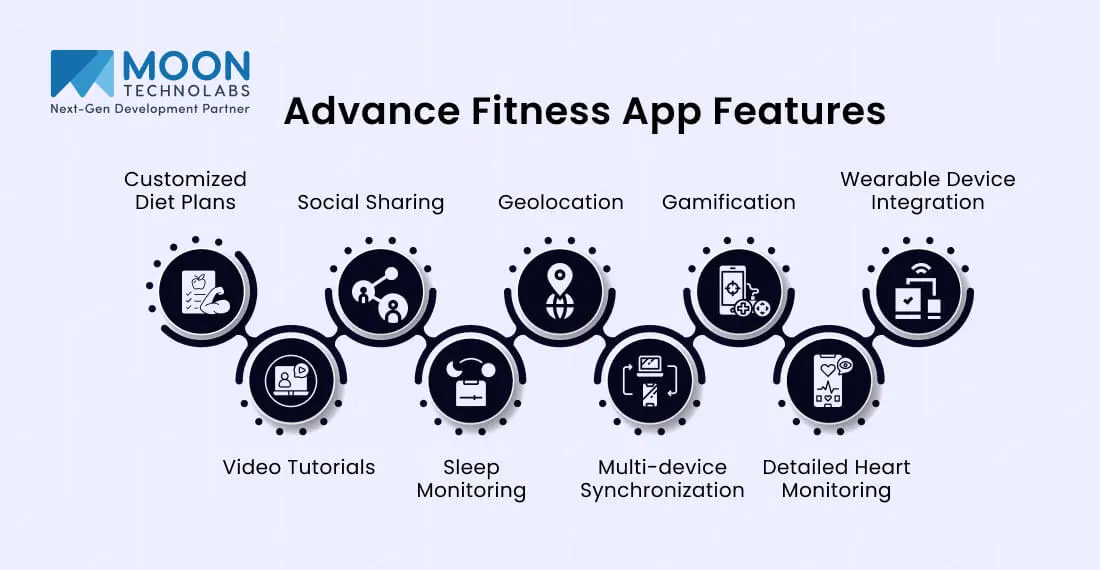
A diet plan specifically tailored to a user serves as a compass to guide their health habits. It allows them to create a plan best suited to their daily activities and health conditions. The feature also includes providing ingredient options and helping them make their homemade recipes.
Further, it also provides recommendations on the recipes they can make. The ingredients and recipes are affordable and within users’ budgets, and they also offer alternatives based on their food preferences, allergies, and intolerances.
You can also include grocery lists and resources for vegetarian, non-vegetarian, vegan, and seafood options. MyFitnessPal is one such example that provides these diet features and water intake levels.
Social sharing is a highly engaging feature that can boost your brand awareness. It offers a community of people looking to achieve their goals while taking part in challenges and events. Users can connect with their family and friends and share their outcomes when they beat a challenge or activity.
This feature allows users to stay motivated on their fitness journey. It connects users with others who are trying to stay healthy and are on the same journey. It also increases app usage by serving as a platform for sharing tips and recipes and accomplishing goals.
This feature uses GPS or other location-tracking technologies to identify a user’s current location. It also provides recommendations for nearby fitness activities, such as outdoor running routes, hiking trails, or local gyms or fitness studios.
Additionally, it tracks workout routes and distances, enabling users to see and compare their workout progress. Geolocation can also be used to create virtual fitness challenges. Users can compete to cover the most distance in a given area or complete a specific workout at multiple locations.
This could involve setting fitness goals and rewarding users with points, badges, or virtual trophies. It rewards them for each milestone they complete or for maintaining a consistent exercise routine.
Gamification can also involve creating fitness challenges or leaderboards. Users can compete with friends or other app users to achieve the highest scores or longest workout streaks.
Additionally, incorporating storytelling or role-playing elements into workouts can make them more enjoyable and encourage users to stick to their fitness goals. For example, users could progress through levels or chapters of a story, unlocking new challenges or rewards as they go.
Wearable devices gather real-time data on a user’s heart rate, steps taken, calories burned, and other metrics. They can easily connect with devices such as smartwatches, fitness trackers, and heart rate monitors,
This data can be analyzed to provide insights into a user’s fitness level, progress over time, and areas for improvement. Additionally, integrating with wearable devices can enable the app to send notifications and reminders to users.
The reminders encourage them to stay active and reach their fitness goals. Wearable device integration can also enable social features, such as sharing workout data with friends or participating in group challenges.
With video tutorials, users can see the proper form and technique for different exercises. Tutorials ensure that users perform them correctly and reduce the risk of injury.
Video tutorials can cover a wide range of workouts, from bodyweight exercises to weightlifting, yoga, and more. They can also be organized by difficulty level, target muscle group, or workout type, making it easy for users to find the content they need.
Additionally, video tutorials can be integrated with the app’s tracking features. Users can track their progress and receive personalized food intake recommendations for new workouts. Video tutorials provide clear visual instruction and guidance for user-friendly experiences.
By tracking a user’s sleep patterns and quality, the app can provide insights into how well they are resting and recovering from their workouts. This can be particularly useful for users who are training hard or trying to improve their fitness levels.
Sleep monitoring can also help users identify potential sleep issues. Users can gain a more holistic view of their health and make more informed decisions about their fitness and wellness routines.
Multi-device synchronization allows users to access their fitness app and data across multiple devices, such as smartphones, tablets, or computers. Users can switch devices and pick up where they left off.
This makes it more convenient for users to stay on top of their fitness goals and maintain a consistent workout routine.
Additionally, multi-device synchronization can enable social features. Users can share workouts with friends or participate in group challenges, regardless of the device they use.
By tracking heart rate, heart rate variability, and other metrics. The app can provide information on a user’s cardiovascular fitness, recovery, and overall health.
This can be particularly useful for users training for endurance events, such as running or cycling, or for those focused on improving cardiovascular fitness.
Detailed heart monitoring can also alert users to potential issues. Users can monitor abnormal heart rates and signs of overtraining, and receive recommendations to adjust their workout routines.
It makes a fitness app more comprehensive and valuable for users who are serious about tracking their cardiovascular performance and overall health.
Share your idea with us and let our experts help you shape a powerful fitness app packed with the right basic and advanced features for user success.
Talk to US Today!
A successful fitness app requires a strategic approach and standout features that set it apart from competitors.
If you are a business owner with a groundbreaking idea for developing or improving a fitness app, partnering with Moon Technolabs can help you achieve your goals.
Here’s why:
Lastly, with customer experience being a top priority, it’s always a good idea to start the app development journey with an MVP. We guide you in choosing the fitness app best suited to your target market. Please consult with our experts to discuss costs and hourly rates.
01
02
03

Jayanti Katariya is the CEO of Moon Technolabs, a fast-growing IT solutions provider, with 18+ years of experience in the industry. Passionate about developing creative apps from a young age, he pursued an engineering degree to further this interest. Under his leadership, Moon Technolabs has helped numerous brands establish their online presence and he has also launched an invoicing software that assists businesses to streamline their financial operations.


Submitting the form below will ensure a prompt response from us.
We refine our expertise to deliver innovative business solutions.





500 N Michigan Avenue, #600, Chicago IL 60611
13500 Long Is Dr, Pflugerville, TX 78660, USA

C/105 Ganesh Meridian, S.G. Highway, Ahmedabad, GJ 380060


Ayse D.
Co-Founder France
“ I highly recommend Moon Technolabs as the quality of service is wonderful. We have hired this company to develop the product based on some complex & technical issues. We get the best quality services as compared with others in the market. Huge Thanks to Moon Technolabs as the team is always ready to give the solution all time.”

Justin G.
Founder & CEO USA
USA“ Moon Technolabs is a pioneer in the WebRTC based project as they have fixed complicated segments of the module by fulfilling different product lines by providing 24X7 customer support. We really recommended Moon Technolabs as they are able to develop products as per the module deadline and project timeline.”

Flavio S.
Founder & Managing Director Germany
“I am happy to recommend Moon Technolabs for their app development services. They successfully developed apps for me, and I am highly satisfied with the overall outcomes. The development team has swiftly addressed the issues with responsive and effective communication to understand the requirement quickly and actively resolve the back-and-forth problems that arose...”

Jay M.
Founder & CEOUSA“Moon Technolabs is the best company that provides advanced apps and websites development services in the USA and Europe. I am a newbie to develop my app with an external team. I am really happy to work with them as I am not that much mobile apps user. Here, the team and specially the CEO of Moon Technolabs helps me to let me know about the benefits of my app to generate revenue....”


Our Offices
India
C/105 Ganesh Meridian,S.G. Highway, Ahmedabad, GJ 380060USA
500 N Michigan Avenue, #600, Chicago IL 60611Contact Information


