
Jayanti Katariya
Last Updated: July 24, 2025 Total Views: 3397
Table of Content


Table of Content
Have you ever wondered how your favourite fashion app knows what you like? It is not magic; it is Artificial Intelligence. From guessing the style of the person using the application to managing the massive supply chain for effortless behind-the-scenes, AI is quietly becoming the fashion industry’s best-kept secret.
As customer expectations and trends are evolving, fashion brands are relying on AI to stay aligned with the latest needs.
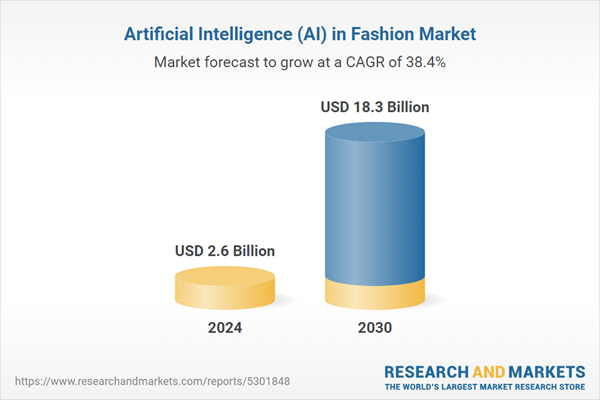
According to Research and Markets, the global market for AI in fashion is estimated to reach $18.3 billion by 2030, indicating it is not just another trend. While the technology is transforming the industry, it is not yet ready for prime time. You must be aware of the challenges that come your way.
This guide will help you learn how AI plays out in real-time. We will also take you through the top 10 powerful AI use cases that will change the fashion industry.
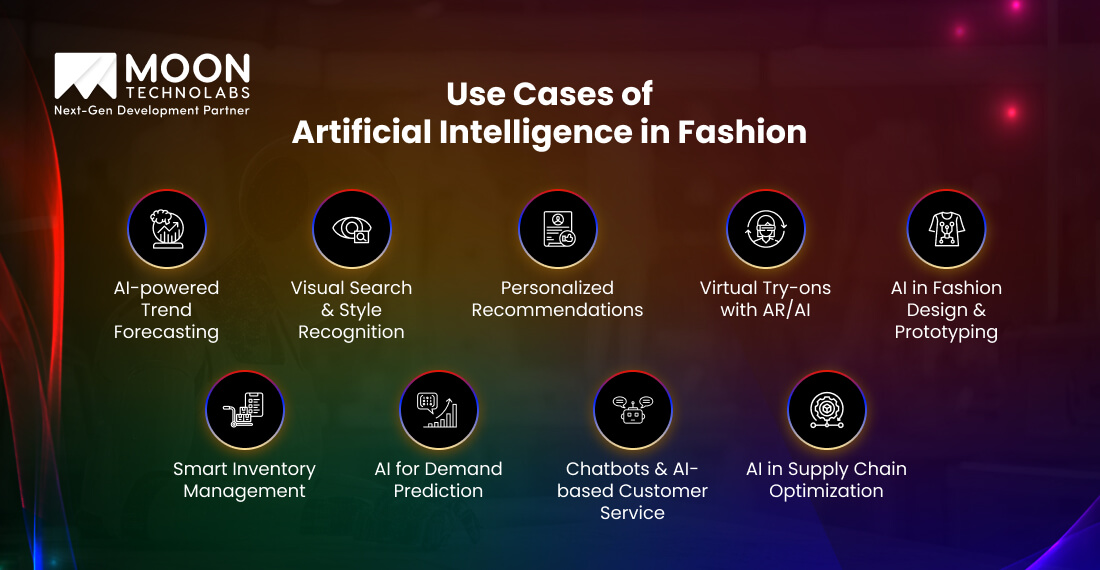
Let’s dive into the real-world applications to understand where and how AI is making a difference in the fashion industry.
From providing smarter shopping experiences to offering predictive analytics in shopping trends, AI is proving to be eerily accurate. These use cases showcase how this emerging trend (or already emerged) is taking over the runway as well as the back office.
AI-backed trend forecasting is your fashion fortune teller. The only difference is that it is fueled with data-backed insights rather than instinct and seasonal runway cues, which makes it accurate. By helping brands analyze vast data sets from social media and search trends, it can help predict upcoming fashion styles.
Designers stay ahead of the curve, instead of playing catch-up, with this trend. At the same time, buyers can place smarter bets on what will go off their shelves.
For marketers, this trend will enable them to build campaigns that match customers’ requirements. It will also help manufacturers by producing what is likely to sell and reduce waste.
AI in trend forecasting isn’t about looking good but about working smart and selling better. It will help create experiences that resonate with the users.
Imagine you are scrolling through the reels and find a good pair of shoes. Before you know it, you have links to the online store to purchase them. That’s what AI-driven visual search combined with style recognition offers you.
You upload an image and the backend will scan through several products to provide you with a list of all the close matches based on colour, texture, shape or style. You will observe lower search fatigue and higher engagement along with quicker conversions.
Visual search reduces the need for being verbose when searching for products, while style recognition helps identify the patterns in customer preferences to recommend outfits and accessories.
You can keep your users engaged by hyperpersonalizing their experiences with this trend.
This trend is changing how shoppers discover relevant fashion products. Instead of the old “one-size-fits-all” philosophy, this trend aims to let users view products based on their purchase behaviour, browsing history, real-time interactions, and preferences.
With this trend, you can make shopping effortless for the customer as they believe you understand them. You can boost your conversion rates and repeat purchases by implementing personalization.
You can move beyond the product page to offer smart suggestions on their email, mobile app, and in-store kiosks. As a result of this trend, you will notice higher basket values and an intuitive fashion journey.
Virtual try-on is a new trend, backed by AR and AI. It can remove the guesswork from online shopping. Whether you are buying sunglasses, lipstick or a full outfit, you can try them before buying without a fitting room. All you need is your phone camera or webcam.
When AR and AI combine, they accurately map out facial features and body proportions, offering a realistic experience. Incorporating this trend will enable you to reduce returns, improve engagement, and enhance your customers’ journey.
Virtual try-on will ensure shopping is inclusive, allowing users to try on the same dress across body types, skin tones, and lighting conditions. With this kind of immersive experience, retailers can stay ahead of the curve.
With AI in fashion design and prototyping, designers can inspire fresh ideas and explore endless fabric combinations. They can even predict how the garment will look or move before beginning the stitch.
These tools can also analyze trends, consumer data, and historical designs, inspiring your mood boards and sketch patterns. In case you are a brand incorporating this trend, you will inspire faster design cycles, reduced trial-and-error, and less resource wastage during prototyping.
Your team can easily visualize and tweak designs digitally within a few hours, using fewer resources. AI doesn’t replace human creativity; it helps boost it so that you can release designs faster. You can access a smarter and faster workflow that aligns with market requirements and user needs.
Ask a fashion brand what their biggest worry is, and they would answer with managing over- and understocks. Brands often rely on guesswork and outdated seasonal trends to determine which products to add or remove from their shelves.
However, AI algorithms can change that by analyzing real-time sales data, along with historical performance, customer data patterns, and even weather, to predict which products will sell. Eventually, this will help retailers make smarter stocking decisions, freeing up their capital.
For customers, this trend will indicate better availability and reduce frustrations that occur when they read “stock out” in the store. Moreover, it provides agility to the brand, allowing it to adapt to the shifting demands without overproducing.
What if you could predict the demand for every product you have launched? AI in fashion analyzes historical sales, current market trends and external factors like holidays to determine the demand for the product.
With this insight, the retailers can plan their production accurately, avoiding both over- and under-stocking of products. They would know when and how much to restock the products, along with the sizes in demand.
For the fashion industry, this visibility means fewer markdowns and better margins that enhance operational efficiency.
Fashion brands can connect with their customers in real-time and interact meaningfully with AI-based chatbots for customer services. This trend enables your support team to be fast, friendly, and available 24/7.
You can help your shopper find their right size, track the order, and even process returns successfully with AI in fashion. Moreover, the bots can learn from previous interactions plus customer data to provide personalized responses that encourage actions.
By implementing this, you can reduce the waiting time for answers and provide a better user experience. For businesses, this trend translates to reduced support costs and faster response time.
As users increasingly demand instant service, AI-backed chatbot support can help build a loyal user base and maintain competitiveness.
If your supply chain is optimized, it can give you the biggest competitive edge. Artificial Intelligence helps you streamline the supply chain, from sourcing to delivery, by providing real-time, detailed analysis of all data. This includes shipping timelines, vendor performance, and even production capacity.
Using this data, you can make smarter decisions and source raw materials more efficiently. It can also help you adjust to the disruptions effectively and reduce delays. Overall, you will notice fewer bottlenecks and excellent cost efficiency for your fashion brand.
In use cases where timing is the most crucial factor, AI will ensure that the product hits the shelves exactly when the customer wants it. This will also support you in your sustainability efforts by reducing the overproduction of goods.
By reducing waste production and growing sustainably, you can fulfil your responsibility towards the environment. By implementing advanced algorithms, AI can predict the demand, optimize your resource utilization, and streamline production. This can reduce fabric waste, in turn reducing carbon emissions.
For example, you can use AI to identify design pieces that require fewer resources. It can also help determine alternative materials that are relatively environmentally friendly. You can also use the technology for resale strategies and smarter recycling, thus improving your carbon footprint.
You will win the environmentally conscious consumers as you become a brand that cares about the environment around them.
Power your fashion business with our AI expertise to create smart, scalable, and fast solutions that increase your growth and returns.
If you want to understand AI’s impact on the fashion industry, you should see it in action. Here are some of the real-world examples of how leading brands have been using AI to innovate their products, enhance efficiency, and improve customer experiences:
Zara is an interesting example of how AI has transformed the fashion industry, particularly in inventory management and supply chain aspects. Instead of operating blindly regarding what and where to stock, Zara has implemented AI algorithms. This helps them track sales data from across time zones and stores in real-time.
For example, Zara would know which dress is popular in Paris. They can use this analysis to adjust their production and shipping, meeting the user demands in real-time. With this smarter system, they have been able to avoid overstocking and reduce waste production. It has also helped them get newer trends into the stores within weeks.
Rolling this out globally was a big challenge for the brand. It included coordinating with different countries while adhering to data privacy laws. But, the ultimate result was worth the efforts made.
This tech has allowed Zara a faster turnaround time, fewer markdowns, and a more efficient fashion business.
This fashion brand is an example of how AI can help bring a stylist to the user’s doorstep. By combining data science with human expertise, they have strived to bring personalized clothing recommendations to their customers’ homes.
They ask their end users to fill out the style quiz. Post that, AI will analyze their preferences, body type, lifestyle and past purchases. Using this data can help narrow down the choices from thousands to a few items. Human stylists can then make the final call, adding a personal touch to this buying journey and reducing the return rate.
Demand is where most fashion brands struggle, as it has always involved a certain amount of guesswork and instinct. However, H&M utilized AI to eliminate this guesswork and achieve more accurate demand forecasting. They have thousands of stores and a strong online presence. That’s why it became crucial for the brand to anticipate its customers’ needs.
AI algorithms analyzed massive amounts of data, including past sales, customer behaviour, and store location trends, to help the fashion brand forecast demand at a hyper-local level. As a result, the fashion company could plan its inventory well, reduce overproduction, and get the right products to the store.
With this tech inclusion, they saw fewer markdowns, a more responsive supply chain, and better product availability. They are still in the process of fine-tuning the models and integrating them into their global operations. However, with this simple step, they can deliver more sustainable fashions and enhance customer experiences.
Tommy Hilfiger joined hands with IBM and the Fashion Institute of Technology to explore the different ways AI can inspire creative aspects of fashion. Instead of replacing the existing designers, AI became their research assistant.
With the help of IBM AI tools, the system analyzed the brand’s past collections, their customers’ sentiment from social media and real-time trends & colour palettes. Using these insights, the students at FIT developed new concepts that aligned with the brand’s identity while incorporating the preferences of the new-age market.
This became a perfect blend of data and creativity. As a result, the brand’s designers spent less time on trend research and more time on exploring ideas backed by real insights. In this case, AI didn’t design the clothes; it helped the designers get a jump start in the creative realm.
Pinterest recently acquired this fashion brand. It implemented AI to become the shopper’s assistant for more relevant purchases. The brand offers a style-based questionnaire that users must complete. They need to mention preferred fits, favourite brands, and colour choices.
Using this data, AI would learn and adapt in real-time. It will then build a style genome for each user, allowing the shopping feed to be curated to meet their unique needs. As the user continues to swipe yes and no for the items displayed on the home page, the AI system will become smarter and refine its recommendations.
In the case of shoppers, they would be able to shop effortlessly. By leveraging this fashion trend, the brand successfully increased engagement and conversion rates.
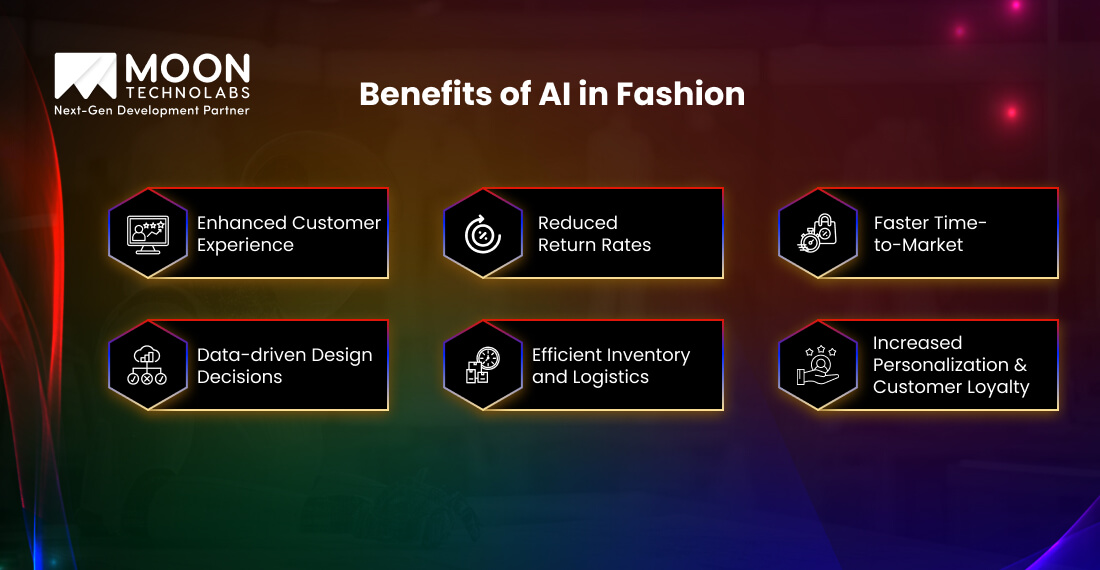
AI can help modernize fashion, solve the long-standing challenges, and unlock new opportunities for your business. From understanding how collections can be designed to transform customer interactions, there are numerous benefits associated with AI in fashion. Let’s find out here:
AI can transform your end user’s shopping journey by offering a more personalized and intuitive experience. Using tools like chatbots, visual search and smart recommendations, you can enable your customers to find products relevant to them quickly. It will also help them find things they didn’t know they needed.
With AI, you can provide seamless interactions across platforms, helping the brand deliver a more consistent service whether your customer is online or in-store. These intelligent systems can also help respond to individual preferences and their past behaviour to offer engaging and delightful experiences.
AI in fashion can help create happier customers, increase their conversion rates, and enhance brand loyalty.
Returns can prove to be expensive for the fashion brand, both financially and environmentally. When you implement AI in your fashion business, you can improve size recommendations, offer fit predictions, and enhance product relevance. It can also help you incorporate virtual try-ons that utilize AR to give an accurate sense of how it will fit the customer.
As a result, you will reduce the “buy now, regret later” among the customers. It also helps personalize styling and offer smarter product descriptions to align purchases with expectations. When your customers receive the products that match their requirements and preferences, it will reduce the return rate.
Overall, AI helps increase customer satisfaction, reduce operational expenses, and enhance supply chain sustainability.
When it comes to fashion, speed is crucial. AI can give brands the much-needed edge. It helps analyze trend data, along with market signals and customer behavior, in real-time, enabling design teams to accelerate decision-making and reduce turnaround time.
From automating prototyping to offering predictive analytics, it will help determine which products are likely to sell, while saving time and resources. AI can also streamline manufacturing and supply chain coordination, helping brands pivot in response to shifting demand.
As a result, products can go from concept to store shelves in record time, ensuring fashion brands stay ahead of trends and competitors.
Traditionally, most fashion brands relied on instinct and seasonal trends to stock their shelves. AI has now equipped designers with access to deep consumer insights and predictive analytics, enabling them to make smarter decisions.
AI analyzes the styles, colors, and fabrics that are performing well in different markets to help teams refine their collections using actual insights instead of guesswork. It can also help designers identify gaps in the market and emerging preferences before hitting mainstream awareness.
This helps fashion brands resonate with the target audiences, reduces the risk of flops, and boosts creativity. In short, it brings data and design together.
Inventory management and logistics are becoming more agile and intelligent with the integration of AI in the fashion industry. You can use it to forecast demand with exceptional accuracy, which helps you order the right quantities and avoid overstocking or understocking.
Machine Learning models take into consideration seasonality, location-based trends, and even social media trends to predict what and where products will sell. It also optimizes warehouse operations, shipping routes, and fulfilment strategies to reduce delivery times and expenses.
It enables a lean and responsive supply chain that minimizes waste, improving operational efficiency and facilitating faster product movement.
With AI, you can hyper-personalize shopping experiences for your customers, making them feel seen and understood. It helps analyze user behavior, preferences, and past purchases, enabling brands to recommend the right products and send personalized emails. It can also help you adjust the marketing messages using real-time data.
AI helps you grow more consistent with regards to messaging and recommendations, thus boosting loyalty. Customers are more likely to engage with your business and stick around longer.
You can easily create personal and memorable experiences for the customer, which makes them engage better and keep coming back to your online store.
Partner with us to redefine your fashion business with smarter decisions, creative abilities and innovative designs.
AI is shaking things up in the fashion world, but let’s be real; it is not all smooth sailing. Like every other big shift, it comes with diverse challenges. Here are the top challenges that you must know before implementing AI in fashion:
AI relies on consumer data, such as preferences, purchase history, browsing behaviour, and images. Using this data, AI offers personalized solutions. However, it also raises major privacy and ethical concerns.
Brands must tread this path carefully, ensuring that data is collected through transparent means and used responsibly. Compliance with GDPR, HIPAA, and other regulations can add complexity to this dimension.
Additionally, biased algorithms used to train or skew the datasets can add to the challenges. With customers being aware of how their data is used, any misuse can cause significant trust and reputation issues. You should strike a balance between personalization and privacy without crossing ethical boundaries to implement AI effectively.
AI implementation can prove to be expensive, especially for small or mid-sized fashion brands. There are costs associated with acquiring the technology, hiring skilled data scientists, and training the team.
You may even need to invest in infrastructure, licenses, and regulatory compliance maintenance. AI may induce long-term savings for your business; however, the upfront cost becomes a barrier to implementation.
Most brands struggle to justify the ROI, especially when they have more functional processes. To make AI accessible, you need to reduce the costs and make the entire solution scalable.
You need vast amounts of data to train your AI model. That’s where the niche brands face an issue. The volume and variety of customer data required to train the models might be limited in this case.
As a result, it can reduce the accuracy of predictions, weaken personalization, and lead to unreliable insights. Due to a weak data foundation, the tools may struggle to recommend products or even forecast demand.
In this case, you face a two-fold challenge. The first is to create a data strategy from scratch, and the other is to utilize AI tools to adapt to limited data inputs.
Many fashion houses, especially those using legacy systems or traditional processes, remain hesitant to adopt AI. Designers and the key stakeholders view AI as a threat to their creative freedom. Owing to the gap in digital literacy, change management can become a challenge.
You are not just introducing a new tech stack but inducing a cultural shift. From retraining staff to trusting data-driven insights, there are numerous steps involved in adopting AI.
Businesses rooted in manual processes often believe that the shift can be overwhelming or unnecessary. You need to communicate with the team on how AI can complement your work, rather than replace designers.
AI is excellent for data analysis and efficiency; however, it can stifle the creativity within the fashion industry. If designers lean too heavily on data rather than trusting their instincts, it can impact the brand’s innovation.
Automation should be used to streamline the process, rather than pushing brands towards more formulaic and trend-driven outputs.
You should ideally use AI as your creative pilot, rather than your creative director, striking a balance between innovation and individuality.
AI is transforming the fashion industry, from making supply chains smarter to personalizing the user’s shopping experience and enhancing the trend response. But, as exciting as it sounds, fashion still thrives on a balance of creativity, emotion, and human touch.
You must strike a balance by utilizing AI for creative vision, rather than replacing human designers. Moving forward, AI will continue to push the boundaries of the fashion industry, paving the way for innovative designs, enhancing interactions, and providing viable fashion opportunities.
The idea is to utilize AI to create high-style fashion brands that are powered by both algorithms and imagination. If you are planning to incorporate AI into your fashion brand, now is the time. With shifting preferences and increasing opportunities, you might strike the right chord with your customers by implementing AI.
Moon Technolabs is a leading AI app development company. We help fashion brands and retail businesses enhance their processes and drive better experiences with our innovative AI solutions. Get in touch with our team to further your idea into a product.
01
02
03
04
05

Jayanti Katariya is the CEO of Moon Technolabs, a fast-growing IT solutions provider, with 18+ years of experience in the industry. Passionate about developing creative apps from a young age, he pursued an engineering degree to further this interest. Under his leadership, Moon Technolabs has helped numerous brands establish their online presence and he has also launched an invoicing software that assists businesses to streamline their financial operations.


Submitting the form below will ensure a prompt response from us.
We refine our expertise to deliver innovative business solutions.





205 N Michigan Avenue, #810, Chicago, 60601, Illinois, United States
13500 Long Is Dr, Pflugerville, TX 78660, USA

C/105 Ganesh Meridian, S.G. Highway, Ahmedabad, GJ 380060


Ayse D.
Co-Founder France
“ I highly recommend Moon Technolabs as the quality of service is wonderful. We have hired this company to develop the product based on some complex & technical issues. We get the best quality services as compared with others in the market. Huge Thanks to Moon Technolabs as the team is always ready to give the solution all time.”

Justin G.
Founder & CEO USA
USA“ Moon Technolabs is a pioneer in the WebRTC based project as they have fixed complicated segments of the module by fulfilling different product lines by providing 24X7 customer support. We really recommended Moon Technolabs as they are able to develop products as per the module deadline and project timeline.”

Flavio S.
Founder & Managing Director Germany
“I am happy to recommend Moon Technolabs for their app development services. They successfully developed apps for me, and I am highly satisfied with the overall outcomes. The development team has swiftly addressed the issues with responsive and effective communication to understand the requirement quickly and actively resolve the back-and-forth problems that arose...”

Jay M.
Founder & CEOUSA“Moon Technolabs is the best company that provides advanced apps and websites development services in the USA and Europe. I am a newbie to develop my app with an external team. I am really happy to work with them as I am not that much mobile apps user. Here, the team and specially the CEO of Moon Technolabs helps me to let me know about the benefits of my app to generate revenue....”


Our Offices
India
C/105 Ganesh Meridian,S.G. Highway, Ahmedabad, GJ 380060USA
205 N Michigan Avenue, #810, Chicago, 60601, Illinois, United StatesContact Information


