


7 Leading AI Governance Tools for Enterprise AI

Artificial Intelligence Team
Last Updated: Sep 29, 2026 Total Views: 85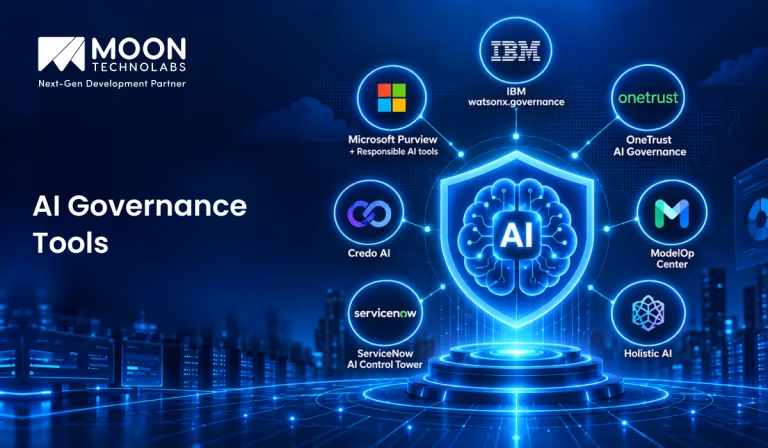
Table of Content


Blog Summary:
This guide explores AI governance tools from a practical business perspective, covering the capabilities that matter when evaluating governance platforms. It explains how different solutions approach risk, compliance, monitoring, and AI lifecycle management. It highlights key considerations to help organizations choose an approach that fits their AI environment and long-term goals.
Table of Content
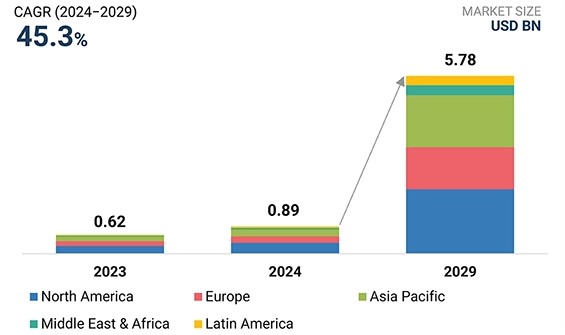
As businesses increasingly adopt AI, keeping AI systems secure, transparent, compliant, and accountable has become essential. AI governance helps organizations manage risks across the AI lifecycle, from development and deployment to monitoring and compliance. According to MarketsandMarkets, the market is projected to grow from USD 0.89 billion in 2024 to USD 5.78 billion by 2029, at a CAGR of 45.3%.
With AI adoption accelerating, organizations need practical tools to manage AI risks, monitor systems, meet regulatory requirements, and maintain accountability. In this guide, we explore top AI governance tools and their key capabilities to help businesses understand their options.
What is AI Governance?
AI Governance is the framework of policies, processes, and practices that guide how an organization develops, deploys, and uses artificial intelligence. It helps ensure AI systems are used responsibly, securely, and aligned with business objectives.
AI governance focuses on areas such as data privacy, security, transparency, fairness, compliance, and accountability. It defines roles and responsibilities so organizations can identify and manage potential AI-related risks.
An effective AI governance platform also promotes ongoing monitoring and human oversight. By establishing clear guidelines and regularly reviewing AI systems, organizations can build trust, improve decision-making, and ensure AI continues to deliver value responsibly.
Why Do Businesses Need AI Governance Tools?
Businesses need AI governance tools to manage the growing number of AI systems and ensure they are used safely, responsibly, and in compliance with applicable regulations. These tools provide visibility into AI applications, models, data, and associated risks.
AI governance tools also help organizations identify potential issues such as data privacy concerns, security vulnerabilities, bias, and inaccurate outputs. By automating monitoring, risk assessments, documentation, and compliance processes, they can reduce manual effort and improve accountability.
Most importantly, these tools help businesses build trust in AI. With centralized oversight, clear controls, and continuous monitoring, organizations can adopt AI more confidently while reducing operational, legal, and reputational risks.
What to Look for in an AI Governance Tool
When selecting an AI governance tool, businesses should focus on capabilities that provide visibility, model risk management, compliance, and continuous oversight across the AI lifecycle. The tool should also integrate easily with existing systems and support the organization as AI use grows.
- Maintain a complete and up-to-date record of AI models, applications, vendors, and use cases.
- Identify, assess, and prioritize potential AI risks across different systems.
- Support regulatory compliance, internal policies, audits, and required documentation.
- Continuously monitor AI performance, accuracy, security, and potential issues.
- Enable human review, approval, intervention, and escalation when required.
- Protect sensitive information through strong data privacy and security controls.
- Maintain detailed records of AI activities, decisions, assessments, and changes.
- Integrate with existing business and technology systems while supporting future growth.
Build a Responsible AI Governance Strategy With Experts
Get specialized guidance to design, implement, and scale AI governance solutions aligned with your business, compliance, and risk requirements.
7 Best AI Governance Tools
If you’re evaluating solutions for your organization, here are 7 AI governance tools worth considering. Have a look at their capabilities to find the right fit for your AI governance needs:
| Platform | Core Strength | AI Lifecycle Coverage |
|---|---|---|
| IBM watsonx.governance | Enterprise AI/model governance + GRC | Development → deployment → monitoring |
| Microsoft Purview | Data governance, security & compliance around AI | Data → AI usage → compliance |
| OneTrust AI Governance | Enterprise AI risk, privacy & compliance | Intake → production → monitoring |
| Credo AI | Policy-driven AI governance & regulatory intelligence | Use case → production → continuous governance |
| ModelOp Center | End-to-end AI lifecycle orchestration | Use case → approval → production → retirement |
| ServiceNow AI Control Tower | Enterprise AI discovery, governance & operational control | Discovery → lifecycle → runtime → value |
| Holistic AI | AI discovery, risk & compliance | Discovery → assessment → enforcement → monitoring |
Important Distinction
These aren’t seven interchangeable products. Their center of gravity differs:
- Model-centric governance: IBM watsonx.governance
- Data + Microsoft ecosystem governance: Microsoft Purview
- Privacy/GRC-centric AI governance: OneTrust
- Regulatory/policy-centric governance: Credo AI
- Lifecycle orchestration: ModelOp
- Enterprise IT/operational control: ServiceNow AI Control Tower
- AI discovery + risk + compliance: Holistic AI
IBM watsonx.governance
An enterprise AI governance platform that helps organizations manage AI risk, compliance, transparency, and accountability throughout the AI lifecycle. It supports governance for traditional machine-learning models and generative AI, giving organizations visibility into AI assets, model performance, risk, explainability, fairness, and regulatory requirements.
It is particularly relevant for enterprises with established model-risk management, compliance, and governance processes that want to integrate AI governance with broader enterprise risk management.
Key Capabilities:
- AI and model inventory
- Generative AI governance
- Bias and fairness monitoring
- Model performance and drift monitoring
- Governance workflows and approvals
- Audit trails and documentation
- Integration with enterprise GRC processes
Microsoft Purview
Microsoft Purview provides AI governance as part of Microsoft’s broader data governance, security, privacy, and compliance ecosystem. It helps organizations understand and control how AI interacts with enterprise data, monitor AI usage, protect sensitive information, and apply compliance policies across Microsoft environments.
Its strongest value is for organizations already using Microsoft 365, Azure, and other Microsoft services, where AI governance can connect to existing data-security, privacy, compliance, and information-governance processes.
Key Capabilities:
- AI usage discovery and visibility
- Data classification and protection
- Compliance management
- Privacy and information governance
- Insider-risk controls
- Microsoft 365 and Azure integration
- Data lineage and governance
OneTrust AI Governance
OneTrust AI Governance focuses on managing AI risk, privacy, compliance, and responsible AI across the enterprise. It enables organizations to maintain an inventory of AI systems, assess their risks, apply governance policies, manage third-party AI usage, and continuously monitor AI systems.
Because OneTrust has a broader privacy, data governance, and GRC ecosystem, organizations can incorporate its AI governance capabilities into existing privacy and compliance programs rather than running AI governance as an isolated function.
Key Capabilities:
- AI inventory and discovery
- AI policy management
- Responsible AI governance
- Privacy and data governance
- Third-party AI/vendor governance
- AI application and model assessment
- Policy enforcement and controls
Credo AI
Credo AI is an AI governance platform that translates organizational policies and external AI regulations into practical governance processes and controls. It provides visibility into AI systems and helps organizations assess risks, map regulatory requirements, manage policies, and maintain compliance evidence.
The platform also addresses newer AI governance requirements involving generative AI and AI agents, making it relevant for organizations that need to manage AI across multiple regulatory frameworks and business functions.
Key Capabilities:
- Regulatory and policy mapping
- AI governance policies
- Control management
- Compliance management
- AI agent governance
- Third-party AI governance
- Support for frameworks such as NIST AI RMF, ISO/IEC 42001, and EU AI Act requirements
ModelOp Center
ModelOp Center is an enterprise AI governance and lifecycle management platform that provides centralized control over AI systems across different technologies and environments. It focuses on governing AI from initial use-case intake and risk assessment through approval, deployment, monitoring, and retirement.
This makes it particularly relevant for large organizations with diverse AI environments, including traditional machine learning, generative AI, AI applications, agents, and models running across multiple cloud and technology platforms.
Key Capabilities:
- Centralized AI inventory
- Risk classification and tiering
- Compliance management
- Policy and control management
- Audit documentation
- Model and AI system retirement
- Integration across heterogeneous AI environments
ServiceNow AI Control Tower
ServiceNow AI Control Tower provides an enterprise-wide control layer to discover, govern, secure, monitor, and measure AI systems. It extends AI governance into the broader IT and business-operations environment by connecting AI assets with enterprise workflows, risk processes, configuration management, security, and service management.
This approach is particularly relevant for organizations already using ServiceNow as a central platform for IT operations, enterprise workflows, risk, and asset management.
Key Capabilities:
- AI model and agent management
- Compliance management
- Runtime monitoring
- AI value and ROI measurement
- Governance workflows
- CMDB integration
- Enterprise IT and business-process integration
Holistic AI
Holistic AI provides an AI governance platform that discovers AI systems, assesses their risks, enforces governance controls, and continuously monitors AI across the enterprise. Its approach covers both known and potentially undiscovered AI usage, including models, applications, third-party AI services, generative AI, and AI agents.
This makes it particularly relevant for organizations that need broad visibility into their AI systems and want to combine AI discovery with risk assessment, regulatory compliance, testing, and ongoing governance.
Key Capabilities:
- Model and application assessment
- Generative AI governance
- AI agent governance
- Bias and fairness testing
- Regulatory compliance
- Third-party AI/vendor assessment
- Risk and compliance reporting
You May Also Like:
AI Proof of Concept (PoC): A Complete Guide to Validating AI Ideas
AI Governance Frameworks and Regulations to Consider
AI governance frameworks and regulations provide businesses with practical guidelines for developing and using AI responsibly while managing risks and compliance requirements. If you’re planning an AI governance strategy, consider these key AI governance frameworks and regulations. Have a look at what each covers and how it can support responsible AI adoption:
NIST AI Risk Management Framework (AI RMF)
The NIST AI RMF is a voluntary framework for identifying, assessing, and managing AI risks throughout the entire AI lifecycle. It is built around four functions:
- Govern – Establish AI policies, roles, responsibilities, and accountability.
- Map – Identify AI risks, stakeholders, and potential impacts.
- Measure – Evaluate AI systems for accuracy, security, privacy, bias, and reliability.
- Manage – Prioritize and mitigate identified risks through appropriate controls and monitoring.
It provides a practical foundation for organizations developing responsible AI governance programs.
ISO/IEC 42001
ISO/IEC 42001:2023 is an international standard for establishing and maintaining an AI management system (AIMS). It focuses on organizational processes for managing AI risks and opportunities.
Key areas include AI policies, risk assessments, data management, transparency, accountability, documentation, monitoring, and continual improvement. It can also support organizations that want a structured, auditable approach to AI governance.
EU AI Act
The EU AI Act is a legally binding, risk-based regulatory framework for AI. It categorizes AI applications by potential risk and sets different obligations accordingly.
Key categories include:
- Prohibited AI practices – Certain high-risk uses are banned.
- High-risk AI – Subject to requirements such as risk management, documentation, human oversight, cybersecurity, and monitoring.
- Transparency requirements – Certain AI systems must inform users when they interact with AI or view AI-generated content.
- General-purpose AI – Providers may have additional documentation, transparency, copyright, evaluation, and cybersecurity obligations.
Organizations operating in or serving the EU should assess whether the act applies to their AI systems and identify their responsibilities within the AI supply chain.
GDPR and AI Governance
The GDPR is important when AI systems process personal data. AI governance should address requirements such as:
- Lawful and transparent processing
- Data minimization and accuracy
- Data-subject rights
- Security and retention
- Privacy by design
- Data Protection Impact Assessments where required
- Safeguards for significant automated decisions
Organizations should understand what personal data AI systems use, why they process it, how they protect it, and what rights individuals have.
Other Regulations and Industry Requirements
Additional requirements may apply depending on the organization’s location, industry, and AI use case. These can include:
- Privacy and data protection laws
- Cybersecurity regulations and standards
- Financial services requirements
- Healthcare and medical-device regulations
- Employment and labor requirements
- Consumer protection laws
- Copyright and intellectual-property requirements
- Contractual and third-party requirements
- Industry standards such as ISO/IEC 27001
AI Governance Tool vs Manual Governance
Here’s a quick comparison to understand how dedicated AI governance tools differ from manual approaches:
| Aspect | AI Governance Tool | Manual Governance |
|---|---|---|
| Risk Assessment | Automated and standardized risk assessments | Mostly manual and dependent on individuals |
| AI Inventory | Centralized, real-time tracking of AI systems | Spreadsheets and manually maintained records |
| Compliance Monitoring | Continuous monitoring and alerts | Periodic manual reviews |
| Documentation | Automatically generated and organized | Created and updated manually |
| Policy Management | Centralized policies with automated workflows | Documents managed across multiple locations |
| Audit Readiness | Faster access to evidence and reports | Time-consuming evidence collection |
| Best Suited For | Organizations managing multiple AI systems and regulatory requirements | Smaller organizations with limited AI governance needs |
Create a Strong Foundation for Responsible AI Governance
Build governance processes that support compliance, manage AI risks, and promote responsible AI adoption.
How to Choose the Right AI Governance Tool?
Selecting the right AI governance tool requires evaluating how well it manages AI risks, supports compliance, monitors AI systems, and fits the organization’s existing technology environment. Look for a solution that can scale with your AI initiatives while providing practical controls across the entire lifecycle.
Consider these key factors:
AI Risk Management
The tool should help identify, assess, prioritize, and mitigate risks throughout the AI lifecycle. Look for features such as risk assessments, risk scoring, impact assessments, controls, and remediation tracking.
AI Inventory & Model Management
A good governance tool should maintain a centralized inventory of AI systems, models, datasets, vendors, and use cases. It should provide visibility into ownership, lifecycle status, model versions, and associated risks.
Compliance & Regulatory Support
The tool should support relevant frameworks and regulations such as NIST AI RMF, ISO/IEC 42001, the EU AI Act, and GDPR. It should help map requirements to controls, track compliance activities, and maintain evidence for audits.
Monitoring & Reporting
Effective monitoring helps organizations identify changes in AI performance, risks, incidents, and compliance status. Dashboards, alerts, automated reports, and audit trails can make ongoing governance more efficient.
Integration Capabilities
The tool should integrate with existing systems such as cloud platforms, data management tools, security solutions, model-development platforms, ticketing systems, and identity-management systems. Strong integrations reduce duplicate work and improve data consistency.
Scalability & Ease of Use
The solution should be easy for technical and non-technical teams to use and should scale as the organization’s AI portfolio grows. A flexible tool should support different business units, use cases, and governance workflows without creating unnecessary complexity.
Cost & Total Value
Consider more than the initial software price. Evaluate implementation costs, licensing, training, maintenance, integrations, and ongoing administration. The right tool should provide measurable value through reduced manual effort, improved compliance, better risk visibility, and faster audits.
AI Governance Best Practices
The following are the best practices that can help organizations establish governance processes that remain practical and scalable as AI adoption grows:
Establish Clear AI Governance Policies
Organizations should develop clear policies that define how they select, develop, deploy, and use AI systems. These policies should address data privacy, security, ethical considerations, regulatory compliance, accountability, and acceptable AI use. Clearly defined roles and responsibilities help ensure that AI-related decisions are managed consistently across the organization.
Maintain a Centralized AI Inventory
Maintain a centralized and up-to-date inventory of all AI systems, models, applications, and use cases across the organization. The inventory should capture key information such as system ownership, purpose, data sources, vendors, deployment environments, risk classification, and regulatory requirements. This provides visibility into the organization’s AI landscape and supports effective governance.
Conduct Regular AI Risk Assessments
AI systems should undergo regular risk assessments throughout their lifecycle. Assessments should consider risks related to privacy, cybersecurity, bias, transparency, reliability, safety, regulatory compliance, and potential business impact. Higher-risk systems should receive more rigorous testing, documentation, and oversight before and after deployment.
Ensure Human Oversight
Human oversight should remain essential to AI governance, particularly for high-impact or high-risk decisions. Organizations should establish clear procedures for reviewing AI outputs, challenging automated decisions, handling exceptions, and escalating concerns. Human decision-makers should have sufficient authority and understanding to intervene when necessary.
Monitor AI Systems Continuously
AI governance does not end when a system is deployed. Organizations should continuously monitor AI systems for changes in performance, accuracy, security, data quality, bias, and compliance. Regular reviews, audits, incident reporting, and performance testing can help identify emerging risks early and ensure that AI systems continue to operate as intended.
Wondering How to Govern Your AI Systems Effectively?
Build a clear AI governance roadmap with expert guidance covering compliance, risk management, monitoring, and responsible AI practices.
Why Choose Moon Technolabs for AI Governance Solutions?
Moon Technolabs helps businesses establish structured AI governance strategies that support responsible AI adoption, regulatory compliance, risk management, data privacy, and ongoing AI monitoring. Backed by our expertise in AI development services, we help businesses integrate responsible AI practices into their operations while maintaining transparency, security, regulatory compliance, and effective risk management.
With experience across AI, enterprise software, and emerging technologies, Moon Technolabs delivers practical governance solutions that go beyond policies and documentation. We help organizations implement AI risk assessments, governance workflows, compliance controls, and monitoring processes that can scale as their AI initiatives grow.
Conclusion
Effective AI governance is about more than selecting a platform—it’s about balancing innovation, risk, compliance, security, and business goals. The right governance approach should give teams clear visibility into how AI is being developed and used, while providing practical controls to manage risks throughout the AI lifecycle.
As businesses move from experimenting with AI to deploying it at scale, strong technical implementation becomes just as important as governance policies. If you’re planning to build, integrate, or scale governed AI solutions, you can hire AI developers with the expertise to implement secure, scalable, and business-focused AI systems.
FAQs
01
How do I choose the right AI governance tool for my business?
Start by identifying your AI use cases, regulatory requirements, existing technology stack, and governance priorities. Then compare platforms based on capabilities such as AI inventory, risk assessment, compliance management, monitoring, lifecycle governance, and integration.02
Can AI governance tools manage generative AI and AI agents?
Yes. Many modern AI governance platforms can govern generative AI applications and AI agents, including risk assessment, monitoring, policy enforcement, and lifecycle controls.03
Do small and mid-sized businesses need AI tools for governance?
Yes, especially if AI is being used for customer-facing, financial, HR, healthcare, or other sensitive business processes. Governance should match the organization's AI usage, risk exposure, and compliance requirements.04
Can AI governance tools help with regulatory compliance?
AI governance platforms can help organizations map requirements to policies and controls, document AI systems, assess risks, maintain evidence, and monitor compliance. However, the specific regulatory coverage depends on the platform and jurisdiction.05
Can AI governance be integrated with existing enterprise systems?
Yes. Many AI governance platforms provide integrations with cloud platforms, MLOps tools, GRC systems, ITSM platforms, data-security solutions, and enterprise applications, allowing governance to fit into existing business workflows.



Explore the latest insights on Artificial Intelligence, including Generative AI, Agentic AI, natural language processing, computer vision, automation, and enterprise AI solutions. This category covers industry trends, practical applications, implementation strategies, and innovations that help businesses leverage AI for smarter decision-making and digital transformation. Stay updated with evolving AI technologies that are reshaping industries worldwide.
Submitting the form below will ensure a prompt response from us.
We refine our expertise to deliver innovative business solutions.



205 N Michigan Avenue, #810, Chicago, 60601, Illinois, United States
13500 Long Is Dr, Pflugerville, TX 78660, USA

C/105 Ganesh Meridian, S.G. Highway, Ahmedabad, GJ 380060


Ayse D.
Co-Founder France
“ I highly recommend Moon Technolabs as the quality of service is wonderful. We have hired this company to develop the product based on some complex & technical issues. We get the best quality services as compared with others in the market. Huge Thanks to Moon Technolabs as the team is always ready to give the solution all time.”

Justin G.
Founder & CEO USA
USA“ Moon Technolabs is a pioneer in the WebRTC based project as they have fixed complicated segments of the module by fulfilling different product lines by providing 24X7 customer support. We really recommended Moon Technolabs as they are able to develop products as per the module deadline and project timeline.”

Flavio S.
Founder & Managing Director Germany
“I am happy to recommend Moon Technolabs for their app development services. They successfully developed apps for me, and I am highly satisfied with the overall outcomes. The development team has swiftly addressed the issues with responsive and effective communication to understand the requirement quickly and actively resolve the back-and-forth problems that arose...”

Jay M.
Founder & CEOUSA“Moon Technolabs is the best company that provides advanced apps and websites development services in the USA and Europe. I am a newbie to develop my app with an external team. I am really happy to work with them as I am not that much mobile apps user. Here, the team and specially the CEO of Moon Technolabs helps me to let me know about the benefits of my app to generate revenue....”


Our Offices
India
C/105 Ganesh Meridian,S.G. Highway, Ahmedabad, GJ 380060USA
205 N Michigan Avenue, #810, Chicago, 60601, Illinois, United StatesContact Information


