


AI Adoption Framework: A Complete Guide for Enterprise AI Success

Artificial Intelligence Team
Last Updated: Aug 10, 2026 Total Views: 459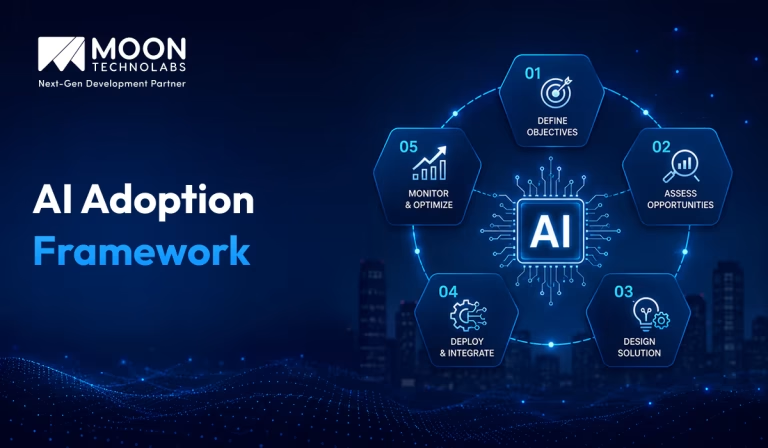
Table of Content


Blog Summary:
As AI continues to reshape industries, adopting it strategically is essential for improving efficiency, driving innovation, and maintaining a competitive edge. This blog explores the importance of an AI adoption framework, its key components, implementation steps, and best practices to help organizations achieve successful, scalable AI adoption.
Table of Content
Artificial intelligence is transforming how businesses operate, but achieving real value requires more than deploying AI tools. Organizations need a structured framework that aligns AI initiatives with business goals, governance, and workforce readiness.
The importance of getting AI adoption right is only increasing. Gartner forecasts that worldwide AI spending will reach $2.59 trillion in 2026, a 47% increase over 2025, underscoring growing enterprise investment in AI and the need for a clear adoption strategy.
This guide explains what an AI adoption framework is, why it matters, and the key steps to successfully implement AI across your enterprise.
What is an AI Adoption Framework?
An AI adoption framework is a structured approach that helps organizations successfully introduce and use artificial intelligence in their processes. It provides guidelines for identifying AI opportunities, selecting suitable technologies, and ensuring that AI solutions support business goals.
The framework typically includes steps such as assessing current capabilities, preparing data, developing AI strategies, implementing AI development tools, and training employees. It helps organizations manage challenges like technology integration, security, and change management.
By following an AI adoption framework, businesses can adopt AI in a planned and effective way. It enables better decision-making, improves efficiency, and helps organizations gain long-term value from artificial intelligence.
Why Businesses Need an AI Adoption Framework
An AI adoption framework helps organizations implement AI strategically, reduce risks, maximize business value, and scale initiatives efficiently while aligning technology investments with long-term objectives. Here are the key reasons why businesses need an AI adoption framework:
Aligns AI With Business Goals
An AI adoption framework ensures every AI initiative supports your organization’s strategic objectives. It helps businesses identify high-value use cases, allocate resources effectively, and implement AI solutions that deliver measurable outcomes instead of isolated experiments.
Minimizes Implementation Risks
Adopting AI without a structured plan can lead to challenges such as poor data quality, compliance issues, and failed deployments. An AI adoption framework establishes clear governance, risk management practices, and implementation guidelines to reduce uncertainties and improve project success.
Improves Operational Efficiency
A well-defined framework enables businesses to streamline workflows, automate repetitive tasks, and optimize decision-making with AI-powered insights. This leads to increased productivity, lower operational costs, and more efficient use of resources across the organization.
Accelerates ROI From AI Investments
An AI adoption framework helps organizations prioritize initiatives with the highest business impact and establish clear success metrics from the outset. By focusing on scalable, value-driven implementations, businesses can reduce wasted investments, achieve faster deployment, and realize measurable returns on their AI initiatives more quickly.
Supports Long-term Scalability
As AI adoption grows, businesses need a structured approach to expand AI capabilities across teams and functions. An AI adoption framework provides standardized processes, governance, and technology guidelines that enable organizations to scale AI solutions efficiently while maintaining consistency, security, and performance.
Connect with our AI specialists to build a tailored adoption strategy, streamline implementation, and achieve measurable business outcomes faster.
Key Components of an AI Adoption Framework
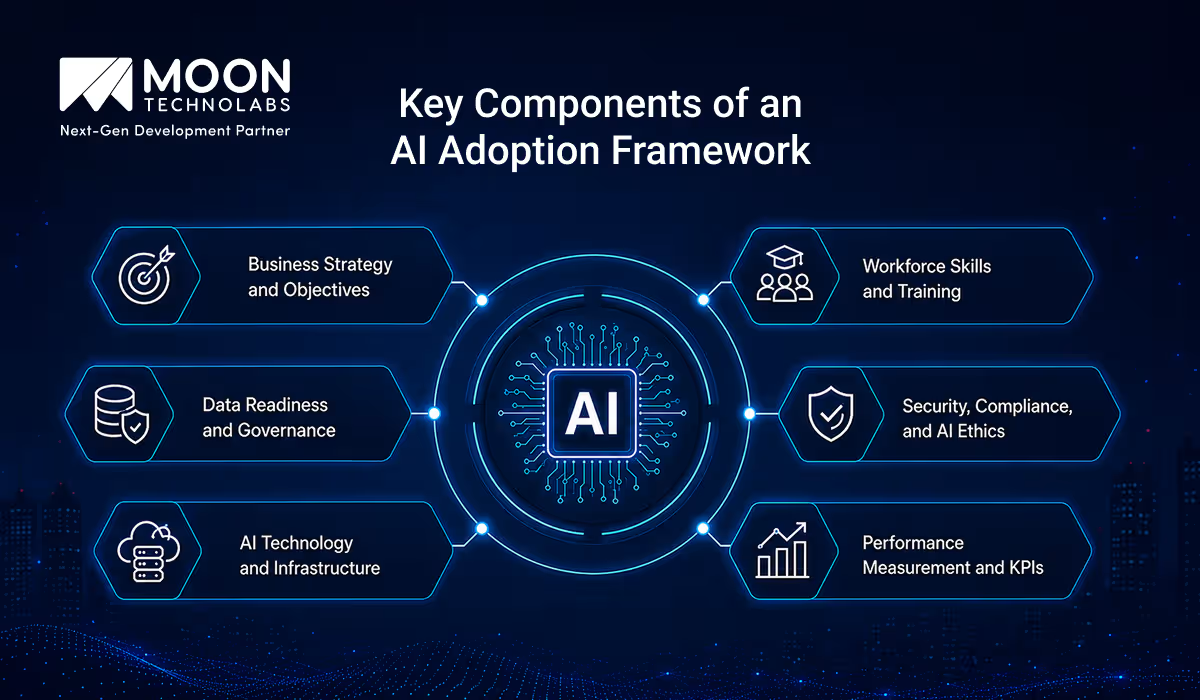
A successful AI adoption framework is built on several essential components that work together to support strategic planning, responsible governance, data readiness, technology integration, and workforce enablement. These elements help organizations implement AI effectively, scale initiatives with confidence, and achieve long-term business value.
Here are the key components of an effective AI adoption framework:
Business Strategy and Objectives
AI adoption should start with a clear understanding of business goals and where AI can create the greatest impact. Organizations should identify priority use cases, define expected benefits, and create an implementation roadmap that connects AI initiatives with strategic objectives. This ensures AI investments focus on solving real business challenges rather than adopting technology without a clear purpose.
Data Readiness and Governance
High-quality data is essential for successful AI implementation. Organizations need to evaluate data availability, accuracy, accessibility, and security while establishing clear governance practices. Effective data management, ownership, and quality standards help ensure that AI models generate reliable insights and support better decision-making.
AI Technology and Infrastructure
Organizations must select the right AI technologies, platforms, and infrastructure to support their AI goals. This includes evaluating cloud capabilities, AI tools, model development platforms, and AI integration with existing systems. A scalable technology foundation enables organizations to deploy AI solutions efficiently and adapt as requirements evolve.
Workforce Skills and Training
Successful AI adoption depends on people having the right skills and understanding of AI capabilities. Organizations should invest in training programs to build AI literacy, technical expertise, and practical skills in using AI across teams. Supporting employees through change management helps drive acceptance and effective adoption of AI solutions.
Security, Compliance, and AI Ethics
AI systems must be developed and used responsibly by addressing security, privacy, compliance, and ethical considerations. Organizations should establish guidelines for responsible AI use, monitor risks such as bias and data misuse, and ensure AI solutions comply with regulatory and industry standards.
Performance Measurement and KPIs
Measuring AI success requires clear performance indicators linked to business outcomes. Organizations should track metrics such as productivity improvements, cost savings, customer impact, accuracy, and adoption rates. Continuous monitoring and improvement help maximize the value generated from AI investments.
Step-by-Step AI Adoption Framework
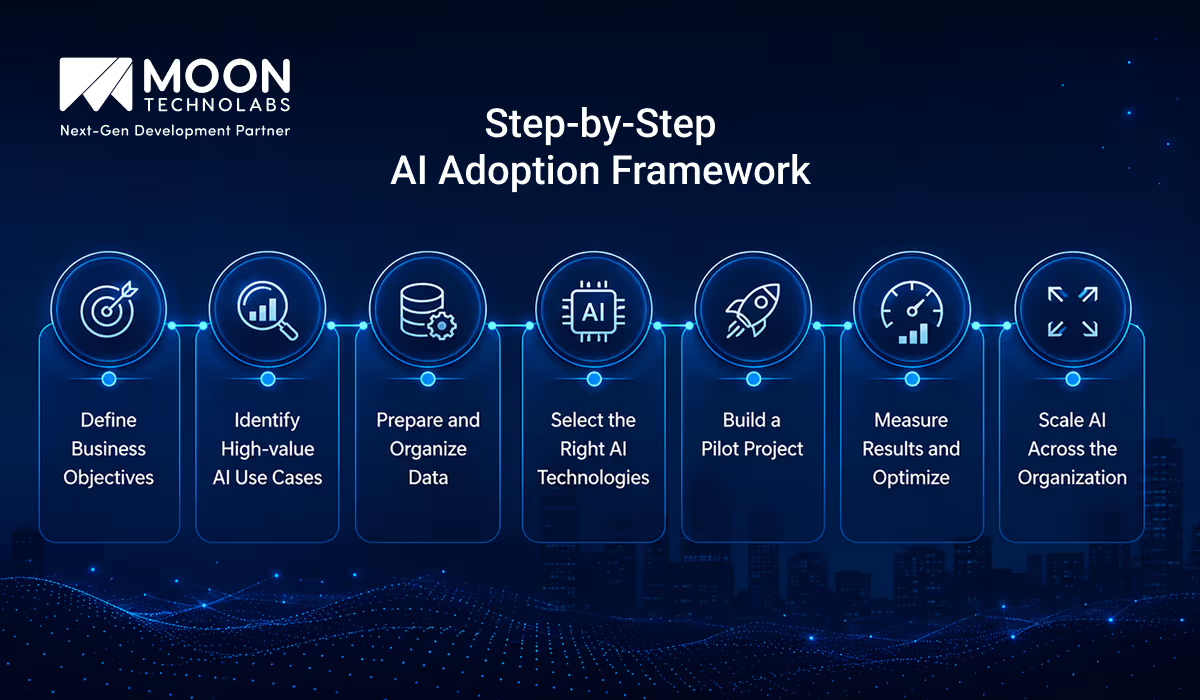
A step-by-step AI adoption framework provides organizations with a clear roadmap to move from planning and experimentation to successful AI implementation. It helps businesses identify opportunities, prepare resources, manage risks, and scale AI solutions effectively. Here are the key steps to build and execute a successful AI adoption framework:
Define Business Objectives
The first step in adopting AI is establishing clear business goals. Organizations should identify the challenges they want to solve or the opportunities they want to capture, such as improving customer experience, reducing operational costs, increasing productivity, or driving revenue growth. Well-defined objectives ensure AI initiatives align with overall business strategy and deliver measurable value.
Identify High-value AI Use Cases
Once objectives are established, identify business processes where AI can create the greatest impact. Focus on use cases that are practical, data-driven, and capable of delivering quick wins. Examples include customer support automation, demand forecasting, fraud detection, predictive maintenance, document processing, and personalized marketing. Prioritizing high-value opportunities helps maximize return on investment.
Prepare and Organize Data
Key Components of an AI Adoption Framework
AI systems rely on high-quality data to produce accurate insights and predictions. Businesses should collect, clean, standardize, and organize data from relevant sources while ensuring compliance with privacy and security regulations. A strong data foundation improves model performance and enables more reliable AI outcomes.
Select the Right AI Technologies
Choose AI tools and platforms that align with your business needs, technical capabilities, and long-term strategy. Consider factors such as scalability, ease of integration, customization, security, and vendor support. Depending on the use case, organizations may leverage machine learning, natural language processing, computer vision, generative AI, or intelligent automation solutions.
Build a Pilot Project
Start with a small-scale pilot to validate the effectiveness of the chosen AI solution. Select a focused use case with clearly defined success metrics and involve key stakeholders throughout the implementation process. A pilot allows organizations to evaluate performance, identify challenges, and gather valuable feedback before making larger investments.
Measure Results and Optimize
Track key performance indicators (KPIs) to assess the impact of the AI implementation. Metrics may include cost savings, process efficiency, accuracy, customer satisfaction, revenue growth, or employee productivity. Analyze results, refine AI models, improve workflows, and continuously incorporate user feedback to enhance performance.
Scale AI Across the Organization
After a successful pilot, expand AI adoption across additional departments and business functions. Develop governance frameworks, establish AI best practices, train employees, and integrate AI into existing workflows. Scaling AI strategically enables organizations to achieve enterprise-wide efficiency, foster innovation, and build a sustainable competitive advantage.
You Might Also Like:
AI Adoption Best Practices for Long-term Success
Following best practices is essential for ensuring AI initiatives deliver consistent value beyond initial implementation. A strong approach helps organizations improve AI performance, maintain responsible usage, adapt to changing business needs, and create a foundation for long-term success.
Here are the key AI adoption best practices businesses should follow:
Start With High-impact Use Cases
Successful AI adoption begins by identifying business challenges where AI can deliver measurable value. Organizations should focus on high-impact use cases that improve efficiency, enhance customer experiences, reduce costs, or support better decision-making. Starting with clear objectives and achievable projects helps demonstrate AI’s benefits, build confidence, and create a foundation for broader implementation.
Build Cross-functional AI Teams
AI initiatives require collaboration between technology experts, business leaders, data specialists, and end users. Building cross-functional teams ensures that AI solutions address real business needs while considering technical feasibility, operational requirements, and user adoption. Diverse perspectives also help organizations identify risks and develop practical, scalable solutions.
Establish Responsible AI Policies
Organizations should develop clear guidelines for the ethical and responsible use of AI. Responsible AI policies should address data privacy, security, transparency, fairness, and accountability. Establishing governance frameworks helps reduce risks, maintain user trust, and ensure that AI systems are aligned with organizational values and regulatory expectations.
Continuously Monitor AI Performance
AI systems require ongoing evaluation to remain accurate, reliable, and effective. Organizations should track key performance indicators, monitor data quality, identify potential biases, and update models as business conditions change. Continuous monitoring helps prevent performance issues and ensures that AI continues to deliver meaningful results over time.
Invest in Continuous Learning
AI adoption is an ongoing journey that requires continuous skill development. Organizations should provide training opportunities to help employees understand AI tools, adapt to new workflows, and identify new opportunities for innovation. Building an AI-ready workforce encourages experimentation, improves adoption, and supports long-term success.
Build an AI Adoption Framework with Moon Technolabs
Building a successful AI adoption framework starts with identifying the right business goals, assessing existing processes, and creating a roadmap for implementation. We help organizations define clear AI strategies, prioritize high-impact use cases, and integrate AI solutions into existing workflows with minimal disruption.
As an experienced AI development company, we focus on data readiness, technology selection, and AI governance to ensure every implementation is scalable, secure, and aligned with long-term business objectives. This structured approach helps businesses confidently adopt AI while minimizing risks and maximizing value.
Beyond strategy, we support organizations throughout the entire AI adoption journey, from developing custom AI solutions and automating workflows to monitoring performance and continuously optimizing AI models. By combining technical expertise with industry-specific insights, we enable businesses to drive innovation, improve operational efficiency, and achieve sustainable digital transformation.
Our specialists help you plan, implement, and scale AI initiatives that drive efficiency, innovation, and measurable business impact.
A Final Word
An effective AI adoption framework helps enterprises turn AI initiatives into measurable business value. By aligning AI with business goals, ensuring data readiness, and implementing strong governance, organizations can reduce risks, improve efficiency, and scale AI with confidence.
As AI continues to evolve, businesses that adopt a strategic approach will be better positioned to innovate and stay competitive. Partnering with an experienced AI development team can simplify the adoption process and drive long-term enterprise success.
FAQs
01
Is AI adoption stalling?
No, AI adoption is not stalling; it is continuing to grow across industries. However, organizations are moving from experimentation to more strategic implementation. Businesses are focusing on improving efficiency, automating tasks, and creating value while addressing challenges such as data privacy, costs, and employee training.02
What are the 4 stages of AI adoption?
The four stages of AI adoption are awareness, experimentation, implementation, and transformation. In the awareness stage, organizations understand AI’s potential. Experimentation involves testing AI solutions; implementation integrates AI into business processes, while transformation uses AI strategically to create new opportunities, improve business operations, and drive innovation.03
What is an example of AI adoption?
An example of AI adoption is a customer service department using AI-powered chatbots to answer common questions and provide instant support. Companies also use AI for recommendations, fraud detection, predictive maintenance, and data analysis. These applications help organizations reduce costs, improve customer experiences, and increase operational efficiency.04
What is the primary goal of the AI framework?
The primary goal of an AI adoption framework is to help organizations implement AI strategically by aligning AI initiatives with business objectives, reducing risks, improving efficiency, and maximizing measurable business value. It provides a structured roadmap for successful AI adoption and long-term scalability.



Explore the latest insights on Artificial Intelligence, including Generative AI, Agentic AI, natural language processing, computer vision, automation, and enterprise AI solutions. This category covers industry trends, practical applications, implementation strategies, and innovations that help businesses leverage AI for smarter decision-making and digital transformation. Stay updated with evolving AI technologies that are reshaping industries worldwide.
Submitting the form below will ensure a prompt response from us.
We refine our expertise to deliver innovative business solutions.





205 N Michigan Avenue, #810, Chicago, 60601, Illinois, United States
13500 Long Is Dr, Pflugerville, TX 78660, USA

C/105 Ganesh Meridian, S.G. Highway, Ahmedabad, GJ 380060


Ayse D.
Co-Founder France
“ I highly recommend Moon Technolabs as the quality of service is wonderful. We have hired this company to develop the product based on some complex & technical issues. We get the best quality services as compared with others in the market. Huge Thanks to Moon Technolabs as the team is always ready to give the solution all time.”

Justin G.
Founder & CEO USA
USA“ Moon Technolabs is a pioneer in the WebRTC based project as they have fixed complicated segments of the module by fulfilling different product lines by providing 24X7 customer support. We really recommended Moon Technolabs as they are able to develop products as per the module deadline and project timeline.”

Flavio S.
Founder & Managing Director Germany
“I am happy to recommend Moon Technolabs for their app development services. They successfully developed apps for me, and I am highly satisfied with the overall outcomes. The development team has swiftly addressed the issues with responsive and effective communication to understand the requirement quickly and actively resolve the back-and-forth problems that arose...”

Jay M.
Founder & CEOUSA“Moon Technolabs is the best company that provides advanced apps and websites development services in the USA and Europe. I am a newbie to develop my app with an external team. I am really happy to work with them as I am not that much mobile apps user. Here, the team and specially the CEO of Moon Technolabs helps me to let me know about the benefits of my app to generate revenue....”


Our Offices
India
C/105 Ganesh Meridian,S.G. Highway, Ahmedabad, GJ 380060USA
205 N Michigan Avenue, #810, Chicago, 60601, Illinois, United StatesContact Information


