


SaaS Pricing Model: A Complete Guide to Pricing Strategies

Jayanti Katariya
Last Updated: Jul 02, 2026 Total Views: 189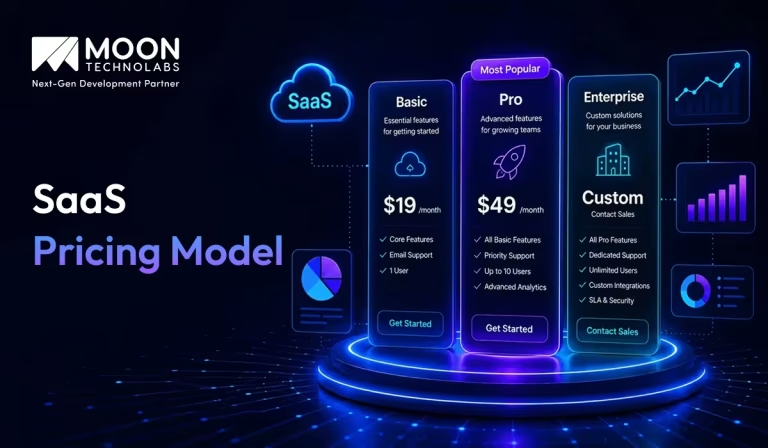
Table of Content


Blog Summary:
A SaaS pricing model does more than determine how much customers pay. It influences customer acquisition, retention, profitability, and long-term growth. The right pricing strategy helps communicate your product’s value, attract the right audience, and create a sustainable revenue stream. In this guide to SaaS pricing, we’ll explore the most common pricing models, the factors that should shape your pricing decisions, and practical strategies to help you choose a model that aligns with your business goals and customer expectations.
Table of Content
Pricing is where most SaaS products either find momentum or quietly stall. You can have strong product-market fit, solid onboarding, and even happy users, but if your pricing doesn’t reflect how customers perceive value, growth gets harder than it should be.
SaaS pricing isn’t just about picking a number; it’s about deciding how you want your product to be consumed, scaled, and ultimately judged in the market. Do you charge per user, per usage, or bundle value into tiers? Do you keep entry friction low with a freemium model, or qualify intent up front with paid plans? Each choice subtly shapes user behavior and revenue patterns.
In this blog, we’ll break down the most common SaaS pricing models, when they actually work, and how companies use pricing not just to monetize, but to grow.
Understanding SaaS Pricing Models
Software as a Service (SaaS) pricing models determine how customers are charged for using cloud-based software. Common pricing strategies include subscription-based pricing, where users pay a monthly or annual fee; usage-based pricing, where charges depend on actual usage; and tiered pricing, which offers different models with varying feature sets. These models allow businesses to choose plans that best fit their needs and budgets.
Selecting the right SaaS pricing model is essential for both customer satisfaction and business growth. A suitable pricing strategy helps attract new customers, improve retention, and maximize revenue. Companies often evaluate factors such as target audience, product value, and market competition when deciding on a pricing model. Flexible and transparent pricing also builds trust and encourages long-term customer relationships.
How Do SaaS Pricing Models Differ from Traditional Pricing?
Unlike traditional pricing, which typically involves a one-time purchase, SaaS pricing is based on recurring subscriptions. Instead of paying a high upfront cost, customers pay monthly or annually for continuous access to the software, including updates, maintenance, and support.
Another key difference is the focus on customer relationships. Traditional businesses prioritize new sales, while top SaaS companies rely on long-term customer retention and recurring revenue. This encourages continuous product improvements and better customer support.
SaaS pricing also offers greater flexibility through models like tiered, per-user, and usage-based pricing, allowing existing customers to scale their plans as their needs change. In contrast, traditional pricing often requires separate purchases for upgrades or additional licenses.
Overall, SaaS pricing provides predictable revenue for businesses and affordable, scalable solutions for customers, making it well-suited for the cloud-based software market.
Build scalable SaaS solutions with flexible pricing, secure architecture, and seamless subscription management tailored to your business.
Key SaaS Pricing Strategies for Businesses
Choosing the right SaaS pricing strategy is one of the most important decisions for any business. A well-planned and right pricing model helps maximize revenue, attract the right customers, and stay competitive in the market. Below are three widely used SaaS pricing strategies:
Customer Value-driven Pricing
Customer value-driven pricing is based on the perceived value customers receive from your SaaS pricing software, rather than on the cost of developing it. Businesses determine pricing by understanding the value their solution delivers, such as increased productivity, cost savings, or revenue growth.
This strategy requires in-depth customer research, feedback, and market analysis to identify what customers are willing to pay. SaaS companies using value-driven pricing often offer multiple pricing tiers, allowing customers to choose a plan that matches their needs and the value they expect.
Benefits:
- Maximizes revenue potential
- Improves customer satisfaction by aligning price with value
- Supports premium pricing for feature-rich products
Market-oriented Pricing
Market-oriented pricing focuses on competitor pricing and current market conditions. Instead of pricing solely based on internal costs or perceived value, businesses analyze similar SaaS products to determine a competitive price range.
This approach helps new SaaS companies enter the market more effectively while ensuring existing businesses remain competitive. They may choose to price below competitors to attract customers or charge a premium by offering unique features and better customer support.
Benefits:
- Keeps pricing competitive
- Makes customer acquisition easier
- Helps respond quickly to changing market trends
Cost-based Pricing Approach
Cost-based pricing calculates the total cost of developing, maintaining, marketing, and supporting the software, then adds a desired profit margin to determine the final price.
While this strategy ensures profitability, it may not fully reflect the value customers receive or market demand. Therefore, many SaaS companies use cost-based pricing as a foundation and adjust it based on customer expectations and competitor pricing.
Benefits:
- Ensures all business costs are covered
- Provides predictable profit margins
- Simple and easy to implement
Top 6 SaaS Pricing Models Explained
Every SaaS business has different pricing needs based on its product, audience, and growth stage. Understanding the strengths of various pricing models can help you create a strategy that aligns with customer expectations while maximizing revenue. Let’s explore the six most common SaaS pricing models:
Fixed Pricing Model
The fixed pricing model offers a single product with a single set of features at a fixed price for every customer. Since there is only one plan, customers can easily understand the pricing without having to compare multiple options. This straightforward approach simplifies purchasing and subscription management.
Multi-tier Pricing Model
This model offers multiple subscription plans with different features, usage limits, or support levels. Customers can choose the plan that best fits their needs and upgrade as their business grows. It allows businesses to serve a wide range of customers with varying budgets and requirements.
Consumption-based Pricing Model
Also known as Pay-as-You-Go, this model charges customers based on their actual usage of the service, such as API requests, storage, bandwidth, or transactions. Instead of paying a fixed monthly fee, customers only pay for what they use, making it a flexible and cost-effective option for businesses with changing usage patterns.
User-based Pricing Model
The user-based pricing model charges based on the number of users or seats accessing the software. As organizations add more employees or team members, subscription costs increase accordingly. This pricing model is simple, predictable, and scales alongside business growth.
Free-to-Paid Pricing Model
Also called the freemium pricing model, this strategy allows users to access basic features for free while charging for advanced features, premium support, or higher usage limits. The free plan helps users experience the product before deciding to upgrade, making it an effective way to attract and convert new customers.
Functionality-based Pricing Model
The functionality-based pricing model structures pricing based on the features available in each subscription plan. Entry-level plans include essential functionality, while higher-tier plans unlock advanced tools, integrations, automation, analytics, and other premium capabilities. This allows customers to pay for the features that match their specific business needs.
Why Does Selecting the Right SaaS Pricing Model Matter?
Choosing the right and popular SaaS pricing model is more than setting a price; it is about creating a strategy that drives growth, attracts the right customers, and maximizes long-term profitability. A well-designed pricing model ensures you develop a SaaS product that delivers value and supports your business goals.
Drive Higher Revenue Growth
The right strategy helps you maximize recurring revenue by aligning pricing with customer needs and usage patterns. Whether it is subscription-based, usage-based, or tiered, an optimized pricing model increases customer lifetime value while improving profitability.
Boost Customer Acquisition and Loyalty
Competitive and transparent pricing lowers the barrier to entry for new customers and encourages long-term retention. Offering flexible plans allows users to choose the option that best fits their requirements, building trust and reducing churn.
Match Pricing with Perceived Value
Customers are willing to pay more when pricing reflects the value they receive. A value-based pricing model ensures your product’s features, benefits, and outcomes justify the cost, leading to greater customer satisfaction and stronger brand perception.
Support Long-term Business Expansion
As your SaaS business grows, your pricing strategy should evolve with it. Scalable pricing models make it easier to introduce new features, target different customer segments, expand into new markets, and sustain predictable recurring revenue over time.
Proven Practices for Improving SaaS Pricing Models
Your SaaS pricing model directly influences customer acquisition and revenue growth, making optimization a critical business activity. By applying tested strategies and data-driven insights, you can build a more effective pricing structure. Let’s explore some proven practices for improving SaaS pricing models:
Anchor Pricing to Customer Value
The most effective SaaS pricing models reflect the value customers receive rather than the cost of delivering the product. Identify the outcomes your solution helps achieve, such as increased productivity, cost savings, or revenue growth, and align pricing with those benefits. Value-based pricing helps justify premium plans while improving customer satisfaction and long-term retention.
Streamline the Pricing Page
A clear, user-friendly pricing page makes it easier for prospects to compare plans and make confident purchasing decisions. Use simple plan names, highlight key features, and clearly communicate the differences between tiers. Including FAQs, comparison tables, and strong calls to action can reduce friction and improve conversion rates.
Implement Hybrid or Usage-Driven Billing
Many SaaS businesses are moving beyond fixed subscriptions by combining base plans with usage-based pricing. This hybrid approach allows customers to pay based on the value they consume while ensuring predictable, recurring revenue. It also provides greater flexibility for businesses serving customers with varying usage patterns.
Leverage Pricing Psychology
Strategic pricing techniques can positively influence purchasing decisions. Tactics such as offering three pricing tiers, highlighting the most popular plan, using annual billing discounts, and presenting premium options as anchors help customers perceive greater value. Small adjustments in pricing presentation can significantly improve conversion rates.
Continuously Test and Refine
Pricing should evolve alongside your product, market, and customer expectations. Regularly analyze customer behavior, monitor key metrics such as conversion rate, churn rate, and average revenue per user, and gather user feedback. A/B testing pricing structures, packaging, and messaging enables data-driven optimization that maximizes both revenue and customer satisfaction.
Partner with our team to develop scalable solutions that adapt to your evolving business needs.
Simplify SaaS Pricing Management with Moon Technolabs for Sustainable Growth
As your SaaS business grows, managing multiple pricing plans, feature-based subscriptions, and recurring billing can become increasingly complex. Moon Technolabs helps simplify this process by building intelligent pricing management systems that automate plan changes, usage tracking, invoicing, and renewals. As a top-notch SaaS development company, we create scalable solutions tailored to your unique subscription model.
Our pricing management solutions are designed to support flexible billing strategies, whether you offer fixed, tiered, or usage-based plans. With seamless payment gateway integration and real-time subscription management, businesses can reduce billing errors, improve operational efficiency, and deliver a smoother customer experience.
By giving you greater control over pricing updates, customer subscriptions, and revenue tracking, we help you respond quickly to market demands without disrupting your platform. The result is a reliable pricing ecosystem that supports sustainable growth and long-term customer retention.
A Final Word
Choosing the right SaaS pricing model is essential for maximizing revenue, improving customer retention, and supporting long-term business growth. So, whether you’re launching a new SaaS product or refining your existing pricing strategy, the right technology partner can make implementation seamless and scalable. If you’re looking to build or optimize a high-performing SaaS platform, consider hiring SaaS developers from Moon Technolabs to create flexible, future-ready solutions tailored to your business goals.
FAQs
01
What are the 7 pricing strategies?
The seven common pricing strategies used by businesses are Cost-Plus Pricing, Competitive Pricing, Value-Based Pricing, Penetration Pricing, Price Skimming, Dynamic Pricing, and Freemium Pricing. Cost-Plus Pricing involves adding a fixed profit margin to the cost of producing a product or service. Competitive Pricing sets prices based on what competitors charge in the market. Value-Based Pricing determines the price according to the perceived value customers receive. Penetration Pricing introduces a product at a lower price to quickly attract customers and gain market share. Price Skimming starts with a higher price at launch and gradually reduces it over time. Dynamic Pricing adjusts prices in real time based on demand, competition, or market conditions. Freemium Pricing offers a basic version of a product or service for free while charging users for advanced features or premium functionality.02
What is the 3 3 2 2 2 rule of SaaS?
The 3-3-2-2-2 rule of SaaS is a business framework that promotes balanced customer and revenue growth. It suggests that around 30% of customers should be on entry-level plans, another 30% on mid-tier plans, and 20% on premium plans, with the remaining 20% of revenue coming from add-ons, upgrades, or enterprise services. This approach helps SaaS companies build a sustainable recurring revenue model and reduce dependence on a single pricing tier.03
What are the 4 types of pricing?
The four primary types of pricing are Cost-Based Pricing, Value-Based Pricing, Competition-Based Pricing, and Demand-Based Pricing. Cost-Based Pricing determines prices by adding a profit margin to the total production cost. Value-Based Pricing sets prices according to the value customers perceive in the product or service. Competition-Based Pricing establishes prices based on competitors' rates to remain competitive in the market. Demand-Based Pricing adjusts prices depending on customer demand and changing market conditions, allowing businesses to maximize revenue during periods of high demand.04
What are the five key elements of pricing strategy?
The five key elements of an effective pricing strategy are Business Objectives, Target Market, Costs, Competitive Analysis, and Value Proposition. Business objectives define goals such as maximizing profit, increasing market share, or boosting sales. Understanding the target market helps businesses identify customer needs, preferences, and willingness to pay. Accurately calculating fixed and variable costs ensures the pricing remains profitable. Competitive analysis involves evaluating competitors' pricing and market positioning to stay competitive, while a strong value proposition ensures the price reflects the unique benefits and value the product or service delivers to customers.




Jayanti Katariya is the CEO of Moon Technolabs, a fast-growing IT solutions provider, with 18+ years of experience in the industry. Passionate about developing creative apps from a young age, he pursued an engineering degree to further this interest. Under his leadership, Moon Technolabs has helped numerous brands establish their online presence and he has also launched an invoicing software that assists businesses to streamline their financial operations.
Submitting the form below will ensure a prompt response from us.
We refine our expertise to deliver innovative business solutions.




205 N Michigan Avenue, #810, Chicago, 60601, Illinois, United States
13500 Long Is Dr, Pflugerville, TX 78660, USA

C/105 Ganesh Meridian, S.G. Highway, Ahmedabad, GJ 380060


Ayse D.
Co-Founder France
“ I highly recommend Moon Technolabs as the quality of service is wonderful. We have hired this company to develop the product based on some complex & technical issues. We get the best quality services as compared with others in the market. Huge Thanks to Moon Technolabs as the team is always ready to give the solution all time.”

Justin G.
Founder & CEO USA
USA“ Moon Technolabs is a pioneer in the WebRTC based project as they have fixed complicated segments of the module by fulfilling different product lines by providing 24X7 customer support. We really recommended Moon Technolabs as they are able to develop products as per the module deadline and project timeline.”

Flavio S.
Founder & Managing Director Germany
“I am happy to recommend Moon Technolabs for their app development services. They successfully developed apps for me, and I am highly satisfied with the overall outcomes. The development team has swiftly addressed the issues with responsive and effective communication to understand the requirement quickly and actively resolve the back-and-forth problems that arose...”

Jay M.
Founder & CEOUSA“Moon Technolabs is the best company that provides advanced apps and websites development services in the USA and Europe. I am a newbie to develop my app with an external team. I am really happy to work with them as I am not that much mobile apps user. Here, the team and specially the CEO of Moon Technolabs helps me to let me know about the benefits of my app to generate revenue....”


Our Offices
India
C/105 Ganesh Meridian,S.G. Highway, Ahmedabad, GJ 380060USA
205 N Michigan Avenue, #810, Chicago, 60601, Illinois, United StatesContact Information


