


Network Modernization: A Complete Guide for Enterprises

Cloud Computing Team
Last Updated: Sep 02, 2026 Total Views: 106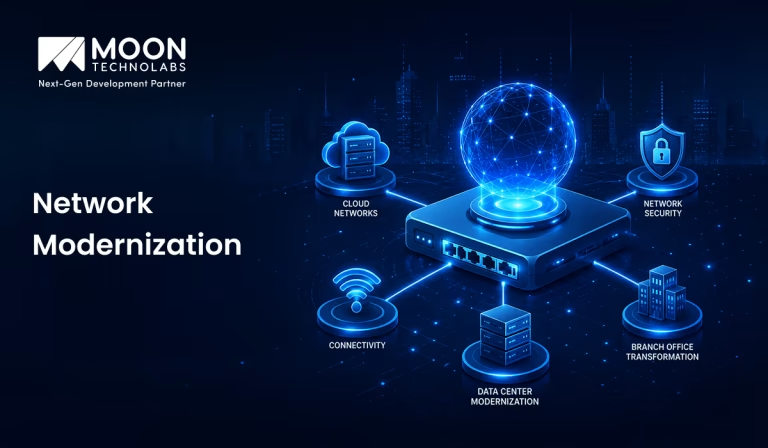
Table of Content


Blog Summary:
As businesses shift more workloads to the cloud and support users across multiple locations, traditional network infrastructure can become difficult to manage and scale. Network modernization provides a way to address these limitations by improving connectivity, security, visibility, and overall network performance. A modernized network gives enterprises the flexibility to adapt faster while keeping critical applications and operations running reliably.
Table of Content
Enterprise networks are under pressure from cloud applications, distributed teams, rising data volumes, and increasingly complex security requirements. Infrastructure that once handled business operations efficiently can quickly become a bottleneck as workloads and connectivity needs change. Network modernization addresses these challenges by rethinking how networks are designed, managed, secured, and scaled.
In this guide, we’ll explore what network modernization entails, why it matters, the key technologies driving it, and how businesses can build an enterprise network ready for what comes next.
What is Network Modernization?
Network modernization is the process of upgrading an organization’s network infrastructure to make it faster, more reliable, secure, and scalable. It often involves replacing outdated hardware, improving connectivity, and adopting modern technologies such as cloud networking and automation.
Modernized networks help businesses handle growing data demands, support remote and hybrid work, and provide better performance for applications and users. They also make it easier to manage network resources and respond quickly to changing business needs.
A key goal of network modernization is to build a flexible and future-ready infrastructure. By improving security, visibility, and efficiency, organizations can reduce downtime, control costs, and create a stronger foundation for digital transformation.
Why is Network Modernization Important for Enterprises?
Here is why network modernization is important for enterprises looking to improve connectivity, strengthen security, support cloud adoption, and scale their infrastructure as business demands continue to evolve:
Growing Cloud and SaaS Adoption
Cloud and SaaS applications are now central to business operations. Modern networks provide faster, more reliable access to cloud services while improving application performance and user experience.
Increasing Network Security Threats
Cyber threats are becoming more sophisticated, while legacy networks may lack modern security controls. Network modernization enables stronger security, better visibility, segmentation, and faster threat detection.
Supporting Hybrid and Remote Workforces
Remote and hybrid employees need secure, reliable access from different locations. Modern network technologies help provide consistent connectivity while maintaining security across distributed work environments.
Rising Bandwidth and Performance Demands
Video conferencing, cloud applications, IoT, AI, and data-intensive workloads are increasing network demands. Modern infrastructure improves capacity, reduces latency, and supports future growth.
Legacy Infrastructure Limitations
Aging hardware can be difficult to maintain, expensive to operate, and incompatible with newer technologies. Modernization replaces outdated systems with more flexible, scalable, and reliable infrastructure.
Need for Greater Automation and Visibility
Modern networks offer centralized management, automation, monitoring, and analytics. These capabilities help IT teams identify problems faster, reduce manual work, and manage increasingly complex environments more efficiently.
Key Benefits of Network Modernization
Here are the key benefits of network modernization that help enterprises overcome legacy network limitations, improve day-to-day operations, and respond faster to changing technology and business demands:
Improved Network Performance
Modern network infrastructure delivers faster speeds, lower latency, and more consistent connectivity. Legacy system modernization helps organizations handle increasing traffic demands while providing users with a smoother and more reliable digital experience.
Enhanced Security and Zero-trust Readiness
Network modernization strengthens security by enabling advanced segmentation, identity-based access controls, continuous monitoring, and the adoption of Zero Trust principles. This helps organizations reduce attack surfaces and protect critical applications, devices, and data.
Greater Scalability and Flexibility
Modern networks are designed to scale as business needs evolve. Organizations can easily support new users, locations, cloud services, applications, and connected devices without extensive infrastructure changes.
Reduced Network Downtime
Modernized infrastructure improves network resilience through redundancy, intelligent monitoring, automation, and proactive issue detection. This minimizes service interruptions and helps maintain business continuity.
Better Application Performance
With optimized connectivity and intelligent traffic management, modern networks provide reliable performance for cloud applications, collaboration platforms, SaaS solutions, and other business-critical workloads.
Simplified Network Management
Automation, centralized visibility, and software-defined networking make modern infrastructure easier to manage. IT teams can monitor performance, identify issues, apply policies, and make configuration changes more efficiently.
Lower Operational Costs
Modernization reduces the cost and complexity associated with aging infrastructure. Automation and centralized management can lower maintenance requirements, improve IT productivity, reduce downtime-related losses, and optimize resource utilization.
Overcome outdated infrastructure, security gaps, performance issues, and scalability challenges with a network built for your business future.
Key Technologies Driving Network Modernization
Network modernization is transforming traditional infrastructure into flexible, secure, cloud-ready, and intelligent networks. The following technologies are driving this transformation:
Software-defined Networking (SDN)
SDN separates network control from data forwarding, enabling centralized, software-based network management. It improves flexibility, automation, visibility, and resource utilization while reducing manual configuration.
SD-WAN
SD-WAN uses software-based policies to intelligently manage traffic across broadband, MPLS, 5G, and other connections. It improves application performance, simplifies branch connectivity, and can reduce WAN costs.
Secure Access Service Edge (SASE)
SASE combines networking and security services through the cloud. It provides secure access for users, devices, and applications regardless of location, making it well suited for hybrid and remote-work environments.
Network Function Virtualization (NFV)
NFV replaces dedicated network hardware with software-based functions such as firewalls, routers, and load balancers. This improves scalability, flexibility, and deployment speed while reducing hardware dependency.
5G and Private Networks
5G offers high capacity, low latency, and reliable connectivity for large numbers of devices. Private 5G networks are increasingly used in factories, campuses, warehouses, and other environments requiring secure and reliable wireless communication.
Edge Computing
Edge computing processes data closer to where it is generated rather than relying entirely on centralized cloud infrastructure. It reduces latency and supports applications such as IoT, automation, real-time analytics, and smart infrastructure.
Cloud Networking
Cloud networking provides flexible connectivity across public, private, and hybrid cloud environments. It enables automated provisioning, dynamic scaling, and secure access to cloud-based applications and workloads.
AI-powered Network Automation
AI and machine learning help networks become more proactive by detecting anomalies, predicting failures, optimizing performance, and automating routine tasks. This improves reliability and reduces the workload on network teams.
Network Modernization Strategy: 7 Essential Steps
Network modernization goes beyond replacing outdated hardware. It creates a secure, scalable, and agile network that supports cloud adoption, hybrid work, digital applications, and future business needs. Here are the essential steps required for network modernization; have a look:
Step 1: Assess the Existing Network Infrastructure
Begin by evaluating the current network, including hardware, software, connectivity, security, configurations, and performance. Identify bottlenecks, outdated devices, reliability issues, and manual processes. This assessment establishes a baseline for modernization.
Step 2: Define Business and Network Requirements
Align network improvements with business goals. Consider cloud adoption, remote work, application performance, scalability, availability, compliance, and security. Translate these needs into measurable network requirements such as bandwidth, latency, and availability.
Step 3: Identify Legacy Systems and Priorities
Review existing systems based on age, security risks, performance, cost, and business importance. Prioritize eliminating outdated or unsupported technologies that limit growth or pose operational risks. Develop a phased roadmap to manage costs and minimize disruption.
Step 4: Design a Cloud-ready Network Architecture
Build an architecture that supports hybrid and multi-cloud environments. Consider technologies such as SD-WAN, software-defined networking, cloud connectivity, and centralized management. The design should provide scalability, redundancy, automation, and consistent policies.
Step 5: Implement Security and Zero-trust Principles
Integrate security throughout the modernization process. Apply zero-trust principles by continuously verifying users & devices and providing only the access they need. Use measures such as identity-based access, segmentation, multifactor authentication, encryption, and continuous monitoring.
Step 6: Migrate and Integrate Network Technologies
Deploy new technologies in controlled phases, starting with pilot environments where possible. Address application dependencies, security policies, testing, and rollback plans. A phased approach reduces disruption while allowing teams to validate the new environment.
Step 7: Monitor, Optimize, and Automate
Continuously monitor network performance, security, bandwidth, and user experience. Use analytics to identify issues and optimize resources. Automation can simplify provisioning, configuration, troubleshooting, and routine maintenance, making network operations more efficient.
Common Network Modernization Use Cases
Here are the common network modernization use cases where upgrading network capabilities can solve specific operational challenges, improve infrastructure flexibility, and support new ways of working:
Data Center Network Modernization
Modernize data center networks to support growing workloads, higher bandwidth demands, and evolving application architectures. Upgrading legacy infrastructure with scalable, automated, and resilient networking enables better performance, simplified operations, and improved availability for business-critical applications.
Branch and Multi-location Connectivity
Connect branch offices and distributed locations with secure, reliable, and high-performance networking. Modern connectivity solutions can simplify WAN management, improve application access, optimize bandwidth utilization, and provide consistent network experiences across geographically dispersed sites.
Cloud and Multi-cloud Networking
Build flexible network architectures that securely connect users, applications, legacy data centers, and multiple cloud environments. Modern cloud networking helps organizations improve visibility, streamline connectivity, support hybrid architectures, and maintain consistent security and performance across cloud platforms.
Hybrid and Remote Workforce Connectivity
Enable employees to securely access applications and resources from offices, homes, and other locations. Network modernization provides reliable connectivity, secure remote access, and optimized application performance while supporting flexible and distributed work environments.
IoT and Connected Device Networks
Support the growing number of IoT devices, sensors, machines, and connected systems across the enterprise. Modern networks provide the scalability, segmentation, visibility, and security needed to manage large devices and efficiently transport the data they generate.
Network Security Modernization
Strengthen network protection by integrating modern security controls, segmentation, identity-based access, and continuous monitoring. Security modernization helps organizations reduce attack surfaces, protect critical resources, and respond more effectively to evolving cyber threats.
Application Performance Optimization
Improve the performance and availability of business-critical applications by modernizing network infrastructure, routing, traffic management, and connectivity. Better visibility and intelligent optimization help reduce latency, improve user experience, and ensure applications receive the network resources they need.
Network Modernization vs Traditional Network Infrastructure
Here’s how network modernization differs from traditional network infrastructure and why a modern approach is better suited to the changing needs of today’s enterprises:
| Aspect | Network Modernization | Traditional Infrastructure |
|---|---|---|
| Architecture | Uses software-defined, distributed, and cloud-ready architecture that provides flexibility and easier adaptation. | Mainly relies on physical hardware and centralized network designs, with limited flexibility. |
| Network Management | Centralized management allows monitoring, configuration, and troubleshooting from a single platform. | Devices are often managed individually, making large networks more difficult to maintain. |
| Scalability | Easily scales network resources, users, and applications without major infrastructure changes. | Expansion usually requires purchasing, installing, and configuring additional hardware. |
| Security | Uses Zero Trust, segmentation, continuous monitoring, and advanced threat detection. | Primarily relies on perimeter security, firewalls, and traditional access controls. |
| Automation | Uses APIs, orchestration, and automation tools to reduce manual work and human errors. | Limited automation, with many configuration and maintenance tasks performed manually. |
| Cloud Integration | Easily integrates with public, private, and hybrid cloud environments. | Mainly designed for on-premises environments and may require additional solutions for cloud integration. |
| Performance | Provides better bandwidth utilization, lower latency, and improved network availability. | Depends on fixed hardware capacity and available bandwidth; upgrades may require new equipment. |
| Cost and Maintenance | Higher initial investment but can reduce long-term maintenance and operational costs. | Hardware maintenance, upgrades, and replacements can increase long-term operational costs. |
Challenges in Network Modernization and How to Overcome Them
Here are the common challenges enterprises face during network modernization and practical ways to address them without disrupting critical business operations:
Legacy Infrastructure Complexity
Many organizations still rely on older hardware, software, and network architectures that may not support modern technologies such as cloud computing, SD-WAN, and automation. These systems can also create compatibility and maintenance issues.
How to overcome it: Organizations should assess their existing infrastructure and identify outdated or critical components. A phased modernization approach can then replace older systems gradually while reducing operational risks.
Migration Without Business Disruption
Network upgrades can cause downtime and affect employees, customers, and critical business operations if the migration is not carefully planned.
How to overcome it: Organizations should use phased migrations, pilot testing, backup systems, and planned maintenance windows. A clear rollback plan should also be prepared in case problems occur during deployment.
Security and Compliance Risks
Modern networks often involve cloud services, remote access, wireless devices, and IoT, which can increase security risks. Organizations must also meet industry regulations and data protection requirements.
How to overcome it: Security should be included from the beginning of the modernization process. Strong access controls, encryption, network segmentation, multi-factor authentication, monitoring, and regular security assessments can help protect the network.
Integration With Existing Systems
New networking technologies may need to work with existing applications, databases, security tools, and business systems. Differences in technologies and configurations can make integration difficult.
How to overcome it: Organizations should identify system dependencies before implementation and use standardized protocols, APIs, and compatible platforms. Testing integrations before production deployment can help prevent failures.
Network Skills Gaps
Modern networks require knowledge of cloud networking, cybersecurity, automation, and software-defined technologies. Organizations may not always have enough skilled professionals to manage these systems.
How to overcome it: Businesses should invest in employee training, certifications, and practical learning. Automation tools can reduce manual tasks, while consultants or managed service providers can provide additional expertise when required.
Budget and Cost Management
Modernization can involve high costs for new hardware, software, security solutions, training, and professional services. Managing these expenses while achieving business goals can be difficult.
How to overcome it: Organizations should prioritize projects based on business value, security needs, and return on investment. A phased approach allows businesses to spread costs over time and measure the benefits of each stage.
Network Modernization Best Practices
Here are the best practices enterprises should follow to modernize their network infrastructure effectively while maintaining reliability, minimizing disruption, and preparing for future growth:
Start With a Comprehensive Network Assessment
Begin by assessing your existing infrastructure, connectivity, applications, security controls, and network performance. Identifying legacy systems, bottlenecks, dependencies, and operational gaps helps establish clear modernization priorities and reduces migration risks.
Align Modernization With Business Goals
Network modernization should directly support business objectives such as improving application performance, strengthening security, reducing operational costs, and enabling digital transformation. Defining measurable goals helps ensure technology investments deliver meaningful business value.
Adopt a Phased Migration Strategy
A phased approach helps minimize disruption and manage migration risks. Prioritize high-impact areas, establish clear milestones, and validate each stage before moving forward. A well-defined cloud migration strategy can help manage workloads, dependencies, risks, and business continuity.
Build Security Into the Network Architecture
Integrate security from the beginning with network segmentation, identity-based access controls, encryption, monitoring, and zero-trust principles. This helps protect users, applications, devices, and sensitive data across modern environments.
Prioritize Automation and Centralized Management
Automation reduces manual effort, configuration errors, and operational overhead. Centralized management provides better visibility and makes it easier to apply consistent policies, monitor infrastructure, and respond quickly to network issues.
Design for Cloud and Multi-cloud Connectivity
Modern networks should provide secure, scalable connectivity across data centers, branches, and cloud platforms. Understanding the difference between multi-cloud and hybrid cloud can help organizations choose an architecture that aligns with their connectivity, scalability, and management requirements.
Continuously Monitor Network Performance
Network modernization is an ongoing process. Continuously monitor availability, latency, bandwidth utilization, application performance, and security events to identify issues early, optimize resources, and maintain reliable network performance.
Tackle legacy infrastructure, connectivity issues, security risks, and growing demands with scalable solutions designed around your business needs.
How are AI and Automation Transforming Network Modernization?
Here’s how AI and automation are changing the way enterprises monitor, optimize, secure, and manage modern networks while reducing manual effort and improving response times:
AI-powered Network Monitoring
AI-powered monitoring continuously analyzes network traffic, logs, and performance data to identify unusual patterns, bottlenecks, and potential issues. This gives IT teams better visibility and helps them resolve problems faster.
Predictive Network Maintenance
AI can analyze historical and real-time network data to predict potential equipment failures and performance issues. By identifying warning signs early, organizations can perform preventive maintenance, reduce downtime, and avoid costly disruptions.
Automated Configuration and Provisioning
Automation simplifies the deployment and configuration of network devices using predefined policies and workflows. It reduces manual effort, minimizes configuration errors, and ensures consistent settings across large and distributed networks.
Intelligent Traffic Management
AI can analyze network traffic in real time to identify congestion, prioritize critical applications, and optimize routing. This helps maintain reliable performance as workloads, users, and application demands change.
Automated Threat Detection and Response
AI is also transforming network security by detecting unusual behavior and potential threats more quickly. Automated systems can identify suspicious activity and respond by blocking malicious traffic, isolating compromised devices, or triggering security workflows.
How Much Does Network Modernization Cost?
Network modernization costs can range from $10,000 to $50,000 for small businesses, while mid-sized organizations may invest $50,000 to $150,000 or more. Large enterprises with multiple locations, data centers, cloud environments, and advanced security requirements can spend $150,000 to $300,000 or more.
The final cost depends on factors such as network size, hardware upgrades, cloud and multi-cloud connectivity, security solutions, software licensing, automation, and implementation services. Legacy infrastructure and complex integrations can also increase the overall investment.
A phased modernization approach allows businesses to spread costs over time while addressing the most critical requirements first. Organizations can prioritize high-impact upgrades and scale the network modernization investment as their business and technology needs evolve.
Future Trends in Network Modernization
AI-native Networking
AI is becoming an important part of network management. AI-led networks can monitor performance, detect anomalies, predict failures, and automate troubleshooting. This reduces manual work, improves reliability, and enables networks to become more adaptive.
Wider Adoption of SASE and Zero Trust
SASE combines networking and security through cloud-based services, while Zero Trust architecture requires continuous verification of users and devices. Together, they provide stronger security for cloud applications, remote workers, and distributed networks.
5G and Private 5G Networks
5G provides high-speed, low-latency connectivity for applications such as IoT, industrial automation, smart factories, and autonomous systems. Private 5G networks can give organizations greater control over connectivity, performance, and security.
Network-as-a-Service (NaaS)
NaaS allows organizations to consume networking capabilities through flexible, subscription-based services instead of managing all infrastructure themselves. It can simplify deployment, improve scalability, and reduce operational complexity.
Edge and Distributed Cloud Networking
Edge networking brings computing and data processing closer to users and devices, reducing latency and improving real-time performance. Combined with distributed cloud infrastructure, it supports applications such as IoT, smart manufacturing, healthcare, and connected vehicles.
Intent-based Networking
It allows organizations to define desired network outcomes while software automatically handles configuration and optimization. This reduces errors, simplifies management, and improves consistency across complex networks.
We help enterprises overcome outdated infrastructure, rising complexity, security concerns, and scalability barriers with future-ready network solutions.
How Does Moon Technolabs Help Businesses With Network Modernization?
Moon Technolabs approaches network modernization by first identifying where the existing infrastructure is holding the business back. We assess network performance, connectivity, security, and scalability to create a modernization roadmap that addresses real operational bottlenecks rather than simply replacing old technology.
As businesses adopt cloud platforms, distributed applications, and hybrid work models, their networks need to be more flexible and responsive. Moon Technolabs helps redesign and optimize network environments to improve application performance, simplify management, strengthen security, and support seamless connectivity across users, locations, and cloud resources.
A modern network should make it easier to introduce new technologies and scale operations. Reach out to us to explore a network modernization strategy designed around your current infrastructure, business priorities, and future growth.
Conclusion
A future-ready enterprise network should keep pace with your applications, users, cloud environments, and security demands without becoming harder to manage. Network modernization helps replace outdated dependencies with infrastructure that is faster, more flexible, and easier to scale.
By assessing current gaps and modernizing the areas with the greatest business impact, organizations can build a network that supports growth rather than slowing it down.
FAQs
01
How long does a network modernization project typically take?
A network modernization project typically takes 3–12 months, depending on the organization's size, complexity, and specific requirements. Larger enterprise edge environments may require a phased approach.02
What is the difference between network modernization and network transformation?
Network modernization focuses on upgrading existing infrastructure, technologies, and systems to improve performance and security. Network transformation is broader, involving a complete redesign of legacy network architecture and operations to support future business needs.03
Can network modernization be completed without replacing all existing infrastructure?
Yes. Modernization does not always require a complete infrastructure replacement. Businesses can upgrade critical components while retaining reliable existing systems, reducing costs, risks, and disruption.04
How much does enterprise network modernization cost?
The cost varies based on the size of the network, number of locations, existing infrastructure, technologies, and project scope. A detailed network assessment can help determine the investment required and identify opportunities for cost savings.05
How can businesses modernize their networks without causing downtime?
Businesses can minimize downtime through phased migration, redundancy, testing, and carefully planned maintenance windows. A well-designed modernization strategy allows upgrades to be introduced gradually while keeping essential business operations running.



Explore cloud computing technologies, cloud migration, multi-cloud strategies, cloud security, serverless architecture, and infrastructure optimization. Stay updated with enterprise cloud trends that enable scalability, flexibility, and business growth. Learn how cloud innovation supports digital transformation across industries.
Submitting the form below will ensure a prompt response from us.
We refine our expertise to deliver innovative business solutions.





205 N Michigan Avenue, #810, Chicago, 60601, Illinois, United States
13500 Long Is Dr, Pflugerville, TX 78660, USA

C/105 Ganesh Meridian, S.G. Highway, Ahmedabad, GJ 380060


Ayse D.
Co-Founder France
“ I highly recommend Moon Technolabs as the quality of service is wonderful. We have hired this company to develop the product based on some complex & technical issues. We get the best quality services as compared with others in the market. Huge Thanks to Moon Technolabs as the team is always ready to give the solution all time.”

Justin G.
Founder & CEO USA
USA“ Moon Technolabs is a pioneer in the WebRTC based project as they have fixed complicated segments of the module by fulfilling different product lines by providing 24X7 customer support. We really recommended Moon Technolabs as they are able to develop products as per the module deadline and project timeline.”

Flavio S.
Founder & Managing Director Germany
“I am happy to recommend Moon Technolabs for their app development services. They successfully developed apps for me, and I am highly satisfied with the overall outcomes. The development team has swiftly addressed the issues with responsive and effective communication to understand the requirement quickly and actively resolve the back-and-forth problems that arose...”

Jay M.
Founder & CEOUSA“Moon Technolabs is the best company that provides advanced apps and websites development services in the USA and Europe. I am a newbie to develop my app with an external team. I am really happy to work with them as I am not that much mobile apps user. Here, the team and specially the CEO of Moon Technolabs helps me to let me know about the benefits of my app to generate revenue....”


Our Offices
India
C/105 Ganesh Meridian,S.G. Highway, Ahmedabad, GJ 380060USA
205 N Michigan Avenue, #810, Chicago, 60601, Illinois, United StatesContact Information


