


Legacy Application Modernization: A Complete Guide to Transforming Enterprise Systems

Jayanti Katariya
Last Updated: Jul 06, 2026 Total Views: 147
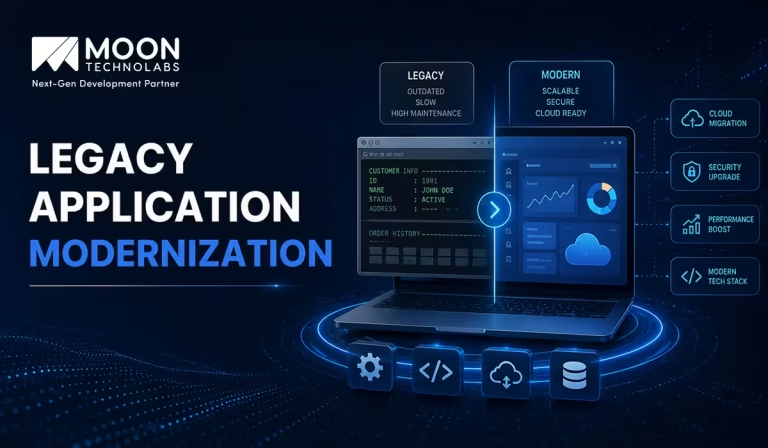
Table of Content


Blog Summary:
Legacy app modernization is necessary for businesses looking to boost performance, improve security, and minimize technical debt. To help them achieve these results, this guide covers everything related to app modernization, including its benefits, importance, strategies, best practices, the right tools, challenges, and future trends.
Table of Content
The majority of businesses still rely on legacy apps to run their core operations. But as their needs evolve, these legacy systems become incompatible due to integration challenges with the latest technologies and limited scalability. Besides, outdated apps consume the largest share of IT budgets, limiting resources for business growth.
To overcome these challenges, businesses nowadays most often turn to Legacy Application Modernization. With this, they don’t need to replace their existing systems completely; they transform them into scalable and secure solutions. This contributed significantly to the growth of the global app modernization market, which is expected to grow from $28.2 billion in 2026 to $52.5 billion by 2030.
But successful app modernization requires selecting the best approach for each app. In this guide, we will explore the most effective app modernization strategies and more.
What is Legacy Application Modernization?
Legacy application modernization is the process of updating outdated software. It includes various activities such as redefining inflexible architectures, addressing outdated code, and supporting unsupported platforms.
The primary aim is to ensure the legacy software solution can meet current business demands. Legacy app modernization doesn’t involve rebuilding everything from scratch or removing the core function.
Importance of Legacy Application Modernization
Businesses that don’t adopt modernization often rely on outdated technologies and thus struggle to sustain themselves. Here are some other reasons why legacy app modernization is pivotal:
Meeting Evolving Business Needs
With continuously changing markets, legacy systems developed for legacy workflows often struggle to support new partnerships, business models, and evolving regulations. A modern app allows businesses to adapt quickly and respond to new opportunities.
Improving Operational Efficiency
Legacy systems often lead to slow processing, manual workarounds, and frequent downtime. When you modernize your app, it improves workflows, automates repetitive tasks, and reduces maintenance stress for IT teams.
Enhancing Customer Experience
Customers today seek easy-to-use, fast, and always available digital experiences. Whether it’s outdated, old, or slow response times, they often minimize customer loyalty and trust.
Supporting Innovation and Scalability
Legacy apps can’t accommodate emerging technologies such as cloud-native services, AI, advanced analytics, and others. Modernization helps you make your legacy software flexible enough to scale with demand and integrate new capabilities.
Reducing Technical Debt
Technical debt increases every time you delay modernizing your existing software system. It indeed makes future updates more expensive and also extremely difficult. You can prevent this increasing debt by modernizing your legacy app.
Key Benefits of Legacy Application Modernization
Modernizing legacy apps delivers long-term value across security, performance, and growth for the organization, while also addressing their pain points. It also yields some other benefits that are as follows:
Improved Performance and Reliability
Legacy systems often struggle to handle current workloads, leading to frequent system crashes, slow loading times, and unexpected downtime. Modern apps offer both reliability and speed. They maintain a higher consistency in performance.
Enhanced Security and Compliance
Outdated systems are often major targets for cyber threats and fail to meet current compliance standards such as HIPAA, GDPR, PCI DSS, and others. Modernizing apps strengthens security postures through encryption, updated protocols, etc.
Lower Maintenance Costs
Maintaining legacy code requires specialized expertise. It increases the support costs over time. Modern architectures are easy to maintain, patch, and update, and minimize operational expenses.
Better Integration With Modern Technologies
A legacy system operates in isolation, making it tough to integrate with cloud platforms, APIs, and third-party tools. But the modern system is effectively designed to integrate with a range of tools and platforms, ensuring seamless connectivity across your entire technology ecosystem.
Increased Business Agility
Businesses can respond quickly to market shifts, competitive pressures, customer demands, and more, especially with cloud-ready, flexible systems. It prevents them from being slowed down by outdated, rigid infrastructure.
Faster Time-to-Market
Whether it’s CI/CD or microservices architecture, modern development practices help teams to develop, test, and implement the latest features fast. It means enterprises can launch and update products quickly.
Strategies for Legacy Application Modernization
One thing you need to understand is that not every strategy works for any legacy system modernization. It depends on many important factors, such as business priorities, the system’s condition, risk tolerance, budget, and more. Let’s take a detailed look at strategies:
Rehosting
Rehosting mainly involves migrating apps to a completely new environment, even without altering the underlying code. It’s a low-risk, quick option, perfect for enterprises seeking fast infrastructure wins even without a complete overhaul.
Replatforming
Replatforming is one step ahead of rehosting by making only small improvements to an app so it performs exceptionally well on a new platform without changing its architecture. It provides a perfect balance between fast migration and improved performance.
Refactoring
This strategy is about restructuring your existing code to improve efficiency, maintainability, and readability. You can do the same even without changing its external behavior. It’s indeed a powerful choice for enterprises that wish to minimize technical debt.
Rearchitecting
This process involves updating the app’s architecture, which moves from a monolithic structure to a microservices-based design. It enhances both scalability and flexibility. It needs a higher investment but also offers long-term performance and architectural resilience.
Rebuilding
Rebuilding becomes essential when legacy code is too outdated to match the evolving needs of business. The entire process involves revamping the app from scratch, from redesigning to rewriting.
Replacing With Cloud-native Solutions
In several cases, you need to make a smart move, such as retiring the legacy system entirely and adopting a cloud-native, ready-made solution. It removes legacy constraints altogether, offers built-in scalability, fast innovation cycles, and security.
We transform your existing app into a scalable and high-performing digital solution. Partner with us to discover new growth opportunities through expert modernization.
Best Practices in Legacy Application Modernization
No matter how effective the modernization strategy is, it tends to fall short without disciplined execution. You can implement the right practices to minimize risk and thus increase the overall ROI.
Assess the Existing Application Landscape
It’s advisable to analyze your existing systems before you make any changes. During review, you need to check dependencies, technical debt, and performance issues. This evaluation is crucial for building a strong foundation for future decisions.
Prioritize Business-Critical Applications
It’s crucial to emphasize apps that directly support revenue, essential business operations, or the customer experience. Modernizing these systems helps deliver fast results, minimize risks, and create business value quickly.
Adopt a Phased Modernization Approach
When you try to overhaul the entire system at once, you will come across operational disruption and unnecessary risk. Breaking your modernization process into phases allows your teams to explore, test, and adjust along the way.
Ensure Data Migration and Integrity
Data is indeed valuable, yet a vulnerable asset even during modernization. All you need to do is establish a clear protocol for data mapping, validation, and cleansing to prevent corruption, loss, or inconsistency as the system enters new environments.
Implement Robust Testing and Validation
Every updated component requires going through complete testing, including performance, functional, user acceptance, and security testing. This is useful for identifying actual issues before deployment, while ensuring the system remains completely reliable and users continue to rely on it.
Continuously Monitor Performance
Modernization is an ongoing project. Even after successful deployment, you need to monitor it continuously to detect security gaps or performance dips early. It enables your teams to improve your systems proactively rather than reactively.
Enterprise Application Modernization Tools
Selecting the right tools for your app modernization is essential to ensure your efforts succeed. The following are some of the important categories of these tools you can leverage to implement modernization properly:
Cloud Migration Tools
Be it Azure Migrate, AWS Migration Hub, or Google Cloud Migration Center, cloud migration tools help organizations assess and implement the move from on-premises systems to the cloud. These tools are essential for simplifying workload analysis and minimizing migration downtime.
Containerization Platforms
You can leverage tools such as Kubernetes and Docker to package apps and their overall dependencies into portable containers. It ensures a consistent performance across multiple environments.
CI/CD and DevOps Tools
When it comes to automating the major activities of building, testing, and deploying a pipeline, you can use platforms like GitLab CI/CD, Jenkins, and GitHub Actions. This fosters the release cycles, supports continuous delivery models, and minimizes manual errors.
API Management Platforms
You can use tools such as MuleSoft, Apigee, and Kong to help businesses connect legacy systems via advanced APIs. This makes it convenient to integrate with third-party apps and new technologies and to partner with platforms.
Application Performance Monitoring Tools
To gather real-time insights into app health, you can use tools such as New Relic, Datadog, Dynatrace, and others. It allows your teams to identify performance issues, downtime risks, and other issues before they affect your end users.
AI-powered Code Modernization Tools
With AI-driven tools, you can perform tasks such as analyzing legacy code, accelerating app modernization, and automating code refactoring. These tools are mainly AWS Transform and GitHub Copilot.
As a custom software development company, we make your outdated legacy app future-ready. Our experts make it a scalable and reliable solution.
Challenges in Modernizing Legacy Applications
Modernization offers real value, but the process involves many challenges. Getting ideas about these challenges helps you understand how to overcome them. Some of these challenges are as follows:
Complex Legacy Architectures
A large number of legacy systems are built on outdated architectures and lack adequate documentation. This makes it tough to untangle safely.
Solution: It’s necessary to conduct a thorough system audit using code analysis tools to check dependencies, even before touching a single line of code.
Data Migration Risks
Moving the largest volume of data between systems increases the risk of data loss and corruption, especially if the system has poorly structured legacy databases.
Solution: Always execute a phased migration approach with validation checkpoints, rollback plans, and data mapping protocols to catch issues before they increase.
Business Continuity During Migration
If downtime occurs during the modernization process, it disrupts operations and eventually affects customer trust.
Solution: You can use parallel-run strategies in which both the old and new systems operate during the transition.
Integration With Existing Systems
Legacy apps often require working with various other systems that were not built to connect conveniently with the latest technologies.
Solution: You can harness API-first integration and also middleware to connect legacy and modern apps. It ensures a smooth data exchange without any replacement.
Security and Compliance Challenges
The modernization process also brings several security risks, especially when protection is not included from the start.
Solution: It’s advisable to establish security and compliance at every crucial stage of the modernization process using access controls.
Budget and Resource Constraints
Modernization can sometimes exceed your budget and take longer than you expected, especially when you don’t plan well.
Solution: You need to modernize in different phases according to business priorities and also work with experts who offer accurate cost estimates and also flexible engagement models that match your budget.
Future Trends in Legacy Application Modernization
With continuously evolving technology, modernizing businesses’ legacy systems is also changing. So, those seeking long-term digital transformation should keep an eye on the following emerging trends that shape the future of legacy app modernization:
AI-assisted Code Modernization
AI is used extensively to find inefficiencies, analyze legacy code, and automate parts of the refactoring process. It not only minimizes manual work but also streamlines the modernization process.
Cloud-native Application Development
Businesses nowadays frequently opt for cloud-native development and create apps tailored to match the cloud environments. They use robust features such as distributed computing, scalability, and managed services.
Microservices and API-first Architecture
Microservices architectures have become a great replacement for monolithic systems — they break the entire app into small, independent components. This structure makes apps easy to update, scale, and integrate when combined with the API-first approach.
Low-Code and No-Code Modernization
As far as low-code and no-code platforms are concerned, they simplify modernization for business teams and enable them to develop apps with less coding. It takes the speed of the software product development process to the next level, while shortening project timelines.
Intelligent Automation and DevSecOps
Automation today is much more than deployment pipelines in security and day-to-day operations. DevSecOps implements various security practices throughout the complete development process, while smart automation manages routine monitoring.
How Does Moon Technolabs Help Modernize Legacy Applications?
We provide legacy software modernization services and assist enterprises in transforming outdated apps into secure, scalable ones. Our commitment is to make your digital solution future-ready through a strategic modernization approach. Our team has an unmatched capability to combine vast technical expertise with the right practices while ensuring minimal disruption and greater business value.
What We Do?
- Analyze legacy systems and craft a tailored modernization roadmap.
- Migrate apps to cloud-native environments with less downtime.
- Re-architect apps with the use of advanced frameworks and microservices.
- Integrate legacy systems with third-party platforms, APIs, and enterprise software.
- Increase apps’ security, performance, and compliance.
Conclusion
Legacy app modernization is essential for businesses today to remain competitive and survive in the digital landscape. To do it successfully, you need to adopt the right modernization strategy, implement proven practices, and use modern tools.
Doing all these is stringent for an organization. So, partnering with a custom software development services provider like us helps you smoothly transform your legacy app while achieving your core objective.
FAQs
01
What is legacy application modernization?
Well, legacy app modernization is the process of upgrading outdated software systems. It’s done in various ways, such as improving code, architecture, user experience, and infrastructure.02
How much does legacy application modernization cost?
The average cost of modernizing legacy apps ranges from $30,000 to $100,000 or even beyond. It depends on factors such as the modernization approach, app complexity, tech stack, and security requirements.03
Which modernization strategy is best for legacy applications?
Rehosting is the best modernization strategy for quick cloud migration, whereas rearchitecting is perfect for enhancing scalability and performance. It relies primarily on your app’s business goals, architecture, timeline, budget, and other factors.04
How long does it take to modernize a legacy application?
Modernizing a legacy app typically takes 3 to 9 months, or longer, especially for enterprise-level modernization.05
What are the biggest risks in legacy application modernization?
The major risks in legacy app modernization include app downtime, data loss during migration, integration failures, security vulnerabilities, budget overruns, user resistance, and compliance issues.




Jayanti Katariya is the CEO of Moon Technolabs, a fast-growing IT solutions provider, with 18+ years of experience in the industry. Passionate about developing creative apps from a young age, he pursued an engineering degree to further this interest. Under his leadership, Moon Technolabs has helped numerous brands establish their online presence and he has also launched an invoicing software that assists businesses to streamline their financial operations.
Submitting the form below will ensure a prompt response from us.
We refine our expertise to deliver innovative business solutions.





205 N Michigan Avenue, #810, Chicago, 60601, Illinois, United States
13500 Long Is Dr, Pflugerville, TX 78660, USA

C/105 Ganesh Meridian, S.G. Highway, Ahmedabad, GJ 380060


Ayse D.
Co-Founder France
“ I highly recommend Moon Technolabs as the quality of service is wonderful. We have hired this company to develop the product based on some complex & technical issues. We get the best quality services as compared with others in the market. Huge Thanks to Moon Technolabs as the team is always ready to give the solution all time.”

Justin G.
Founder & CEO USA
USA“ Moon Technolabs is a pioneer in the WebRTC based project as they have fixed complicated segments of the module by fulfilling different product lines by providing 24X7 customer support. We really recommended Moon Technolabs as they are able to develop products as per the module deadline and project timeline.”

Flavio S.
Founder & Managing Director Germany
“I am happy to recommend Moon Technolabs for their app development services. They successfully developed apps for me, and I am highly satisfied with the overall outcomes. The development team has swiftly addressed the issues with responsive and effective communication to understand the requirement quickly and actively resolve the back-and-forth problems that arose...”

Jay M.
Founder & CEOUSA“Moon Technolabs is the best company that provides advanced apps and websites development services in the USA and Europe. I am a newbie to develop my app with an external team. I am really happy to work with them as I am not that much mobile apps user. Here, the team and specially the CEO of Moon Technolabs helps me to let me know about the benefits of my app to generate revenue....”


Our Offices
India
C/105 Ganesh Meridian,S.G. Highway, Ahmedabad, GJ 380060USA
205 N Michigan Avenue, #810, Chicago, 60601, Illinois, United StatesContact Information


