


AIDLC vs SDLC Key Differences, Features, and Examples

Jayanti Katariya
Last Updated: Jun 05, 2026 Total Views: 340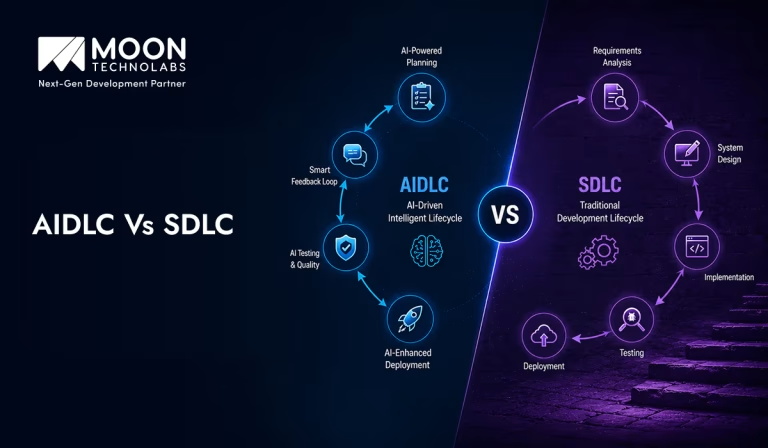
Table of Content


Blog Summary:
AIDLC and SDLC are two development frameworks built for completely different purposes. SDLC guides traditional software development, while AIDLC is designed for building AI systems. Understanding AIDLC Vs SDLC helps teams select the right process, avoid costly mistakes, and build better products. This article breaks down both frameworks, compares the two, and shows where they work best together.
Table of Content
If you have ever kicked off an AI project the same way you would kick off any software project, then you aren’t alone. Most teams do that.
From gathering requirements to designing, testing, and shipping systems, you follow the same process. The one that seemed familiar and always worked for you. So, why would you think differently for AI projects?
But slowly, the cracks began showing. Your AI model may behave unpredictably, your data may contain significant noise or low-quality inputs, and your testing process may not always explain why the model produces incorrect results.
That’s the thing, your process isn’t broken. It just wasn’t built for AI. This is where the gap between SDLC and AIDLC becomes clear, and AIDLC Vs SDLC starts to matter more than most teams initially realize.
In this article, we will walk you through both so you know exactly which one your project needs and why.
What is AIDLC?
Think of AIDLC (Artificial Intelligence Development Life Cycle) as a roadmap for building AI systems. It doesn’t help you develop generic software. You use it specifically to build AI solutions.
Unlike traditional software, AI systems don’t always behave in strictly deterministic ways based on explicit instructions. Instead, it learns from data, makes predictions, and improves over time. That’s why the way you build it, validate it, and even maintain it has to be completely different. AIDLC accounts for all facets of AI development, including data collection and preparation, model selection and training, evaluation, bias detection, deployment, monitoring, and continuous retraining.
At its core, AIDLC is a structured process that takes responsibility from the very first question, “What problem are we solving with AI?” to testing, deployment, and beyond. That beyond is the most crucial part when you are building with AI. This means work doesn’t stop when you ship the solution. The model is continuously monitored, learns, and improves over time.
That’s what AIDLC has been designed for.
Why is AIDLC important?
Here is what you should be asking: What happens when you build an AI system without a proper framework guiding you?
You end up with models that work perfectly during testing but fall apart when deployed in the real world. It can result in biased outputs that go unnoticed because they were never specifically evaluated during testing. Ultimately, you keep maintaining a model that you barely understand.
AIDLC helps you prevent these issues. It gives your team a clear structure to follow at every stage. From how you collect the data to how you monitor the model after it goes live is clearly managed through this process. It keeps biases in check, ensures models perform as intended, and ensures accountability doesn’t fall through the cracks.
You aren’t really building AI without AIDLC. You are just hoping your chosen process works.
Example of AIDLC
Consider a hospital that wants to build its next AI system to predict whether a patient is at risk of developing diabetes within the next year.
With AIDLC at the helm of development, the team begins collecting patient data, including medical history, lifestyle habits, and test results. They clean it, remove biases, and select the right model for this job.
After that, they train it, rigorously test it, and validate it against real patient outcomes before it goes live.
Once deployed, the model doesn’t run on its own. It is monitored regularly, retrained as new patient data comes in, and checked for ethical concerns around how it makes decisions.
That entire journey from raw data to a responsible & live AI system is AIDLC in action.
Phases of AIDLC
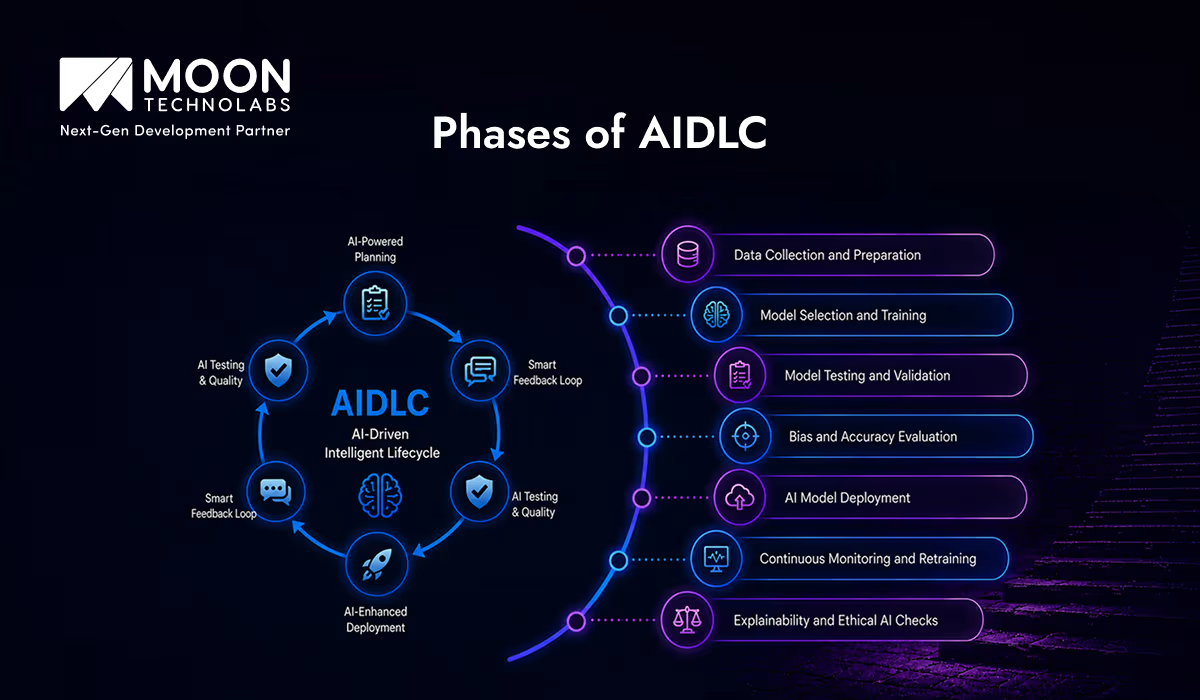
AI development isn’t a straight line. It is a carefully structured cycle with stages uniquely designed to handle the unpredictability inherent in building intelligent systems. Here is what that looks like in practice.
Data Collection and Preparation
Before your AI model begins learning anything, it needs high-quality data to back it. It should be clean and relevant, too. AIDLC puts this at the front because everything that follows depends on the quality of data. You gather datasets, remove noise, fill in missing values, and ensure everything that goes in is actually worth learning from.
Model Selection and Training
You pick the right model for the problem you are solving once your data is ready. This isn’t a one-size-fits-all decision. AIDLC makes sure you don’t treat it like one. You evaluate different algorithms, understand your use case’s needs, and then train the model using the prepared data. This is where the model begins turning data into actionable insights.
Model Testing and Validation
Testing your AI model is nothing like testing traditional software. You aren’t just checking whether it runs; you must also check whether it can think correctly. With AIDLC, your model is tested against real-world scenarios and unseen datasets. Validation here tells you whether your model is genuinely ready or just performing well on paper.
Bias and Accuracy Evaluation
This is the step most teams skip. It is the one that comes back to haunt them the most. AIDLC includes a dedicated stage to evaluate whether your model makes fair and accurate decisions across different groups. If it works well for one demographic but fails another, you will be able to capture the difference in this stage.
AI Model Deployment
Deployment in AIDLC isn’t about pushing your code to the server. You will release a system that makes decisions, critical ones, to the server. AIDLC ensures gradual, monitored deployment and includes a rollback plan. It ensures your model performs in the real world the way it did in controlled testing.
Continuous Monitoring and Retraining
This is where AIDLC separates from traditional frameworks. The work doesn’t end at deployment. Your model is exposed to new data, changing user behavior, and challenges such as data drift vs concept drift, all of which can affect performance over time. AIDLC builds continuous monitoring to catch performance drops early. It also includes retraining cycles to keep models accurate and relevant over time.
Explainability and Ethical AI Checks
It is crucial to explain why your AI model made a specific decision. There’s a problem when you cannot. AIDLC includes explainability as its core requirement. This lets model decisions be understood, justified, and even validated. Ethical checks make sure the AI operates fairly and within boundaries that serve people.
What is SDLC?
You have likely worked with the SDLC, even if you were not familiar with the term. SDLC (Software Development Life Cycle) is the process by which software teams plan, build, test, and deliver software. Software teams have been following this process for decades.
It’s a structured framework that takes your project from the idea stage all the way to deploying a usable product for the users.
Consider it a blueprint for building software the right way. Each phase has a clear purpose, and every team member is aware of their responsibilities. The end goal is to deliver a reliable, functional piece of software that does what it is supposed to do.
It is a predictable and proven process. For traditional software development, it works exceptionally well.
Why is SDLC Important?
Let’s understand what happens when a software team builds without a proper process. Deadlines are missed, budgets spiral out of control, features are built that nobody asked for, and bugs that should have been caught earlier make it to production. Doesn’t all of this sound familiar?
SDLC exists to bring order to what can quickly turn into chaos. It gives each person on your team, from developers to project managers and stakeholders, a shared understanding of what is happening in the project, where it is moving, and what happens next.
It also protects you from expensive mistakes in software development, such as discovering them late. The earlier you catch an issue, the cheaper it becomes to fix it. SDLC is structured to surface problems at the right stage, not after you have already shipped it.
Without this process, you aren’t really building software. You are just writing code and hoping it works.
Example of SDLC
Imagine a retail company that wants an eCommerce website where customers can visit, browse products, add them to their cart, and check out seamlessly.
Using SDLC, your team starts by collecting the requirements. These include what features the website needs, who the user is, and what success looks like. Then they can move into design, architecture, database, and user interface. Development follows, and then the product goes through a series of testing rounds to catch bugs before users see them.
Once everything passes through quality checks, the website goes live. The team then moves into maintenance mode, fixing all issues that arise and rolling out updates informed by user feedback.
That is the SDLC doing what it was built to do.
Phases of SDLC
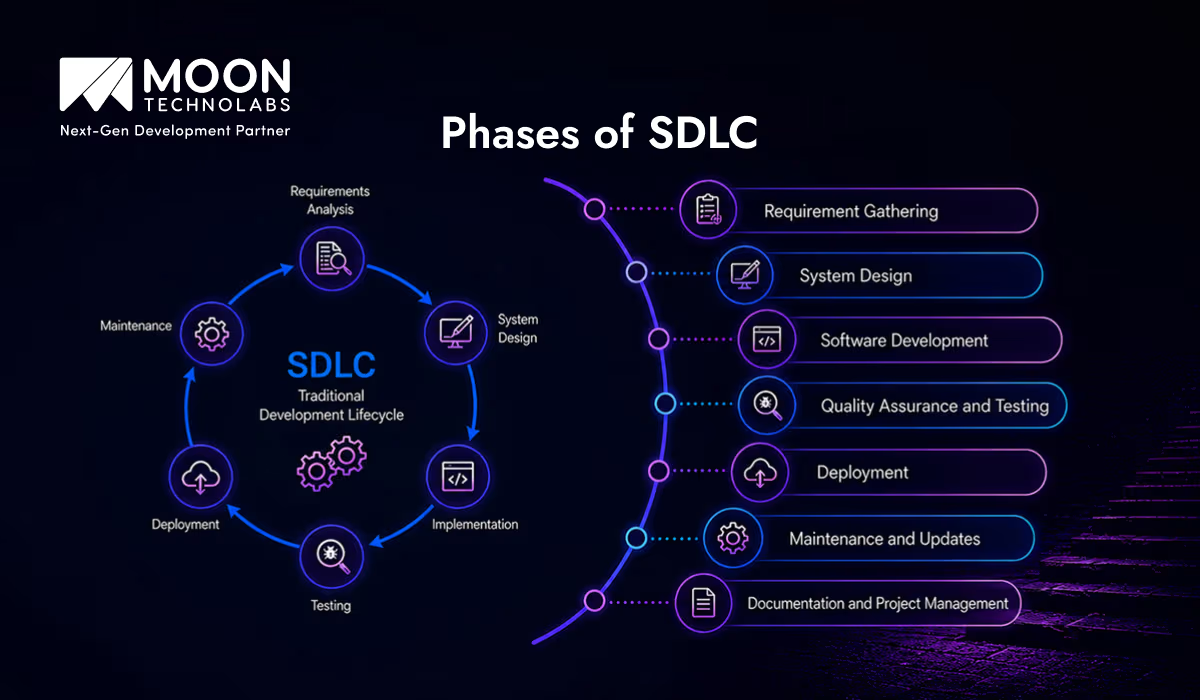
SDLC has been the backbone of software development for decades, and for good reason. Each phase is designed to keep your project on track, team aligned, and final product as close to perfect as possible. Here are the key features of this process.
Requirement Gathering
The process begins with this phase or feature. Before a single line of code is written, your team sits down with multiple stakeholders to understand what they need built and why. They get answers to questions like what the user needs and what outcome your business expects from this project. Getting this stage right can save you from the most common and costly mistake in software development: failing to solve the intended problem.
System Design
Once you know what you are building, you need to figure out how you will build it. System design translates all your requirements into a technical blueprint. That covers everything from the overall architecture to the database structure, the technology stack, and how different components communicate within the system. A strong design stage ensures there are fewer surprises later.
Software Development
This is where your team must roll up their sleeves and start writing the code. With a clear design, your developers would know what they are building and how it fits into the bigger picture. SDLC keeps this stage focused and structured. No random features or scope creep allowed. It is a clean development completely guided by everything that came before it.
Quality Assurance and Testing
Building the software is one thing. Making sure it actually works is another. QA and testing are where your software gets put through its paces. Your product will undergo functional, security, and performance testing, and everything in between. The goal is simple: catch every bug, gap, and inconsistency before users do. This is because fixing problems post-launch is always more expensive than catching them here.
Deployment
Your software has been built, tested, and approved. Now it goes live. But deployment in SDLC isn’t just flipping a switch. It is a carefully managed process that ensures the transition from development to production is smooth and reversible, even when something unexpected comes up. Your users should never feel the friction of a bad deployment.
Maintenance and Updates
Shipping the product is not the finish line. It is the start of a new phase. Once your software is live, real users start interacting with it in ways you never anticipated. SDLC accounts for this with a dedicated maintenance phase, where your team responds to feedback, fixes bugs, and rolls out updates to keep software relevant and reliable over time.
Documentation and Project Management
This is the feature that holds everything together. Good documentation means your team knows what was built, why the decisions were made, and how the systems work. Project management keeps timelines realistic, resources fully allocated, and stakeholders informed at each step. Without these two running in the background, even the best development process starts to fall apart.
AIDLC vs SDLC: Key Difference
Both frameworks are built to guide development. But each is designed for a very different kind of problem. Here is a side-by-side look at how they compare across the aspects that matter most.
| Aspect | AIDLC | SDLC |
|---|---|---|
| Full Form | Artificial Intelligence Development LifeCycle | Software Development Life Cycle |
| Main Focus | Building, training, and continuously improving AI models that learn from data | Planning, developing, and delivering software that performs the defined functions |
| Core Dependency | High-quality, relevant, and unbiased data is the foundation of all aspects | Clearly defined and documented requirements before development begins |
| Output | A trained, validated, and deployable AI model that improves over time | A fully functional, tested, and stable software application is ready for users. |
| Testing Approach | Evaluates bias, fairness, accuracy, and real-world performance of the model | Checks for functionality, identifies bugs, validates security, and performance of the software |
| Process Nature | Iterative and experimental. You train, evaluate, adjust,t and repeat till you get the desired outcome. | Sequential and structured. One phase is completed before the next phase begins |
| Maintenance | Continuous retraining, performance monitoring, and bias re-evaluation. | Periodic bug fixes, feature updates, and security patches |
| Risk Area | Biased outputs, model drift, unexplainable decisions, and underperformance | Missed requirements, scope creep, and accumulating technical debt. |
| Best Used For | AI solutions, machine learning systems, predictive analytics, and intelligent automation | Traditional software, enterprise applications, websites, and mobile apps. |
Where AIDLC and SDLC Work Together?
The truth is, AIDLC and SDLC are not competitors. In the real world, the most powerful products are built when both frameworks work side by side. Here are six areas where you will notice them working together.
AI-Powered Software Products
When you are building a software product that has AI capabilities baked into it, you need both these frameworks running in parallel. SDLC manages overall software development, while AIDLC will handle the AI component development within it. Think of a productivity app that uses AI to predict users’ next tasks. The app will be built using the SDLC, while the prediction engine will use the AIDLC.
Predictive Analytics Platforms
This is another example of both frameworks pulling their weight equally. SDLC builds the platform, including the interface, data pipelines, and reporting dashboards. AIDLC builds the brain of the analytics platform, including models that analyze patterns and generate predictions. You don’t have a dashboard with built-in intelligence if you don’t work with both of these frameworks.
Intelligent Automation Systems
Intelligent automation systems go beyond automating repetitive tasks. It uses AI to make decisions within automated workflows. SDLC designs and builds the automation infrastructure while AIDLC trains models that decide what actions to take and when. Together, they build systems that not only follow rules but also learn and adapt as they run.
AI Chatbots and Virtual Assistants
Building a chatbot that understands your users requires both frameworks working together. SDLC handles the software side, including interface design, integrations, conversational flows, and backend infrastructure. AIDLC handles the intelligence, such as training natural language models, evaluating responses, and continuously improving the assistant’s understanding and responses to real user inputs over time.
Recommendation Engines
Every time a platform recommends something you actually want, that is both frameworks at work. SDLC builds product experience using UI, backend, and user accounts. AIDLC builds and maintains the recommendation model itself. It continuously trains the model on new user behavior to make suggestions that are relevant and accurate.
Computer Vision Applications
Think quality control systems, medical imaging tools, and facial recognition that need both frameworks to be deeply integrated. SDLC builds an application layer that captures, processes, and displays visual data. AIDLC trains and refines the models that actually interpret what they see. One without the other gives you a blind app or an intelligent system with no way to function.
Every project is different. Knowing whether to follow AIDLC, SDLC, or both from the start can save your team months of rework and unnecessary costs.
What do We Think About This Difference?
Choosing between AIDLC and SDLC is not really a debate; it is a matter of understanding what you are building and picking the right tool for it.
If you are building traditional software, SDLC is your framework. It is structured, proven, and designed to deliver exactly what your requirements say. There is a reason teams have relied on it for years to build their software products.
However, if you are building AI, SDLC alone will not get you there. You need a framework that accounts for the data, model behavior, and biases. It should also help extend continuous improvement. That is what AIDLC is built for.
We think the teams struggling aren’t the ones choosing the wrong framework. They are the ones who never stopped to ask which framework would naturally fit their project needs. You should know what you are building to choose accordingly.
Conclusion
When comparing AIDLC vs SDLC, it is important to recognize that AI projects have different requirements from traditional software projects. The framework you choose influences everything from data collection and testing to deployment, maintenance, and scaling, making it essential to align the development approach with the project’s needs.
SDLC builds reliable software while AIDLC builds intelligent systems. When your project needs both, you use both.
So, the next time you kick off a project, do not ask what you are building. Instead, ask how it needs to be built. That one question will save you more time, money, and headaches than anything else.
If you are still unsure where to start, get in touch with our team at Moon Technolabs. We will help you make that call and build it right from day one.
FAQs
01
What is the main difference between AIDLC and SDLC?
SDLC is designed to plan, build, and deliver traditional software solutions. AIDLC is designed for AI development, accounting for data quality, model training, and bias evaluation. The core difference is that one builds software that follows rules while the other builds systems that learn.02
Is AIDLC better than SDLC?
Neither is better than the other; they serve completely different purposes. AIDLC is better suited to AI projects, while SDLC is better suited to traditional software. Comparing them as better or worse is like comparing two completely different tools used for the same project. The choice will depend on what you are building.03
Can AIDLC and SDLC be used together?
Absolutely. In fact, most modern AI-backed software solutions need both. SDLC manages overall software development, while AIDLC handles the AI system development. Using the two together gives your team a complete framework that includes both software and built-in intelligence.04
What are examples of AIDLC?
Any project involving building and deploying an AI model follows AIDLC. The common examples include fraud detection systems, medical diagnosis tools, recommendation engines, and predictive analytics platforms. Each of these requires data collection, model training, and bias evaluation, which are core stages of AIDLC.05
What are examples of SDLC?
SDLC is used in almost all traditional software development projects. Whether you want to build an e-commerce website or a mobile banking app, these will follow SDLC. All projects that follow the requirements-gathering, design, development, and deployment phases need this framework.




Jayanti Katariya is the CEO of Moon Technolabs, a fast-growing IT solutions provider, with 18+ years of experience in the industry. Passionate about developing creative apps from a young age, he pursued an engineering degree to further this interest. Under his leadership, Moon Technolabs has helped numerous brands establish their online presence and he has also launched an invoicing software that assists businesses to streamline their financial operations.
Submitting the form below will ensure a prompt response from us.
We refine our expertise to deliver innovative business solutions.





205 N Michigan Avenue, #810, Chicago, 60601, Illinois, United States
13500 Long Is Dr, Pflugerville, TX 78660, USA

C/105 Ganesh Meridian, S.G. Highway, Ahmedabad, GJ 380060


Ayse D.
Co-Founder France
“ I highly recommend Moon Technolabs as the quality of service is wonderful. We have hired this company to develop the product based on some complex & technical issues. We get the best quality services as compared with others in the market. Huge Thanks to Moon Technolabs as the team is always ready to give the solution all time.”

Justin G.
Founder & CEO USA
USA“ Moon Technolabs is a pioneer in the WebRTC based project as they have fixed complicated segments of the module by fulfilling different product lines by providing 24X7 customer support. We really recommended Moon Technolabs as they are able to develop products as per the module deadline and project timeline.”

Flavio S.
Founder & Managing Director Germany
“I am happy to recommend Moon Technolabs for their app development services. They successfully developed apps for me, and I am highly satisfied with the overall outcomes. The development team has swiftly addressed the issues with responsive and effective communication to understand the requirement quickly and actively resolve the back-and-forth problems that arose...”

Jay M.
Founder & CEOUSA“Moon Technolabs is the best company that provides advanced apps and websites development services in the USA and Europe. I am a newbie to develop my app with an external team. I am really happy to work with them as I am not that much mobile apps user. Here, the team and specially the CEO of Moon Technolabs helps me to let me know about the benefits of my app to generate revenue....”


Our Offices
India
C/105 Ganesh Meridian,S.G. Highway, Ahmedabad, GJ 380060USA
205 N Michigan Avenue, #810, Chicago, 60601, Illinois, United StatesContact Information


