Shopify vs Magento: Which eCommerce Platform Should You Choose?

Jayanti Katariya
Last Updated: Jun 15, 2026 Total Views: 87
Table of Content


Blog Summary:
Shopify vs Magento is a common debate for businesses looking to build a successful online store. This blog compares both platforms in terms of usability, customization, performance, SEO, security, integrations, and scalability. Discover which eCommerce solution best matches your business goals, technical requirements, and growth plans to make an informed decision for long-term online success.
Table of Content
When it comes to Shopify vs Magento, choosing the right eCommerce platform depends on your budget, operational preferences, and long-term growth objectives. Shopify is known for its simplicity and quick setup, while Magento offers advanced customization and greater control for businesses with complex needs.
In this Magento vs Shopify comparison, we’ll examine how both platforms stack up in terms of ease of use, scalability, customization, performance, and pricing. We’ve also included a Google Trends comparison to show how interest in Shopify and Magento has changed over time and what it suggests about their popularity in the e-commerce industry.
Overview of Shopify
Shopify is a leading eCommerce platform that enables businesses to create, manage, and scale online stores with ease. Designed for entrepreneurs, small businesses, and large enterprises, Shopify offers a user-friendly interface, customizable themes, inventory management, and marketing tools.
Its extensive Shopify app store allows merchants to integrate third-party applications and add advanced functionalities, making it a flexible solution for businesses across various industries.
Unlike Magento, Shopify is a fully hosted platform that eliminates the need for complex server management and technical maintenance. It also provides secure, streamlined Shopify payments, allowing merchants to accept payments without relying on external payment gateways.
With reliable performance, mobile responsiveness, and built-in security features, Shopify helps businesses focus on growth while delivering a seamless shopping experience to customers.
Overview of Magento
Magento is a powerful and highly customizable platform designed for businesses looking to build and manage a scalable e-commerce store. Known for its flexibility and extensive features, Magento enables merchants to create tailored shopping experiences, manage large product catalogs, and support complex business requirements.
Its open-source architecture makes it a preferred choice for businesses that require deep customization and complete control over their online operations.
The Magento marketplace offers a wide range of extensions and integrations that enhance store functionality, from payment gateways to marketing tools. Many businesses rely on experienced Magento developers to customize features, optimize performance, and create unique shopping experiences. Whether launching a new Magento store or upgrading an existing one, Magento provides the tools and scalability needed to support long-term e-Commerce business growth.
Magento vs Shopify: Comparison Table
| Aspects | Magento | Shopify |
|---|---|---|
| Core Functionality | Powerful open-source and enterprise eCommerce platform with extensive native catalog, inventory, and multi-store capabilities. Suitable for complex business requirements. | Fully hosted SaaS eCommerce platform with built-in storefront, payments, checkout, inventory, and app ecosystem. Designed for fast deployment and operation. |
| Customization & Flexibility | Extremely flexible. Full access to source code, database, checkout, and backend logic. Supports highly customized workflows, custom integrations, and user experiences. | Customizable through themes, apps, APIs, and Shopify Functions, but core platform access is limited compared to Magento. Best for businesses that prefer managed infrastructure. |
| Pricing & Total Cost | Free open-source software, but expenses for hosting, development, maintenance, and customizations can significantly increase overall ownership costs. | Subscription-based pricing with hosting, security, and updates included. Lower upfront investment, though app subscriptions and transaction fees can increase costs over time. |
| B2B Capabilities | Strong native B2B features in Adobe Commerce, including company accounts, custom catalogs, negotiated pricing, requisition lists, and approval workflows. | Shopify Plus offers B2B features such as company profiles, wholesale pricing, customer-specific catalogs, and self-service purchasing portals. |
| Performance & Scalability | Highly scalable for large enterprises but requires infrastructure optimization, hosting management, and technical knowledge to maintain peak Magento performance. | Cloud-hosted architecture provides automatic scaling, global CDN, and performance optimization with minimal operational effort. |
| AI & Automation | Supports AI through Adobe Sensei, third-party integrations, product recommendations, predictive merchandising, and custom workflow automation tools. | Strong AI ecosystem with Shopify Magic, Sidekick AI assistant, automated content generation, customer support tools, and marketing automation. |
| Ease of Use | Steeper learning curve. Typically requires developers and technical resources for setup, customization, and ongoing management. | User-friendly interface with intuitive store management. Suitable for non-technical teams and small-to-medium businesses. |
| Security & Compliance | Security responsibilities are shared with the merchant, including hosting security, patching, PCI compliance, and infrastructure management. | Shopify manages hosting security, PCI DSS compliance, updates, and platform-level protection, reducing operational burden. |
| Customer Support | Community support for open source users. Adobe Commerce customers receive enterprise support and account management services. | 24/7 platform support available through Shopify, with extensive documentation, partner network, and community resources. |
Shopify vs Magento: A Detailed Side-by-Side Comparison of Key Differences
Choosing the right eCommerce platform is one of the most important decisions for any online business. Shopify and Magento are the two popular solutions available today, but they cater to different business needs.
Shopify is known for its simplicity and ease of use, while Magento offers extensive customization and flexibility for businesses with more complex requirements. Understanding their differences can help you select the platform that aligns well with your budget, goals, and technical capabilities.
Ease of Use: User Experience and Learning Curve
When it comes to ease of use, Shopify has a clear advantage. As a fully hosted eCommerce platform, Shopify is designed for users with little to no technical expertise. Its intuitive dashboard, drag-and-drop store builder, and straightforward setup process allow businesses to launch an online store quickly. Store owners can manage products, orders, and customers from a user-friendly interface without worrying about coding or server management.
Magento, on the other hand, has a steeper learning curve. While it offers a powerful set of features, managing and customizing a Magento store often requires technical expertise or assistance from dedicated developers. Businesses that have in-house development teams may appreciate Magento’s flexibility, but beginners may find the platform more challenging to navigate.
Winner: Shopify for simplicity and beginner-friendly usability.
Customization: Design and Development Flexibility
Magento excels in customization capabilities. Its open-source architecture allows developers to modify virtually every aspect of the store, including design, functionality, checkout processes, and integrations. This makes Magento an excellent choice for businesses with unique requirements or complex workflows.
Shopify also offers customization options through themes, apps, and custom coding. However, it operates within a more controlled environment. While businesses can personalize their stores to a significant extent, this is limited compared to Magento’s unrestricted flexibility.
For brands seeking a highly tailored shopping experience, Magento provides greater creative and technical freedom. Shopify, meanwhile, strikes a balance between customization and ease of maintenance.
Winner: Magento for advanced customization and development flexibility.
Scalability: Supporting Business Growth
Both Shopify and Magento can support growing businesses, but they approach scalability differently.
Shopify handles hosting, server maintenance, and performance optimization automatically. As traffic increases, merchants can upgrade their plans without worrying about infrastructure management. Shopify Plus, the enterprise-level solution, is specifically designed for high-volume businesses and global brands.
Magento offers exceptional scalability, particularly for large enterprises with extensive product catalogs and complex operations. However, scaling a Magento store often requires additional server resources, performance optimization, and technical oversight.
Businesses looking for hassle-free growth may prefer Shopify app development, while organizations requiring complete control over infrastructure and scalability may find Magento more suitable.
Winner: Tie, depending on business requirements and technical resources.
Hosting and Security: Managing Performance and Protection
Shopify is a fully hosted platform, meaning it manages hosting, software updates, backups, and security on behalf of merchants. The platform includes SSL certificates, PCI compliance, and regular security updates, reducing the burden on store owners.
Magento gives businesses more control over hosting environments, but that control comes with responsibility. Store owners must arrange hosting, manage updates, implement security measures, and monitor performance. While this flexibility can be beneficial, it requires ongoing technical expertise and maintenance.
For businesses seeking convenience and peace of mind, Shopify offers a simpler solution. Magento is better suited to companies that need complete control over their hosting and security configurations.
Winner: Shopify for managed hosting and built-in security.
SEO and Marketing: Driving Traffic and Visibility
Search engine optimization is critical for e-commerce success, and both platforms provide strong SEO capabilities.
Shopify includes built-in basic SEO features such as customizable title tags, meta descriptions, mobile-friendly themes, XML sitemaps, and integration with popular marketing tools. Its app ecosystem also provides additional functionality for content marketing, email campaigns, and social media promotions.
Magento offers more advanced SEO customization options. Businesses can gain deeper control over URLs, metadata, site structure, and technical SEO elements. This level of flexibility is particularly valuable for large websites with extensive catalogs and complex SEO strategies.
While Shopify makes SEO accessible for most users, Magento offers greater control for experienced marketers and developers.
Winner: Magento for advanced SEO customization; Shopify for ease of implementation.
Payment Gateways: Transaction Processing and Fees
Shopify supports a wide range of payment gateways and includes its own payment solution, Shopify Payments. Merchants using Shopify Payments can avoid additional transaction fees, simplifying payment processing and reducing costs.
Magento also supports numerous payment gateways and can integrate with a variety of third-party providers. However, setup and configuration often require more technical involvement. Transaction costs depend on the chosen payment processor rather than the platform itself.
For businesses seeking a streamlined payment experience, Shopify offers a more convenient solution. Magento provides flexibility but may require additional setup effort.
Winner: Shopify for simplicity and integrated payment processing.
You Might Also Like:
Cost: Initial and Ongoing Expenses
Cost is a significant factor when comparing Shopify and Magento.
Shopify operates on a subscription-based pricing model. Monthly plans include hosting, security, software updates, and customer support. While app subscriptions and premium themes can increase expenses, costs are generally predictable and easier to manage.
Magento Open Source is free to download, but businesses must pay for hosting, development, security, maintenance, and extensions. For larger organizations using Adobe Commerce (Magento’s enterprise version), licensing costs can be substantial. However, Magento’s flexibility may justify the investment for businesses with complex requirements.
Small and medium-sized businesses often find Shopify more cost-effective, while large enterprises may benefit from Magento’s customization despite the higher total cost of ownership.
Winner: Shopify for predictable and lower upfront costs.
Support and Community: Access to Expert Assistance
Shopify provides dedicated customer support through live chat, email, phone support (in certain regions), comprehensive documentation, and an extensive knowledge base. Merchants can quickly access assistance whenever issues arise, making it an attractive option for businesses without technical teams.
Magento relies heavily on its global developer community and extensive documentation. Because of its open-source nature, there is a vast ecosystem of developers, agencies, and technology partners available to provide support. Enterprise users of Adobe Commerce receive dedicated support services, but users often depend on community resources and third-party experts.
Businesses seeking direct vendor support may prefer Shopify, while organizations with development resources can leverage Magento’s strong community and partner network.
Winner: Shopify for direct support; Magento for community-driven expertise.
Benefits of using Shopify
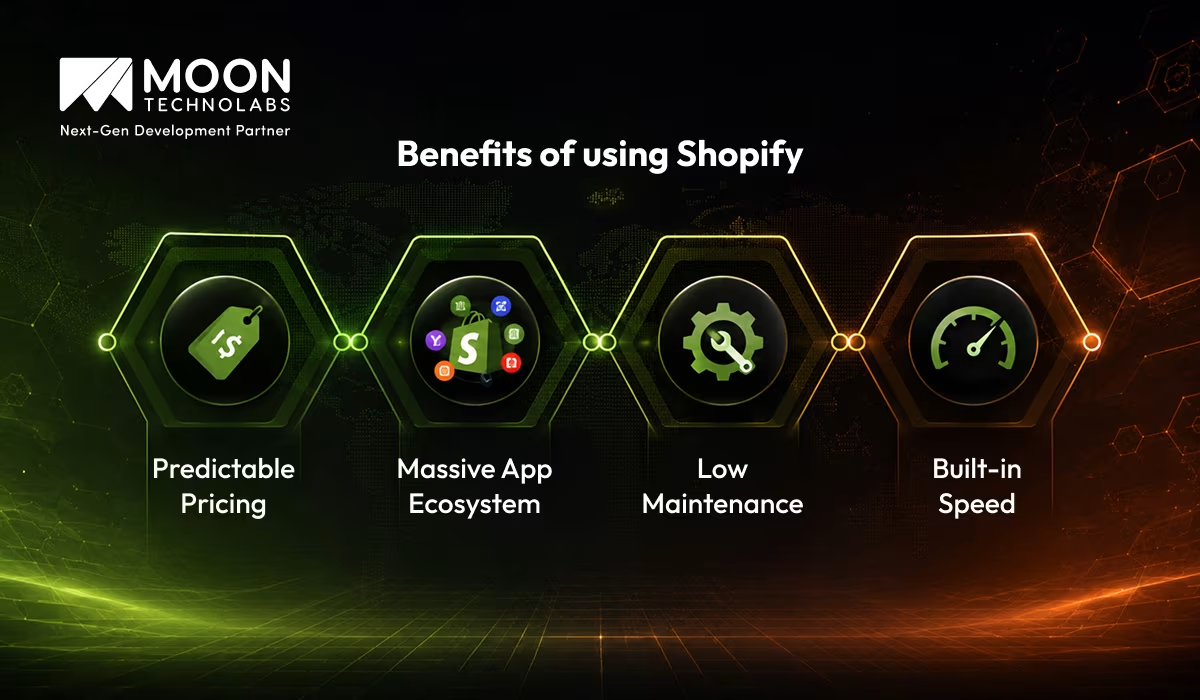
Shopify is trusted by millions of businesses worldwide for its ease of use and reliable eCommerce capabilities. Below are some of the main reasons merchants choose Shopify for their online stores.
Predictable Pricing
Shopify offers transparent and straightforward pricing plans, making it easier for businesses to manage their e-commerce budgets. Hosting, SSL security, platform updates, and essential e-commerce features are included in the monthly subscription, reducing the need for unexpected infrastructure investments or ongoing technical support.
This predictable cost structure is particularly beneficial for growing businesses that want to scale without worrying about fluctuating platform expenses.
Massive App Ecosystem
One of Shopify’s greatest strengths is its extensive app marketplace, which provides access to thousands of integrations and extensions. Whether you need advanced marketing tools, loyalty programs, inventory management, accounting software, shipping solutions, or customer support features, there is likely an app that meets your requirements.
Businesses can easily expand store functionality as their needs evolve without making heavy investments in custom development.
Low Maintenance
As a fully managed, cloud-based ecommerce platform, Shopify handles hosting, security updates, software maintenance, and performance optimization. Store owners do not need to worry about server management, patch installations, or system upgrades.
As a result, teams can dedicate more time to growing the business and less time to managing technical infrastructure.
Built-in Speed
Website speed plays a crucial role in user experience, search engine rankings, and conversion rates. Shopify is designed with performance in mind, offering optimized hosting infrastructure, content delivery networks (CDNs), and efficient caching mechanisms.
Faster page loads contribute to a smoother shopping experience and can help improve customer engagement and sales.
You Might Also Like:
Benefits of Shopify: How to Scale eCommerce Business with Shopify
Benefits of using Magento
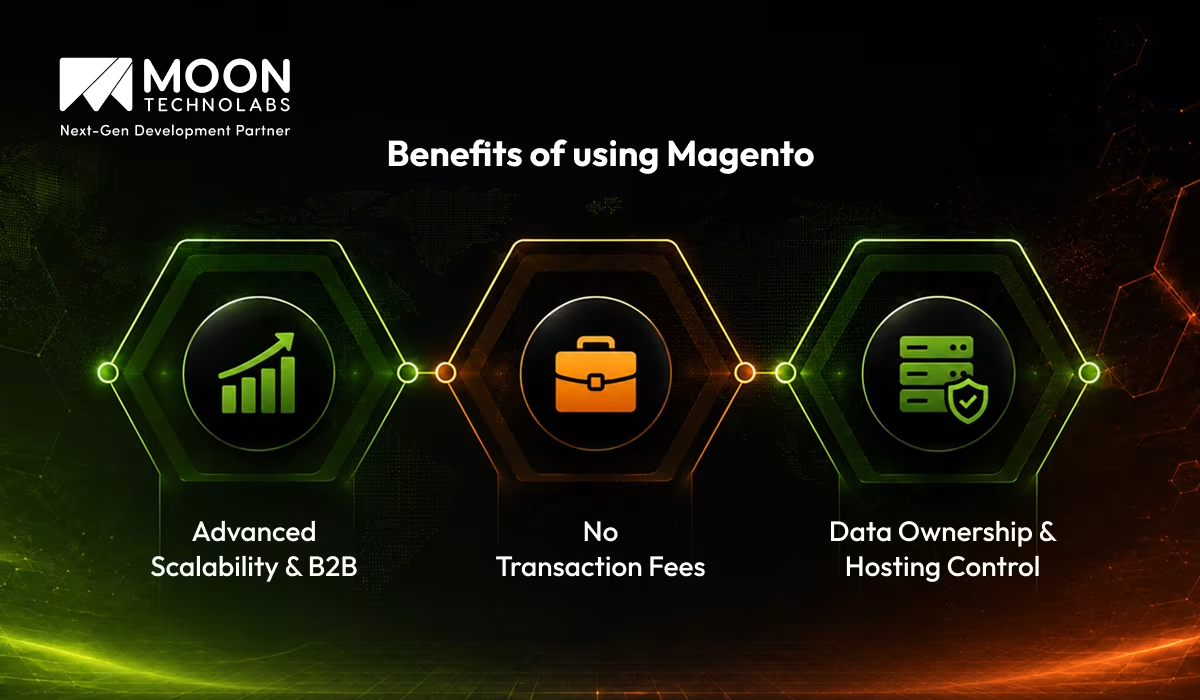
Here are some key benefits that make Magento a powerful eCommerce platform for growing and enterprise-level online stores. Its flexibility, scalability, and advanced features enable businesses to create tailored shopping experiences while supporting long-term growth and evolving customer demands.
Advanced Scalability & B2B
Magento Commerce is built to support businesses of all sizes, from growing online stores to large-scale enterprises. Robust architecture handles extensive product catalogs, high traffic volumes, and complex business operations with ease.
Advanced B2B features such as custom pricing, company accounts, bulk ordering, and personalized catalogs help streamline wholesale and enterprise sales processes.
No Transaction Fees
Unlike many e-commerce platforms, Magento does not charge transaction fees on sales. This allows businesses to maximize revenue and maintain better margins while choosing their preferred payment gateways without additional platform-imposed costs.
Data Ownership & Hosting Control
Magento offers businesses full ownership of their store data and infrastructure. With the flexibility to choose your hosting environment, you maintain complete control over security, performance, backups, and compliance requirements. This level of independence ensures deep customization, scalability, and long-term business flexibility.
Magento vs Shopify: Who is the Real Winner?
Both eCommerce platforms provide powerful capabilities, but the ideal option will align with your business priorities and long-term vision.
Shopify is a fully hosted solution that offers ease of use, quick setup, and built-in tools for managing an online store. It is ideal for small- to medium-sized businesses that want a hassle-free platform without technical complexities. With its intuitive interface, extensive app marketplace, and reliable hosting, Shopify enables merchants to launch and scale their stores efficiently.
On the other hand, Magento offers unmatched flexibility and customization, making it a preferred choice for large enterprises and businesses with unique requirements. Its open-source architecture allows developers to create highly tailored shopping experiences, integrate advanced functionalities, and manage complex product catalogs.
While Magento offers greater control, it also requires more technical expertise, development resources, and maintenance. Ultimately, the real winner depends on business goals: Shopify excels in simplicity and speed, while Magento stands out for customization and scalability.
We build custom Shopify and Magento stores designed to drive growth, conversions, and customer engagement.
Conclusion
When comparing Shopify vs Magento, both platforms offer powerful eCommerce capabilities, but the right choice depends on your business goals, budget, and technical requirements. Shopify is ideal for businesses looking for an easy-to-manage, scalable solution with faster setup, while Magento offers greater flexibility and customization for large enterprises with complex needs.
By understanding the strengths of each platform, businesses can choose the best option to support long-term growth and deliver seamless customer experiences. Investing in the right eCommerce development solutions can help you build a high-performing online store that meets your unique business objectives.
FAQs
01
Who is Shopify's biggest competitor?
There isn’t a single competitor universally considered the biggest, but Shopify most often competes with platforms such as WooCommerce, BigCommerce, and Adobe Commerce (Magento). For small and mid-sized businesses, WooCommerce is often viewed as Shopify’s largest alternative due to its popularity and flexibility.02
Do people still use Magento?
Yes. Magento, now known as Adobe Commerce, is still widely used by medium and large businesses that need extensive customization, complex product catalogs, or advanced B2B features. While some merchants have moved to simpler platforms, Adobe Commerce (Magento) remains a major player in enterprise eCommerce.03
What are the top 3 eCommerce platforms?
The top eCommerce platforms are Shopify, WooCommerce, and Adobe Commerce (Magento). Shopify offers an easy-to-use, all-in-one solution, WooCommerce provides flexibility and customization for WordPress users, and Adobe Commerce delivers advanced scalability and features for large businesses and enterprises.04
Is Amazon using Shopify?
No. Amazon does not use Shopify to run its marketplace. Amazon operates on its own proprietary eCommerce infrastructure. However, Shopify merchants can integrate their stores with Amazon and sell products through Amazon’s marketplace channels.




Jayanti Katariya is the CEO of Moon Technolabs, a fast-growing IT solutions provider, with 18+ years of experience in the industry. Passionate about developing creative apps from a young age, he pursued an engineering degree to further this interest. Under his leadership, Moon Technolabs has helped numerous brands establish their online presence and he has also launched an invoicing software that assists businesses to streamline their financial operations.
Submitting the form below will ensure a prompt response from us.
We refine our expertise to deliver innovative business solutions.





205 N Michigan Avenue, #810, Chicago, 60601, Illinois, United States
13500 Long Is Dr, Pflugerville, TX 78660, USA

C/105 Ganesh Meridian, S.G. Highway, Ahmedabad, GJ 380060


Ayse D.
Co-Founder France
“ I highly recommend Moon Technolabs as the quality of service is wonderful. We have hired this company to develop the product based on some complex & technical issues. We get the best quality services as compared with others in the market. Huge Thanks to Moon Technolabs as the team is always ready to give the solution all time.”

Justin G.
Founder & CEO USA
USA“ Moon Technolabs is a pioneer in the WebRTC based project as they have fixed complicated segments of the module by fulfilling different product lines by providing 24X7 customer support. We really recommended Moon Technolabs as they are able to develop products as per the module deadline and project timeline.”

Flavio S.
Founder & Managing Director Germany
“I am happy to recommend Moon Technolabs for their app development services. They successfully developed apps for me, and I am highly satisfied with the overall outcomes. The development team has swiftly addressed the issues with responsive and effective communication to understand the requirement quickly and actively resolve the back-and-forth problems that arose...”

Jay M.
Founder & CEOUSA“Moon Technolabs is the best company that provides advanced apps and websites development services in the USA and Europe. I am a newbie to develop my app with an external team. I am really happy to work with them as I am not that much mobile apps user. Here, the team and specially the CEO of Moon Technolabs helps me to let me know about the benefits of my app to generate revenue....”


Our Offices
India
C/105 Ganesh Meridian,S.G. Highway, Ahmedabad, GJ 380060USA
205 N Michigan Avenue, #810, Chicago, 60601, Illinois, United StatesContact Information