SaaS Metrics and KPIs: The Complete Guide to Measuring SaaS Business Performance

Jayanti Katariya
Last Updated: Jun 24, 2026 Total Views: 84

Table of Content


Blog Summary:
SaaS metrics and KPIs are crucial for businesses to measure their performance, identify hidden growth opportunities, and make informed decisions. To help them use these insights more effectively, this blog discusses the types of these metrics, the reasons to measure them, AI-based metrics, common measurement challenges, and more. Keep reading the entire blog to understand more.
Table of Content
Growing a SaaS business is much more than just gaining new customers and maximizing subscription revenue. As they expand, they also need to ensure their growth is scalable, profitable, and sustainable.
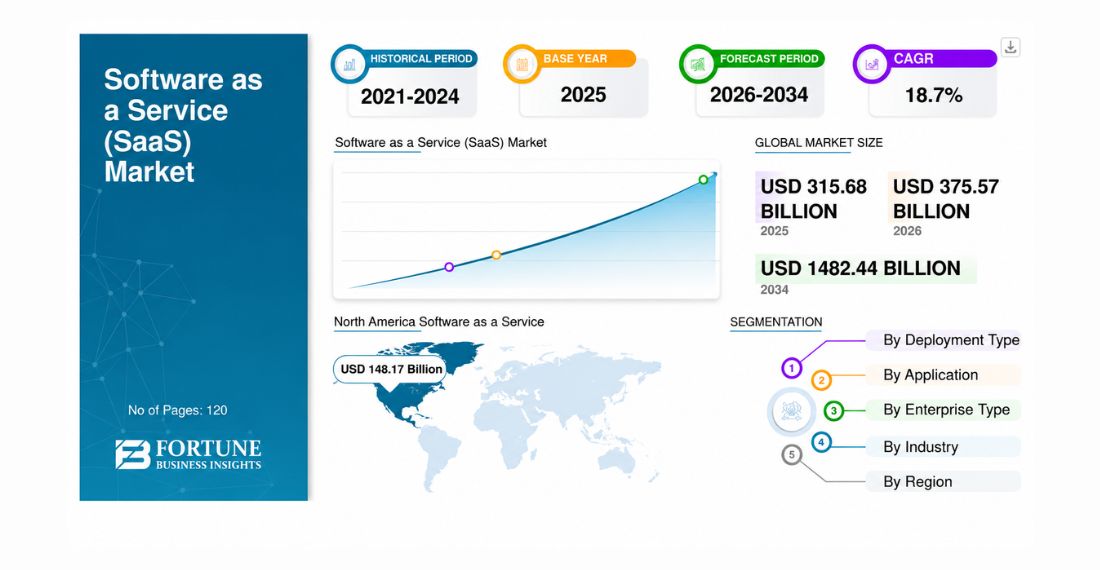
But maintaining this balance is indeed quite challenging with the rising competition and customer expectations. This challenge is likely to be more critical as the global SaaS market continues to grow, expected to reach up to $1,482.44 billion by 2034 (Fortune Business Insights). Though it brings opportunities, it also causes pressure on SaaS businesses to perform.
So they should have clear visibility into their performance in today’s competitive, fast-growing market. In this context, SaaS Metrics KPIs play a vital role, enabling organizations to identify churn risks, optimize revenue, assess customer success, and predict future growth.
We will explore SaaS metrics and KPIs in more detail throughout this guide.
What are SaaS Metrics and KPIs?
Well, SaaS metrics and KPIs serve as important indicators that help a SaaS business assess performance and understand customer behavior. These insights help them in making informed decisions as well. SaaS businesses nowadays rely extensively on subscription-based models, which enable them to track the right data at the right time.
Why Measure SaaS Metrics and KPIs?
Tracking SaaS metrics and KPIs has become a business necessity today, as it provides clear data to sustain success in a highly competitive market. Some other reasons for the same are as follows:
Track Business Growth and Performance
With metrics, you get real-time information regarding where your business stands. Tracking growth indicators enables you to recognize what works, what stalls, and also where to maximize your efforts, right from monthly recurring revenue to user acquisition rates.
Improve Customer Retention
The fact can’t be denied that gaining new customers is indeed highly expensive. So, it’s crucial to keep the existing ones quite profitable. Once you analyze retention-based metrics such as Net Promoter Score and churn rate, you can easily recognize at-risk users, build lasting relationships, and address pain points.
Optimize Revenue Generation
Analyzing vital metrics such as customer lifetime value (CLV) and average revenue per user (ARPU) helps you identify the most profitable segments. It also helps you to redefine your upsell strategies, pricing, and sales approach.
Support Data-driven Decision Making
SaaS metrics replace guesswork with exact and real data. Whether you wish to launch the latest features, change your pricing model, or enter a new market, you can gain crucial insights to support better decision-making.
Enhance Investor Confidence
Any SaaS provider that consistently tracks and presents clear metrics demonstrates operational maturity. Doing this helps in building credibility and speeds up funding conversations. It also highlights leadership that understands its business better.
Types of SaaS Metrics and When to Use Them
SaaS providers focus on a variety of metrics depending on their growth stage, objectives, operational priorities, and other factors. So, businesses that understand which metrics to analyze and when to use them can make smart decisions and achieve growth. The following are the important types of SaaS metrics:
Growth Metrics
As the name suggests, growth metrics help you analyze how your business expands. Many factors fall into this category, be it customer acquisition rates, monthly recurring revenue, or user signups.
When to Use: You can use these metrics to determine product-market fit, set quarterly expansion targets, and prepare for fundraising rounds.
Revenue Metrics
Revenue metrics help you assess both the quality and sustainability of your overall income. You can determine the actual revenue source using Average Revenue Per User (ARPU), Annual Recurring Revenue (ARR), and expansion revenue.
When to Use: You can use revenue metrics while reviewing your sales strategy and price experimentation.
Customer Success Metrics
It’s a fact that happy customers spend more and also stay longer. It includes Customer Lifetime Value (CLV), Churn rate, and Net Promoter Score (NPS).
When To Use: You can use “customer success metrics” especially when coordinating with new users, launching retention campaigns, or identifying early warning signs of customer dissatisfaction.
Product Usage Metrics
Product usage metrics let you explore information regarding how customers interact with your product. You can use feature adoption rates, Daily Active Users (DAU), session durations, and other metrics to assess whether your product delivers value.
When To Use: Use them when you focus on your product roadmap, minimize time-to-value for new customers, and maximize the user experience.
Marketing and Sales Metrics
You can use metrics such as lead conversion rates, customer acquisition cost (CAC), and sales cycle length to determine the overall efficiency of your go-to-market efforts.
When to Use: You can use these metrics to optimize ad spend, compare the ROI of acquisition channels, and determine sales team performance.
Operational Metrics
You can leverage operational metrics to analyze the actual efficiency of your internal processes. It’s the most suitable for infrastructure uptime, support ticket resolution time, team productivity, etc.
When to Use: Use operational metrics during rapid scaling and quality maintenance.
We help you transform your SaaS data into fully actionable insights to boost retention and revenue. Let’s build analytics capabilities for your business to scale.
Key SaaS Metrics and KPIs Every Business Should Track
Tracking the right metrics is pivotal for a business to understand its performance and identify growth opportunities. With the abundance of available metrics, businesses often struggle to determine which to track. The following are some of them you need to consider:
Monthly Recurring Revenue (MRR)
MRR is pivotal for any SaaS business. It reflects the overall, predictable revenue your company generates each month from active subscriptions. One can calculate it easily by multiplying the total number of active customers by the average revenue per user.
With MRR, you can get a real-time pulse on business momentum. Tracking MRR monthly helps you identify growth trends, forecast future revenue, and assess the overall impact of pricing changes.
Formula:
MRR = Sum of Monthly Recurring Revenue from All Active Subscriptions
Annual Recurring Revenue (ARR)
ARR indicates the annual value of your recurring subscription revenue — it’s one of the cited metrics in broad meetings and investor conversations. It effectively contextualizes your business at a high level while serving as a strong benchmark for assessing the size and trajectory of a SaaS company.
Formula:
ARR = MRR X12
Customer Acquisition Cost (CAC)
CAC determines the overall cost of acquiring new customers, including both sales and marketing expenses. Analyzing it properly helps you find out whether the customer acquisition strategy is sustainable or cost-efficient. Lower CAC boosts profitability and growth efficiency.
Formula:
CAC = Total Sales and Marketing Expenses ÷ Number of New Customers Acquired
Customer Lifetime Value (CLV/LTV)
It reveals the overall revenue a business can expect from a single customer over the course of their relationship with your product. It’s a powerful metric, especially when compared to CAC. A healthy SaaS business maintains a CLV-to-CAC ratio of 3:1. If they spend more time acquiring customers than they generate in revenue, its growth model is fundamentally broken.
Formula:
LTV = (ARPU × Gross Margin %) ÷ Churn Rate
Churn Rate
With the churn rate, you can determine the overall percentage of revenue lost over a specific period. Customer churn helps you analyze account cancellations, whereas revenue churn tracks the overall monetary impact of losses.
Formula:
Customer Churn Rate = (Customers Lost During Period ÷ Customers at Start of Period) × 100
Net Revenue Retention (NRR)
NRR is useful for determining the total revenue you receive from your existing customers over time, including downgrades, upgrades, cancellations, etc. An NRR above 100% indicates your existing customers are spending more, even without adding new ones.
Formula:
NRR = [(Starting MRR + Expansion MRR − Contraction MRR − Churned MRR) ÷ Starting MRR] × 100
Customer Retention Rate
Customer retention rate measures the percentage of customers who continue to use your products over a defined period. It’s basically an inverse of the overall churn rate and indicates customer satisfaction and loyalty. A higher customer retention is necessary for compounding SaaS growth.
Formula:
Customer Retention Rate = [(Customers at End of Period − New Customers Acquired) ÷ Customers at Start of Period] × 100
Average Revenue Per User (ARPU)
ARPU indicates the average monetary value that every customer contributes to your business. It helps determine pricing effectiveness and identify many upsell opportunities.
An increase in ARPU reflects the successful expansion of revenue strategies, whereas a decline in ARPU indicates that low-value customers dominate your acquisition funnel.
Formula:
ARPU = MRR ÷ Total Active Customers
Gross Margin
Gross margin reflects the percentage of revenue remaining after subtracting the cost of goods sold. It includes support, hosting, and infrastructure costs. The majority of healthy SaaS companies target gross margins between 70% to 85%. High gross margin characterizes a scalable SaaS business.
Formula:
Gross Margin = [(Revenue − Cost of Goods Sold) ÷ Revenue] × 100
Burn Rate
Burn rate determines how quickly your organization spends its available cash reserves each month. Net burn includes the overall revenue earned, whereas gross burn indicates the total cash spent. For early-stage startups, burn rate reflects how long they can continue operating before they require more funding.
Formula:
Net Burn Rate = Monthly Cash Outflows − Monthly Cash Inflows
SaaS Metrics for AI-powered SaaS Products
AI-driven SaaS products require additional metrics to assess both AI performance and the overall value it delivers to users. These metrics help organizations understand adoption, customer satisfaction, accuracy, efficiency, and more. The following are some of the AI SaaS metrics:
AI Feature Adoption Rate
It determines the overall percentage of users who actively engage with your AI-driven features once they become available. A lower adoption rate reflects a weak onboarding, poor discoverability, or a mismatch between actual user needs and features.
AI Model Accuracy
Accuracy reflects how well your AI models perform their intended tasks, whether that’s sorting data, making predictions, or offering recommendations. You need to monitor precision and error rates regularly. It’s a must-have metric for an AI-driven SaaS product to analyze.
User Engagement With AI Features
Engagement provides details such as how frequently users interact with or use the AI capabilities over time. You will be able to know whether users returned to AI-driven features repeatedly or tried them just once and then abandoned them. Higher engagement reflects genuine value delivery, whereas low engagement points to usability friction.
AI Processing Cost per User
This metric helps you understand the overall infrastructure and computing costs required to offer AI features to every user. So, when you track it properly, it keeps your AI services financially sustainable as your customer base expands. It also prevents you from a situation where growth ends up minimizing your profit margins.
AI Response Time and Performance
Users often seek quick responses — even a minor delay erodes trust and satisfaction. Tracking response time, processing speed, uptime, and other metrics across multiple workloads ensures your AI systems deliver reliable, consistent performance.
AI-driven Customer Satisfaction
This metric is useful in determining user satisfaction with AI features through NPS follow-ups, targeted surveys, in-app feedback, etc. It allows you to determine whether your AI improves the user experience or causes frustration.
We develop scalable SaaS solutions that bring real-time visibility into your metrics and KPIs. We turn your data into growth-based decisions driven by custom analytics.
Understanding What SaaS Metrics Can and Cannot Tell You
Metrics are important, but they can’t tell you everything. So, it’s highly important to read and use your data properly. Here’s what SaaS metrics can or can’t do:
Metrics vs Business Context
With numbers alone, you will not be able to understand the entire story. Any sudden spike in churn can be your big concern at first glance. But there’s also a possibility that it could result from your planned move to minimize the use of a low-value free plan.
Leading vs Lagging Indicators
Not every metric offers the same value at different stages. So, important indicators like feature usage, trial signups, and onboarding completion rates are useful to predict future outcomes. Apart from this, lagging indicators reflect outcomes that have already taken place.
Avoiding Vanity Metrics
Whether it’s social media followers, app downloads, or basic page views, they indeed look impressive on a dashboard. But they don’t reflect the business’s actual performance. Vanity metrics often create a misleading sense of growth.
Combining KPIs for Better Insights
A single metric often fails to capture the full picture. In this case, CAC becomes more useful when analyzed with CLV. Churn rate offers crucial insights when reviewed with NRR. When you look at the related KPIs together, you can explore connections and trends that an individual metric often misses.
Benchmarking Against Industry Standards
Knowing your numbers is very important. But it’s also important to know how they compare with others in your industry. A 75% gross margin seems to be perfect until you find the leading SaaS companies reach 80% or even more than this.
How Moon Technolabs Helps Businesses Track SaaS Metrics and KPIs?
We not only provide custom SaaS development services but also craft solutions that deliver measurable results and support your business growth. We have skilled developers who specialize in integrating robust analytics tools, real-time reporting features, and a custom dashboard into your SaaS platform. Our solution gives you complete visibility into highly important metrics.
Whether you wish to track MRR, determine AI feature usage, or minimize churn, we ensure every crucial KPI is easily accessible, useful, and accurate. We assist organizations in making informed decisions using high-quality, reliable data, transforming metrics from simple numbers into an impeccable foundation while ensuring long-term success.
Conclusion
Analyzing the right KPIs and SaaS metrics prevents you from making business decisions based on assumptions. Regular tracking is important to convert data into complete actions, from revenue metrics to AI performance insights. Getting in touch with a leading software development company gives you access to custom analytics solutions that help you understand trends, measure performance, and drive growth.
FAQs
01
Which SaaS metrics should startups track first?
Startups should track many SaaS metrics, including CAC, MRR, LTV, CRR, and Churn Rate. These metrics offer profitability, growth, customer loyalty, etc.02
What is the difference between MRR and ARR?
MRR is useful in determining the recurring revenue a SaaS business generates every month. On the other hand, ARR analyzes recurring revenue over a year. ARR is generally calculated as MRR X 12. It provides a long-term view of revenue stability and business growth.03
How often should SaaS KPIs be measured?
Well, SaaS KPIs should be measured at different intervals according to their core purpose. One can track operational metrics weekly or daily. On the other hand, strategic KPIs such as churn rate, MRR, and customer lifetime value. These are analyzed monthly or quarterly for a complete trend analysis.04
Which SaaS metric is the best indicator of business growth?
MRR is the finest indicator of business growth. It indicates customer acquisition success, predictable revenue expansion, and retention performance.05
How can businesses improve customer churn using SaaS metrics?
Businesses will be able to maximize customer churn using SaaS metrics. These mainly include Customer Acquisition Cost and Customer Lifetime Value to determine the long-term profitability of retained users.




Jayanti Katariya is the CEO of Moon Technolabs, a fast-growing IT solutions provider, with 18+ years of experience in the industry. Passionate about developing creative apps from a young age, he pursued an engineering degree to further this interest. Under his leadership, Moon Technolabs has helped numerous brands establish their online presence and he has also launched an invoicing software that assists businesses to streamline their financial operations.
Submitting the form below will ensure a prompt response from us.
We refine our expertise to deliver innovative business solutions.





205 N Michigan Avenue, #810, Chicago, 60601, Illinois, United States
13500 Long Is Dr, Pflugerville, TX 78660, USA

C/105 Ganesh Meridian, S.G. Highway, Ahmedabad, GJ 380060


Ayse D.
Co-Founder France
“ I highly recommend Moon Technolabs as the quality of service is wonderful. We have hired this company to develop the product based on some complex & technical issues. We get the best quality services as compared with others in the market. Huge Thanks to Moon Technolabs as the team is always ready to give the solution all time.”

Justin G.
Founder & CEO USA
USA“ Moon Technolabs is a pioneer in the WebRTC based project as they have fixed complicated segments of the module by fulfilling different product lines by providing 24X7 customer support. We really recommended Moon Technolabs as they are able to develop products as per the module deadline and project timeline.”

Flavio S.
Founder & Managing Director Germany
“I am happy to recommend Moon Technolabs for their app development services. They successfully developed apps for me, and I am highly satisfied with the overall outcomes. The development team has swiftly addressed the issues with responsive and effective communication to understand the requirement quickly and actively resolve the back-and-forth problems that arose...”

Jay M.
Founder & CEOUSA“Moon Technolabs is the best company that provides advanced apps and websites development services in the USA and Europe. I am a newbie to develop my app with an external team. I am really happy to work with them as I am not that much mobile apps user. Here, the team and specially the CEO of Moon Technolabs helps me to let me know about the benefits of my app to generate revenue....”


Our Offices
India
C/105 Ganesh Meridian,S.G. Highway, Ahmedabad, GJ 380060USA
205 N Michigan Avenue, #810, Chicago, 60601, Illinois, United StatesContact Information