


Grocery Store Inventory Management System: Benefits, Features, Cost

Software Development Team
Last Updated: Jul 27, 2026 Total Views: 98
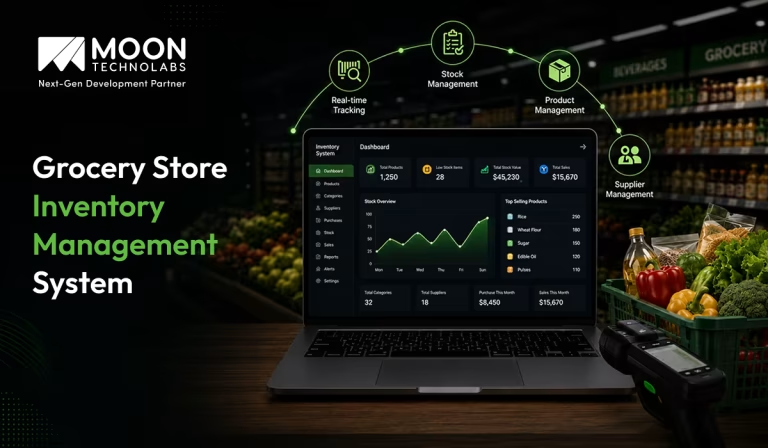
Table of Content


Blog Summary:
Managing grocery inventory manually can lead to overstocking, stockouts, wasted products, and lost sales. A grocery store inventory management system helps retailers maintain accurate stock levels, streamline operations, and make smarter business decisions. In this blog, we explore 10 must-have features, from real-time tracking and expiry management to supplier coordination, analytics, and automated inventory control.
Table of Content
Managing a grocery store involves more than just selling products; it requires accurate stock tracking, supplier coordination, and preventing shortages or waste. With thousands of items to manage, manual inventory handling can lead to errors and lost sales.
A grocery store inventory management system helps retailers automate operations, track stock in real time, reduce costs, and improve efficiency. Let’s explore the top features of an inventory management system that every retailer needs to run a smarter and more successful grocery business.
What is a Grocery Store Inventory Management System?
A grocery store inventory management system is a software solution that helps grocery retailers track, organize, and manage their stock efficiently. It provides real-time visibility into inventory levels, making it easier to monitor products, reduce waste, and ensure popular items are always available for customers.
The system automates everyday inventory tasks such as stock updates, barcode scanning, purchase order management, and low stock alerts. Modern retailers are also adopting advanced solutions such as smart inventory management systems to improve automation, enhance forecasting accuracy, and gain better control over stock movement.
By minimizing manual errors, it improves operational efficiency and saves valuable time for store owners and staff. With accurate inventory tracking and reporting, grocery businesses can make better purchasing decisions, prevent overstocking or stock shortages, and improve overall customer satisfaction. This helps stores increase profitability while maintaining smooth day-to-day operations.
Benefits of a Grocery Store Inventory Management System
Explore the key benefits of inventory management software that helps grocery retailers optimize operations, improve accuracy, and deliver better customer experiences:
Optimize Stock Levels and Prevent Stockouts
A grocery store inventory management system helps maintain optimal stock levels by tracking inventory in real time. It automatically updates stock levels after every sale and alerts managers when products reach reorder points. This ensures that popular items are always available while preventing overstocking, reducing lost sales, and improving inventory turnover.
Reduce Product Expiry and Food Waste
Managing perishable goods is one of the biggest challenges for grocery stores. An effective inventory management system monitors expiration dates and supports FIFO (First In, First Out) or FEFO (First Expired, First Out) inventory practices. Staff receive notifications about products nearing expiration, allowing timely discounts or promotions to minimize grocery waste and maximize profitability.
Streamline Batch and Lot Tracking
Batch and lot tracking enables grocery stores to monitor products from suppliers through to sale. This feature helps identify the exact locations of products during recalls, ensures compliance with food safety regulations, and improves inventory accuracy. It also makes managing perishable and packaged goods much more efficient.
Analyze Sales Trends and Customer Demand
Advanced reporting and analytics provide valuable insights into customer buying behavior and seasonal demand. Store managers can identify top-selling products, slow-moving inventory, and peak shopping periods. These insights enable smarter purchasing decisions, better inventory planning, and targeted promotional campaigns that increase sales.
Minimize Inventory Shrinkage and Loss
Inventory shrinkage due to theft, spoilage, or administrative errors can significantly affect profiles. A grocery inventory management solution tracks every inventory movement, making discrepancies easier to detect. Regular stock audits, barcode scanning, and automated inventory records improve accountability and reduce unnecessary losses.
Improve Supplier and Purchase Order Management
The system simplifies supplier management by maintaining supplier information, tracking purchase orders, and monitoring delivery schedules. Automated purchase order generation based on inventory levels reduces manual work and ensures timely replenishment. This strengthens supplier relationships and prevents delays in stocking essential products.
Increase Operational Efficiency
Automation eliminates many time–consuming manual inventory tasks such as stock counting, data entry, and reorder calculations. Employees can focus more on customer service and store operations while managers gain better visibility into inventory performance. Improved efficiency reduces labor costs and increases overall productivity.
Enhance Customer Satisfaction Through Better Product Availability
Customers expect grocery stores to stock the products they need consistently. Real-time inventory visibility helps ensure shelves remain well-stocked with essential items, reducing stockouts and improving the shopping experience. Better product availability builds customer trust, encourages repeat visits, and strengthens brand loyalty.
Develop a reliable inventory management system to reduce waste, improve accuracy, and support your business’s growth.
10 Essential Features of a Grocery Store Inventory Management System
A grocery store inventory management system helps retailers manage stock, streamline operations, and maintain accurate product information. With advanced automation and tracking capabilities, these systems make inventory processes more efficient and reliable:
Real-Time Inventory Tracking
Real-time inventory tracking allows grocery stores to monitor product quantities and stock movement instantly. The system automatically records inventory changes whenever products are purchased, sold, returned, damaged, or transferred. Store managers can view updated stock information and maintain accurate records without relying on manual inventory checks.
Automated Stock Replenishment
Automated stock replenishment helps maintain appropriate inventory levels by identifying products that require restocking. The system monitors stock quantities, sets minimum and maximum inventory limits, and generates reorder suggestions based on predefined rules or sales patterns. This feature simplifies the purchasing process and ensures continuous inventory management.
Barcode and QR Code Scanning
Barcode and QR code scanning enable fast and accurate product identification throughout the inventory process. Employees can scan products during receiving, billing, stock verification, and inventory audits. The system instantly retrieves product details such as price, category, quantity, and batch information, reducing the need for manual data entry.
Expiry Date and Batch Management
Expiry date and batch management are essential for grocery stores handling perishable products such as dairy items, fruits, vegetables, and packaged foods. The system records batch numbers, production dates, and expiration dates for each product. It can also organize inventory by expiry dates to support effective product management.
Multi-Store Inventory Synchronization
Multi-store inventory synchronization allows businesses with multiple grocery outlets to manage inventory through a centralized platform. Stock information from different branches can be integrated and automatically updated, allowing managers to monitor product availability, transfers, and inventory activities across all locations.
Sales Reports and Inventory Analytics
Sales reports and inventory analytics provide detailed information about product sales, inventory movement, and purchasing trends. The system generates reports that help businesses analyze sales performance, identify frequently sold products, monitor inventory patterns, and understand overall store operations through organized data.
POS and ERP Integration
POS and ERP integration connects the inventory management system with billing systems and business management software. When a sale is completed through the POS system, inventory records are updated automatically. ERP integration allows businesses to connect inventory, accounting, purchasing, and operational processes within a single platform.
For example, our retail POS billing software demonstrates how an integrated POS solution can streamline billing, inventory tracking, payment processing, and business operations through a unified platform.
Supplier and Purchase Order Management
Supplier and purchase order management helps grocery stores organize their purchasing activities and maintain supplier information. The system allows businesses to create purchase orders, track supplier details, monitor order status, and maintain records of incoming stock deliveries for better supply chain management.
Role-Based Access and Security Controls
Role-based access and security controls allow businesses to manage system access according to employee responsibilities. Different users, such as store managers, cashiers, and inventory staff, can be assigned specific permissions. This ensures that sensitive inventory and business information are accessed only by authorized personnel.
Customer Notifications and Loyalty Integration
Customer notifications and loyalty integration connect inventory systems with customer engagement platforms. Businesses can manage loyalty programs, send product availability updates, share promotional information, and maintain customer-related data through integrated communication tools.
You Might Also Like:
Reasons to Build a Custom vs Ready-Made Grocery Inventory Solutions
While ready-made inventory software offers quick deployment, it may not provide the flexibility and scalability growing grocery businesses need. A custom inventory management system is built around your operations, helping improve efficiency, reduce waste, and support long-term growth.
Custom Solution to Your Business Operations
Every grocery store has unique inventory workflows. A custom solution is designed to match your processes, making it easier to manage perishable goods, automate stock replenishment, track inventory accurately, and generate reports that support better decision-making.
Scale Easily as Your Grocery Business Grows
As your business expands with new stores, warehouses, or online channels, a custom system can scale without major limitations. It supports larger product catalogs, higher transaction volumes, and new features as your business evolves.
Integrate Seamlessly With Existing POS, ERP, and E-commerce Platforms
An inventory management system connects easily with your POS, ERP, accounting software, and e-commerce platforms. This enables real-time inventory updates, reduces manual data entry, and improves operational accuracy across sales channels, supporting an effective grocery delivery app with better order and inventory synchronization.
Gain Greater Control Over Data Security and Custom Features
Custom grocery software gives you complete control over data security, user access, and feature development. You can implement business-specific functionality while protecting sensitive inventory and sales data.
Reduce Long-term Operational Costs
Although custom software requires a higher upfront investment, it helps lower long-term costs by automating tasks, improving inventory accuracy, reducing waste, and eliminating recurring licensing fees for unnecessary features.
How Much Does a Grocery Store Inventory Management System Cost?
The cost of developing a grocery inventory management system depends on factors such as features, business size, number of store locations, third-party integrations, technology stack, and the development team’s expertise. On average, development costs range from $15,000 to $150,000+, depending on the project’s complexity.
Cost Based on Features and Complexity
The more advanced the features, the higher the development cost.
Basic System ($15,000–$30,000): Includes product management, stock tracking, low-stock alerts, basic reporting, and user management. Suitable for small grocery stores.
Mid-Level System ($30,000–$70,000): Adds barcode scanning, supplier management, purchase orders, POS integration, mobile access, and advanced reporting.
Enterprise System ($70,000–$150,000+): Includes multi-store management, warehouse integration, AI demand forecasting, RFID support, cloud deployment, ERP integration, and business intelligence dashboards.
Cost Based on Number of Store Locations
Managing inventory across multiple stores requires additional functionality, increasing development costs.
| Store Locations | Estimated Cost |
|---|---|
| Single Store | $15,000–$30,000 |
| 2–10 Stores | $30,000–$60,000 |
| 10–50 Stores | $60,000–$100,000 |
| 50+ Stores | $100,000–$200,000+ |
Cost Based on Third-Party Integrations
Integrating external tools improves automation but adds to development costs.
| Integration | Estimated Cost |
|---|---|
| Payment Gateway | $2,000–$6,000 |
| POS System | $5,000–$15,000 |
| ERP Integration | $10,000–$30,000 |
| Accounting Software | $3,000–$10,000 |
| CRM Integration | $4,000–$12,000 |
| SMS/Email Notifications | $1,000–$4,000 |
Cost Based on Technology Stack
Your choice of technologies affects both development and long-term maintenance costs.
- Frontend: React.js, Angular, Vue.js
- Backend: Node.js, Laravel, Django, ASP.NET Core
- Mobile: Flutter, React Native, Kotlin, Swift
- Database: PostgreSQL, MySQL, MongoDB
- Cloud: AWS, Microsoft Azure, Google Cloud
Overall technology stack costs typically range from $20,000 to $80,000+, depending on the platform and project scope.
Cost Based on Development Team and Location
Development rates vary by region.
| Region | Average Hourly Rate |
|---|---|
| North America | $100–$200/hour |
| Western Europe | $80–$180/hour |
| Eastern Europe | $40–$80/hour |
| India | $20–$50/hour |
| Southeast Asia | $20–$45/hour |
Choosing an experienced offshore development team can help reduce costs while maintaining quality.
Why Choose Moon Technolabs for Grocery Inventory Development?
We specialize in developing customized grocery inventory management software designed to meet the unique requirements of modern retail businesses.
With expertise in advanced technologies, we create scalable solutions that include real-time inventory tracking, automated stock management, barcode integration, supplier management, reporting, and POS connectivity. Each system is developed with a focus on accuracy, usability, and seamless integration with existing business operations.
By partnering with us, businesses get access to experienced developers who understand the challenges of grocery retail management and deliver solutions tailored to specific workflows. We follow a customer-focused approach, ensuring secure, reliable, and future-ready inventory management platforms that help grocery stores streamline daily operations and adapt to changing market demands.
Discuss your requirements with our experts and create a scalable system tailored to your grocery business needs.
Conclusion
A grocery store inventory management system is no longer just a useful tool; it has become an essential solution for modern retailers looking to improve efficiency, reduce waste, and increase profitability.
With features such as real-time stock tracking, automated reordering, sales analysis, supplier management, and inventory reporting, these systems help grocery businesses make smarter decisions and deliver better customer service.
By adopting the right inventory management system, retailers can minimize stock issues, streamline daily operations, and stay competitive in a fast-changing market. Investing in reliable inventory technology allows grocery stores to save time, reduce costs, and build a more organized and successful business for the future.
Partnering with a trusted grocery delivery app development company can further help retailers create seamless digital shopping experiences and enhance their overall business growth.
FAQs
01
How much does it cost to develop a grocery store inventory management system?
The development cost depends on features, integrations, and project complexity. A basic solution typically starts at $10,000, while an advanced, custom-built system with AI, analytics, and multi-store support can cost $10,000 or more.02
What features are essential in a grocery inventory management system?
Essential features include real-time inventory tracking, barcode scanning, stock alerts, expiration date management, supplier management, purchase orders, sales reporting, multi-store support, POS/ERP integration, and analytics. These capabilities improve inventory accuracy, reduce waste, and streamline daily operations.03
Can grocery inventory software integrate with POS and ERP systems?
Yes. Grocery inventory software can integrate with POS and ERP systems to synchronize inventory, sales, purchasing, and financial data. This ensures real-time stock updates, improves operational efficiency, reduces manual errors, and provides a centralized view of business performance.04
How does AI improve grocery inventory management?
AI improves online grocery inventory management by forecasting demand, automating stock replenishment, identifying purchasing trends, reducing stockouts and overstocking, and minimizing food waste. It also provides actionable insights that help businesses optimize inventory levels and improve profitability.05
What is the difference between custom and ready-made grocery inventory management software?
Custom software is tailored to your business needs, offering greater flexibility, scalability, and integrations. Ready-made software is faster to deploy and more affordable, but provides limited customization. The right choice depends on your budget, business complexity, and future growth plans.



The Software Development Team at Moon Technolabs includes experienced developers, solution architects, and technology consultants who contribute content on software engineering, application development, system architecture, and digital innovation. Their articles are based on real-world project experience and aim to help businesses make informed technology decisions.
Submitting the form below will ensure a prompt response from us.
We refine our expertise to deliver innovative business solutions.




205 N Michigan Avenue, #810, Chicago, 60601, Illinois, United States
13500 Long Is Dr, Pflugerville, TX 78660, USA

C/105 Ganesh Meridian, S.G. Highway, Ahmedabad, GJ 380060


Ayse D.
Co-Founder France
“ I highly recommend Moon Technolabs as the quality of service is wonderful. We have hired this company to develop the product based on some complex & technical issues. We get the best quality services as compared with others in the market. Huge Thanks to Moon Technolabs as the team is always ready to give the solution all time.”

Justin G.
Founder & CEO USA
USA“ Moon Technolabs is a pioneer in the WebRTC based project as they have fixed complicated segments of the module by fulfilling different product lines by providing 24X7 customer support. We really recommended Moon Technolabs as they are able to develop products as per the module deadline and project timeline.”

Flavio S.
Founder & Managing Director Germany
“I am happy to recommend Moon Technolabs for their app development services. They successfully developed apps for me, and I am highly satisfied with the overall outcomes. The development team has swiftly addressed the issues with responsive and effective communication to understand the requirement quickly and actively resolve the back-and-forth problems that arose...”

Jay M.
Founder & CEOUSA“Moon Technolabs is the best company that provides advanced apps and websites development services in the USA and Europe. I am a newbie to develop my app with an external team. I am really happy to work with them as I am not that much mobile apps user. Here, the team and specially the CEO of Moon Technolabs helps me to let me know about the benefits of my app to generate revenue....”


Our Offices
India
C/105 Ganesh Meridian,S.G. Highway, Ahmedabad, GJ 380060USA
205 N Michigan Avenue, #810, Chicago, 60601, Illinois, United StatesContact Information


