


Fintech Development Outsourcing: Benefits, Costs, and Trends

Jayanti Katariya
Last Updated: May 19, 2026 Total Views: 177

Table of Content


Blog Summary:
Fintech development outsourcing is necessary for businesses seeking to minimize costs, foster innovation, and stay competitive in the emerging financial sector. This blog lets you explore everything about fintech development outsourcing, including its engagement models, benefits, costs, risks, and emerging trends.
Table of Content
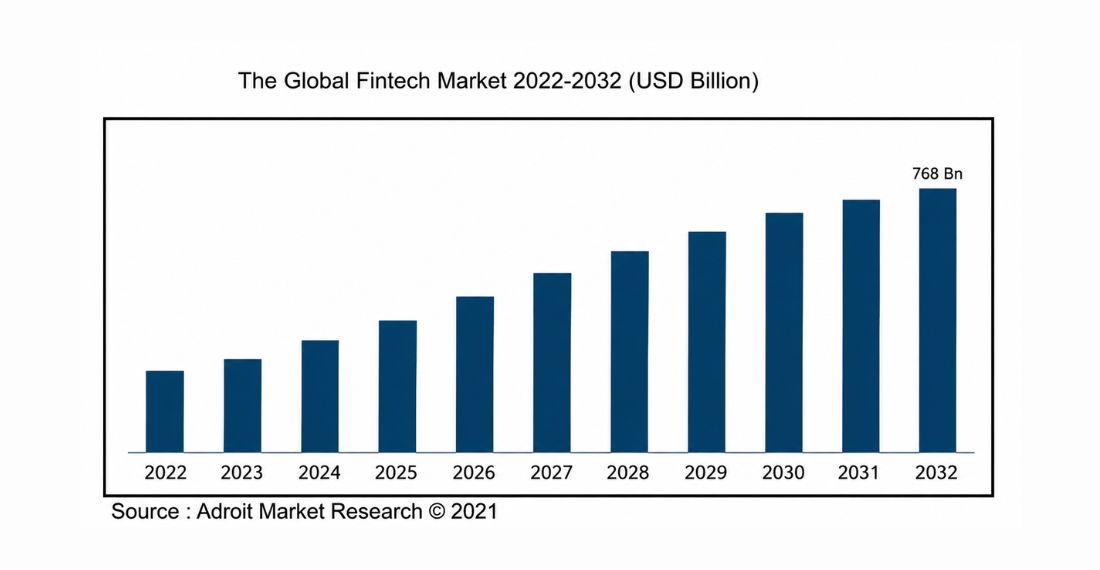
The financial industry is growing rapidly, driven by AI-powered financial services, digital banking, blockchain, and contactless payment solutions. Adroit Market Research reveals that the global fintech market is likely to surpass $768 billion by 2032. It reflects the growing demand for customer-centered, innovative financial technologies.
This is where Fintech Development Outsourcing offers a significant advantage to modern businesses. It allows them to minimize operational costs, improve time-to-market, access specialized expertise, and scale more efficiently. You can gain all these benefits without managing in-house teams.
What are the Benefits of Outsourcing FinTech Development?
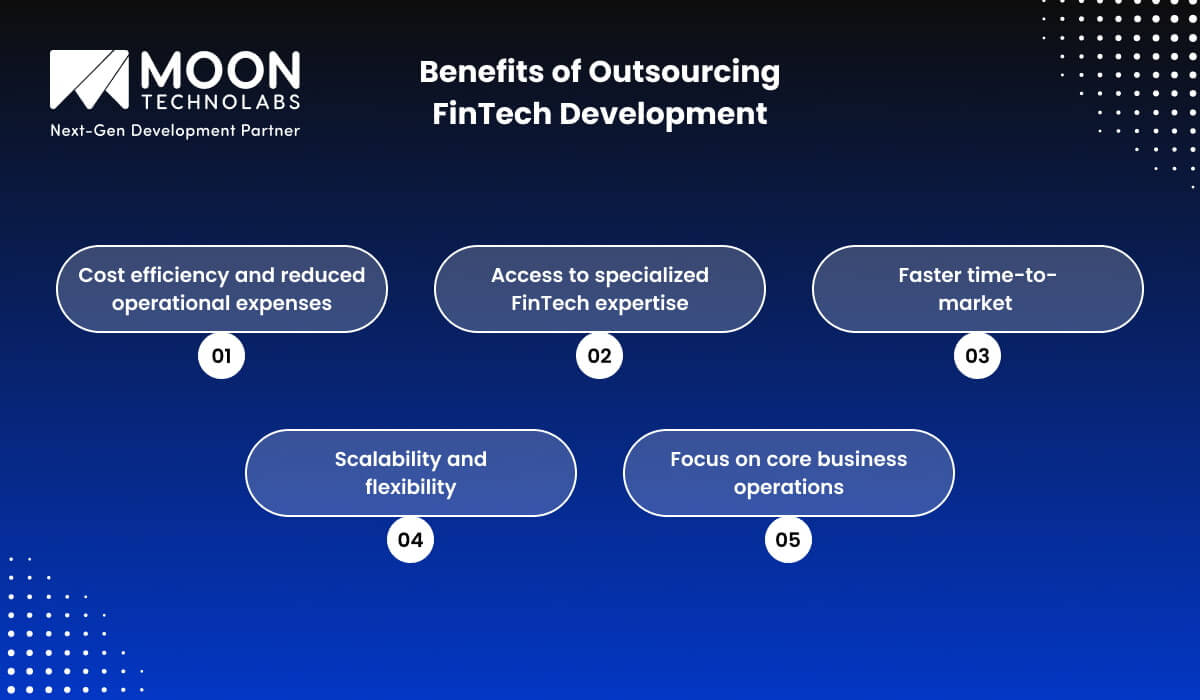
Outsourcing fintech development is considered to be a smart move for businesses seeking to gain a competitive edge without expanding their resources. Some other benefits are as follows:
Cost Efficiency and Reduced Operational Expenses
By outsourcing fintech development, businesses can avoid the long-term costs of building and maintaining an in-house team, including recruitment, employee benefits, workspace setup, training, and ongoing software and infrastructure investments.
It also allows you access to the largest pool of talented developers from different regions across the world. They are not only more affordable than your in-house team but also promise to deliver high-quality solutions.
Access to Specialized FinTech Expertise
Fintech development requires a specific skill set, whether it’s payment gateway development, blockchain integration, cybersecurity, or regulatory compliance. With outsourcing, you can easily find and partner with developers who have hands-on expertise in this area. They have a sound understanding of the nuances of industry standards and financial systems.
Faster Time-to-Market
Another major advantage of outsourcing fintech development is that it accelerates the development timelines with experienced teams. They work with an agile methodology and proven workflow.
Your outsourcing fintech solution provider has dedicated resources who work exclusively on your projects and deploy them rapidly compared to your in-house teams, who manage along with other responsibilities.
Scalability and Flexibility
By outsourcing your fintech development project, you get full flexibility to scale up or down team size based on your project requirements. It thus prevents you from facing complications of hiring or removing your permanent staff. This adaptability is specifically important for both startups and growing businesses.
Focus on Core Business Operations
Managing a team distracts you from your core business strategies. When you outsource the fintech development process, your internal teams keep focusing on customer relationships, strategy, revenue generation, and partnerships. It enables leadership to boost business while a reliable development partner manages the complications of developing and maintaining your fintech solutions.
What Happens When You Delay FinTech Development Outsourcing?
When you continuously delay outsourcing fintech development, it ultimately erodes your competitive position in ways that are very hard to recover from. Let’s explore some other repercussions as well:
Missed Market Opportunities
You need to know that the fintech industry moves rapidly, and market windows don’t open for long. Whether it’s demand for embedded financial solutions, a gap in digital payments, or a shift in consumer banking behavior, opportunities are always evolving. By the time you become ready to launch your final solution, the market has already moved on.
Increased Development Costs
Another disadvantage of delaying the outsourcing of your fintech development project is that it rarely allows you to save your hard-earned money. It always costs more. With the passage of time, the technical requirements of your projects grow more complex, regulations become stricter, and the cost of skilled fintech talent continues to rise. So, delaying outsourcing leads to issues such as technical debt and costly rework.
Competitive Disadvantage
You should always remember you are delaying your decision, not your competitors. When you opt to outsource as early as possible, you can achieve faster development cycles, stronger market positioning, and higher-quality products.
The more you delay your project, the wider the gap becomes. In an industry where product reliability and customer trust are important, falling behind technologically ultimately damages your reputation.
Slower Innovation Cycles
It’s well known that innovation is a continuous process rather than a one-time effort. You can expect your outsourcing partners to bring extensive exposure to global trends, fresh perspectives, and experience across diverse projects, fostering innovation.
In the absence of external input, internal teams often face repercussions such as repetitive cycles and the same issues being solved in the same way. When you delay outsourcing, it’s, in fact, an important form of fresh thinking that helps your products stay relevant and keeps users engaged.
Transform your Vision into Robust Fintech Solutions
We help you redefine your vision into a powerful fintech solution that delivers an outstanding user experience. Partner with us to drive innovation and market success.
Freelance or Agency: Which FinTech Outsourcing Model Should You Choose?
When it comes to choosing between freelance and agency outsourcing for fintech development, it’s a tough decision for most businesses. It depends on factors such as budget, scope, timeline, and long-term goals. Let’s understand how to make the right decision between them:
Freelancers vs Agencies Comparison
Freelancers are basically independent professionals who get hired for short-term projects or specific tasks. They provide flexible arrangements, direct communication, and minimum hourly rates.
On the other hand, agencies have structured teams with diverse skill sets, defined processes, and dedicated project management. Freelancers offer you individual talent, agencies provide you with a complete development ecosystem, including designers, developers, testers, and others.
Cost vs Quality Considerations
In terms of cost, a freelancer is more affordable than an agency. But the cost increases when you manage multiple freelancers, dealing with inconsistent availability and coordination gaps.
On the other hand, agencies generally charge more upfront, but investing offers improved code quality, fewer costly revisions, and clear accountability.
Project Complexity and Team Requirements
Hiring freelancers can be the right choice for you when you have a small project. Meanwhile, fintech products are not simple – most of them are highly complex. Whether it’s developing a payment platform, a lending app, or a compliance management system, it requires cross-functional collaboration that a single freelancer cannot provide.
Indeed, complex projects often demand coordinated effort, structured delivery, specialized knowledge, and more. These are things that only an experienced agency can provide.
Long-term Support and Scalability
You need to understand that fintech products often require constant security updates, ongoing maintenance, feature expansions, and regulatory adjustments. You can’t expect any long-term commitment from freelancers.
Agencies can definitely meet your expectations by providing the necessary support and scalability for your fintech solution. You can expect them to offer scalable team arrangements, structured support agreements, and institutional knowledge of your solutions. These become highly valuable with time.
How to Select the Right FinTech Development Partner?
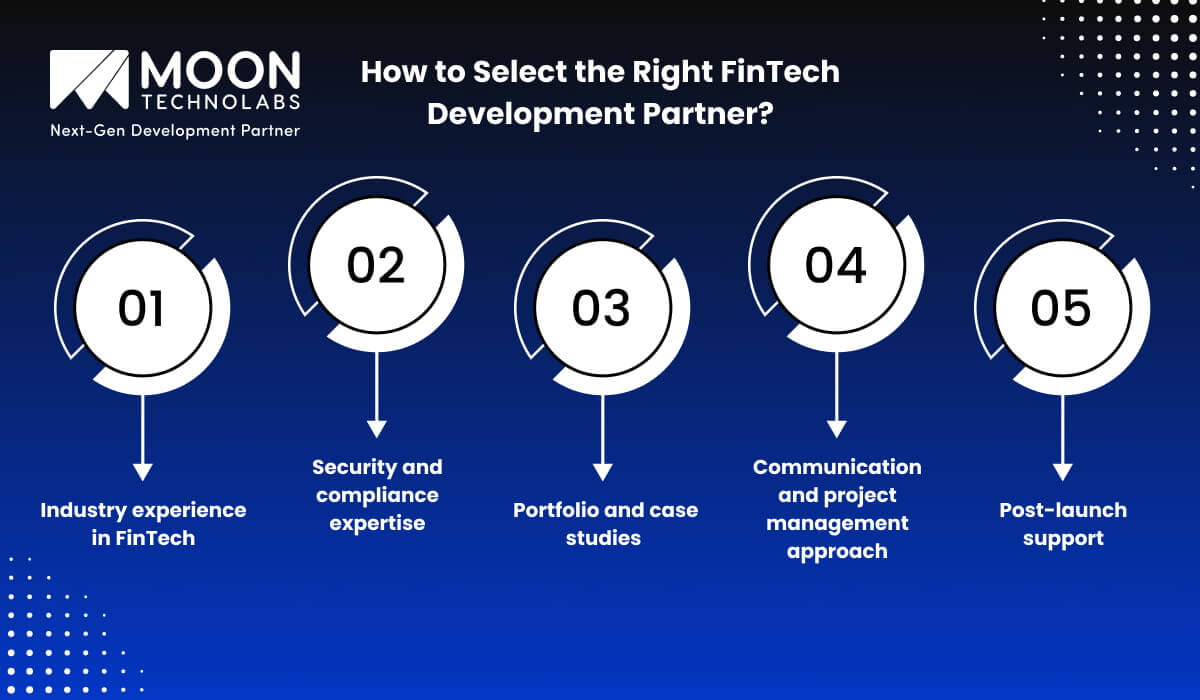
Selecting the right fintech development partner is a highly responsible task and requires you to consider numerous important factors. We have discussed below some of these factors in-depth:
Industry Experience in FinTech
You need to know that not every software development outsourcing company can handle the unique requirements of financial technology. Therefore, you should always seek the right financial development partner with a proven track record in this niche.
Those with experience in developing digital banking platforms, payment systems, and insurance technology signals, as well as industry-specific experience, minimize the learning curve and the risk of costly mistakes.
Security and Compliance Expertise
As far as security in fintech is concerned, it’s not only a feature but a backbone. So, when selecting your development partner, you need to ensure they have a thorough understanding of compliance frameworks such as GDPR and PCI DSS. You need to ask them their strategy for handling data encryption, secure coding practices, vulnerability testing, etc.
Portfolio and Case Studies
Going through the past works of your potential fintech development partner gives you an idea about their specialization in this niche. It’s advisable to request detailed case studies that not only reflect what was developed but also the problems solved, the challenges overcome, and the outcomes delivered.
A vast portfolio of developers reflects technical capability, versatility, and the ability to deliver under real-world conditions.
Communication and Project Management Approach
Clear communication is essential for the team and enables them to manage projects smoothly. They manage projects better in several ways, such as following agile sprints, handling scope changes, and leveraging collaboration tools. Whether it’s clear documentation, regular updates, or a dedicated point of contact, they are indeed must-haves for keeping the development smooth.
Post-launch Support
A reliable development partner will never leave you, even after successfully deploying your project. Make sure they provide structured post-launch support, including security patches, performance monitoring, bug fixes, and feature updates. A clearly defined support agreement and long-term availability are essential to protect your product perfectly.
Case Study: How FinTech Companies Achieve Growth Through Outsourcing
Outsourcing fintech development is a proven growth strategy, not just a theory. It has helped some of the industry’s popular names scale quickly and efficiently. Let’s explore detailed information:
Real-world Success Examples
As the most sought-after buy-now-pay-later (BNPL) company, Klarna has successfully scaled its engineering capabilities by harnessing external development talent to accelerate product builds across multiple markets simultaneously.
On the other hand, Revoult, Europe’s most successful fintech company, leveraged outsourced development resources, especially during its early growth phases, to expand its feature set without delaying the development of in-house capabilities.
Important Strategies Used
The most common thing about these companies is that they have not blindly outsourced their projects. Instead, they identified specific functions where external expertise would have a greater impact, including compliance automation, payment integrations, and mobile app development.
They also maintained extensive internal oversight while allowing outsourced teams the freedom to implement. Be it KPIs, clear communication frameworks, or agile development methodologies, many factors contributed significantly to keeping projects more closely aligned with core business objectives throughout the process.
Impact on Revenue and Scalability
Faster development cycles contributed significantly to early market entry, faster user acquisition, and improved revenue growth. They kept their operating expenses low through outsourcing, which enabled them to reinvest their savings in partnerships, marketing, and product innovation. These finally created a compounding effect that maximized scalability.
What is the Cost of FinTech Development Outsourcing?
You need a complete understanding of the actual cost of outsourcing fintech development. It’s necessary for budgeting accurately. We have discussed below detailed information regarding the cost involved in fintech development outsourcing:
Factors Affecting Cost
Many important factors directly influence the cost of an outsourced fintech project. Some of them are as follows:
- Project complexity
- Number of features
- Security requirements
- Third-party integrations
- The geographical location
Estimated Pricing Based on Project Scope
When you build a basic fintech app with standard features, the development cost generally ranges from $30,000 to $50,000. Mid-complexity platforms involve multiple integrations and compliance layers, costing $50,000 to $100,000.
Besides, the cost of enterprise-grade fintech solutions ranges from $100,000 to $500,000 or even higher. It depends on factors such as the timeline and scope.
Cost vs ROI Analysis
As we mentioned, outsourcing fintech projects promises faster time-to-market. It clearly reflects earlier and faster revenue generation. Minimized operational overhead cost frees capital for growth.
Access to specialized professionals reduces expensive rework and compliance penalties. Outsourcing fintech development is considered a higher-value investment rather than just a line-item expense.
What Are the Risks Involved in FinTech Outsourcing and How to Mitigate Them?
Though outsourcing a fintech project offers numerous advantages, it also comes with various challenges. Let’s have a look at the risks involved in managing them most effectively:
Data Security Risks
Fintech products can handle sensitive personal and financial data, making them potential targets for attackers. When you give this information to your outsourcing partner, it introduces additional security risks.
To overcome it, you need to ensure your outsourcing partner adheres to stringent data protection protocols, operates under a clearly defined NDA (Non-Disclosure Agreement), uses encrypted communication channels, and more.
Compliance Challenges
Financial regulations tend to vary by region and evolve constantly. An outsourced team that is not aware of your target market’s regulatory landscape can build a product mistakenly, which fails to comply with requirements.
You can overcome this by partnering with teams that have direct experience with relevant frameworks such as GDPR, PCI DSS, and local financial authority guidelines.
Communication Gaps
Whether it’s language barriers, time zone differences, or unclear project documentation, these can derail even funded projects. You need to establish a fully structured communication protocol from the outset, be it shared project management tools, regular video calls, or clearly documented requirements. These significantly minimize the overall risk of misalignment.
Quality Control Issues
Your outsourced development tends to produce consistent code quality even without proper oversight. You need to counter this by defining quality benchmarks, code reviews, and emphasizing thorough testing at every important development stage.
Risk Mitigation Strategies
The most important way to minimize risk is to conduct in-depth research before working with a partner. You need to properly check their overall experience.
It’s a good idea to start with a pilot project to assess their skills, define variables in the contract, and regularly analyze projects. This proactive approach allows businesses to manage risk efficiently.
Build Scalable and Secure Fintech Solutions
We craft secure and scalable fintech solutions tailored to match the emerging business demands. Let’s foster digital innovation with expert-driven development services.
Key Engagement Models for FinTech Development Outsourcing
Selecting the top engagement models is pivotal, alongside hiring the best development partner. The engagement model you select determines the cost structure, flexibility you have, and how closely you manage the development process. The following are some of the engagement models fintech companies work with:
Fixed Price Model
As the name suggests, the fixed-price model works with a defined scope, agreed-upon cost, and timelines even before development starts. This model works better for small projects with clearly outlined requirements that are unlikely to change.
It offers clear accountability and budget predictability. Meanwhile, it leaves room for mid-project adjustments, which makes it a poor fit for complex fintech products where requirements evolve as they take shape.
Dedicated Development Team
This model involves engaging the entire team, whether designers, developers, QA specialists, or project managers. They work dedicatedly on your project. This approach works well for long-term projects that need ongoing development and a deep product familiarity.
The dedicated team works as an extension of your in-house staff. They offer higher control, consistent output, and the ability to scale the team as your product grows.
Time and Material Model
Billing for this model is based on actual working hours and resources utilized. It offers greater flexibility for projects where the scope is not fully defined at the outset.
It’s a perfect match for agile fintech development where features are added iteratively. While it requires closer budget monitoring, it enables real-time adjustments that align the product with emerging market requirements.
Hybrid Engagement Models
A hybrid approach may use fixed cost for clearly scoped initial phases – it shifts to a time and material structure for ongoing feature development. This balance delivers the flexibility and cost predictability required to adapt to your fintech’s maturity.
What are the Biggest FinTech Development Trends?
It can’t be denied that the fintech space is constantly evolving, driven by emerging technologies and frequently changing customer expectations. We will take a detailed look at some of the popular fintech development trends, which you can consider to implement in your project:
AI and ML in FinTech
AI and ML are two of the fast-emerging technologies that have a significant impact on how modern financial products operate. From credit card assessment and fraud detection to personalized financial advice and automated customer support, AI makes financial services smarter, faster, and more accurate.
Businesses that leverage AI in their products deliver an outstanding user experience while minimizing overall operational cost and human error.
Blockchain and Decentralized Finance (DeFi)
Blockchain technology has a major influence on how financial transactions are recorded, verified, and implemented. The major advantage of a Decentralized finance platform is that it removes any traditional intermediaries from lending, borrowing, and trading.
Smart contracts automate even complex financial agreements while maintaining both precision and transparency. Blockchain integration brings improved security, reduced transaction costs, and access to a new ecosystem for financial products.
Embedded Finance
Embedded finance is better represented as a smooth integration of financial services into non-financial platforms. A large number of ride-handling apps include insurance, e-commerce platforms that offer instant credit, and payroll software with built-in savings tools.
You Might Also Like:
Outsourced Payroll Services: Benefits, Process, and Business Impact
In fact, it darkens the line between non-financial and financial businesses while creating a new revenue system. It also ensures in-depth customer engagement for organizations seeking to implement it.
Open Banking APIs
Open banking introduces a new age of financial connectivity – it enables third-party developers to create products across bank data with the help of secure APIs. This accelerates innovation in lending, personal finance management, payments, and more, through interconnected ecosystems in which data flows securely between applications and institutions with customer consent.
Digital Payments and Wallets
Cashless transactions have witnessed much acceptance globally due to customer preferences. As a result, contactless payments, digital wallets, and real-time payment infrastructure gained widespread popularity.
They have, in fact, become great expectations instead of premium features. Businesses that focus on secure, seamless digital payments earn strong customer loyalty, especially in today’s cashless world.
Why Choose Moon Technolabs as a Trusted FinTech Development Service Provider?
We have years of experience building secure, scalable fintech solutions tailored to your specific business requirements. Our team specializes in blending vast technical expertise with a thorough understanding of the financial industry.
We focus on everything when creating fintech solutions, from regulatory compliance and security to clean code.
Our Specialization in Fintech Development
We provide a range of fintech software development services to meet the diverse needs of businesses. We create the following solutions:
- Fintech app development
- Banking and financial software development
- POS system development
- Blockchain and DeFi solutions
- Consulting services
Conclusion
Rather than merely a cost-saving option, outsourced fintech development is a strategic move toward rapid innovation, market success, and scalability. You can gain the best strategy and support, access the right talent, streamline development, and minimize risk by partnering with a reliable outsourcing partner like us. We work with the right strategy and provide the support you need to stay competitive, agile, and future-ready.
FAQs
01
What is fintech development?
Fintech development involves building digital solutions, such as platforms, mobile apps, and software. They are capable of improving financial services while maximizing safety.02
What are the four types of outsourcing?
The four types of outsourcing include onshore, nearshore, offshore, and multi-sourcing. These are useful to balance expertise, cost, scalability, and operational efficiency.03
What are the three levels of outsourcing?
Well, the three levels of outsourcing include tactical, strategic, and transformational. Tactical outsourcing emphasizes cost-saving tasks, strategically improves expertise and efficiency, whereas transformational outsourcing boosts innovation, business growth, etc.04
What is a good example of outsourcing?
A great example of outsourcing is an organization that hires a third-party agency for handling customer support. It allows them to focus on their important business activities while minimizing their operational costs.05
What is the future of outsourcing?
The future of outsourcing is set to rely on strategic partnerships, AI-driven automation, access to global talent, and more. Businesses will focus on innovation, value, scalability, and other factors over cost.




Jayanti Katariya is the CEO of Moon Technolabs, a fast-growing IT solutions provider, with 18+ years of experience in the industry. Passionate about developing creative apps from a young age, he pursued an engineering degree to further this interest. Under his leadership, Moon Technolabs has helped numerous brands establish their online presence and he has also launched an invoicing software that assists businesses to streamline their financial operations.
Submitting the form below will ensure a prompt response from us.
We refine our expertise to deliver innovative business solutions.





205 N Michigan Avenue, #810, Chicago, 60601, Illinois, United States
13500 Long Is Dr, Pflugerville, TX 78660, USA

C/105 Ganesh Meridian, S.G. Highway, Ahmedabad, GJ 380060


Ayse D.
Co-Founder France
“ I highly recommend Moon Technolabs as the quality of service is wonderful. We have hired this company to develop the product based on some complex & technical issues. We get the best quality services as compared with others in the market. Huge Thanks to Moon Technolabs as the team is always ready to give the solution all time.”

Justin G.
Founder & CEO USA
USA“ Moon Technolabs is a pioneer in the WebRTC based project as they have fixed complicated segments of the module by fulfilling different product lines by providing 24X7 customer support. We really recommended Moon Technolabs as they are able to develop products as per the module deadline and project timeline.”

Flavio S.
Founder & Managing Director Germany
“I am happy to recommend Moon Technolabs for their app development services. They successfully developed apps for me, and I am highly satisfied with the overall outcomes. The development team has swiftly addressed the issues with responsive and effective communication to understand the requirement quickly and actively resolve the back-and-forth problems that arose...”

Jay M.
Founder & CEOUSA“Moon Technolabs is the best company that provides advanced apps and websites development services in the USA and Europe. I am a newbie to develop my app with an external team. I am really happy to work with them as I am not that much mobile apps user. Here, the team and specially the CEO of Moon Technolabs helps me to let me know about the benefits of my app to generate revenue....”


Our Offices
India
C/105 Ganesh Meridian,S.G. Highway, Ahmedabad, GJ 380060USA
205 N Michigan Avenue, #810, Chicago, 60601, Illinois, United StatesContact Information


