


AR in Education: Transforming Learning Through Immersive Technology

Jayanti Katariya
Last Updated: Jun 02, 2026 Total Views: 218
Table of Content


Blog Summary:
Augmented reality (AR) has revolutionized education by making learning more engaging and interactive for students across different age groups. This blog explores the importance of AR in education through real-world use cases, benefits, features, and key challenges.
Table of Content
Think about a classroom where students visualize a human heart in 3D, witness ancient civilizations firsthand, and experiment without a physical lab. Well, all of these are now possible with augmented reality, an emerging technology.
AR in education converts passive lessons into immersive learning experiences by gaining students’ curiosity and attention. It has propelled the demand for this technology in the education sector.
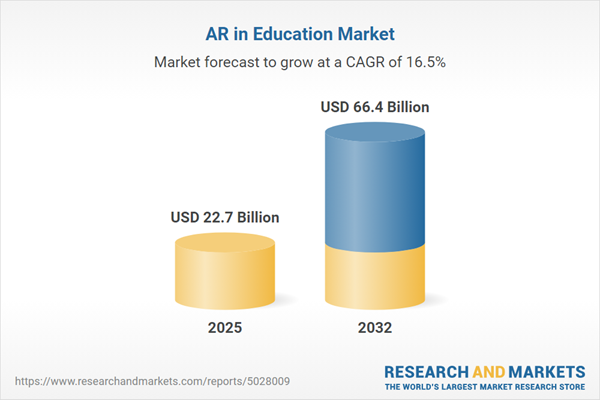
Research and Markets reports that the global market for AR in education was $ 22.7 billion in 2025 and is likely to reach up to $66.4 billion by 2032. It’s projected to grow at a CAGR of 16.5% between 2025 and 2032.
The major potential of AR lies in combining digital content with the real world, which makes learning more experimental and visual. It thus engages students extensively by redefining their learning experience.
In this blog, we will explore more about the impact of this technology on the education sector. Let’s explore now.
Top 10 Augmented Reality Use Cases in Education
Augmented reality has redefined the way students learn and retain information. From walking through ancient historical places to virtual frogs, technology is used in the classroom for various purposes. Let’s take a comprehensive look at the real-world use cases of AR in education.
Interactive Classroom Learning
AR has transformed even traditional textbooks, bringing them to life. It allows students to simply point at a device on the page and visualize the 3D model of the solar system spinning before them.
The technology also lets them visualize even historical battles at their desks. It helps students become active learners, which not only increases engagement but also knowledge.
Virtual Science Experiments
AR allows students to conduct experiments in a cost-free, safe virtual environment. They get the liberty to combine chemicals, visualize reactions, etc. Even if they make a mistake, it doesn’t have any real-world consequences. It works effectively in building a scientific intuition among students, even without any safety concerns.
AR-based Medical and Anatomy Training
AR prevents students from relying only on two-dimensional diagrams while learning the complex structure of the human body. They can place an anatomical structure over real bodies, rotating organs, separate body systems, etc. They can learn the entire human body in depth, compared to any traditional textbook illustrations that could ever do the same.
Historical and Cultural Immersive Tours
AR makes it possible for students to stand in their classroom and watch the signing of any peace treaty. It reflects that technology has made history tangible. Students today not only read about the past but also step into it – it indeed builds context, empathy, and longer-term memory for events.
Language Learning Through Visual Interaction
With AR tools, learners just point their camera at any object and see the word in their preferred language appear in front of them. This visual connection to the actual surroundings improves vocabulary learning in a way that is certainly not possible with traditional flashcards.
Skill-Based Training and Simulations
Technical and vocational education both benefit extensively from AR simulations. The technology benefits every student with different needs, whether it’s an engineering student learning about a wire circuit board or a culinary student following a layered cooking process.
The technology offers thorough, step-by-step visual guidance overlaid onto the task at hand. It minimizes errors, thereby building muscle memory quickly.
Gamified Learning Experiences
AR enables teachers to craft treasure hunts across a school campus and interactive quizzes that appear in real spaces, where students can select different outcomes. It introduces game-like elements that motivate students for longer. It improves their ability to remember concepts for longer.
AR for Special Education
AR also caters to students with learning differences through personalization. Students who have dyslexia or autism spectrum can engage with content in formats specifically suited to how their minds process information.
AR experiences can minimize sensory overload while still offering an interactive, rich, and engaging learning environment for users across multiple training and educational settings.
Remote Learning With 3D Models
AR has made distance learning more engaging by allowing remote students to interact with 3D models of buildings, molecules, or landforms directly from their homes. It provides a more practical learning experience than traditional online education often offers.
AR-based Assessment and Student Engagement
AR allows educators to visualize how students interact with virtual objects, respond to simulated situations, and resolve spatial challenges. This offers a detailed insight into student learning and skill development compared to traditional multiple-choice tests.
We build AR apps to transform education by making learning more engaging and interactive. We offer solutions that deliver a complete immersive experience.
Benefits of Leveraging Augmented Reality in Education
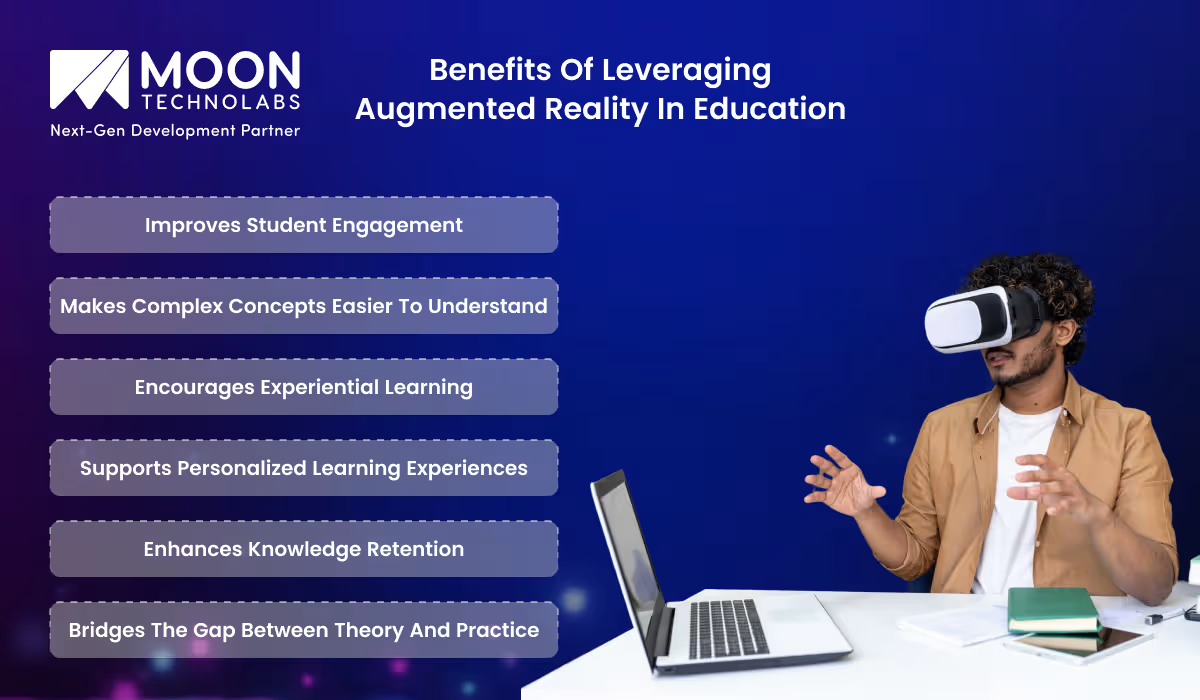
Augmented reality offers numerous advantages in education, transforming it entirely. The following are some of these advantages:
Improves Student Engagement
It has been a major challenge to keep students engaged in classrooms. Augmented reality draws attention through interactive and visually engaging experiences. When students can gather and engage with lessons, passive boredom turns into genuine curiosity. As a result, the classroom feels not only attentive but also involved in learning.
Makes Complex Concepts Easier to Understand
Some concepts are really tough to explain using only words. Some of them include how light passes through a prism, how tectonic plates move, and how a jet engine works.
These concepts can be convenient to understand when students visualize and engage with them in complete three dimensions. AR makes even complex topics more practical, visual, and convenient for learners.
Encourages Experiential Learning
AR facilitates learning moments that students experience actively rather than just hearing about. Whether it’s creating mechanical components piece by piece or exploring a virtual ecosystem, the process of interactive development offers a deeper understanding than just listening.
Supports Personalized Learning Experiences
It’s a fact that every student has a unique learning style, and AR supports it. Content can be adjusted in terms of speed, difficulty, and style to match individual needs.
The technology allows students to review a concept using a new visual method thoroughly. On the other hand, an advanced learner has the flexibility to learn the finer details of the same topics. They can do everything, even within the same classroom session.
Enhances Knowledge Retention
When students learn anything visually, interactively, and spatially, it helps them develop a strong memory. Augmented reality has the potential to engage multiple senses simultaneously, making it a highly effective tool for long-term memory.
Bridges the Gap Between Theory and Practice
The actual gap between learning something and doing it is indeed quite challenging. AR minimizes this gap. It allows students not only to study a surgical process theoretically but also to gain experience in a risk-free environment that can be easily applied in the real world.
Challenges and Considerations of Implementing AR in Education
Augmented reality, of course, has significantly revolutionized education by offering many of its most promising benefits. But, its implementation also creates a lot of challenges that educational institutions need to recognize and address properly:
High Development and Implementation Costs
Quality AR experiences are highly expensive to create and implement. Whether it’s custom educational content development, software licenses, or compatible hardware purchases, these mainly involve considerable costs.
For schools and educational institutions with small budgets, these expenses create a growing divide between underserved and well-funded communities.
Device and Infrastructure Requirements
AR requires a complete infrastructure to work properly – it needs reliable internet connectivity, capable devices, dedicated physical space, etc. Many schools still lack basic infrastructure and are seeking to implement AR on a larger scale before resolving the main issues that can hinder the technology from delivering its full capabilities.
Teacher Training and Adoption Barriers
An AR tool can be effective only when teachers use it properly. Most teachers are underprepared to use new tools and technologies, especially when professional development opportunities are limited.
Even a properly funded AR initiative often fails to deliver its full potential without ongoing training and genuine institutional support.
Content Quality and Curriculum Alignment
One thing you need to know is that not all AR content is equal — a visually immersive experience that doesn’t align with curriculum standards will not add value to students or learning.
Schools should spend sufficient time carefully analyzing content to ensure students learn from materials intended to be educationally valuable.
Data Privacy and Student Safety
AR apps collect vast amounts of user data, and when users are students, the responsibility becomes especially serious. It’s the responsibility of schools to analyze the data practices of every platform they leverage, which helps them ensure compliance with privacy regulations. They can protect students from any misuse of their personal information.
Accessibility and Usability Concerns
AR experiences designed without inclusivity in mind can alienate students with visual impairments, motor difficulties, or limited familiarity with technology. True accessibility means designing experiences that every student can navigate comfortably, regardless of ability or background.
We create an AR app that revolutionizes traditional lessons into a complete immersive learning experience. We deliver solutions that engage students with interactive content.
The Future of AR Applications in the Education Industry
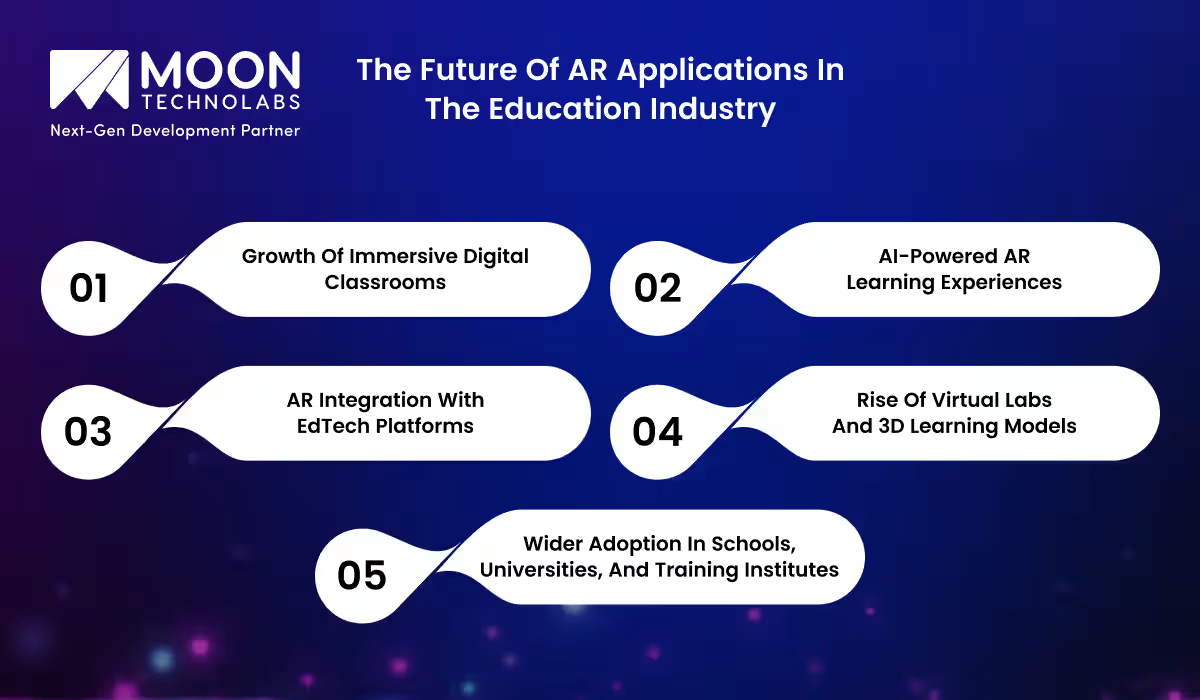
AR technology that most classrooms leverage today is just the beginning. In the coming times, technology seems to be more available and accessible, which will transform the way students learn and also the spaces where they learn. Below are some of the future trends of AR apps:
Growth of Immersive Digital Classrooms
With immersive digital classrooms enabled by AR, students have opportunities to learn in a fully realized environment. They can explore everything, whether it’s walking through a functioning human cell, ocean flora, or standing inside a historical event. In the future, physical location will be less relevant, but the richness of the learning environment will matter most.
AI-powered AR Learning Experiences
The actual combination of both augmented reality and artificial intelligence makes learning more powerful and interesting. Think about an AR system that not only delivers educational content but also adjusts it in real time based on the student’s progress.
It slows down with difficult concepts, offers different explanations, increases complexity with strong understanding, etc. AI-based AR turns personalized learning into a fully practical experience rather than just an educational ambition.
AR Integration With EdTech Platforms
AR is set to be an integral part of everyday learning rather than just a technology. Schools can use it most effectively by integrating it with student-tracking tools, learning management systems, collaboration platforms, and other systems.
This connection enables teachers to assign lessons, assess performance, track progress, and manage AR-based activities across the entire system and the workflows they use regularly.
Rise of Virtual Labs and 3D Learning Models
The gap between digital and physical laboratory experiences tends to shrink as virtual labs become more advanced. Students grab modern educational opportunities regardless of the resources and facilities available in their schools. They can create prototypes, do experiments, engage with 3D models, etc.
Wider Adoption in Schools, Universities, and Training Institutes
Whether it’s better hardware, lower costs, or an expanding range of curriculum-assigned content, they help bring AR into mainstream education. Anything that is a unique advantage for an innovative institution will become a common expectation at universities, schools, and professional training programs worldwide.
How Moon Technolabs Drives Digital Innovation With Custom EdTech Software Services?
We have years of experience in providing the best-in-class AR/VR app development services. We specialize in creating custom EdTech software solutions with advanced features and functionalities. Our developers work closely with you to build your solutions, with a commitment to ensuring they are technically robust and meaningful.
With us, you can get end-to-end solutions with a complete purpose and precision, whether your objective is to streamline remote learning, introduce immersive AR experiences, or create intelligent adaptive systems.
Our Services:
As an education app development company, our core services are as follows:
- Augmented and Virtual Reality Learning Solutions
- AI-driven Adaptive Learning Platforms
- Interactive Mobile Learning Apps
- Virtual Lab and Simulation Development
- EdTech Platform Development
Conclusion
So, by now, you may have understood the impact of augmented reality in the education sector and how it improves the learning experience for students. It allows students to understand even complex concepts easily with improved engagement and knowledge retention.
Meanwhile, developing AR apps requires proper planning, research, and professional assistance. Partnering with an educational app development company like ours helps you create an innovative solution that unlocks AR’s full potential.
FAQs
01
What is augmented reality in education?
Well, augmented reality in education is basically a technology that overlays digital content onto real-world environments. It helps students better understand even complex concepts through engaging, immersive, hands-on learning experiences.02
How does AR improve student learning experiences?
AR improves student learning experiences by making lessons highly interactive and visually engaging. It allows students to grasp even the complex concepts with 3D visualization, enhances knowledge retention and participation, and creates personalized learning environments across several subjects.03
Which subjects benefit the most from AR in education?
Those subjects that benefit from AR in education rely primarily on interaction, visualization, and practical learning. These subjects mainly include medicine, science, geography, history, engineering, etc.04
What is the cost of developing AR education applications?
Well, the average cost of developing AR education apps ranges from $30,000 to $200,000 or even more. It also depends on several important factors, including 3D content, app complexity, AI integration, platform compatibility, and real-time features.05
What are the biggest challenges of implementing AR in schools?
The major challenges in implementing AR in schools include infrastructure, software, and the high cost of devices. Apart from this, schools also face technical limitations, content compatibility issues, and gaps in teacher training.




Jayanti Katariya is the CEO of Moon Technolabs, a fast-growing IT solutions provider, with 18+ years of experience in the industry. Passionate about developing creative apps from a young age, he pursued an engineering degree to further this interest. Under his leadership, Moon Technolabs has helped numerous brands establish their online presence and he has also launched an invoicing software that assists businesses to streamline their financial operations.
Submitting the form below will ensure a prompt response from us.
We refine our expertise to deliver innovative business solutions.





205 N Michigan Avenue, #810, Chicago, 60601, Illinois, United States
13500 Long Is Dr, Pflugerville, TX 78660, USA

C/105 Ganesh Meridian, S.G. Highway, Ahmedabad, GJ 380060


Ayse D.
Co-Founder France
“ I highly recommend Moon Technolabs as the quality of service is wonderful. We have hired this company to develop the product based on some complex & technical issues. We get the best quality services as compared with others in the market. Huge Thanks to Moon Technolabs as the team is always ready to give the solution all time.”

Justin G.
Founder & CEO USA
USA“ Moon Technolabs is a pioneer in the WebRTC based project as they have fixed complicated segments of the module by fulfilling different product lines by providing 24X7 customer support. We really recommended Moon Technolabs as they are able to develop products as per the module deadline and project timeline.”

Flavio S.
Founder & Managing Director Germany
“I am happy to recommend Moon Technolabs for their app development services. They successfully developed apps for me, and I am highly satisfied with the overall outcomes. The development team has swiftly addressed the issues with responsive and effective communication to understand the requirement quickly and actively resolve the back-and-forth problems that arose...”

Jay M.
Founder & CEOUSA“Moon Technolabs is the best company that provides advanced apps and websites development services in the USA and Europe. I am a newbie to develop my app with an external team. I am really happy to work with them as I am not that much mobile apps user. Here, the team and specially the CEO of Moon Technolabs helps me to let me know about the benefits of my app to generate revenue....”


Our Offices
India
C/105 Ganesh Meridian,S.G. Highway, Ahmedabad, GJ 380060USA
205 N Michigan Avenue, #810, Chicago, 60601, Illinois, United StatesContact Information


