


AI Vision with YOLO: A Beginner’s Guide to Real-Time Object Detection

Marketing Team
Last Updated: May 25, 2026 Total Views: 89
Table of Content


Blog Summary:
AI vision is changing how machines interact with the real world, and YOLO object detection has become a powerful solution for fast, accurate, real-time object recognition. Its ability to process visual data instantly makes it valuable across industries like security, healthcare, retail, and automation. This blog covers the basics of YOLO models, explains how they work, and explores key computer vision applications.
Table of Content
AI-powered vision systems are rapidly transforming industries by enabling machines to detect and understand objects in real time. From autonomous vehicles and smart security to healthcare and retail, YOLO-based object detection models are making AI vision faster, smarter, and more efficient.
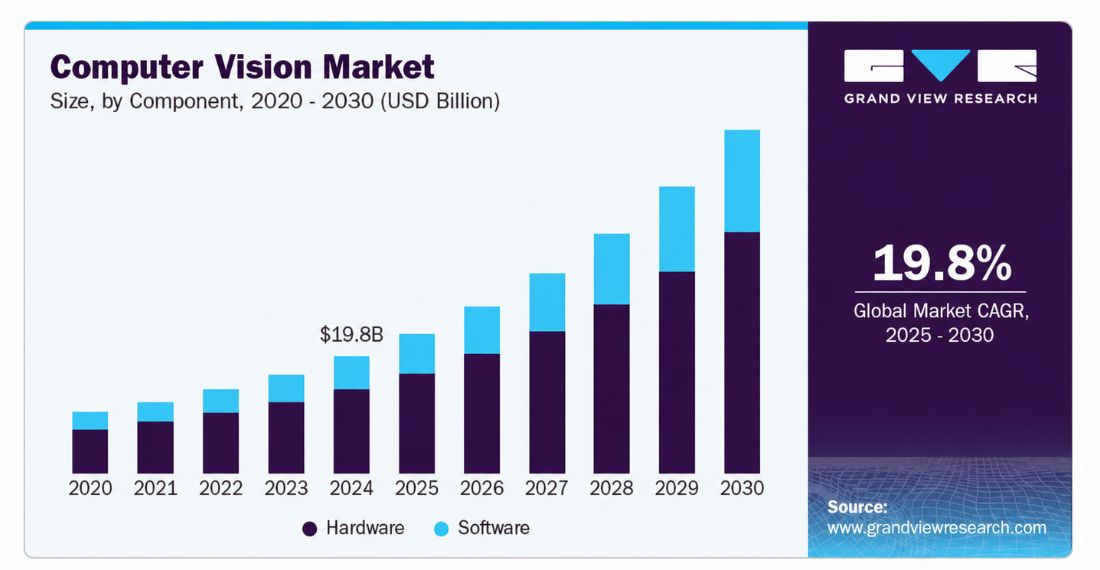
According to Grand View Research, the global computer vision market was valued at USD 19.82 billion in 2024 and is expected to reach USD 58.29 billion by 2030, growing at a CAGR of 19.8% from 2025 to 2030. This growth highlights the rising demand for advanced solutions like AI Vision with YOLO.
In this guide, we’ll explore the basics of YOLO object detection, how it works, and why it’s one of the most popular models for real-time AI vision applications.
What is AI Vision?
Vision AI is a branch of artificial intelligence that enables machines to analyze, understand, and interpret visual data such as images and videos by combining computer vision with deep learning. Vision AI systems can identify specific objects, recognize faces, track movements, and make intelligent decisions in real time.
Today, businesses across industries use Vision AI for applications like smart surveillance, autonomous vehicles, medical imaging, retail analytics, and industrial automation. The rise of state-of-the-art technologies has significantly improved the speed and accuracy of AI-powered visual systems.
Modern object detection models such as YOLO, SSD, and Faster R-CNN can detect and classify multiple objects within a single frame, making real-time AI vision more efficient than ever. Among these, it has become one of the most popular choices for high-speed and accurate YOLO object detection applications.
Understanding YOLO (You Only Look Once)
YOLO (You Only Look Once) is a powerful real-time object detection algorithm widely used in modern AI applications. In computer vision, YOLO can quickly detect objects in images and videos with high speed and accuracy.
Unlike traditional methods, YOLO processes the entire image in a single step, enabling it to perform both image classification and object localization simultaneously. The fundamentals of YOLO involve dividing an image into a grid and predicting objects and their positions within it.
One key reason why YOLO is so popular is its real-time performance, making it ideal for applications such as surveillance, autonomous vehicles, and smart retail systems.
How YOLO Object Detection Works?
YOLO performs the detection process by identifying and classifying objects in a single pass through a convolutional neural network. Rather than scanning an image multiple times, it analyzes the entire image at once and directly predicts object locations and classes.
Input Image
The process starts with an input image that is resized to a fixed dimension, such as 416×416 or 640×640 pixels. This image is then passed into a convolutional neural network (CNN) for feature extraction.
Grid Division
YOLO divides the image into an S×SS grid.
Each grid cell is responsible for detecting objects whose centers lie within that cell.
Feature Extraction
The CNN analyzes the image and extracts important visual features such as edges, shapes, textures, and patterns. These features help the model understand the image’s content.
Bounding Box Prediction
Each grid cell predicts one or more bounding boxes around possible objects. A bounding box is represented using four values:
(x,y,w,h)(x,y,w,h)(x,y,w,h)
Where:
- xxx and yyy represent the center coordinates
- www and hhh represent the width and height of the box
These values determine the exact position of the detected object.
Confidence Score Calculation
For each predicted box, YOLO calculates a confidence score that estimates whether an object is present in the box and how accurate the prediction is.
The confidence score is based on:
P(Object)×IOU
Here, IoU (Intersection over Union) measures the overlap between the predicted bounding box and the actual object location.
Class Prediction
Along with the bounding box, YOLO predicts class probabilities for each object, such as person, car, bicycle, or dog.
The final prediction score becomes:
P(Class)×P(Object)×IoU
This score helps determine both the object type and the detection confidence.
Non-max Suppression (NMS)
Multiple bounding boxes may sometimes detect the same object. YOLO uses Non-Max Suppression (NMS) to remove duplicate predictions by:
- Keeping the box with the highest confidence score.
- Removing overlapping boxes with lower confidence.
Bring Real-Time Object Detection to Your Business
Partner with AI experts to develop intelligent computer vision solutions powered by YOLO for faster and smarter operations.
Why is YOLO Popular for AI Vision Projects?
YOLO has become one of the most widely used approaches in modern computer vision because it delivers a rare combination of speed, accuracy, and simplicity.
It is designed to handle real-time YOLO object detection tasks efficiently, making it a preferred choice for developers building practical AI vision systems across industries like security, automotive, healthcare, and retail.
Real-time Detection Speed
YOLO processes images in a single forward pass, enabling extremely fast object detection. Its high frame-processing capability makes it ideal for real-time applications like surveillance systems, autonomous vehicles, robotics, and live video analytics.
High Accuracy with Efficient Performance
YOLO delivers strong detection accuracy while maintaining efficient computational performance. It can identify multiple objects in complex scenes with minimal hardware requirements, making it suitable for both high-end systems and resource-constrained devices.
Single-pass Architecture
Unlike traditional object detectors, YOLO evaluates the entire image in one step. This single-pass architecture reduces processing complexity, lowers latency, and improves efficiency by simultaneously predicting object classes and bounding box coordinates.
Easy Custom Training and Deployment
YOLO supports easy training on custom datasets, allowing developers to adapt the model for specialized applications. Its flexible deployment options make it compatible with cloud platforms, edge devices, mobile systems, and embedded hardware.
Strong Ecosystem and Continuous Improvements
Modern versions like YOLOv5 and YOLOv8 offer improved speed, accuracy, and usability. Active community support, frequent updates, and extensive documentation continue to enhance YOLO’s reliability and industry adoption.
Applications of AI Vision with YOLO
Autonomous Vehicles
Autonomous or self-driving vehicles rely heavily on AI vision systems to understand their surroundings. YOLO helps these vehicles detect and classify objects such as cars, pedestrians, bicycles, traffic signs, lane markings, and road obstacles in real time.
Since YOLO processes images extremely quickly, it allows vehicles to make instant driving decisions, which is essential for safe navigation.
For example, if a pedestrian suddenly crosses the road, YOLO can immediately detect them and signal the vehicle’s control system to apply the brakes or change direction. It also assists in parking systems, collision avoidance, and adaptive cruise control.
Key Uses
- Pedestrian detection
- Traffic sign recognition
- Lane detection
- Obstacle avoidance
- Vehicle tracking
Benefits
- Increased road safety
- Reduced human driving errors
- Faster real-time response
- Improved traffic management
Security and Surveillance
YOLO is widely used in modern surveillance systems because of its ability to analyze live video feeds in real time. Security cameras integrated with YOLO can automatically detect suspicious behavior, unauthorized access, abandoned objects, or unusual movement patterns.
In airports, banks, shopping malls, and public areas, YOLO-based systems can detect intruders, monitor restricted zones, and instantly alert security personnel. Face recognition systems, when combined with YOLO, can also help identify wanted individuals or missing persons.
Beyond these applications, similar approaches are also used in modern threat detection security apps that leverage real-time object detection to identify potential security risks from live camera feeds and trigger instant alerts for proactive response.
Key Uses
- Intruder detection
- Facial recognition
- Crowd monitoring
- Weapon detection
- Suspicious activity tracking
Benefits
- 24/7 automated monitoring
- Faster threat detection
- Reduced dependence on manual surveillance
- Enhanced public safety
Healthcare and Medical Imaging
AI vision systems powered by YOLO are transforming healthcare by helping doctors analyze medical images more accurately and efficiently. YOLO can detect abnormalities in X-rays, MRI scans, CT scans, and ultrasound images.
For example, YOLO models can identify tumors, fractures, pneumonia, or other diseases within seconds. This assists radiologists and doctors in early diagnosis and treatment planning. In hospitals, AI-powered health monitoring systems can also track patient movements and detect emergencies such as falls.
Key Uses
- Tumor detection
- Disease diagnosis
- Organ analysis
- Patient monitoring
- Medical image segmentation
Benefits
- Faster diagnosis
- Early disease detection
- Reduced workload for doctors
- Improved treatment accuracy
Retail and Inventory Management
Retail businesses use YOLO to automate operations and improve customer experiences. AI vision systems can detect products on shelves, monitor stock availability, and identify misplaced items. Smart checkout systems use YOLO to recognize products without scanning barcodes, reducing wait times at checkout counters.
YOLO also helps retailers analyze customer behavior by tracking movement patterns, identifying popular products, and measuring in-store customer engagement.
Key Uses
- Automated checkout systems
- Shelf monitoring
- Inventory tracking
- Customer behavior analysis
- Product recognition
Benefits
- Faster billing process
- Better inventory management
- Reduced operational costs
- Enhanced shopping experience
Traffic Management
Smart traffic systems use YOLO to monitor roads and manage transportation efficiently. YOLO can detect vehicles, count traffic flow, identify accidents, and recognize traffic rule violations such as overspeeding or illegal parking.
Traffic authorities use AI vision systems to optimize traffic signals, reduce congestion, and improve road safety. YOLO can also support automatic toll collection and smart parking systems.
Key Uses
- Vehicle counting
- Accident detection
- Traffic violation monitoring
- Smart parking systems
- Congestion analysis
Benefits
- Reduced traffic congestion
- Improved urban planning
- Faster emergency response
- Better road safety
Industrial Automation
In manufacturing industries, YOLO is used for automated inspection and quality control. Cameras installed on production lines can detect defective products, damaged parts, or assembly errors in real time.
YOLO also improves worker safety by monitoring whether employees are wearing safety equipment such as helmets, gloves, and masks. Factories use AI vision systems to monitor machinery and detect unusual operations before failures occur.
Key Uses
- Defect detection
- Quality inspection
- Safety compliance monitoring
- Machine monitoring
- Production automation
Benefits
- Increased production efficiency
- Reduced manufacturing defects
- Improved worker safety
- Lower operational costs
Agriculture
YOLO-based AI vision systems are increasingly used in smart farming and precision agriculture. Farmers use drones and cameras equipped with YOLO to monitor crop health, detect weeds, identify pests, and estimate crop yield.
AI vision systems can analyze plant conditions and recommend precise use of fertilizers or pesticides. This reduces waste and improves farming productivity.
Key Uses
- Crop disease detection
- Weed identification
- Pest monitoring
- Fruit counting
- Soil and plant analysis
Benefits
- Higher agricultural productivity
- Reduced pesticide usage
- Better crop management
- Increased farming efficiency
Future of AI Vision with YOLO
YOLO (You Only Look Once) is one of the most advanced technologies in AI-powered computer vision. It is designed for fast, accurate YOLO object detection, enabling machines to identify multiple objects in real time. Because of its speed and efficiency, YOLO has become an important part of modern machine learning development.
One of the most impactful uses of YOLO is in self-driving cars. Autonomous vehicles use AI vision systems to instantly detect pedestrians, traffic lights, road signs, and nearby vehicles. YOLO helps these systems process visual information quickly, improving safety, navigation, and driving decisions.
YOLO is also widely used in creating advanced image classification models. These models help businesses and industries analyze visual data for applications such as healthcare imaging, security monitoring, facial recognition, and retail analytics. Its ability to deliver accurate results in real time makes it valuable across many sectors.
As AI technology continues to grow, YOLO is expected to play a key role in the future of robotics, automation, and smart devices, making computer vision faster, smarter, and more reliable.
Why Trust Moon Technolabs to Build AI Vision Solutions with YOLO?
Moon Technolabs empowers businesses to build advanced AI-powered vision systems using the You Only Look Once algorithm, widely known as YOLO. We deliver scalable custom software development services tailored to industry-specific needs, from real-time object detection to smart surveillance and retail analytics.
One of the biggest advantages of YOLO in real-world applications is its ability to process images and videos in real time, making it ideal for healthcare, manufacturing, logistics, and smart-city applications.
We combine deepAI expertise with robust development practices to create intelligent vision solutions that help enterprises reduce manual efforts, enhance security, and accelerate decision-making through real-time visual intelligence.
Ready to Power Your Business with AI Vision?
Work with us to develop advanced AI vision solutions powered by YOLO for real-time monitoring, intelligent detection, and next-generation automation.
Wrapping Up
AI-powered vision systems, combined with YOLO, are transforming real-time object detection across industries. As technology continues to evolve, real-time object detectors will become even more intelligent, scalable, and accessible for organizations of all sizes.
For businesses looking to integrate advanced computer vision solutions, partnering with an experienced AI development company can help accelerate innovation and ensure successful deployment.
Whether you are building security systems, automation tools, or next-generation AI applications, YOLO provides a strong foundation for creating powerful real-time AI vision solutions.
FAQs
01
How can I get started with AI vision solutions using YOLO?
You can begin by identifying a use case, collecting relevant visual data, and partnering with an experienced AI development company to design, train, deploy, and maintain a custom YOLO-based solution.02
How long does it take to develop a YOLO-based AI vision solution?
Development time depends on project complexity, dataset preparation, model customization, and deployment requirements. A basic proof of concept may take a few weeks, while enterprise-grade solutions can require several months.03
How accurate is YOLO object detection?
Modern versions like YOLOv5 and YOLOv8 offer high accuracy while maintaining fast processing speed. Accuracy depends on factors such as dataset quality, training process, lighting conditions, and deployment environment.04
Can YOLO be customized for my specific business requirements?
Yes. YOLO models can be trained on custom datasets to detect industry-specific objects such as medical anomalies, defective products, safety equipment, inventory items, or agricultural crops. This makes the solution highly adaptable to unique business needs.05
Can your solution work with our existing cameras and systems?
Yes. YOLO-based AI vision systems can integrate with existing CCTV cameras, IoT devices, ERP platforms, warehouse systems, cloud infrastructure, and third-party applications.




Jayanti Katariya is the CEO of Moon Technolabs, a fast-growing IT solutions provider, with 18+ years of experience in the industry. Passionate about developing creative apps from a young age, he pursued an engineering degree to further this interest. Under his leadership, Moon Technolabs has helped numerous brands establish their online presence and he has also launched an invoicing software that assists businesses to streamline their financial operations.
Submitting the form below will ensure a prompt response from us.
We refine our expertise to deliver innovative business solutions.




205 N Michigan Avenue, #810, Chicago, 60601, Illinois, United States
13500 Long Is Dr, Pflugerville, TX 78660, USA

C/105 Ganesh Meridian, S.G. Highway, Ahmedabad, GJ 380060


Ayse D.
Co-Founder France
“ I highly recommend Moon Technolabs as the quality of service is wonderful. We have hired this company to develop the product based on some complex & technical issues. We get the best quality services as compared with others in the market. Huge Thanks to Moon Technolabs as the team is always ready to give the solution all time.”

Justin G.
Founder & CEO USA
USA“ Moon Technolabs is a pioneer in the WebRTC based project as they have fixed complicated segments of the module by fulfilling different product lines by providing 24X7 customer support. We really recommended Moon Technolabs as they are able to develop products as per the module deadline and project timeline.”

Flavio S.
Founder & Managing Director Germany
“I am happy to recommend Moon Technolabs for their app development services. They successfully developed apps for me, and I am highly satisfied with the overall outcomes. The development team has swiftly addressed the issues with responsive and effective communication to understand the requirement quickly and actively resolve the back-and-forth problems that arose...”

Jay M.
Founder & CEOUSA“Moon Technolabs is the best company that provides advanced apps and websites development services in the USA and Europe. I am a newbie to develop my app with an external team. I am really happy to work with them as I am not that much mobile apps user. Here, the team and specially the CEO of Moon Technolabs helps me to let me know about the benefits of my app to generate revenue....”


Our Offices
India
C/105 Ganesh Meridian,S.G. Highway, Ahmedabad, GJ 380060USA
205 N Michigan Avenue, #810, Chicago, 60601, Illinois, United StatesContact Information


