


SAP Datasphere: Features, Benefits, Alternatives, and Migration Guide

Software Development Team
Last Updated: Oct 28, 2026 Total Views: 86
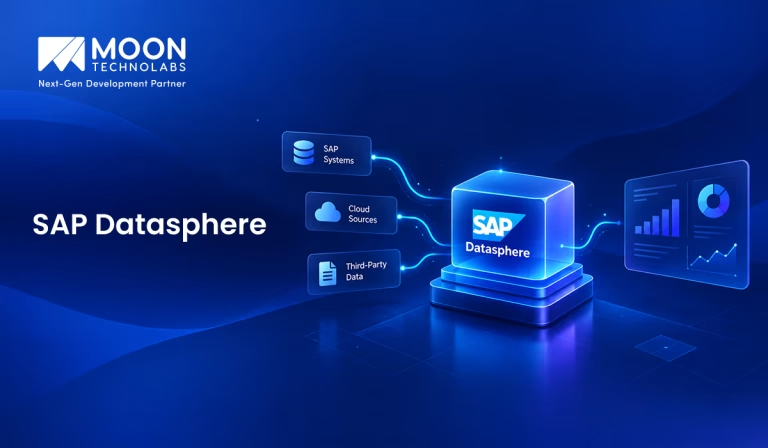
Table of Content


Blog Summary:
SAP Datasphere connects SAP and non-SAP data sources, preserves business context, and simplifies reporting with analytics. It helps organizations unify information, create consistent data models, and reduce data silos. Understanding its features and capabilities helps businesses assess compatibility with existing infrastructure and determine how it supports their data management and analytics goals.
Table of Content
As businesses rely on data spread across ERP systems, cloud platforms, and third-party applications, bringing that information together for meaningful analysis becomes increasingly complex. SAP Datasphere addresses this challenge by connecting enterprise data while preserving its business meaning, helping teams work with consistent information without rebuilding their entire data landscape.
But is SAP Datasphere the right fit for every organization? Before investing in the platform, it’s essential to understand its core features, business benefits, and limitations. This guide explains how SAP business data cloud works, compares it with alternatives such as Snowflake and Microsoft Fabric, and outlines key steps for planning a successful migration.
What is SAP Datasphere?
SAP Datasphere is a cloud-based data management solution that helps organizations integrate, manage, and access data from diverse sources. It provides a unified environment for connecting SAP and non-SAP systems while preserving essential business context. This enables enterprises to build a consistent and reliable data foundation.
The platform offers comprehensive capabilities, including data integration, modeling, warehousing, and virtualization. It lets businesses combine information from multiple systems, create reusable data models, and simplify data access without unnecessary duplication. These capabilities improve data accessibility, consistency, and operational efficiency across departments.
SAP business technology platform supports data-driven decision-making by providing trusted, business-ready information for analytics and reporting. Its integration with SAP Analytics Cloud enables organizations to develop interactive dashboards, identify business trends, and generate actionable insights.
By connecting enterprise data with business processes, it helps organizations make informed strategic decisions and achieve better business outcomes.
Why are Businesses Adopting SAP Datasphere?
Here are the key reasons businesses are adopting SAP Datasphere, from simplifying data management and integration to supporting analytics and meeting evolving enterprise data requirements:
Unified Data Management
SAP Datasphere brings data from multiple systems into a unified environment, helping businesses maintain consistent information across departments. It preserves business context, simplifies data access, reduces silos, and enables teams to make informed decisions using reliable, connected data.
Real-time Data Integration
SAP Datasphere enables a business to access and integrate data from various sources, enabling timely insights and faster decision-making. By connecting enterprise systems and leveraging data replication or federation, organizations can respond quickly to changing operational needs and market conditions.
Improved Data Governance
SAP Datasphere strengthens data governance through centralized metadata management, business semantics, access controls, and consistent data definitions. These capabilities help organizations improve data quality, support regulatory compliance, establish accountability, and ensure teams work with trusted, well-managed business information.
Cloud-based Scalability
Built for cloud environments, SAP Datasphere lets businesses scale data management capabilities as requirements evolve. Organizations can adapt resources to changing workloads, reduce infrastructure management burdens, and support growing data volumes without relying solely on traditional on-premises systems.
Better Business Analytics
SAP Datasphere enhances business analytics by providing trusted, business-ready data for reporting, visualization, and advanced analysis. Its integration with SAP Analytics Cloud helps organizations uncover trends, monitor key performance indicators, identify opportunities, and make faster, most impactful decisions.
Partner with our team to address data management challenges and develop an SAP Datasphere approach aligned with your business goals.
SAP Datasphere: A Modern Approach to Enterprise Data Management
Discover how SAP Datasphere transforms traditional data management by bringing enterprise information together, simplifying access across systems, and supporting more effective data utilization:
Data Integration and Connectivity
SAP Datasphere connects data from SAP and non-SAP systems, cloud platforms, and on-premises databases. With the right data engineering services, businesses can simplify data integration, maintain consistency across systems, and make enterprise information more accessible for reporting and analytics.
Data Modeling and Virtualization
Flexible data modeling lets organizations create business-friendly data models with graphical tools and reusable entities. Data virtualization lets users access information without unnecessary duplication, reducing storage needs while improving analytical flexibility, data accessibility, and decision-making efficiency.
Business Data Fabric Architecture
A business data fabric architecture connects distributed enterprise data while preserving its business meaning and context. This approach enables unified data access, consistent interpretation, and seamless cross-department collaboration, helping organizations build trusted data environments for effective decision-making.
Data Warehousing and Analytics
Modern data warehousing capabilities support the organization, transformation, and analysis of enterprise information. Integration with analytics tools enables interactive dashboards, comprehensive reporting, and actionable insights, helping businesses identify trends, monitor performance, and make informed strategic decisions.
Security and Access Control
Robust security mechanisms protect sensitive enterprise information through user authentication, role-based access control, and permissions management. These capabilities help organizations maintain data confidentiality, enforce access restrictions, support regulatory compliance, and ensure that users access only authorized information.
Top SAP Datasphere Alternatives
Here are some leading alternatives to SAP Datasphere, each offering different capabilities for enterprise data management, cloud data warehousing, and analytics. The right option depends on your existing technology stack, integration needs, and business priorities:
Snowflake
Snowflake is a cloud-based data platform that offers scalable data warehousing, secure sharing, and advanced analytics. Its flexible architecture supports multiple cloud environments, helping organizations manage diverse workloads, improve collaboration, and derive valuable business insights.
Microsoft Fabric
Microsoft Fabric is an integrated analytics platform that combines data engineering, data warehousing, business intelligence, and real-time analytics. Its integration with Power BI and Azure helps organizations simplify data management, streamline workflows, and support informed decision-making.
Google BigQuery
Google BigQuery is a serverless cloud data warehouse designed for large-scale data processing and SQL-based analytics. Its integration with Google cloud services, artificial intelligence, and machine learning enables organizations to analyze complex datasets and generate actionable business insights.
Amazon Redshift
Amazon Redshift is a cloud data warehousing solution within Amazon Web Services that supports scalable analytics across large datasets. Its integration with AWS data services enables efficient data processing, reporting, business intelligence, and cost-effective analytical workloads for enterprises.
Databricks
Databricks provides a unified platform for data engineering, analytics, and artificial intelligence. Its lakehouse architecture combines the flexibility of data lakes with data warehousing capabilities, enabling organizations to process large datasets, develop machine learning models, and support advanced analytics.
You May Also Like:
Planning Your Migration to SAP Datasphere
Here are the key steps for planning your migration to SAP Datasphere to ensure a smooth transition, reliable data integration, and minimal disruption to business operations:
Assess Your Existing Data Infrastructure
Start by evaluating your existing data landscape, including databases, data warehouses, integration tools, and reporting systems. Identify system dependencies, performance bottlenecks, and data quality issues before defining your migration roadmap.
Cloud migration services can support this process by helping businesses assess infrastructure readiness, plan data transfers, and address potential risks before they disrupt ongoing operations.
Define Data Migration Requirements
Determine the migration scope by identifying essential datasets, timelines, resource allocation, and success criteria. Clear requirements reduce uncertainty, streamline implementation, and ensure the migration supports organizational priorities and future growth.
Choose the Right Migration Strategy
Select an appropriate migration approach based on data complexity, system dependencies, business priorities, and available resources. Consider phased migration, parallel operations, or a complete transition. A well-chosen strategy minimizes implementation risk, maintains business continuity, and supports a smooth transition to the new environment.
Integrate SAP and Non-SAP Data Sources
Connect SAP applications with non-SAP systems, cloud platforms, and on-premises databases to establish a unified data environment. Configure suitable integration methods, validate connectivity, and maintain consistent data flows. Effective integration enables reliable reporting, improves data accessibility, and supports cross-functional business analytics.
Test Data Quality and Performance
Validate migrated data for accuracy, completeness, consistency, and integrity before moving workloads into production. Conduct performance testing, verify data models, and evaluate query response times. Thorough testing helps identify potential issues early, maintain analytical reliability, and ensure business users receive accurate information.
Tell us about your data management goals, integration challenges, or migration plans, and explore the right solution for your organization.
How Moon Technolabs Helps With SAP Datasphere Integration?
Moon Technolabs helps businesses streamline their data management processes through SAP Datasphere integration tailored to their operational needs. By connecting SAP and non-SAP systems, we help organizations establish a unified data environment that improves accessibility, consistency, and reporting efficiency.
With expertise in data integration, modeling, and analytics implementation, we help businesses build scalable data architectures. Our enterprise SAP consulting services can help organizations plan integration strategies, optimize data workflows, and align technology investments with their business objectives.
From initial assessment to implementation and ongoing optimization, we can support businesses throughout their SAP Datasphere journey. The goal is to simplify data management, strengthen analytical capabilities, and enable informed decision-making through reliable, business-ready data.
Conclusion
SAP Datasphere helps businesses unify data, simplify analytics, and maintain consistent information across enterprise systems. Its data integration, modeling, security, and migration capabilities enable organizations to build a connected data environment.
Successful implementation requires careful planning, data quality validation, and ongoing performance optimization. We help businesses streamline integration and implementation through tailored technology solutions.
With the right strategy and technical expertise, organizations can transform enterprise data into actionable insights, improve decision-making, and build a scalable foundation for future growth.
FAQs
01
What is SAP Datasphere used for?
SAP Datasphere is a cloud-based data management and analytics solution that integrates information from multiple sources while preserving business context. It helps organizations unify enterprise data, simplify reporting, improve data accessibility, and support informed, data-driven decision-making.02
What are the main features of SAP Datasphere?
Key features of SAP Datasphere include data integration, semantic modeling, data federation, data warehousing, metadata management, and governance capabilities. Integration with SAP Analytics Cloud enables businesses to create interactive dashboards, generate reports, and gain actionable insights from connected enterprise data.03
How is SAP Datasphere different from SAP BW/4HANA?
SAP Datasphere is a cloud-based data platform that connects diverse data sources and supports modern analytics.While SAP BW/4HANA is an enterprise data warehouse focused on structured data modeling, reporting, and SAP-centric data warehousing workloads.04
What are the best alternatives to SAP Datasphere?
Popular alternatives include Microsoft Fabric, Snowflake, Google BigQuery, Amazon Redshift, Databricks, and Oracle Autonomous Data Warehouse. The right choice depends on your existing infrastructure, cloud strategy, integration requirements, scalability needs, analytics workloads, and overall budget.05
How much does SAP Datasphere implementation cost?
SAP Datasphere implementation costs depend on licensing, data volumes, integration complexity, migration requirements, and consulting services. Organizations should evaluate subscription pricing, infrastructure expenses, and ongoing maintenance costs to develop an accurate budget tailored to their business needs.



The Software Development Team at Moon Technolabs includes experienced developers, solution architects, and technology consultants who contribute content on software engineering, application development, system architecture, and digital innovation. Their articles are based on real-world project experience and aim to help businesses make informed technology decisions.
Submitting the form below will ensure a prompt response from us.
We refine our expertise to deliver innovative business solutions.



205 N Michigan Avenue, #810, Chicago, 60601, Illinois, United States
13500 Long Is Dr, Pflugerville, TX 78660, USA

C/105 Ganesh Meridian, S.G. Highway, Ahmedabad, GJ 380060




Ayse D.
Co-Founder France
“ I highly recommend Moon Technolabs as the quality of service is wonderful. We have hired this company to develop the product based on some complex & technical issues. We get the best quality services as compared with others in the market. Huge Thanks to Moon Technolabs as the team is always ready to give the solution all time.”

Justin G.
Founder & CEO USA
“ Moon Technolabs is a pioneer in the WebRTC based project as they have fixed complicated segments of the module by fulfilling different product lines by providing 24X7 customer support. We really recommended Moon Technolabs as they are able to develop products as per the module deadline and project timeline.”

Flavio S.
Founder & Managing Director Germany
“I am happy to recommend Moon Technolabs for their app development services. They successfully developed apps for me, and I am highly satisfied with the overall outcomes. The development team has swiftly addressed the issues with responsive and effective communication to understand the requirement quickly and actively resolve the back-and-forth problems that arose...”

Jay M.
Founder & CEOUSA“Moon Technolabs is the best company that provides advanced apps and websites development services in the USA and Europe. I am a newbie to develop my app with an external team. I am really happy to work with them as I am not that much mobile apps user. Here, the team and specially the CEO of Moon Technolabs helps me to let me know about the benefits of my app to generate revenue....”


Our Offices
India
C/105 Ganesh Meridian,S.G. Highway, Ahmedabad, GJ 380060USA
205 N Michigan Avenue, #810, Chicago, 60601, Illinois, United StatesContact Information


