


Hospital Management Software Development: A Complete Guide for Modern Healthcare Systems

Jayanti Katariya
Last Updated: Aug 27, 2026 Total Views: 210
Table of Content


Blog Summary:
Hospital management software (HMS) streamlines healthcare operations and improves patient care, prompting most healthcare organizations to adopt it. This blog covers needs, benefits, types, development process, cost, features, challenges, etc.
Table of Content
Hospitals today handle numerous tasks, whether clinical or administrative. The increasing number of patients makes the workflow even more complex — managing the same without error becomes quite difficult.
On the other hand, every new admission triggers various actions across departments, increasing the likelihood of costly mistakes. According to the National Library of Medicine, medical errors cause approximately $20 billion in annual costs to the US healthcare system.
Investing in hospital management software development helps healthcare providers overcome both administrative and operational challenges. It replaces outdated, fragmented tools with integrated digital solutions that streamline everything from appointment scheduling and billing to regulatory compliance.
Why Should Organizations Invest in Developing Hospital Management Software?
Organizations invest in developing a hospital management system to manage the vast ecosystem of data, processes, and people. The following are some other reasons for developing this software:
Rising Demand for Digital Healthcare Solutions
Patients nowadays seek digital convenience, right from online appointment booking to keeping digital health records. Additionally, demand for technology-enabled healthcare experiences is growing rapidly, so investing in HMS helps you meet these expectations.
Need for Efficient Hospital Operations
Hospitals find it cumbersome to manage multiple departments, be it diagnostics, pharmacy, emergency care, or billing. HMS has the potential to keep all operations under a single roof — it improves workflows while ensuring all departments are aligned.
Improving Patient Care and Experience
Doctors can make better decisions, especially when they have fast access to accurate patient details, test results, treatment plans, and more. A hospital management app removes guesswork, minimizes wait times, and delivers a smooth, personalized experience for every patient.
Reducing Administrative Workloads
Administrative staff spend most of their time handling routine tasks such as billing, scheduling, reporting, and documentation. A healthcare management app prevents them from doing the same by automating these tasks.
Enhancing Data Accuracy and Compliance
A healthcare management app can capture data accurately. It securely stores and manages data in compliance with HIPAA, helping organizations build strong patient trust.
What Types of Hospital Management Software Systems Do Enterprises Build?
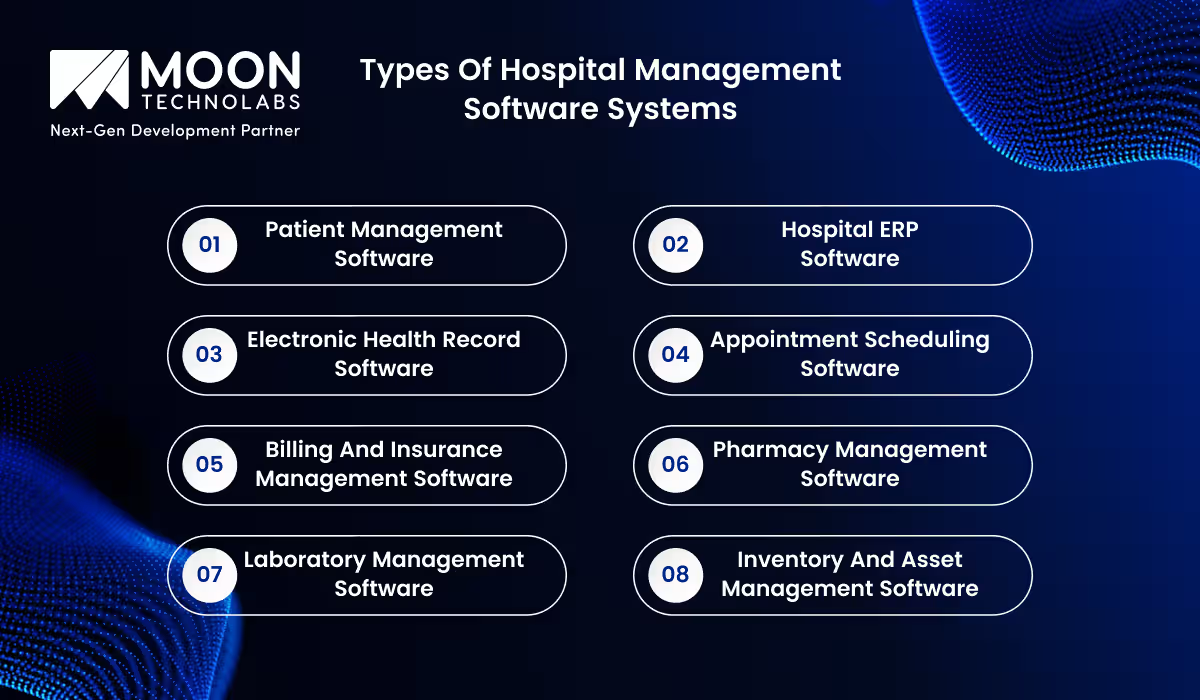
Well, enterprises build a variety of hospital management software systems to address the specific challenges hospitals face. We will describe each software in detail:
Patient Management Software
Patient management software can handle everything, from registration to discharge and follow-up care. It maintains a record of each patient interaction while ensuring continuity of care across different departments and visits.
Hospital ERP Software
This ERP software has the potential to integrate key business functions, including procurement, finance, HR, and operations, into a unified platform. It allows administrations to monitor the entire organization to plan resources effectively.
Electronic Health Record (EHR) Software
EHR software digitizes patients’ medical records, making them fully accessible to reliable healthcare providers. It can be updated fast, shared across different facilities, and used to support clinical decision-making with higher accuracy.
Appointment Scheduling Software
With appointment scheduling software, a hospital lets patients book, reschedule, or even cancel appointments. Patients can do everything online while letting staff manage doctor availability.
Billing and Insurance Management Software
The fact can’t be denied that medical billing is complex. So, healthcare software makes it easy by automating key processes such as managing insurance claims, generating invoices, tracking payments, and ensuring billing compliance.
Pharmacy Management Software
Pharmacy management software can dispense medications with greater accuracy and efficiency, from prescription processing to drug inventory tracking. It also identifies drug interactions, which add an extra layer of patient safety.
Laboratory Management Software
As the name suggests, laboratory management software has immense potential to manage the entire lab workflow, from test requests to report delivery. It reduces the overall turnaround times and minimizes the risk of sample reporting errors.
Inventory and Asset Management Software
Hospitals today rely extensively on equipment pieces and medical supplies. Inventory and asset management apps can track stock levels, analyze equipment maintenance schedules, and prevent costly shortages and overstocking.
What Are the Key Benefits of Hospital Management Software Development?
Investing in hospital management software development enables you to redefine how your healthcare organizations function, care for patients, and grow. It offers many other benefits, which are as follows:
Streamlined Hospital Operations
Workflows become fast and more efficient when every department works on a connected platform. Those tasks that require constant coordination now occur automatically, minimizing delays and allowing daily operations to run smoothly.
Improved Patient Care and Experience
With a complete patient record, healthcare professionals can make better decisions fast. Be it a personalized treatment plan, shorter wait times, or smooth communication across multiple departments, these factors contribute significantly to an improved patient experience.
Faster Appointment and Billing Processes
Automated scheduling effectively prevents double bookings and minimizes long waiting times. Digital billing systems manage insurance claims and invoices more quickly than manual processes. It leads to a smoother experience for administrative staff and patients.
Centralized Medical Records
Whether it’s prescriptions, medical history, treatment notes, or lab results, HMS brings all patient data into a secure and easily accessible location. It minimizes the chaos of scattered paper files while ensuring an authorized care provider has the necessary details at the right time.
Better Staff and Resource Management
With HMS, hospital administrators gain real-time visibility into their key resources, from tracking staff schedules and attendance to monitoring equipment usage. It also ensures a smart allocation while minimizing operational waste.
Reduced Administrative Errors
In billing, documentation, medical records, and related areas, human error can have serious consequences. HMS automates routine administrative tasks and validates data entries to minimize the overall risk of costly mistakes.
Enhanced Data Security and Compliance
HMS comes with powerful security features such as role-based access controls, encrypted storage, and audit trails. These are useful for protecting patient data and ensuring organizations comply with healthcare regulations, including HIPAA.
What Features Must a Hospital Management Software System Include?
A hospital management software system includes numerous features to become fully functional and support the complex demands of a healthcare environment. We have listed below some of the must-have features for this software:
Patient Registration and Profile Management
A robust healthcare management system accurately captures patient information, including personal details, insurance data, medical history, and emergency contacts. A good patient profile is important for every interaction and ensures care is personalized.
Doctor and Staff Management
A healthcare management app supports attendance tracking, staff scheduling, performance monitoring, role assignments, credentialing, etc. It gives administrators complete visibility into their human resources at all times.
Appointment Booking and Scheduling
An intuitive scheduling system not only enables patients to book appointments online but also allows staff to manage everything proficiently. It includes managing doctor availability, sending automated reminders, and preventing conflicts. It maximizes patient satisfaction.
Electronic Medical Records (EMR)
Healthcare providers use EMR functionality to create and access patient records. They can also update the patient records online. EMR ensures accuracy and availability of clinical data, right from diagnosis to lab results.
Billing, Invoicing, and Claims Management
A robust billing module automates tasks such as generating invoices, managing insurance claims, processing payments, and monitoring outstanding balances. It makes reimbursements fast, minimizes billing errors, etc.
Pharmacy and Lab Management
Integrated pharmacy and lab modules streamline processes such as medication dispensing, prescription processing, result reporting, and test requests. These features enhance turnaround times and minimize errors.
Inventory Management
Hospitals regularly use a large amount of supplies. An inventory management feature checks stock levels and expiry dates in real time and sends reorder alerts. These ensure necessary supplies are available without overstocking.
Reports and Analytics Dashboard
Hospitals use built-in analytics dashboards to gain actionable insights into patient trends, financial health, operational performance, staff productivity, and more. All of these are available in one place.
Role-based Access Control
Role-based access control allows doctors, administrative staff, nurses, and management to access only the information relevant to their responsibilities. It minimizes the misuse of internal data and improves accountability.
Data Security and Compliance Features
HMS includes next-generation security features to protect sensitive medical data. Some of these features include multi-factor authentication, end-to-end encryption, and audit logs. It also complies with standards such as HL7, HIPAA, and GDPR.
Common Tech Stack Components for HMS
Choosing the best tech stack for your hospital management software is critical, as the wrong selection can lead to security vulnerabilities, performance issues, and costly rework. The following are some of the factors you should consider to make the right tech selection:
Frontend and Backend Technologies
For the frontend, you can leverage frameworks such as Angular or React.js to build an intuitive, responsive interface. For the backend, you can use technologies such as Python, Node.js, and Java.
Database and Cloud Infrastructure
For databases, you can use technologies such as MySQL or PostgreSQL for structured data. On the other hand, MongoDB handles unstructured data. For cloud infrastructure, platforms like Microsoft Azure, AWS, and Google Cloud are best.
API and Third-party Integrations
A powerful HMS leverages HL7 FHIR, RESTful APIs, and other standards to ensure smooth integration with third-party systems. These include diagnostic labs, telemedicine platforms, and pharmacy networks for smooth data exchange.
Security and Compliance Tools
Some popular security tools for HMS include SSL/TLS encryption, OAuth, and dedicated compliance frameworks. These should be implemented from scratch rather than being added afterward.
Scalability and Performance Requirements
As the number of patients increases, your system scales without sacrificing efficiency. Microservices architecture and container tools allow your HMS to manage increasing workloads while staying reliable, flexible, and easy to maintain.
We help you develop next-generation healthcare digital solutions that automate workflows. We redefine your operational efficiency to grow fast.
What Are the Stages of Hospital Management Software Development?
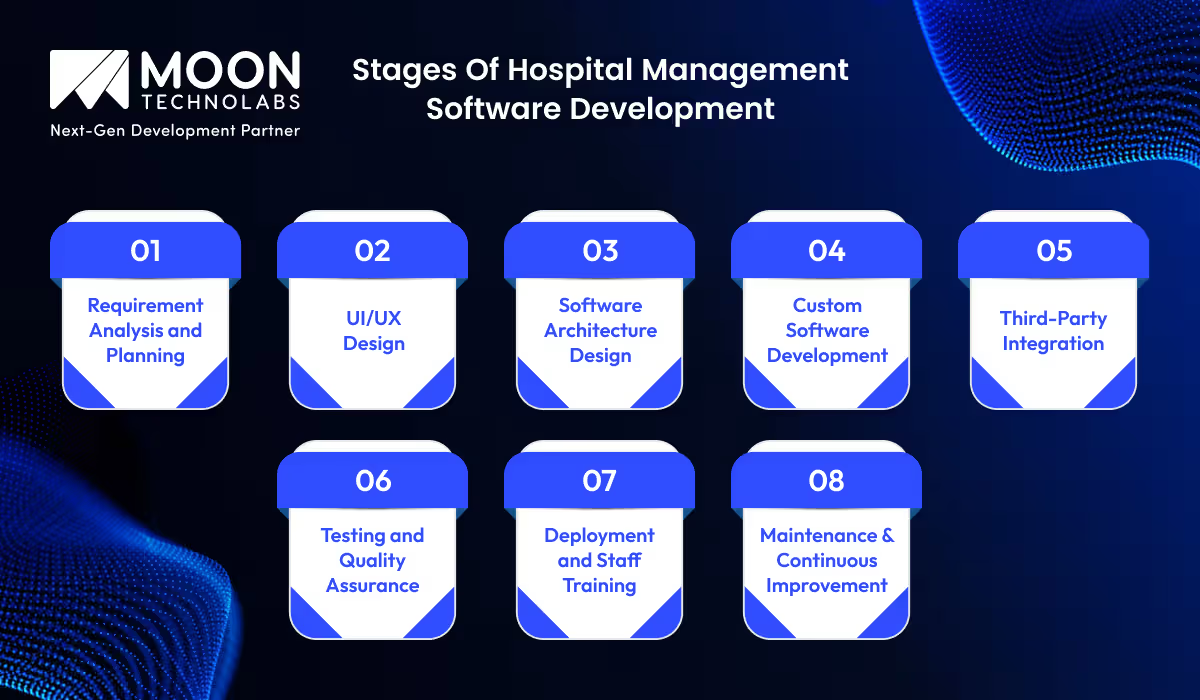
Building hospital management software involves multiple steps that serve specific purposes. Let’s have a breakdown of each step in-depth:
Requirement Analysis and Planning
The hospital management software project begins with an understanding of an organization’s needs, pain points, workflows, and related aspects. At this step, stakeholders engage in goal setting, scope setting, and the creation of a detailed project roadmap.
UI/UX Design
UI/UX design involves creating an intuitive interface that reduces cognitive load for medical staff while ensuring patients can navigate the system without effort. At this stage, activities like wireframing, prototyping, and user testing take place.
Software Architecture Design
It’s all about defining the structural blueprint of the entire system, including module interactions, database design, security layers, and API frameworks. A solid architecture effectively prevents expensive technical debt later on.
Custom Software Development
It’s the core step of medical software development. At this step, developers implement the approved design and architecture. They create each module in interactive sprints that provide regular feedback and course correction.
Third-party Integration
The hospital management software is well-connected to many external systems, such as diagnostic labs, insurance networks, EHR platforms, and payment gateways. It ensures a smooth data flow across the entire ecosystem.
Testing and Quality Assurance
QA experts perform a variety of tests, including performance, functionality, security, and compliance. The main purpose of doing the same is to ensure that the software functions smoothly before it reaches users and patients.
Deployment and Staff Training
After the final approval, the system is implemented in a live environment. Comprehensive staff training is necessary to ensure that every user can navigate the platform confidently and use it from day one.
Maintenance and Continuous Improvement
The software needs thorough maintenance and continuous improvements to function smoothly. Be it bug fixing, regular updates, feature enhancements, or performance monitoring, the software requires all of these to stay aligned with emerging healthcare needs and regulatory requirements.
How Much Does It Cost to Build Hospital Management Software?
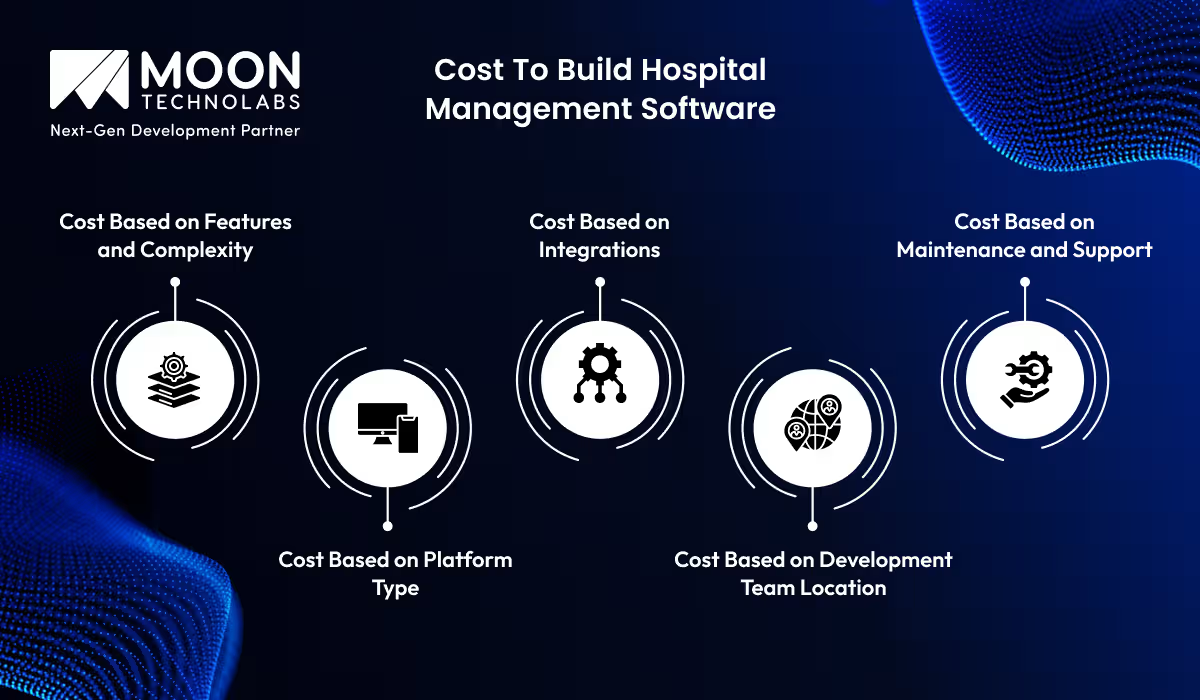
The cost of developing HMS is certainly not constant – it’s based on several factors. We will describe each factor in detail to help you understand better:
Cost Based on Features and Complexity
Basic hospital management software with limited features like patient registration, billing, and scheduling is more affordable than software packed with advanced features. These include analytics, EMR, lab management, pharmacy, etc.
Cost Based on Platform Type
Developing a web solution is indeed much more affordable than creating a cross-platform system that includes iOS, web, and Android. Each additional platform requires design, development, testing, and related activities. These increase the cost.
Cost Based on Integrations
Integrating your app with third-party systems takes both time and cost. The number of integrations and their complexity directly impact the cost of the entire project.
Cost Based on Development Team Location
When you hire a software development team in Western Europe or North America, it often costs more than hiring a team in Eastern Europe or India. Offshore development delivers cost-saving opportunities without compromising on quality.
Cost Based on Maintenance and Support
Security updates, ongoing maintenance, feature additions, and bug fixes account for 15 to 20% of the initial development cost each year. It’s also included for long-term budget planning.
Key Tech Trends in Hospital Management Software Development
The healthcare industry is changing at a fast pace. So, one needs to keep up with the latest trends to ensure that the HMS you create stays competitive, useful, and ready to handle your future needs. We will describe some of the important trends below:
AI-powered Patient Assistance
AI has transformed patient engagement in several ways, including virtual health assistants, intelligent chatbots, and AI-based diagnostic support tools. These solutions allow patients to gain a fast response, minimize stress on frontline staff, and more.
Telemedicine Integration
Remote consultation has become a necessity rather than just a convenience nowadays. An advanced HMS implements built-in telemedicine capabilities that allow remote prescriptions, video consultations, virtual follow-ups, and more within the system.
Cloud-based Hospital Management Systems
Cloud-powered hospital management apps offer easier scalability, lower infrastructure costs, remote accessibility, and automatic updates. These make the software a highly attractive choice for hospitals of different sizes.
Predictive Healthcare Analytics
By analyzing operational trends and historical patient data, predictive analytics helps hospitals anticipate important details. These mainly include patient admission, optimizing staffing levels, and identifying at-risk individuals.
IoT and Remote Patient Monitoring
Whether it’s wearables or connected medical devices, they send real-time data directly to HMS platforms with the use of data exchange technologies and integrated healthcare platforms. It allows doctors to spot worsening conditions early, analyze vital signs remotely, and deliver fast and proactive patient care and treatment.
Mobile-first Healthcare Platforms
Since smartphones are common nowadays, healthcare organizations focus completely on mobile-friendly HMS solutions. It allows patients to book appointments, connect with providers, and view records, while letting staff handle them at any time, from any location.
Automation in Billing and Administration
Robotic Process Automation (RPA) automates repetitive administrative tasks such as billing reconciliation, claim processing, and compliance reporting. It helps staff spend their extra time on tasks that create value for the organization.
Transform patient care with powerful healthcare solutions created for advanced medical requirements. Let’s improve patient experience and operations.
Hospital Management Software Development Challenges and How to Overcome Them
Developing hospital management software, of course, yields various benefits. But it also comes with certain challenges. Below are some of these challenges along with their solutions:
Data Privacy and Healthcare Compliance
The fact can’t be denied that healthcare data is highly sensitive. So, you need to comply with crucial regulations such as GDPR, HIPAA, and HL7 from the start, which is indeed the best approach. It’s vital to involve your compliance and legal experts even during the planning stage to avoid any major issues in the future.
Integration With Legacy Hospital Systems
Many hospitals still rely on outdated systems that cannot communicate with advanced platforms. You can bridge the gap between new and old infrastructure by creating middleware layers, adopting interoperability frameworks, and using standardized APIs.
User Adoption Among Medical Staff
You need to understand that even the most robust HMS can fail when users are unwilling to adapt to change. Adoption rate can be increased through offering a proper training program, involving staff early in the design process, and introducing the system gradually rather than all at once.
Managing Large Volumes of Patient Data
Hospitals generate vast amounts of data daily. Whether implementing intelligent data archiving strategies, crafting scalable database architectures, or leveraging cloud storage solutions, they ensure the system can handle increasing data volumes without performance degradation.
Ensuring High System Availability
A hospital management system simply can’t afford any downtime. Whether it’s automated failover mechanisms, redundant server architecture, or robust disaster recovery planning, these measures ensure the system remains operational around the clock during unexpected technical failures.
Balancing Security With Ease of Use
Overly rigid security measures cause a huge frustration for medical staff and thus slow down important workflows. The most important thing is to implement robust security measures that protect sensitive data without creating unnecessary friction for busy healthcare professionals.
Why Moon Technolabs Is the Right Partner for Hospital Management Software Development?
With 17+ years of experience, we provide hospital management software development services. We create outstanding solutions based on your healthcare requirements and goals. The following are some other reasons why clients prefer us for developing HMS:
- Deep Healthcare Domain Expertise
- End-to-End Development Services
- Scalable and Future-Ready Solutions
- Compliance-First Approach
- Dedicated Support and Maintenance
Conclusion
Hospital management software is necessary for healthcare organizations seeking to increase efficiency, operational management, and patient care. When you invest in scalable healthcare solutions and the right technologies, hospitals can create future-driven digital ecosystems.
Partnering with a leading healthcare app development company like ours helps you build reliable, secure, and customized hospital management systems tailored to meet emerging healthcare needs.
FAQs
01
How much does hospital management software development cost?
Well, the average cost of hospital management software development ranges from $30,000 to $200,000, and can be higher. It also depends on factors such as integrations, features, platform complexity, and compliance requirements.02
How long does it take to develop hospital management software?
Developing hospital management software generally takes 4 to 9 months. It also depends on factors such as compliance requirements, integrations, features, and UI complexity.03
What are the must-have features in hospital management software?
Hospital management software should include many must-have features. These mainly include appointment scheduling, patient registration, pharmacy integration, billing, and EHR management.04
Which technologies are used in hospital management software development?
Many technologies are used for developing hospital management software. These include .NET, Python, Java, Angular, React, and more.05
How can hospital management software improve patient care?
Well, hospital management software redefines patient care in various ways. These mainly include enabling fast access to medical records, streamlining appointments, minimizing errors, and improving communication.




Jayanti Katariya is the CEO of Moon Technolabs, a fast-growing IT solutions provider, with 18+ years of experience in the industry. Passionate about developing creative apps from a young age, he pursued an engineering degree to further this interest. Under his leadership, Moon Technolabs has helped numerous brands establish their online presence and he has also launched an invoicing software that assists businesses to streamline their financial operations.
Submitting the form below will ensure a prompt response from us.
We refine our expertise to deliver innovative business solutions.





205 N Michigan Avenue, #810, Chicago, 60601, Illinois, United States
13500 Long Is Dr, Pflugerville, TX 78660, USA

C/105 Ganesh Meridian, S.G. Highway, Ahmedabad, GJ 380060


Ayse D.
Co-Founder France
“ I highly recommend Moon Technolabs as the quality of service is wonderful. We have hired this company to develop the product based on some complex & technical issues. We get the best quality services as compared with others in the market. Huge Thanks to Moon Technolabs as the team is always ready to give the solution all time.”

Justin G.
Founder & CEO USA
USA“ Moon Technolabs is a pioneer in the WebRTC based project as they have fixed complicated segments of the module by fulfilling different product lines by providing 24X7 customer support. We really recommended Moon Technolabs as they are able to develop products as per the module deadline and project timeline.”

Flavio S.
Founder & Managing Director Germany
“I am happy to recommend Moon Technolabs for their app development services. They successfully developed apps for me, and I am highly satisfied with the overall outcomes. The development team has swiftly addressed the issues with responsive and effective communication to understand the requirement quickly and actively resolve the back-and-forth problems that arose...”

Jay M.
Founder & CEOUSA“Moon Technolabs is the best company that provides advanced apps and websites development services in the USA and Europe. I am a newbie to develop my app with an external team. I am really happy to work with them as I am not that much mobile apps user. Here, the team and specially the CEO of Moon Technolabs helps me to let me know about the benefits of my app to generate revenue....”


Our Offices
India
C/105 Ganesh Meridian,S.G. Highway, Ahmedabad, GJ 380060USA
205 N Michigan Avenue, #810, Chicago, 60601, Illinois, United StatesContact Information


