


Chatbot vs Voicebot: Key Differences, Features, Benefits, and Use Cases

Artificial Intelligence Team
Last Updated: Nov 17, 2026 Total Views: 92
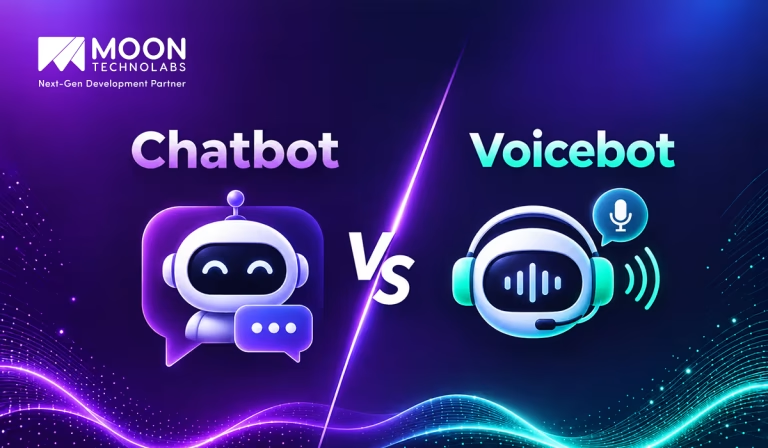
Table of Content


Blog Summary:
Chatbots and voicebots may serve the same purpose, but they differ in how to interact with customers. This blog explores chatbot vs voicebot, comparing their communication methods, functionality, and real-world applications to help businesses understand where each technology fits and which solution best aligns with their customer support goals.
Table of Content
Customers today expect quick, convenient, and personalized support. That’s where chatbots and voicebots come in. While chatbots handle text-based queries, voicebots enable voice conversations, helping businesses automate customer interactions in different ways.
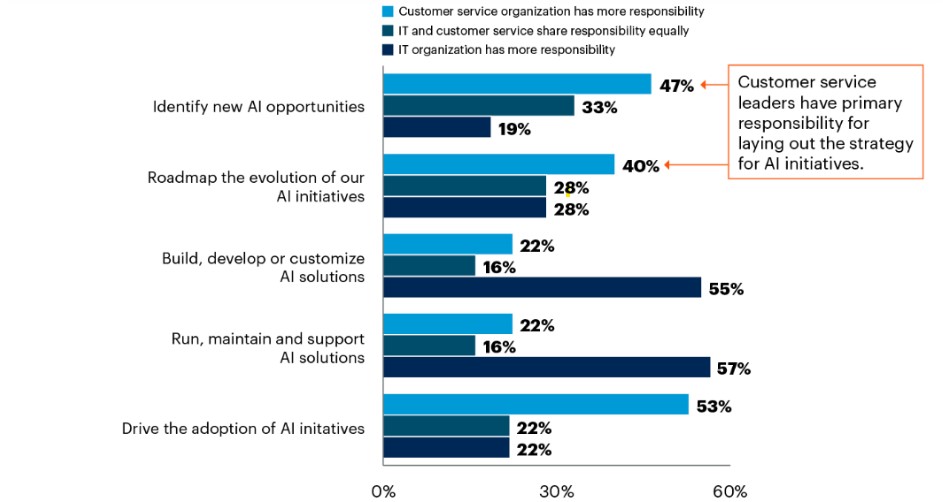
Understanding chatbot vs voicebot is essential for businesses choosing the right AI-powered communication solution. According to Gartner, 85% of customer service leaders planned to explore or pilot customer-facing conversational GenAI solutions in 2025. Let’s explore their key differences, features, benefits, and use cases, and how an AI app development company can help businesses make the right choice.
What is a Chatbot?
A chatbot is a software application that communicates with users through text-based conversations. It can answer questions, provide information, recommend products, and assist customers without requiring human intervention.
Modern chatbots use AI, NLP, and ML to understand queries and generate relevant responses. Businesses use them on websites, mobile apps, and messaging platforms to automate communication and improve customer support.
How Does a Chatbot Work?
A chatbot receives a user’s message, understands the request, and generates an appropriate response. Depending on its technology, it may follow predefined rules or use AI to understand complex queries.
The process typically involves these steps:
- User Input: Customers enter questions through a website, app, or messaging platform.
- Query Processing: The chatbot analyzes the message to identify keywords and intent.
- Intent Recognition: NLP helps understand what the customer wants.
- Response Generation: The chatbot retrieves information or generates a relevant answer.
- Response Delivery: The answer is displayed to the user.
- Human Escalation: Complex queries can be transferred to a human agent.
Types of Chatbots
Different chatbots use different technologies to handle customer conversations. The main types include:
- Rule-Based Chatbots: These chatbots follow predefined rules, keywords, and decision trees to answer specific questions. They are commonly used for FAQs and basic customer support.
- AI-Powered Chatbots: AI-powered chatbots use machine learning and NLP to understand customer intent, interpret different questions, and generate relevant responses.
- Menu-Based Chatbots: These chatbots guide users through predefined options or buttons. They help book appointments, answer service questions, and guide users through a website.
- Keyword Recognition Chatbots: These systems identify specific words or phrases in customer messages and provide matching responses. For example, mentioning “refund” triggers relevant refund-related information.
- Hybrid Chatbots: Hybrid chatbots combine predefined workflows with AI capabilities. They handle routine questions through fixed responses and use AI to manage more complex conversations.
Core Features of Chatbots
Here are the key features of chatbots that make them effective tools for automating conversations, improving customer support, and enhancing user experiences:
Text-based Conversations
Chatbots let users interact with businesses through text-based messages on websites, mobile apps, and messaging platforms. They provide instant responses, answer common questions, guide customers through processes, and deliver convenient communication without requiring human assistance.
Natural Language Processing (NLP)
Natural Language Processing (NLP) helps chatbots understand, interpret, and respond to human language naturally. It allows them to recognize user intent, identify keywords, understand context, and deliver relevant responses, making conversations more engaging and meaningful.
Automated Customer Support
Chatbots automate routine customer support tasks by answering frequently asked questions, resolving common issues, and providing instant assistance. They remain available 24/7, reduce support team workloads, minimize response times, and help businesses improve customer satisfaction.
Multilingual Communication
Multilingual communication enables chatbots to interact with customers in different languages. This feature helps businesses overcome language barriers, connect with diverse audiences, provide localized support, and create more accessible customer experiences across different geographical markets.
CRM and Third-Party Integrations
Chatbots can integrate with CRM systems, payment gateways, booking platforms, and other business applications. These integrations help automate workflows, access customer information, manage inquiries, track interactions, and deliver personalized experiences while improving overall operational efficiency.
Omnichannel Messaging Support
Omnichannel messaging allows chatbots to communicate with customers across multiple platforms, including websites, mobile apps, WhatsApp, Facebook Messenger, and other channels. It ensures consistent interactions, maintains continuity, and lets customers connect through their preferred platforms.
Upgrade Customer Experiences with Intelligent AI Conversations
With hands-on expertise in chatbot and voicebot development, we build intelligent solutions that fit your workflows, handle customer queries, and simplify everyday business operations.
Advantages of Chatbots
Let’s look at how chatbots benefit businesses, from handling repetitive queries to reducing support workloads and keeping customer interactions running smoothly:
24/7 Customer Assistance
Round-the-clock support lets businesses assist customers anytime without relying on human agents. Automated systems can answer questions, share information, resolve common issues, and handle inquiries even outside regular business hours.
Faster Response Times
Instant responses eliminate long waiting times and improve communication efficiency. Automated conversations can handle multiple customer inquiries simultaneously, ensuring timely assistance and reducing delays without requiring an available support representative.
Reduced Customer Support Costs
Automating repetitive customer service tasks helps businesses lower operational expenses. It reduces the need for additional support staff, handles high volumes of inquiries efficiently, and lets human agents focus on complex customer issues.
Personalized Customer Interactions
Using customer preferences, past interactions, and available data enables more relevant, personalized communication. AI-powered solutions can recommend suitable products, provide tailored information, and create engaging experiences that strengthen customer relationships.
Easy Scalability
Managing increasing customer inquiries becomes easier without significantly expanding support teams. Automated systems can handle multiple conversations simultaneously, adapt to changing customer demands, and support business growth while maintaining consistent service quality.
Chatbot Use Cases
From answering customer queries to managing bookings and processing orders, here are some practical ways businesses use chatbots across different industries:
E-commerce Customer Support
Online businesses use chatbots to assist customers with product inquiries, order tracking, payment-related questions, and return requests. They provide instant responses, recommend relevant products, and help shoppers navigate the purchasing process, improving satisfaction and the overall shopping experience.
Lead Generation and Qualification
Chatbots help businesses capture potential customer information through automated website conversations. They can ask qualifying questions, understand customer needs, collect contact details, and identify promising leads, helping sales teams prioritize opportunities and improve conversion rates.
Appointment Scheduling
Service-based businesses use chatbots to simplify appointment booking and scheduling. Customers can check available time slots, book appointments, reschedule existing bookings, and receive automated reminders, reducing administrative tasks and making scheduling faster and more convenient.
Banking and Financial Assistance
Financial institutions use chatbots to assist customers with balance inquiries, transaction information, account-related questions, and payment support. These automated solutions provide quick responses, improve access to service, and help customers get basic banking information without waiting for human assistance.
IT Help Desk Automation
IT teams use chatbots to automate routine technical support requests, troubleshoot common issues, and guide employees through basic solutions. They can also create support tickets, share troubleshooting instructions, and escalate complex problems to IT professionals, improving help desk efficiency.
What is a Voicebot?
A voicebot is an AI-powered software application that communicates with users through spoken conversations. It can answer questions, handle phone calls, schedule appointments, provide updates, and automate customer interactions without requiring a human agent.
Voicebots use technologies such as AI, Automatic Speech Recognition (ASR), Natural Language Understanding (NLU), and Text-to-Speech (TTS) to understand spoken requests and deliver voice-based responses.
How Does a Voicebot Work?
A voicebot listens to a customer’s request, processes the spoken words, understands the intent, and responds through speech. The process typically involves these steps:
- Voice Input: The customer speaks a question or request.
- Speech Recognition: ASR converts spoken words into text.
- Intent Recognition: NLU identifies the customer’s intent and understands the request.
- Response Generation: AI retrieves relevant information or generates an appropriate response.
- Voice Output: TTS converts the response into spoken language.
- Call Transfer: Complex queries can be forwarded to a human agent when needed.
Types of Voicebots
Different voicebots use different technologies and conversational approaches to manage customer interactions.
- Rule-Based Voicebots: These voicebots follow predefined scripts and instructions to respond to specific customer queries. They suit basic inquiries, call routing, and appointment confirmations.
- AI-Powered Voicebots: They use ML and NLU to understand spoken language, recognize customer intent, and manage more natural conversations beyond predefined scripts.
- IVR-Based Voicebots: These systems use voice prompts and interactive menus to guide callers through options. They help businesses route calls, provide basic information, and automate routine telephone interactions.
- Conversational Voicebots: They support more natural, two-way interactions. Customers can speak freely instead of following fixed menus, making them useful for customer support, bookings, and service inquiries.
- Hybrid Voicebots: Hybrid voicebots combine predefined call flows with AI-powered capabilities. They handle routine requests through structured workflows while using AI to understand complex queries and provide relevant responses.
Core Features of Voicebots
Voicebots do more than respond to spoken commands. Here are the features that help them understand conversations, process requests, and deliver natural voice interactions:
Speech Recognition (ASR)
Automatic Speech Recognition (ASR) converts spoken words into text, allowing voicebots to understand customer queries. This technology captures user input, processes spoken language, and enables accurate responses without requiring customers to type. It is a key component of modern voice technology, enabling systems to process spoken input and respond accurately.
Text-to-Speech (TTS) Technology
TTS technology converts written responses into natural-sounding speech. It enables voicebots to communicate verbally with customers using clear, human-like voices, making interactions more accessible, engaging, and convenient across different applications.
Natural Language Understanding (NLU)
NLU helps voicebots interpret spoken language, identify user intent, and understand conversational context. It allows them to recognize customer needs, process complex queries, and provide relevant responses for more meaningful interactions.
Real-time Voice Conversations
Real-time voice conversations let customers interact naturally with automated systems without significant delays. Voicebots can listen, process requests, and respond instantly, creating smooth conversations for customer support, appointment scheduling, and other business operations.
Telephony and IVR Integration
Integration with telephony systems and Interactive Voice Response (IVR) platforms allows voicebots to manage incoming and outgoing calls. They can route calls, answer customer inquiries, automate call handling, and connect callers with human agents when necessary.
Multilingual Voice Support
Multilingual voice support enables businesses to communicate with customers in different languages through spoken interactions. This capability helps overcome language barriers, serve diverse audiences, improve accessibility, and deliver localized customer experiences across multiple regions.
Advantages of Voicebots
From handling calls simultaneously to offering hands-free support, here are the key advantages that make voicebots valuable for businesses and their customers:
Hands-free Customer Interactions
Voice-based communication allows customers to interact with businesses without typing or navigating screens. Users can simply speak their queries and receive responses, making interactions more convenient, accessible, and efficient, especially while multitasking or using hands-free devices.
Faster Voice-based Assistance
Instant voice responses help customers get information and resolve queries without waiting for human agents. Automated systems can understand spoken requests, provide relevant answers, and manage multiple interactions efficiently, reducing response times and improving customer satisfaction.
Automated Inbound and Outbound Calls
Automating inbound and outbound calls helps businesses manage customer communication more efficiently. Voicebots can handle inquiries, appointment reminders, payment notifications, follow-up calls, and customer feedback collection while reducing the workload on support teams.
Improved Call Center Efficiency
Automated call handling reduces repetitive tasks and allows human agents to focus on complex customer issues. Voicebots can manage high call volumes, route inquiries, provide instant assistance, and minimize waiting times, improving overall call center productivity.
Personalized Voice Experiences
Using customer information, preferences, and previous interactions enables more personalized voice conversations. AI-powered voicebots can tailor responses, recommend relevant services, and understand individual requirements, helping businesses build stronger customer relationships and improve engagement.
Voicebot Use Cases
Voicebots are finding applications across various industries, making voice-based interactions faster and easier. Here’s how businesses are putting them to practical use:
AI-powered Call Center Automation
Voicebots automate routine call center operations by answering customer queries, routing calls, and providing instant assistance. They can manage high call volumes, handle repetitive inquiries, and connect customers with human agents when more personalized support is required.
Healthcare Appointment Booking
Healthcare providers use voicebots to simplify appointment scheduling and patient communication. Patients can book, reschedule, or cancel appointments through voice conversations. These systems can also send appointment reminders, share basic information, and reduce administrative workloads.
Banking and Payment Reminders
Banks and financial institutions use voicebots to automate payment reminders, transaction notifications, and basic account-related inquiries. Customers receive timely updates through automated calls, helping businesses improve communication, reduce missed payments, and streamline routine banking interactions.
Order Tracking and Delivery Updates
E-commerce businesses use voicebots to provide real-time order status, shipping notifications, and delivery updates. Customers can simply ask about their orders and receive relevant information, reducing support inquiries while improving transparency and the overall shopping experience.
Customer Feedback Collection
Voicebots help businesses collect customer feedback through automated voice surveys and post-service calls. They can ask predefined questions, record responses, measure satisfaction, and gather insights that help organizations identify areas for improvement and enhance service quality.
Chatbot vs Voicebot: Key Differences
When comparing chatbot vs voicebot, several differences stand out. Let’s look at how they compare in terms of communication, functionality, user experience, and business applications:
Communication Method
A chatbot communicates through written messages, allowing customers to type questions and receive answers on a website, app, or messaging platform. For example, an online shopper can ask about product availability, compare prices, or check an order without speaking to anyone.
A voicebot replaces typing with spoken conversations. Customers can call a business, ask questions aloud, and receive verbal responses. This makes voicebots especially useful when customers want quick information without navigating menus or writing long messages.
User Experience and Accessibility
Chatbots give customers more control over conversations because they can read responses at their own pace, revisit previous messages, and share links or documents. This works particularly well for customers comparing products, filling out forms, or looking for detailed information.
Voicebots offer a more direct experience by allowing customers to explain their requirements naturally. Someone checking an appointment while driving or seeking help without a screen may find speaking much easier than typing messages.
Underlying Technologies
Chatbots primarily depend on NLP, NLU, machine learning, and language models to understand written questions. These technologies help identify what customers are asking, recognize conversation context, and generate relevant answers based on business information or connected databases.
Voicebots require additional speech-processing capabilities before an AI system can respond. Automatic Speech Recognition converts spoken words into text, NLU interprets the request, and Text-to-Speech converts the generated answer into spoken language for the customer.
Implementation Complexity
Setting up a chatbot usually starts with identifying common customer questions, preparing relevant responses, and connecting the system to business platforms. A basic website chatbot can be deployed relatively quickly, while advanced AI chatbots require more extensive training, integrations, and testing.
Voicebot implementation involves more technical considerations, particularly when connecting AI systems to existing phone infrastructure. Businesses must configure call routing, speech recognition, voice quality, response timing, and interruption handling to ensure conversations feel natural rather than robotic.
Integration Capabilities
A chatbot can connect directly with e-commerce platforms, CRM software, payment gateways, and customer databases. For instance, when a customer asks about an order, the chatbot can retrieve tracking information from the connected system instead of providing generic instructions.
Voicebots connect with telephony platforms, IVR systems, CRM software, and business applications to manage phone-based interactions. For example, a customer calling a bank can receive payment reminders, check basic account information, or request assistance without waiting for an agent.
Accuracy and Error Handling
Chatbots generally process written queries more consistently because they receive text rather than interpret speech. However, spelling mistakes, incomplete questions, slang, and unclear instructions can still affect response accuracy. Well-designed chatbots use clarification prompts and human handoffs to manage these situations.
Voicebots face additional challenges because spoken language varies between customers. Accents, pronunciation, background noise, and speaking speed can affect speech recognition. To avoid misunderstandings, voicebots may repeat important information, confirm customer details, or ask callers to rephrase their requests.
Development and Maintenance Costs
Chatbot development is generally more cost-effective, especially when businesses need automated answers for frequently asked questions or basic customer support. Costs increase when projects involve advanced AI models, CRM integrations, multilingual capabilities, custom workflows, and continuous system improvements.
Voicebots usually require a larger investment because businesses must account for speech recognition, voice generation, telephony integration, and call usage charges. Ongoing expenses also depend on conversation volumes, supported languages, voice customization, and the infrastructure required to handle simultaneous calls.
Scalability and Performance
Chatbots can manage multiple customer conversations simultaneously without requiring a separate support representative for every interaction. As website traffic increases, businesses can expand chatbot capacity through cloud infrastructure and automation, as long as the underlying platform supports the additional workload.
Voicebots can also handle numerous calls simultaneously, reducing dependence on human call center agents. However, businesses need sufficient telephony capacity and reliable speech-processing infrastructure to maintain response quality during peak calling hours and high-volume campaigns.
Best Business Use Cases
Chatbots are a practical choice for businesses where customers frequently need written information or assistance while browsing digital platforms. E-commerce product queries, lead qualification, appointment booking, banking FAQs, and IT support are common examples where text-based automation works effectively.
Voicebots suit businesses that handle frequent phone inquiries or need to automate spoken interactions. Healthcare appointment confirmations, banking payment reminders, delivery updates, outbound sales calls, and call center support are strong examples of voicebot applications.
Chatbot vs Voicebot: Which One Should You Choose?
The right choice depends on your communication channels, customer preferences, and business requirements. Here is when each solution makes the most sense:
When to Choose a Chatbot
Choose a chatbot when your business needs to:
- Handle frequent website and mobile app inquiries.
- Provide instant answers to product and service-related questions.
- Automate order tracking, returns, and payment inquiries.
- Capture and qualify leads through website conversations.
- Manage appointment bookings and customer requests.
- Offer written support across WhatsApp and other messaging platforms.
- Reduce repetitive tasks handled by customer support teams.
When to Choose a Voicebot
Choose a voicebot when your business needs to:
- Automate high volumes of incoming and outgoing calls.
- Provide hands-free customer assistance through voice conversations.
- Send automated payment reminders and appointment confirmations.
- Reduce call center waiting times and agent workloads.
- Handle delivery updates and order-related phone inquiries.
- Provide real-time assistance through natural spoken conversations.
- Support customers who prefer calling over typing messages.
When to Use Both Chatbots and Voicebots
Consider combining chatbots and voicebots when your business wants to:
- Provide consistent customer support across voice and messaging channels.
- Allow customers to switch between chat and phone support.
- Automate both digital conversations and telephone interactions.
- Manage customer inquiries across multiple touchpoints.
- Connect customer conversations through shared CRM systems.
- Improve support availability without increasing staffing requirements.
- Deliver a seamless omnichannel customer experience.
Looking to Develop a Smarter AI Communication Solution?
Let’s create customized chatbots and voicebots that align with your workflows, customer expectations, and long-term business objectives.
How Moon Technolabs Helps Businesses Build AI-led Chatbot & Voicebot?
Moon Technolabs develops AI-powered chatbots and voicebots based on how businesses actually interact with their customers. From handling repetitive support queries and qualifying leads to managing inbound calls and appointment bookings, we build conversational solutions around specific business workflows, customer expectations, and operational requirements.
With our AI voicebot development expertise, we help businesses integrate speech recognition, conversational AI, NLP, and third-party systems into existing operations. Our focus is on building practical automation solutions that reduce manual workloads, handle customer interactions more efficiently, and give support teams more time to address complex requests.
Conclusion
Both chatbots and voicebots play an important role in improving customer interactions and business efficiency. While chatbots offer quick, text-based support, voicebots enable natural, hands-free conversations. The right choice depends on your business goals, customer preferences, and communication needs.
By adopting the right AI-powered solution, businesses can enhance customer experiences, streamline operations, and drive growth. Partnering with an experienced AI development company can help you implement intelligent chatbot and voicebot solutions tailored to your business needs.
FAQs
01
What is the main difference between a chatbot and a voicebot?
A chatbot communicates with users through text-based messages, while a voicebot interacts through spoken conversations. Both automate customer interactions, but differ in communication channels and user experience.02
Are voicebots more expensive than chatbots?
Yes, voicebots can be more expensive because they require speech recognition, voice processing, and telephony integrations. However, actual costs depend on features, complexity, technology, and development requirements.03
Can a chatbot and voicebot work together?
Yes, chatbots and voicebots can work together to provide seamless customer support across multiple channels. They can share data, maintain conversation context, and improve overall customer experience.04
Which is better for customer service: chatbot or voicebot?
Both are effective for customer service. Chatbots work best for text-based queries and quick responses, while voicebots suit real-time conversations, appointment bookings, and hands-free customer assistance.05
How much does it cost to develop a chatbot or voicebot?
Development costs vary depending on complexity, integrations, features, and customization. Basic chatbots are generally more affordable, while advanced AI-powered chatbots and voicebots require higher investments.



Explore the latest insights on Artificial Intelligence, including Generative AI, Agentic AI, natural language processing, computer vision, automation, and enterprise AI solutions. This category covers industry trends, practical applications, implementation strategies, and innovations that help businesses leverage AI for smarter decision-making and digital transformation. Stay updated with evolving AI technologies that are reshaping industries worldwide.
Submitting the form below will ensure a prompt response from us.
We refine our expertise to deliver innovative business solutions.





205 N Michigan Avenue, #810, Chicago, 60601, Illinois, United States
13500 Long Is Dr, Pflugerville, TX 78660, USA

C/105 Ganesh Meridian, S.G. Highway, Ahmedabad, GJ 380060




Ayse D.
Co-Founder France
“ I highly recommend Moon Technolabs as the quality of service is wonderful. We have hired this company to develop the product based on some complex & technical issues. We get the best quality services as compared with others in the market. Huge Thanks to Moon Technolabs as the team is always ready to give the solution all time.”

Justin G.
Founder & CEO USA
“ Moon Technolabs is a pioneer in the WebRTC based project as they have fixed complicated segments of the module by fulfilling different product lines by providing 24X7 customer support. We really recommended Moon Technolabs as they are able to develop products as per the module deadline and project timeline.”

Flavio S.
Founder & Managing Director Germany
“I am happy to recommend Moon Technolabs for their app development services. They successfully developed apps for me, and I am highly satisfied with the overall outcomes. The development team has swiftly addressed the issues with responsive and effective communication to understand the requirement quickly and actively resolve the back-and-forth problems that arose...”

Jay M.
Founder & CEOUSA“Moon Technolabs is the best company that provides advanced apps and websites development services in the USA and Europe. I am a newbie to develop my app with an external team. I am really happy to work with them as I am not that much mobile apps user. Here, the team and specially the CEO of Moon Technolabs helps me to let me know about the benefits of my app to generate revenue....”


Our Offices
India
C/105 Ganesh Meridian,S.G. Highway, Ahmedabad, GJ 380060USA
205 N Michigan Avenue, #810, Chicago, 60601, Illinois, United StatesContact Information


